
"The Source of Ví and Giặm Folk Songs" recounts everyday stories.
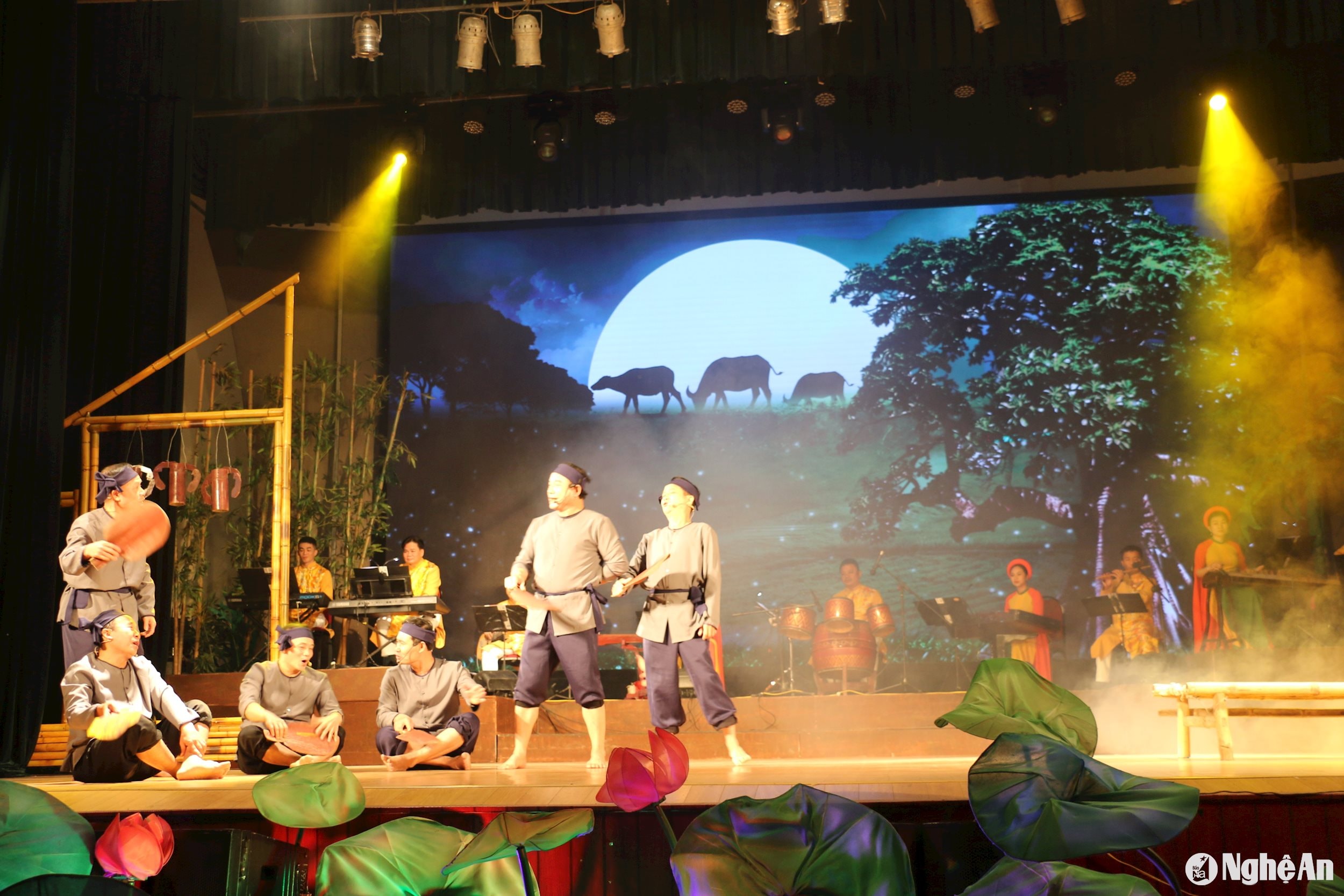
On the evening of December 22nd, at the Provincial Traditional Arts Center, artists performed and presented the 2025 Ví and Giặm folk art program titled "The Source of Ví and Giặm Folk Art".
Attending the program were Ms. Quach Thi Cuong - Deputy Director of the Department of Culture and Sports; Mr. Ho Mau Thanh - President of the Nghe An Union of Literature and Arts; People's Artist Tien Dung - Head of the Vietnam Musicians Association branch in Nghe An province; and a large number of people who came to watch and cheer.
.jpg)
.jpg)
""Ví, Giặm power supply circuit"It recounts everyday stories, the loving voices of working people who toil under the sun and rain behind the bamboo hedges of their villages.
Through original folk melodies, adapted melodies, and newly composed melodies; and through diverse forms of expression: performance, courtship singing, singing and dancing, combining folk elements with developments in music and dance, a new and captivating appeal has been created, yet deeply imbued with the cultural heritage of Nghe Tinh folk singing.
.jpg)
The program consists of two parts: Part 1, titled "A Picture of the Countryside," has the main theme: Each of us has a place called home, a place deeply etched in our hearts. In the hustle and bustle of life, simply remembering the sunrise in that countryside brings a sense of peace and warmth.
Nghe An province is not only beautiful with its lush green mountains and clear blue waters, and its hardworking and resilient people, but it also preserves long-standing customs and traditions, creating a unique cultural identity that cannot be confused with many other regions.
.jpg)
Part 2, titled "Vi and Giam Folk Songs Soar Far," conveys the following message: Through many historical and life-changing events, the Kinh people migrated to the mountains to clear land and establish settlements, living alongside ethnic minority groups. Many folk song clubs were established, and the Mong, Thai, Tho, Kho Mu, and O Du people all knew how to sing these folk songs.
Many songs performed in Part 2 successfully conveyed the message that folk songs and traditional melodies have spread far and wide, remaining in the work and daily lives of people across the country.
The dress rehearsal, featuring many outstanding performances that clearly showcased the spirit of Nghe An's folk songs and dances, delighted the audience and received positive feedback from the art council.


