
Conflicts that are difficult to resolve.
(Baonghean)The Pakistani government yesterday canceled peace talks scheduled for the same day with the Tehreek-e-Taliban Pakistan, a militant group closely linked to the Taliban. This move came just one day after the Taliban murdered 23 Pakistani security personnel who had been kidnapped in June 2010. According to the Taliban, this action was in retaliation for the killing of several Taliban members in Pakistani prisons. Once again, peace negotiations between the Pakistani government and the Taliban have stalled, with no resolution in sight.
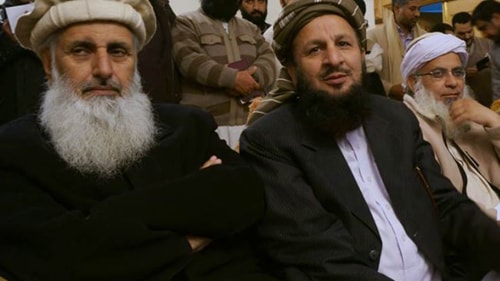 |
| Taliban representatives at a press conference in Islamabad, Pakistan. Photo: PressTV |
In an angry reaction, Pakistani government peace negotiators refused to hold further talks with Taliban representatives. The head of the Pakistani government's peace delegation, Irfan Siddiqui, even stressed that the meeting was "useless" following the killing of 23 Pakistani security personnel by the Taliban. Pakistani Prime Minister Nawaz Sharif also condemned the killings, emphasizing that Pakistan could not tolerate any more bloodshed. The Taliban, for their part, stated that this was a message from the Taliban to the Pakistani government demanding an end to the killing of their members.
Since 2007, Pakistan has been plagued by instability due to the Taliban, officially known as the Tehreek-e-Taliban, a dogmatic and extremist militant group that has launched numerous attacks killing tens of thousands of people in shelling and bombings across Pakistan. In early 2014 alone, over 100 people were killed in Taliban attacks. Meanwhile, the Pakistani air force has also been continuously bombing Tehreek-e-Taliban strongholds in North Waziristan, a move analysts believe reflects Pakistan's determination to cripple the Taliban before engaging in dialogue with them.
Following numerous clashes resulting in casualties on both sides, Pakistani Prime Minister Nawaz Sharif on January 29 proposed peace talks with the Tehreek-e-Taliban militant group and established a four-member committee to oversee these negotiations. The decision came after the Pakistani Tehreek-e-Taliban offered peace talks to the Pakistani government.
Negotiations between the Pakistani government and the Taliban have been repeatedly hampered, particularly by the US airstrikes on the Tehreek-e-Taliban headquarters late last year, which killed the group's leader, Hakimullah Mehsud, causing the peace talks to collapse at their very beginning. After much effort, the Pakistani government and the Taliban finally sat down for talks on February 6th to seek a solution to lift the country out of the seven-year shadow of violence. The main focus of the dialogue was to outline a roadmap for future peace talks and for each side to present its demands. However, in this first meeting, the Taliban put forward dozens of conditions for negotiations, leading analysts to doubt the chances of success for the entire negotiation process between the two sides.
The Taliban's killing of 23 kidnapped Pakistani security personnel, which led to the cancellation of the next round of talks scheduled for yesterday, was the final straw in the already deep-seated disagreements between the two sides. In reality, too many unresolved conflicts remain. Cleric Maulana Abdul Aziz, a member of the Taliban negotiating team, stated that peace talks could be delayed. His main reason was that while the government wanted the talks to be conducted within the framework of the Pakistani Constitution, the Taliban demanded Sharia law as the basis for these negotiations. Taliban representatives even argued that the Pakistani Constitution is contrary to Islam, asserting that the peace process could only be advanced if the Pakistani government imposed Islamic law throughout the country.
Following the recent events, no date has been set for the next round of negotiations. Many Pakistani observers even express skepticism that talks with the outlawed Tehreek-e-Taliban militant group will yield results in a country where the Taliban are fighting to overthrow the government and establish an Islamic state. Therefore, peace negotiations between the Pakistani government and Tehreek-e-Taliban remain a tunnel with no end in sight.
Cao Bien


