
Tips for using a washing machine to save electricity and water.
Here are some helpful tips to help you use your washing machine freely while saving on electricity and water bills.
Choose the appropriate water level.
Most modern washing machines have three water levels corresponding to different washing cycles. Choose the water level that best suits the amount of laundry. If you have only a few clothes, choose the low water level; this will not only save water but also speed up the washing process, ultimately saving electricity.
Choose the right type of detergent.
You should choose a detergent specifically designed for washing machines. This type of detergent not only provides better cleaning results than other regular detergents but also helps protect the machine. It produces less foam, so it won't leave much residue on your clothes.
Use the right amount of detergent, corresponding to the amount of clothes to be washed. Using the right amount of detergent increases washing efficiency and saves electricity and water. For heavily soiled clothes, you should pre-wash them by hand before putting them in the washing machine; don't try to solve the problem by using too much detergent as it will be ineffective.
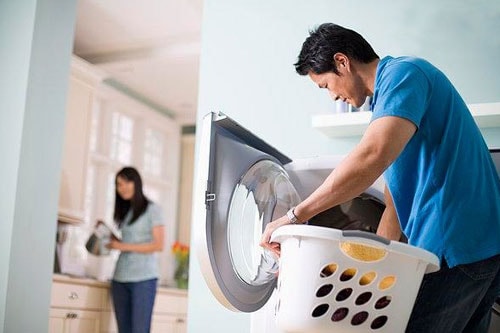
If you use fabric softener, you should also use it judiciously to save money more effectively. You should add fabric softener during the final cycle, perhaps pausing the machine for 10 minutes to allow the clothes to absorb the softener better.
Do not overload the washing machine.
This method helps clean clothes more effectively and prevents damage to the machine. When overloaded, washing machines often make loud noises and may stop rotating the drum. In many cases, if you put too much laundry in, clothes fall out of the drum during the washing process. Only when a repair technician removes the drum do homeowners find the clothes stuck between the drum and the machine frame.
Don't do laundry when you have too few items.
Avoid washing too few clothes. Also, washing a small load doesn't necessarily result in cleaner clothes compared to a full load. If your washing machine has a hot water setting, use only cold water for rinsing to save energy. When not in use, completely unplug the machine. Energy Star-certified washing machines use 50% less water than conventional washing machines.
Choose the appropriate spin setting.
In washing machines, the spin cycle is usually included with the pre-set washing program. However, if you want your clothes to dry faster, you should choose the appropriate spin cycle. For thick clothes, or bedding, you should choose the extra-dry spin cycle to save time.
For thin, lightweight clothes, you should choose a lower spin speed, which will still help the clothes dry quickly.
Additionally, to ensure your washing machine lasts a long time, you should avoid placing it in damp areas and prevent water from getting onto the control panel. If water does get on it, wipe it dry immediately.
Level the washing machine.
When your washing machine is placed unevenly, it can cause problems such as: water not flowing into the fabric softener dispenser, the drum tilting leading to noise during washing, and reducing the lifespan of the washing machine.
Hopefully with thesetips and tricksAbove, you will learn more about how to use your washing machine to save electricity and water.


