
Tips for distinguishing real and fake cassava starch
(Baonghean.vn) - Cassava starch powder is not only known as a great cooling drink in the summer but can also treat many different diseases. It's a valuable remedy with abundant supply on the market. However, choosing a quality cassava starch powder is not easy. Here are 4 ways to distinguish them.Below is a comparison of real and fake kudzu powder so you can fully utilize the benefits of this valuable remedy.
Distinguishing real and fake cassava starch powder with the naked eye.
Authentic kudzu starch powder is characterized by large, sharp-edged granules, a pure white color, and a distinctive natural aroma. It is dry and not damp. When bitten, authentic kudzu starch powder has a crisp texture, dissolves quickly in the mouth, and feels warm on the tongue. After dissolving, the powder feels smooth and free of any gritty particles.
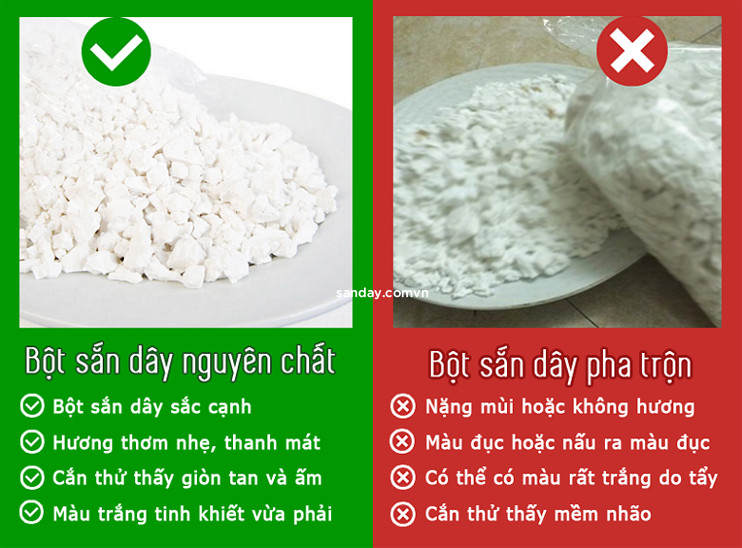 |
Conversely, if it's fake cassava starch, the powder will contain many impurities, the granules will not be sharp-edged, and will be small. When observed, it will not have a natural white color, will usually have no aroma or a very strong odor, and when bitten, the granules will feel soft.
Distinguishing real and fake cassava starch by dissolving it in water.
Dissolve the tapioca starch in a glass of purified water, then pour the water from one glass into another. If you see that the water drains completely, with no residue at the bottom of the glass, then the starch is completely pure.
For a more thorough test, you can place the entire cup of dissolved tapioca starch in the refrigerator. After 3-5 hours, the starch will settle firmly at the bottom. Pour off the water; if you find the starch is very difficult to scrape up and has a completely white color like when it was dry, then it's good quality tapioca starch.
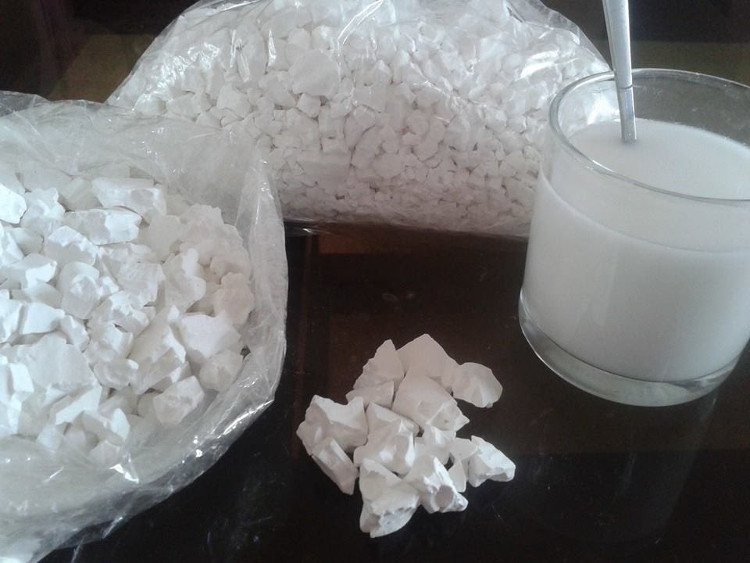 |
| Genuine kudzu starch powder, when dissolved in water, leaves no residue. (Illustrative image.) |
Identifying genuine and fake cassava starch by heating.
Take about 3 tablespoons of tapioca starch, 1 bowl of water, and 3 tablespoons of sugar. Dissolve the mixture and cook over medium heat for 10 minutes, stirring constantly. Once cooked, pour it into a bowl. If the starch is translucent to the bottom, it's definitely high-quality tapioca starch.
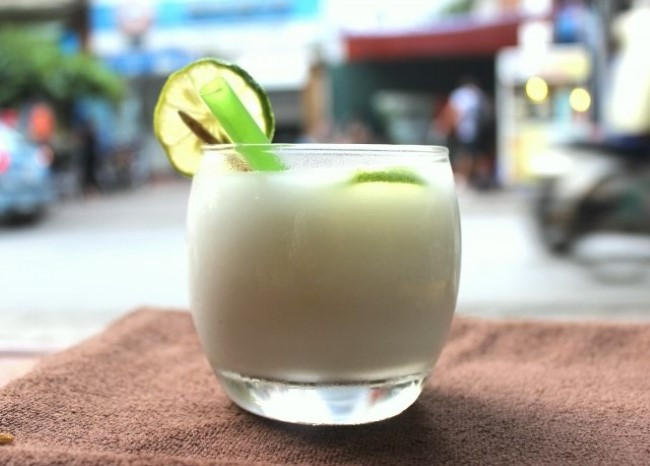 |
| If you can see the flour all the way to the bottom, then it's definitely high-quality flour. (Illustrative image.) |
Distinguishing real from fake cassava starch powder by taste.
The simplest method is to mix two different types of cassava starch powder separately in two cups and taste them. High-quality powder will definitely have a better flavor and a distinctive cassava aroma. Low-quality powders often have a strange taste, a musty smell, or lack the characteristic aroma.
Distinguishing real from fake cassava starch powder by smell.
Additionally, when buying cassava starch, you should avoid buying the kind that has been flavored with pomelo blossoms, as it is very prone to mold, or counterfeiters may use pomelo blossoms to mask the musty smell of fake cassava starch. Therefore, you should buy starch that is truly dry and crispy so that it can be stored for a long time.
How to prepare kudzu powder according to its uses: Beauty and medicine.
 |
| Cassava starch face mask for bright, smooth skin. (Illustrative image.) |
Treating acne, dark spots, and preventing aging: Due to its cooling and detoxifying effects, the nutrients in kudzu root powder help eliminate toxins accumulated in the body, preventing acne. In addition, kudzu root contains many isoflavones – substances with activity similar to the hormone estrogen, which help replace disordered hormones, stabilize their function, and prevent the secretion of melanin – the cause of dark spots and blemishes on the skin.
Drink two cups of kudzu powder mixed with mung beans and sugar daily. Additionally, combine this with a face mask using the following recipe: 20g kudzu powder + 20g mung beans, 1 teaspoon honey. Mix the ingredients together, apply to the face for 20-30 minutes, then rinse with clean water for noticeable results.
For fever, headache, and prevention of rashes and boils: Take 12-30g of dried kudzu root daily, decocted and drunk, or 10-16g of powder mixed with water and drunk.
For heatstroke, headache, heartburn, and vomiting: You can take 12g of the herb mixed with sugar or decoct it in water using the following recipe: 20g of cassava root and 12g of broad beans, crushed together.
Food poisoning: Crush fresh kudzu root and lotus root, extract 500ml of juice, mix the juices together, and drink gradually.
Alcohol poisoning: Grind 30g of kudzu flowers, 4g of Coptis rhizome, 30g of talc, and 15g of licorice powder into a fine powder, then mix with water and roll into pills. Take about 3g each time with cool water.
For enteritis, abdominal pain, and diarrhea: You can mix kudzu root powder with sugar and drink it, or crush 30g of kudzu root and 20g of centella asiatica, add water, and drink the resulting liquid daily.
Tips for mixing tapioca starch - Because kudzu root powder is in powder form, it will solidify when hot water is added. If you don't like your kudzu root powder too runny and accidentally add too much cold water, just let it sit for about 30 minutes and the powder will settle, then you can pour off the excess water. - If you accidentally mix kudzu powder with hot water and want to drink it cold, let the powder cool down until it becomes liquid, then pour it into a glass, add ice, and enjoy. |
Hoa Le
(Synthetic)
| RELATED NEWS |
|---|


