
Escape tips: Protecting against robberies
The situation regarding property theft and robbery in densely populated urban areas is becoming increasingly complex. The dangerous nature of this type of crime lies in the fact that it not only causes property damage but also directly threatens the lives and health of victims and other road users, as perpetrators often try to evade pursuit by victims, passersby, and the police after committing the crime.
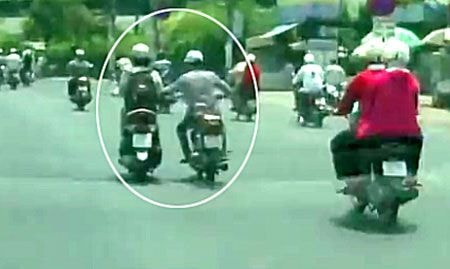 |
Illustrative image.
Violent robbery and snatching
In recent years, robbery and theft crimes have become more brazen. The perpetrators are primarily young people aged 16-30, unemployed, frequently gathering to socialize, using stimulants (beer, alcohol, drugs, etc.), and engaging in gambling, football betting, and lottery. The recidivism rate among those with prior criminal records is quite high. Of particular concern is the increasing number of students, even civil servants and teachers, committing crimes.
Robbers often work together, forming gangs of two or more members. They usually have specific roles assigned to each member, such as the driver (on the motorbike), the passenger (sitting behind to snatch the items), and the lookout (blocking the pursuit). In some cases, they stage incidents to distract passersby or create opportunities for their accomplices to steal. Some gangs assign members to scout locations such as banks, jewelry stores, and ATMs.
The common modus operandi involves using motorcycles to "cruise" along roads and observe. When they spot someone carrying small, valuable items that are easy to sell (such as mobile phones, cameras, jewelry, handbags, gold, cash, etc.), or people leaving banks, gold shops, or ATMs, they immediately follow them. At advantageous locations (such as wide, open roads or those with multiple turns convenient for escape, or deserted areas ahead), they accelerate, closing in on their target to snatch the bag containing money or gold before fleeing. If pursued, the person riding behind will act as a decoy, hindering the pursuit.
Recently, there have been new tactics used by robbers, such as blocking victims' vehicles or staging car accidents to distract them, then having accomplices approach from behind to pickpocket or snatch items hanging on the vehicle. In some cases, they follow cars and taxis that have just withdrawn money from the bank. On deserted roads, they secretly scatter nails in front of the tires, then inform the driver that the tire is flat. While the driver gets out to check or repair it, they steal money or snatch items from the occupants of the car before escaping.
The mindset of snatch thieves is extremely aggressive and ruthless, disregarding any danger to the lives and health of others, as long as they can steal property. When pursued, they are ready to use the weapons they carry to resist. The tools and means used in the crimes are mainly high-speed, high-displacement motorcycles with fake license plates, covered plates, or removed plates; they may also have real license plates, but from another vehicle. Almost every snatch thief carries weapons (knives, swords, etc.) on their person.
Prevention methods
So what can you do to avoid becoming an easy target for robbers? The best prevention is still individual vigilance. You need to proactively avoid putting yourself in dangerous situations and not create any vulnerabilities that robbers can exploit. At the same time, you must "prevent early" by anticipating how to react if you are robbed.
The best way to dress when going out is to avoid flaunting valuables and limit wearing jewelry. If you must wear jewelry, cover it with a scarf, long-sleeved shirt, or sun-protective clothing. Don't carry a lot of expensive items unless absolutely necessary. In that case, keep your money and valuables in the trunk of your vehicle (if available) or secure them carefully to your motorcycle. Remember to look around before putting items in or taking them out of the trunk, as thieves often use this time to commit crimes. If your bag is too large and the trunk is too small, it's best to wear it in front of your stomach, or hang it on the motorcycle's luggage rack (between your thighs), securing it with a strap to prevent it from being slashed if worn on your back. Choose wide, sturdy straps to deter thieves from snatching. Absolutely do not place or hang items carelessly (such as in the basket in front of the handlebars or on the luggage rack on the frame).
While driving, pay close attention to your surroundings. If you notice a suspicious person following you in your rearview mirror, or if they are speeding, swerving, or driving erratically in the same direction as you, slow down significantly, move close to the roadside, pull over to the side of the road and stop completely, or try to reach an area with more people. Do not use your phone while driving. If you must use your phone, pull over to the side of the road and stop near an obstacle (tree, lamppost), then get out of the car and take out your phone to answer the call using your right ear (on the side with the obstacle). While on the phone, keep looking around. If you see someone speeding straight towards you, be alert and quickly react. Be vigilant when someone approaches you asking for directions, or when stopped at a red light at an intersection.
Remember to keep an eye on your belongings and anticipate what might be stolen so you can protect them carefully. If a minor collision occurs, immediately consider the valuables you are carrying or have on your vehicle and take precautions, as the incident could be a staged event designed to distract you. Be wary of children selling goods or lottery tickets who suddenly approach, push, or jostle you. Thieves often exploit these children to create a distraction or obstruct your view, allowing another person to snatch your belongings. If transporting goods by car or taxi, be extra vigilant and observe your surroundings before loading or unloading money or goods. Especially, before getting out of the car, look around carefully. Only take out your belongings once you are outside the vehicle.
On the street, avoid giving rides to strangers to prevent robbery, theft, or snatching of belongings. Avoid walking home late at night on deserted roads. When walking, be mindful of your belongings. Do not walk in the middle of the road; or walk close to the curb but hang your bag on your left shoulder (facing the road), as this makes it easier for thieves to snatch your valuables. When withdrawing money from banks and ATMs, have someone with you and be observant and vigilant when leaving these locations.
When robbed, almost everyone loses their composure, even panics, and loses control of their immediate behavior. In such situations, try to calm down by taking several deep breaths. Many people, out of regret for their stolen belongings, unconsciously accelerate to chase after the perpetrators. This is very dangerous, as chasing after robbers without paying attention to traffic can easily lead to accidents for yourself and others. Furthermore, remember that most robbers carry weapons. They are ready to retaliate violently if pursued aggressively.
The wise reaction is to shout loudly to passersby for help and to chase after the thief. When shouting, don't just say "help, help" or "help me...", but clearly and loudly state that you've been robbed, what kind of vehicle the thief is riding, what they look like, and which direction they are fleeing. You shouldn't cry, scream, or curse, as this will only make people dislike you.
After shouting for help, try to remain calm and remember the characteristics of the suspects (number, stature, age, hair, clothing, shoes, any distinctive features...) and their vehicle (type of vehicle, license plate), direction of escape… to immediately report to the nearest police unit, deploying forces to cordon off the area and track down the perpetrators. Remember, the license plate is the most important; if the suspects have a fake license plate, it can be helpful in the investigation later.
In our experience, it is absolutely essential to report a robbery to the police. Although there is little hope of finding the perpetrator and recovering your property immediately, remember that these criminals always repeat their actions and will eventually be caught in other cases. At that point, your report today will help the investigating authorities expand the case and recover your property.
Many people don't know how to react if they catch a robber. In fact, there have been many cases where passersby beat up the suspects out of anger and then abandoned them on the roadside. This is very dangerous; if the suspect dies or is seriously injured, you will be held criminally responsible for "murder" or "intentional infliction of injury." Furthermore, releasing the suspect will give them the opportunity to commit further crimes against others. The most appropriate course of action is to remain calm, prevent others from beating the suspect, quickly search and seize the weapon and vehicle, recover the stolen property, and then, together with other passersby, restrain the suspect and hand them over to the police.
According to Labor


