
Plum blossoms can cure intestinal diseases.
"I heard that the leaves of the *Morus alba* plant, often eaten with dog meat, are very effective in treating diarrhea. Is this true? If so, what is the proper way to use them and what is the dosage?"
The scientific name for the hairy plum tree is Paedy tomentosa. It is a climbing vine with compound, ovate or lanceolate leaves, rounded or heart-shaped at the base, and long petioles. The pale purple flowers are arranged in tubular clusters in compound inflorescences in the leaf axils or at the ends of branches. The fruit is spherical with a persistent calyx, glossy yellowish-brown in color.
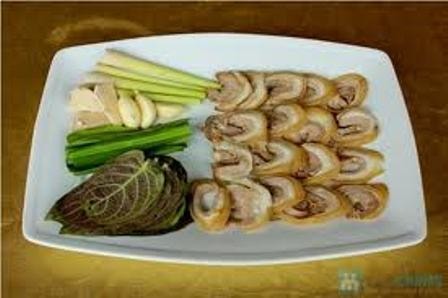
Uses and dosage:
Treatment for Shigella dysentery: 30-50g of Tricolor jasmine leaves, 1 chicken egg.
Wash and drain the leaves of the *Morus alba* plant, chop them finely, mix with chicken eggs (both yolk and white), wrap in banana leaves and bake or fry in a pan without oil. Eat 2-3 times a day for 7-10 days. Alternatively: 400g of *Portulaca oleracea*, 100g of betel nut, 100g of *Phyllanthus niruri* root, 400g of *Eucommia ulmoides* (small-leaved *Euphorbia hirta*), 100g of *Morus alba* leaves. Roast and grind all ingredients into a powder, use 20g/day for 5-7 days.
Additionally, if suffering from bacillary dysentery with frequent diarrhea (possibly 15-30 times/day), it is recommended to supplement with electrolytes. Use 2 teaspoons of sugar and 1 teaspoon of roasted salt, or mix one packet of OMS or Orezol with 1 liter of cooled boiled water and drink throughout the day until recovery.
The leaves of the three-colored fig tree are also effective in treating acute amoebic dysentery caused by G. pylori and Shigella bacteria belonging to the Enterobacteriaceae family (intestinal bacteria), which are gram-negative bacilli. They are also effective in treating bacterial infections, food poisoning caused by Salmonella, and functional bowel disorders with loose stools.
According to Health & Life - NT


