
Malabar spinach is not just for cooling the body.
Dishes made from Malabar spinach with stewed black chicken and black beans will help postpartum women produce more milk, recover quickly, and have rosy skin and smooth hair.
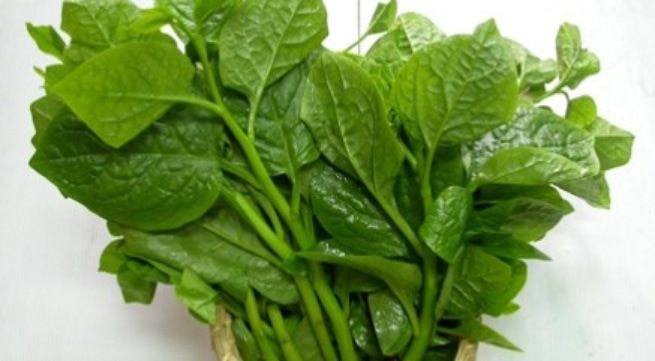 |
Malabar spinach is a vegetable that has been used as medicine for a long time. According to traditional Chinese medicine, Malabar spinach has a sweet and sour taste, a cooling nature, and is non-toxic; it has the effects of clearing heat, promoting bowel movement, cooling the blood, and detoxifying...; it treats rectal bleeding, urinary retention, painful urination, dysentery, rashes, boils, etc.
Both Eastern and Western medicine confirm that this vegetable has laxative effects. Studies also show that it helps eliminate fat, making it beneficial for people with high blood fat and blood sugar levels. Besides being used in daily meals, Malabar spinach is also used in some remedies to treat constipation, chronic rectal bleeding, urinary retention, frequent urination, chest tightness, to stop bleeding, and to promote wound healing. In folk medicine, Malabar spinach is often used as a cooling vegetable to prevent constipation. In some places, the fruit of Malabar spinach is also used to dye jams red.
* Treatment for erectile dysfunction:Consuming hot soup made with spinach, water spinach, centella, and chicken or duck offal can be quite effective in treating erectile dysfunction in men.
* Treatment for nocturnal emissions and involuntary ejaculation:Take a handful each of spinach, soybeans, and peanuts and cook them with 1-2 kg of pork bones (marrow bones are best). Simmer the pork bones thoroughly in a pressure cooker before adding the soybeans and peanuts, and finally add the spinach and cook for another 10 minutes. Serve hot.
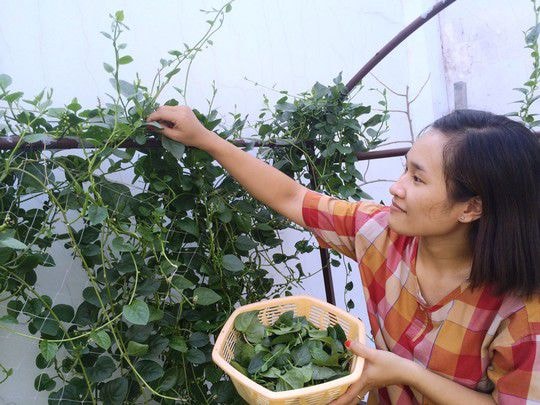 |
| In folk medicine, Malabar spinach is often used as a cooling vegetable and to prevent constipation (Photo: Son Nhung). |
* Treatment for hyperactivity:For cases of premature ejaculation followed by fatigue, weakness, and paleness after intercourse, take a handful of Malabar spinach and a handful of red amaranth, cook them with a pair of testicles (with the fat and membrane intact), and eat while hot. After eating, drink hot ginger tea. Before going to bed, eat one spoonful of roasted black sesame seeds, chew thoroughly, and swallow, then drink a cup of rice wine.
* Increase milk production for postpartum mothers:For women who have low milk production after childbirth, eating Malabar spinach can increase milk supply. Malabar spinach contains vitamins A3 and B3, saponin, mucilage, and iron, making it beneficial for postpartum women. Dishes made from Malabar spinach with stewed black chicken and black beans, eaten hot, will help postpartum women produce more milk, recover quickly, and have rosy skin and shiny black hair.
* Helps skin look fresh and radiant:Malabar spinach leaves also have skin-nourishing effects. Eating Malabar spinach helps improve blood circulation, promotes bowel regularity, and keeps skin smooth and youthful. Crush a few young Malabar spinach leaves to extract the juice, add a few grains of salt, and apply evenly to the face several times before bed to nourish the skin, smooth wrinkles, and prevent dryness.
* Treatment for vaginal discharge and weakness:Take one black chicken, a handful of Malabar spinach leaves, and a handful of black beans, simmer until tender, and eat hot with both the broth and the solids, 1-2 times a week. When you see results, add a handful of soybeans and two handfuls of peanuts. This dish helps women recover after childbirth and makes their skin rosy and their hair black and shiny. It is also good for people with stomach pain and heartburn.
* Treating constipation:Eating Malabar spinach daily is very good for bowel movements. If you suffer from constipation, you can try the following remedy: Take 500g of Malabar spinach, add fish sauce, salt, soy sauce, and vinegar, and cook it into a soup to eat with rice daily. You will see results after a few days.
* Treatment for painful urination:Pick Malabar spinach leaves early in the morning, clean them, put them in a mortar and pestle, crush them, squeeze out the juice, add a little cooled boiled water, add a few grains of salt, and drink it. Use the remaining pulp to apply to the lower abdomen (bladder area); after just a few applications, the ailment will be cured.
* Treating hemorrhoids:For mild hemorrhoids, take a handful of Malabar spinach leaves, wash them thoroughly, crush them with a few grains of salt, and apply the paste to the swollen area. At the same time, cook Malabar spinach soup with crucian carp (eat both the broth and the fish) for a very effective remedy.
* Treating nosebleeds caused by excess heat in the blood:Crush fresh Malabar spinach leaves, then soak a cotton ball in the juice and insert it into the nostril that is bleeding.
* Treating bloating:50g of Malabar spinach, 50g of jute leaves, and 1 taro root (peeled and chopped) can be cooked into a soup and eaten for a few days. Alternatively, use equal amounts of the following four vegetables to make a soup: Malabar spinach, jute leaves, taro leaves, and centella.
Attention:Malabar spinach has a cooling effect, so it should be consumed with caution by people prone to stomach chills and diarrhea. To reduce its cooling properties, it should be thoroughly cooked or combined with other animal-based foods.
In Indonesia, Malabar spinach is commonly used as a remedy for constipation in children and difficult childbirth in women; its juice is used as eye drops to treat eye pain. In some parts of China, crushed Malabar spinach is used as a poultice to treat swollen and cracked breasts and to detoxify the body.
According to Health and Life


