
A truly admirable example of conduct: President Ho Chi Minh and General Nguyen Son
General Nguyen Son (1908 - 1956), born on October 1, 1908, was from Kien Ky village, Gia Lam district, Hanoi. He was a famous and widely admired figure, possessing exceptional qualities: a talented general skilled in both military and literary arts, an excellent fighter, and a lover of literature and poetry.
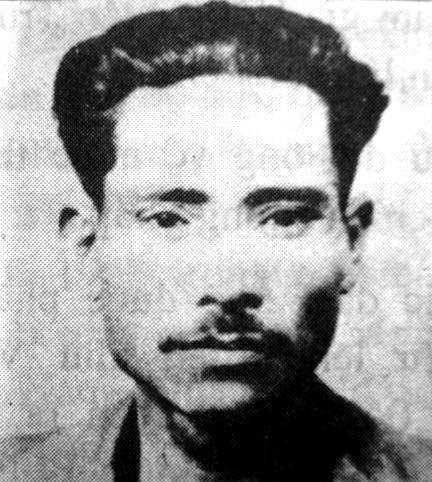 |
General Nguyen Son |
Transliteration of Sino-Vietnamese characters:
Gift to Son De
Great liberties,
Mind desires subtle.
Intellectual training center,
The path to happiness!
Translation:
Dedicated to Nguyen Son
The liver needs to be enlarged.
The mind needs subtlety.
Perfect intellect,
Hạnh must be honest and straightforward!
On January 20, 1948, President Ho Chi Minh signed Decree No. 111/SL promoting several generals to the rank of General: Vo Nguyen Giap - General, Commander-in-Chief of the National Army; Nguyen Binh - Lieutenant General, Commander of the Southern Military Region; Nguyen Son - Major General, Commander of the Military Region IV.
The ceremony for the conferment of titles on generals, according to President Ho Chi Minh's decree, was held solemnly in Viet Bac. Because Nguyen Son was in Military Region IV, the Government delegated the Chairman of the Military Region IV Resistance Administrative Committee to preside over the ceremony, but Nguyen Son hesitated and delayed accepting the title.
Upon hearing this report, President Ho Chi Minh calmly and quietly took a small card he usually used and neatly wrote on it: "To my younger brother Son".
These lines and words are taken from a poem by the renowned physician Confucius Mo during the Sui-Tang dynasty of China, sent to his friend Liu Zhaolin (some sources say it was by Sun Tzu Mo). The original text is as follows: "Courage should be great, but the heart should be small, / Intellect should be complete, and conduct should be upright, / Remembering it carefully is like fighting a battle, / Remembering it in your heart is like crossing a bridge."
Uncle Ho took the first 12 words of the first two lines of the poem and replaced the word "tiểu" (small/small) with "tế" (delicate/subtle), meaning subtle and delicate. Removing "tiểu" means discarding the small, and the recipient will immediately understand that their heart needs to be more subtle, mature, skillful, and delicate. Uncle Ho gave this card to Dr. Pham Ngoc Thach, who traveled all the way from Viet Bac to Military Region IV to deliver the card and preside over the military promotion ceremony for Nguyen Son.
President Ho Chi Minh's approach to General Nguyen Son prioritized the greater good, using compassion to win him over, demonstrating tolerance because he understood Nguyen Son's personality, character, and innermost feelings. This approach was implemented subtly and very specifically:
Firstly, instead of issuing orders, criticisms, and potentially punishing those who fail to enforce the law in his capacity as President and Head of Government (in a feudal monarchy, this general would not have been able to protect his life), he spoke to his younger brother as an older brother, sending him twelve sincere words.
Since they were brothers, they gently advised and encouraged each other to strive towards what was good and moral in life. Nguyen Son was a man with a strong personality, so Uncle Ho used a gentle approach, "a soft rope easily binds." Lao Tzu once said: "What the world considers very soft often overcomes what the world considers very hard" (Thiên hạ chi chi nhu, trù sinh thiên hạ chi phi kiên).
Secondly, Nguyen Son was a cultured person who loved literature, so in the greeting card "To Brother Son," Uncle Ho used words from a famous poet's poem to praise Nguyen Son, affirming his talent and virtue, but also subtly reminding him that what he already had to do well needed to be even better, especially to be more refined and mature, and to self-correct in order to perfect himself.
Thirdly, the decision to send a government envoy to Zone IV to preside over the investiture ceremony showed that Uncle Ho understood the underlying reasons. Not allowing someone of the same rank to preside over the ceremony preserved face while showing favoritism without offending Nguyen Son, thus "forcing" Nguyen Son to accept. The law was not violated. The decree was implemented.
Fourth, in life, dealing with each other requires magnanimity and tolerance. Uncle Ho's behavior towards Nguyen Son implicitly conveyed this when he used the word "tế" (meaning kindness/compassion) instead of "tiểu" (meaning small), and when "tế" is combined with "đại" (meaning great), "đại" signifies magnanimity and tolerance.
According to General Nguyen Son's subordinates, upon receiving the "Gift to Brother Son" card, he suddenly understood everything, was completely convinced, and exclaimed: "This old man is truly formidable!" He immediately instructed the officers in the Inter-regional Command to urgently prepare for the investiture ceremony.
President Ho Chi Minh's conduct yielded the desired results. Such conduct stemmed from his deeply humane moral character, his love, tolerance, and magnanimity. The twelve quoted words are not only a gift to Nguyen Son at a specific, momentary point in time, but also a gift to Nguyen Son throughout the entire flamboyant, free-spirited, and legendary life of this general.
General Nguyen Son, using the 12 words bestowed upon him by President Ho Chi Minh, completed his military career, contributing to the revolutionary causes of both Vietnam and China, thus becoming a general of two nations!
LXD


