
A momentous day in the memory of poet Xuân Diệu
That was September 2nd, 1945.
(Baognehan.vn) -That was September 2nd, 1945.In the memoirUnforgettable yearsGeneral Vo Nguyen Giap wrote that, in essence, after the Declaration was drafted, Uncle Ho brought it out for collective reading and approval, and he admitted that those were the most exhilarating moments of his life.
Because Uncle Ho had previously realized that he could not rely on the charity of capitalists, he could only rely on the struggle, on the strength of his own nation. At this moment, he was reaping the fruits of 80 years of struggle on behalf of the entire nation. That day, General Vo Nguyen Giap recounted: "We clearly saw the radiant joy on Uncle Ho's still gaunt face."

Hanoi, September 2nd, 1945, a momentous day for the entire Vietnamese nation, for every Vietnamese person, whether present or not, at the flagpole garden in Hanoi (Ba Dinh Square). No one could sit still. A long, dark night was now giving way to dawn. Everyone stood in their respective ranks, flags and slogans surging towards the gathering place. People still remembered slogans never seen before: "Vietnam belongs to the Vietnamese," "Independence or death," "Down with French colonialism," "Support the Provisional Government," "Support President Ho Chi Minh," "Hail the Allied Delegation"... At exactly 2 PM on September 2nd, the delegates could be seen disembarking from their vehicles and ascending the platform. Up there, within a few dozen square meters, dozens of people stood, including President Ho Chi Minh – who had just been elected President of the Provisional Revolutionary Government of the new Vietnam.
At exactly 2 PM, on a high and solemn platform, before hundreds of thousands of people in Hanoi, President Ho Chi Minh solemnly read the Declaration of Independence, giving birth to the Democratic Republic of Vietnam. His words that day were calm, warm, concise, and resonant. It was not difficult to find in them profound emotions, unwavering will, wisdom, and vibrant energy in every word and phrase, naturally touching the hearts of the people...
Among the crowds that flocked to Ba Dinh Square that day was the poet Xuan Dieu (1916-1985). His recollections of "Independence Day, September 2nd, 1945"Anthology of Xuan Dieu(1987), he vividly remembers the first time he saw President Ho Chi Minh from afar. The President wore a yellowed white hat, rubber sandals, and carried a cane with a curved end like an umbrella handle. His yellow khaki suit was very striking. When he began to read the Declaration of Independence, he heard a unique voice, as if it still carried a mix of accents from around the world, a voice still tinged with the sounds of the mountainous war zones... Even more surprisingly, the President stood on a high platform, his white umbrella shielding him from the sun, before the loudspeaker, and asked an unexpected question: "Can you hear me clearly, my fellow countrymen?"
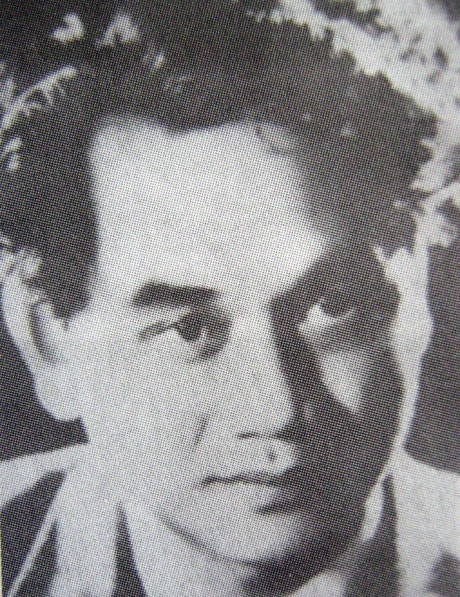
Poet Xuan Dieu
The poet Xuan Dieu wrote emotionally: “At this point, all the awkwardness between the President and the nation vanished like smoke, and an invisible electric current began to flow between the President and the nation... With a sudden, unexpected question, President Ho Chi Minh transcended all rules, all ceremonies, all representatives, all the government. President Ho Chi Minh had become Uncle Ho of the Vietnamese nation.”
In response to the President's question, "Can you hear me clearly, my fellow countrymen?", a million voices responded, "Yes!" And that is my most cherished and profound memory, as well as that of all my fellow countrymen after attending the Independence Day ceremony..." Indeed, it is not easy to write such sincere, emotionally resonant, subtle yet logically sound and eloquent memoirs!
In 1945, the poet Xuan Dieu was 28 years old, full of youthful energy and vitality. Before joining the Revolution, Xuan Dieu was already a representative poet of the New Poetry movement (1932-1945). His poetry at that time captivated many young readers. And it was thanks to that passionate flame of love within him, along with his ability to understand the times and the path of a great intellect and personality, that when he joined the Revolution and President Ho Chi Minh, Xuan Dieu blended his passion for poetry with the great passion of the national revolutionary struggle. It should be remembered that in 1944, the poet participated in the Viet Minh movement. In 1945, he participated in the seizure of power in Hanoi. After the August Revolution, as a representative in the first National Assembly (1946-1960), the poet Xuan Dieu was active in the National Salvation Cultural Association, the Tien Phong Magazine, the Voice of Vietnam Radio, the Vietnam Arts and Literature Association, the Vietnam Writers Association, etc. His creative capacity was so abundant that, in 1945 alone, sharing in the joy of the country's transformation, Xuan Dieu published five books, two of which remain famous to this day:Sending fragrance on the wind(Poetry collection) andNational flag(Epic poem collection).
Recalling and reflecting on September 2nd, 1945, the poet Xuan Dieu seemed to want to contribute to affirming a truth: revolution is indeed a festival of the masses, and in Vietnam, amidst that festival, the person most deserving of honor was President Ho Chi Minh. President Ho's question at Ba Dinh Square that year, "Can you hear me clearly, compatriots?" and the resounding "Yes" from millions of people, truly captivated the poet. Perhaps the French journalist Charles Fournier "met" the poet Xuan Dieu when he made a very noteworthy observation after being received and interviewed by President Ho on March 15th, 1969: "He didn't try to teach me any moral or political lessons. He only recounted old stories from the past. However, the more I listened, the more I realized that he was both speaking about a major issue of the state and teaching me the most profound moral and political lesson!"
Nguyen Van Hung



;)