
Some remedies using Centella asiatica and things to keep in mind when using it.
In addition to the health and beauty benefits of centella asiatica, please refer to the information below to learn about precautions when using it.
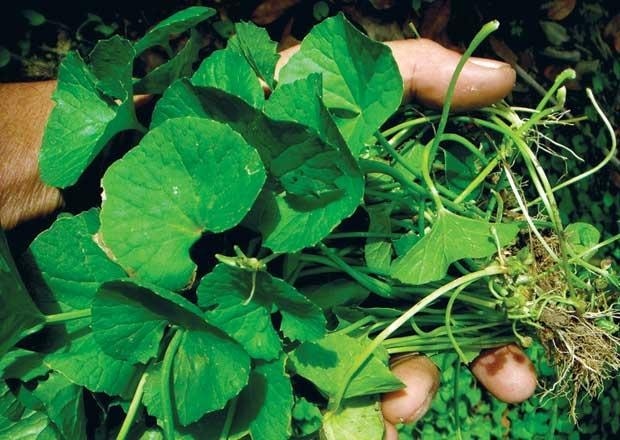
Centella asiatica is an edible wild vegetable that commonly grows in damp places such as valleys and ditches in tropical regions.
Leaves have long petioles growing from the base or from the nodes. The leaves are slightly rounded, with scalloped edges. The leaf blade has a reticulate venation pattern resembling a duck's foot. Flowers grow in the leaf axils. The petals are red or purple.
Some medicinal remedies using Centella asiatica
Centella asiatica (Gotu Kola) is effective in treating several common ailments and is also a safe and natural beauty secret for women. Below are some common remedies using Centella asiatica:
1. Treating boils:
50g of Centella asiatica (Gotu Kola) leaves, 50g of Gac fruit leaves. Instructions: Wash both thoroughly, crush them finely, add a little salt and mix well. Apply to the affected area and bandage. Change the dressing twice a day. Continue applying until healed.
2. Treating jaundice (yellowing of the skin and eyes):
50g of centella asiatica (Gotu Kola) and 50g of mugwort leaves. Wash both thoroughly and boil them in water to drink daily.
3. Treating dysentery:
Recipe 1 (150g Centella asiatica, 10g salt).
Wash the pennywort thoroughly, drain the water, put it in a clean mortar, add salt, and grind it finely. Then add a bowl of boiling water, stir well, let it settle, and strain the clear liquid to drink.
Adults should take the medicine all at once, while children should take a reduced dose depending on their age. When taking the medicine, eat porridge and avoid foods that are difficult to digest, fatty foods, and foods that are fishy, spicy, or hot.
Recipe 2: Centella asiatica, Artemisia vulgaris root, Cynodon dactylon root, and Prunus mume root, in equal amounts (about 100g each), roasted until golden brown, then buried in the ground. Brew and drink twice daily until cured.
4. Treating nosebleeds:
Crush centella leaves, squeeze out the juice, and drink it 2-3 times a day for 5 consecutive days.
5. Treating mild dengue fever at home:
30g of Centella asiatica, 30g of Polygonum multiflorum, 20g of Plantago major leaves and flowers (or Imperata cylindrica leaves, Imperata cylindrica roots).
Wash the herbs thoroughly, crush them, add boiling water, squeeze out the juice and drink it, or boil them to make a decoction for drinking.
 |
Side effects of Centella asiatica
According to Dr. Nguyen Hong Siem, President of the Hanoi Traditional Medicine Association, as shared on Women Today, there is no research stating that consuming too much centella asiatica, or at what quantity, can cause illness. However, as a general rule, consuming anything in excess is not good, including everyday food.
Excessive and prolonged consumption of Centella asiatica can cause complications for certain blood cells, liver cells, and kidney cells.
A normal person can consume one cup of pennywort juice per day, equivalent to about 40 grams of pennywort, but it should not be consumed for more than a month.
Research results also show that drinking too much centella asiatica juice or herbal tea can cause headaches, even temporary loss of consciousness; women who drink centella asiatica tea for a long time may experience reduced fertility...
In addition, because centella asiatica has a cooling effect, those with bloating or diarrhea should be cautious when consuming it. It's advisable to eat it with a few slices of ginger to warm the stomach and neutralize the cooling properties of the herb.
In some cases, centella asiatica can increase cholesterol and blood sugar levels, so people with high cholesterol and diabetes should avoid excessive consumption of centella asiatica.
This herb can also lead to miscarriage if used during pregnancy. Therefore, children, pregnant women, and breastfeeding mothers should also avoid using this vegetable.
Centella asiatica may interact with sedatives and anticonvulsants, barbiturates, benzodiazepines, sleep medications, and antidepressants. It may also reduce the effectiveness of insulin and other oral diabetes medications, as well as cholesterol-lowering drugs.
Centella asiatica may also have a sedative effect when taken with cold and cough medicines, or when consumed with alcohol.
According to Alobacsi.vn


