
Some medicinal dishes made from amaranth.
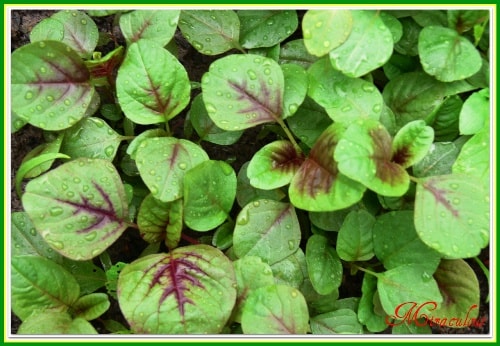
Amaranth (Amaranthus viridis L.) belongs to the Amaranthaceae family. It is a small herbaceous plant, growing up to 80cm tall, erect or prostrate, usually with a large, curved branch at the base; the stem is up to 5mm thick, hairless, and thornless. The leaf blade is oblong-ovate, sometimes oval-shaped, 3-6cm long and 1.5-3cm wide, with a blunt or sometimes notched tip, hairless; the petiole is up to 10cm long.
The flowers are terminal or axillary; each flower has 3 sepals, 3 stamens, and 2-3 stigmas. The fruit is a wrinkled achene containing a single dark brown, glossy seed, 1 mm in size. The plant grows in wasteland, along roadsides, and is also cultivated for its leaves, which are used as a vegetable. It can be harvested year-round, washed, cut into sections, and dried for later use. Amaranth is rich in medicinal properties and is used as medicine. The medicinal parts are the roots and the whole plant (Radix et Herba Amaranthi Viridis).
 |
According to Traditional Chinese Medicine, amaranth has a mildly sweet taste, a cool and slightly cold nature, and the effects of clearing heat, promoting diuresis, cooling the blood, and stopping bleeding. It is commonly used to treat fever, constipation, bacillary dysentery, acute and chronic gastroenteritis, sore throat, conjunctivitis, and nosebleeds. The daily dose is 40-80g, decocted and drunk. For external use, crush the fresh roots, extract the juice for drinking, and apply the pulp as a poultice. In India, the leaves are used to treat scorpion stings, and the whole plant is used to treat snake bites. Amaranth seeds have a sweet taste, a cold nature, and the effects of cooling the liver, treating wind-heat, and improving poor eyesight.
Here are some ways to treat illnesses using amaranth.
To treat headaches, dizziness, and high blood pressure caused by excess liver heat: take 100g of amaranth leaves, 50g of jute leaves, and 50g of freshwater crab meat, season with spices, and cook into a soup.
To treat poor eyesight and fever: take 12g of amaranth seeds, 12g of cassia seeds, and 12g of cockscomb flowers, decoct and drink for several days.
Treatment for eye pain: Use equal amounts of amaranth seeds and cassia seeds (10g each). Boil in water and drink the decoction. This treats eye pain with pterygium (a type of eye infection).
To cool the liver, clear heat, and stimulate digestion: cook 100g of amaranth, 50g of jute leaves, and 50g of Malabar spinach in a shrimp or crab soup.
Treating dysentery in its early stages: Boil amaranth leaves in water and drink four times a day; on the second day, use half the dose, also four times a day.
To treat constipation caused by heat: cook 100g of amaranth leaves and 30g of peeled fresh shrimp or dried shrimp in a soup, add seasonings and eat regularly.
According to suckhoevadoisong


