
Some thoughts on the Party's personnel work in the new situation.
In recent times, the Party's personnel work has undergone many innovations, achieving very important results in all aspects, meeting the requirements and tasks of the revolution in the new situation. However, personnel work still reveals certain limitations, and solutions to overcome them have been slow. In the coming time, to build and rectify a clean and strong Party and political system, it is necessary to continue to focus on researching and summarizing experiences, and promoting the role and responsibility of Party committees, collective leaders, and the people.
Ho Chi Minh's thoughts on the Party's personnel work.
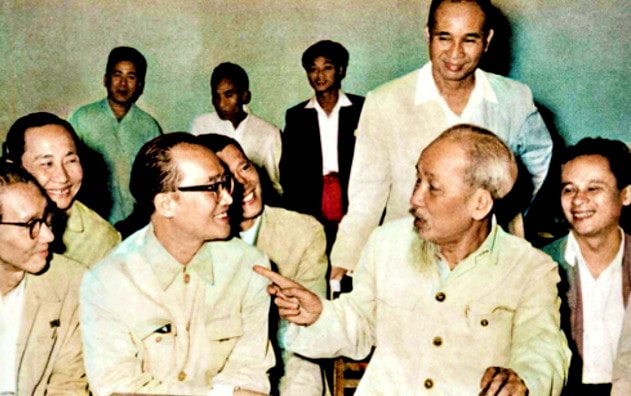
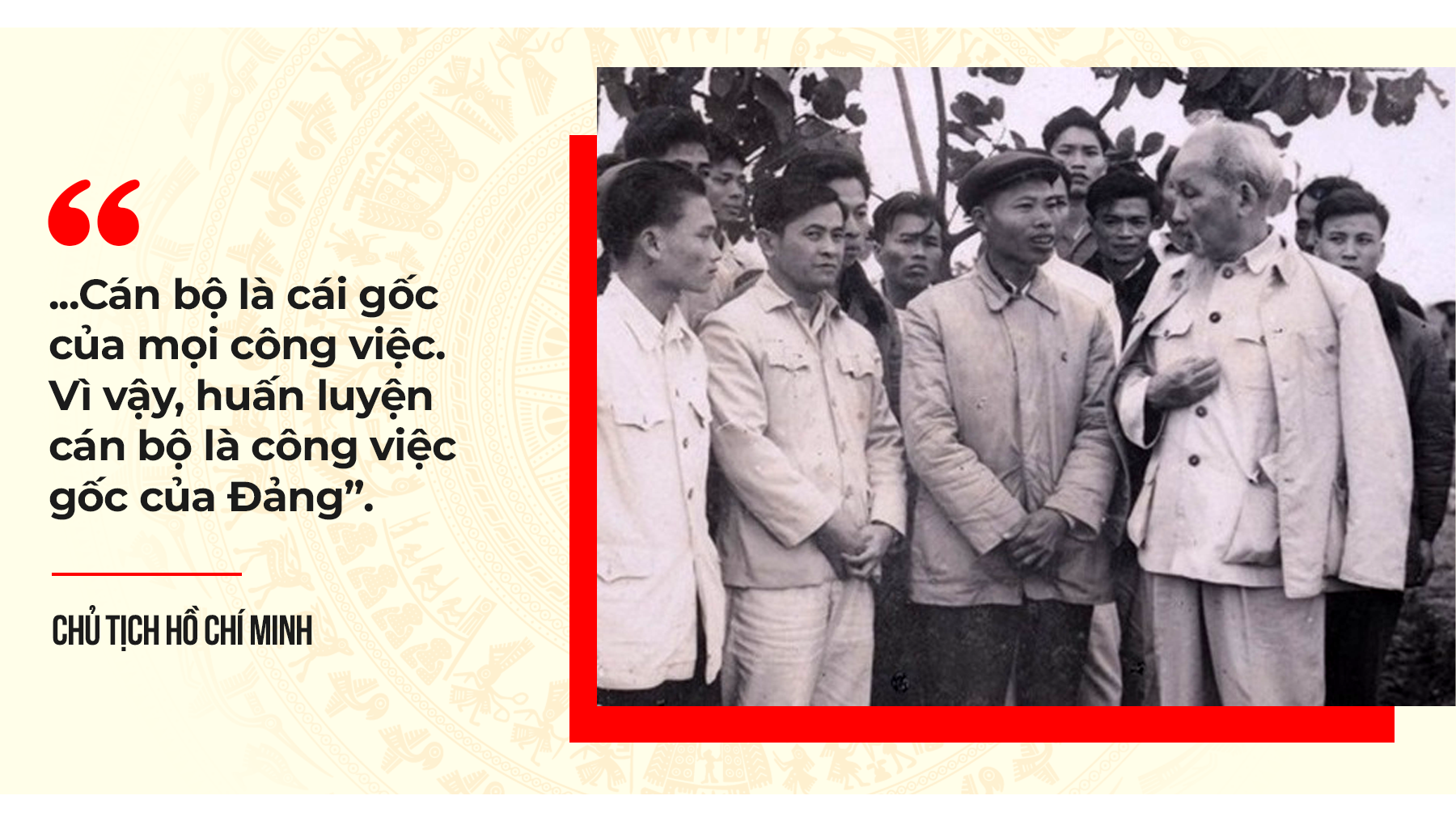
Our Party and our beloved President Ho Chi Minh paid special attention to personnel work. He said: "Cadres are the foundation of all work."(1)"The success or failure of any undertaking depends on whether the staff are good or bad."(2)Resolution No. 26-NQ/TW, dated May 19, 2018, of the 12th Central Committee, "On focusing on building a contingent of cadres at all levels, especially at the strategic level, with sufficient qualities, capabilities, and prestige, commensurate with the tasks," clearly defines the viewpoint: Cadres are the decisive factor in the success or failure of the revolution; cadre work is the "key" link in the work of building the Party and the political system. Building a contingent of cadres, especially at the strategic level, is a top priority, a crucial task of the Party, and must be carried out regularly, cautiously, scientifically, rigorously, and effectively. The documents of the 13th Party Congress further affirm: "Focus on building a contingent of cadres at all levels, especially at the strategic level and leaders."(3).
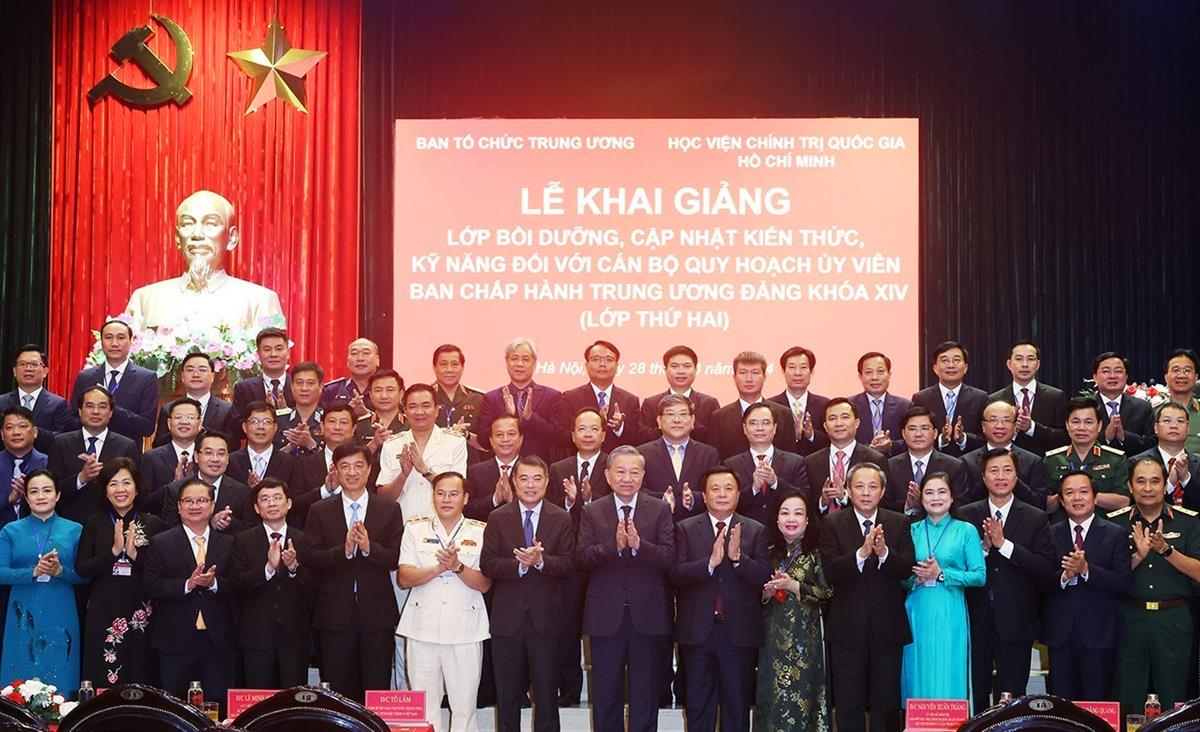
Recently, our Party and State have issued many very important documents on personnel work.(4)Accordingly, the thorough understanding and implementation of resolutions and regulations of the Central Committee, the Politburo, and the Secretariat have been ensured to be serious and unified, so the Party's personnel work has been carried out in an orderly manner from the central to the local level.
The Party's cadre is becoming increasingly mature, with many cadres making important contributions to the leadership, guidance, and implementation of political tasks at all levels, sectors, agencies, and units. The Central Committee, the Politburo, and the Secretariat, headed by the General Secretary, have resolutely directed the implementation of the goals and targets of the Party's congresses in each term. The investigative, prosecutorial, judicial, inspection, and auditing agencies have demonstrated expertise and professionalism, making significant contributions to evaluating the quality and capabilities of the cadre, through the fight against corruption, waste, and negative phenomena, thus contributing to strengthening the people's trust in the Party and the State.
However, in reality, there is still a segment of officials with limited qualities and capabilities who, wanting to advance to higher positions, resort to bribing their way to obtain degrees, manipulate planning, and secure promotions and appointments in violation of Party and State regulations.
Some officials holding positions of power and authority seek to introduce, promote, and appoint relatives, family members, or those with connections to positions that do not meet the required standards.
Some officials, after being promoted and appointed, quickly deteriorated in character, ethics, and lifestyle, engaging in embezzlement, corruption, and wastefulness, causing losses of state budget and assets, and had to receive strict disciplinary measures from the Party and the State; among them, a small number of high-ranking officials have eroded the people's trust in the Party, the State, and the regime.
.jpg)
The aforementioned limitations and negative aspects of personnel management have several causes, including the following:
The first,Some Party committees, agencies, and departments have not focused on seriously studying and thoroughly understanding the content of the Party's resolutions and regulations, and the State's policies and laws on personnel work, thus failing to change the awareness of each cadre, Party member, civil servant, and citizen to understand and implement them.
Monday,Some Party committees, especially the heads of departments, agencies, localities, and units, have not fulfilled their responsibilities well in personnel work, particularly in not respecting the principle of democratic centralism. In some cases, there are even manifestations of authoritarianism and arbitrariness in controlling the planning, rotation, promotion, and appointment of cadres.
Tuesday,Accurately evaluating cadres is a very difficult task, but apart from general standards for cadres, there are no clear regulations on standards or evaluation criteria for each leadership and management position, especially for heads of Party committees and governments at all levels and in all sectors.
Wednesday,The people are very interested in building a team of Party cadres within the political system, but currently there is no truly effective mechanism for the people to participate in, introduce, and nominate truly virtuous and talented individuals to the Party and the State, nor is there a regular mechanism to assess the people's satisfaction and trust in the heads of Party committees and governments at all levels.
Thursday,Although Party documents have clearly stipulated the inspection, supervision, and control of power in personnel work and the fight against bribery for positions and power, while many functional agencies have implemented them well, in some places they are still not implemented well, resulting in low effectiveness and efficiency.
Friday,Personnel work is extremely important and is carried out through specific individuals, but the Party and State documents lack comprehensive and strict regulations on the authority and responsibility of organizations and individuals in advising, recommending, nominating, and appointing personnel, especially in cases where personnel who do not truly possess virtue and talent are still promoted or appointed, harming the prestige and reputation of the Party and the State.
Several issues need to be studied and lessons learned to further improve personnel work in the new situation.
The Resolution of the 13th National Congress of the Party affirmed: “Strengthening Party building and rectification, promoting the working-class nature of the Party, enhancing the Party's leadership capacity, governing capacity, and fighting strength; building a clean, strong, and comprehensive Party and political system; building a streamlined, effective, and efficient State; linked with downsizing the workforce, improving the quality and restructuring the contingent of cadres, civil servants, and public employees; building a contingent of cadres and Party members, especially strategic-level cadres and leaders, with sufficient qualities, capabilities, and prestige, commensurate with their tasks, and closely connected with the people, are decisive factors for the success of the cause of national construction and development and the protection of the Fatherland.”(5)This needs to be implemented extensively throughout the Party and the political system.
To implement the above viewpoint, a number of synchronized solutions are needed. Regarding personnel management, it is necessary to study and draw lessons from the following issues:
Firstly, we must continue to promote the people's role as masters of their own destiny, relying on the people to build a contingent of cadres at all levels, especially strategic-level cadres and leaders of Party committees, governments at all levels, and in all sectors.
Consistently implementing the Party's viewpoint that "the people are the foundation," affirming the role and central position of the people in the national development strategy, in the entire process of building and defending the Fatherland, and the motto "The people know, the people discuss, the people do, the people inspect, the people supervise, and the people benefit," Party committees must promote the people's right to self-governance and rely on the people to build a team of cadres.
To create favorable conditions for the people to actively and effectively participate in personnel work, specific mechanisms and documents are needed to introduce and recommend truly virtuous and talented individuals to the Party; to inspect and supervise cadres regarding "things that Party members are not allowed to do," and regarding the responsibility of setting an example, especially for strategic-level cadres and heads of Party committees and governments at all levels and in all sectors. The Party and the State need mechanisms to protect citizens in reporting and denouncing cadres who violate regulations on personnel work; at the same time, strictly punish those who abuse democracy to incite division within the national unity and make false accusations.
Secondly, we must continue to innovate and streamline the Party's organizational structure and the political system to ensure efficient and effective operation, coupled with downsizing the workforce and improving salary policies, so that cadres can better fulfill their assigned political responsibilities and tasks.
The documents of the 13th National Congress of the Party state: "Continue to improve the organizational model of the political system; more clearly define the functions, tasks and operating mechanisms of organizations within the political system..."(6)"Strengthening the implementation of personnel reduction associated with restructuring the workforce of officials, civil servants, and public employees according to positions and jobs."(7)In this new era, the rapid development of science and technology, especially information technology, allows the Party and the State to streamline the organization and intermediate apparatus at the provincial and district levels, as well as the general departments, departments, bureaus, and institutes in ministries and sectors.
For the Vietnam Fatherland Front system and socio-political organizations, it is necessary to strengthen the team of researchers and those summarizing practical experiences at the central level to both advise the Party and serve as the core force in effectively mobilizing and gathering organizations and members nationwide; at the same time, build a strong team of cadres at the grassroots level to directly propagate, act as the core force in mobilizing, gathering, and uniting members to implement the Party's guidelines and policies, the State's laws and regulations, and political tasks at the grassroots level.
For agencies advising Party committees, it is necessary to strengthen the staff with the capacity to conduct theoretical research and summarize practical experiences in order to provide effective advice to Party committees; at the same time, streamline administrative and support staff. Based on that, the salary policy should be improved soon to ensure that cadres, civil servants, and public employees can work with peace of mind.

Third, continue to do a good job of evaluating cadres.
Evaluating cadres has always been a difficult task. Some cadres are intelligent, dynamic, and daring to think and act for the common good, but in places where internal unity is lacking, especially when the leader lacks true virtue and talent, it is very difficult for them to develop their abilities. Conversely, some cadres work in excellent environments, but if they do not consciously strive and improve themselves, it is difficult for them to grow. In reality, measuring people's hearts is the hardest thing; some people speak well but do not act well, say one thing and do another, or say one thing and do another... Nguyen Trai - a wise man of the Le Dynasty - had to exclaim:The shallow and deep waters are known to the fish / The high and low mountains are known to the clouds / The weak trees are known to the wind / Oh, how difficult it is to fathom the human heart!
The documents of the 13th National Congress of the Party clearly state: "Taking the results of work, the satisfaction and trust of the people as important criteria to evaluate the quality of the organizational structure and the quality of cadres and Party members."(8)"Prioritize evaluating the quality, effectiveness, and actual products based on assigned responsibilities and tasks, and emphasize the accountability of the head of the organization."(9).
The Politburo has issued a document on cadre evaluation, but it is necessary to specify criteria for some important positions in order to contribute to enhancing the accountability of those cadres to the people and the country. Because the number and structure of cadres in the political system are very large, it is proposed that priority be given to establishing evaluation criteria for the following positions: Ministers, heads of ministerial-level agencies, secretaries and chairpersons of people's committees at the provincial, city, district, commune, and ward levels.
These positions involve daily work directly or indirectly with the legitimate rights and interests of the people, and therefore are closely monitored and evaluated by the public. Along with regulations and evaluation criteria, both the rights and responsibilities of the heads of sectors, Party committees, and governments must be defined to ensure they fulfill their roles effectively. Annually, regulations should be established to measure the satisfaction and trust of officials, civil servants, and employees in the sector and the people nationwide regarding ministers, as well as the satisfaction and trust of various segments of the population in each locality regarding the heads of each level. After the evaluation by the higher-level Party committee, the results should be widely publicized through mass media so that the people are informed. This is a very important measure that contributes to improving the nationwide movement. At the same time, it requires leaders to select and recommend their subordinates more genuinely, preventing the situation where officials seek positions and power through illicit means, or who are incompetent, enter the state apparatus.
The criteria for evaluating a minister must be based on the results and effectiveness of directing and managing the state administration functions and tasks of the sector, on the satisfaction and trust index of officials, civil servants, and employees in the sector, and on the satisfaction index of the people nationwide.
Evaluating a leader of a local Party committee or government primarily depends on whether the material and spiritual lives of the local people have improved compared to before, the results achieved in socio-economic, national defense, and security targets annually and throughout the term, and the level of public satisfaction and trust. Relying solely on year-end or end-of-term performance reviews conducted by the Party committee is unlikely to guarantee genuine results, as some reviews are conducted seriously while others are merely ceremonial.
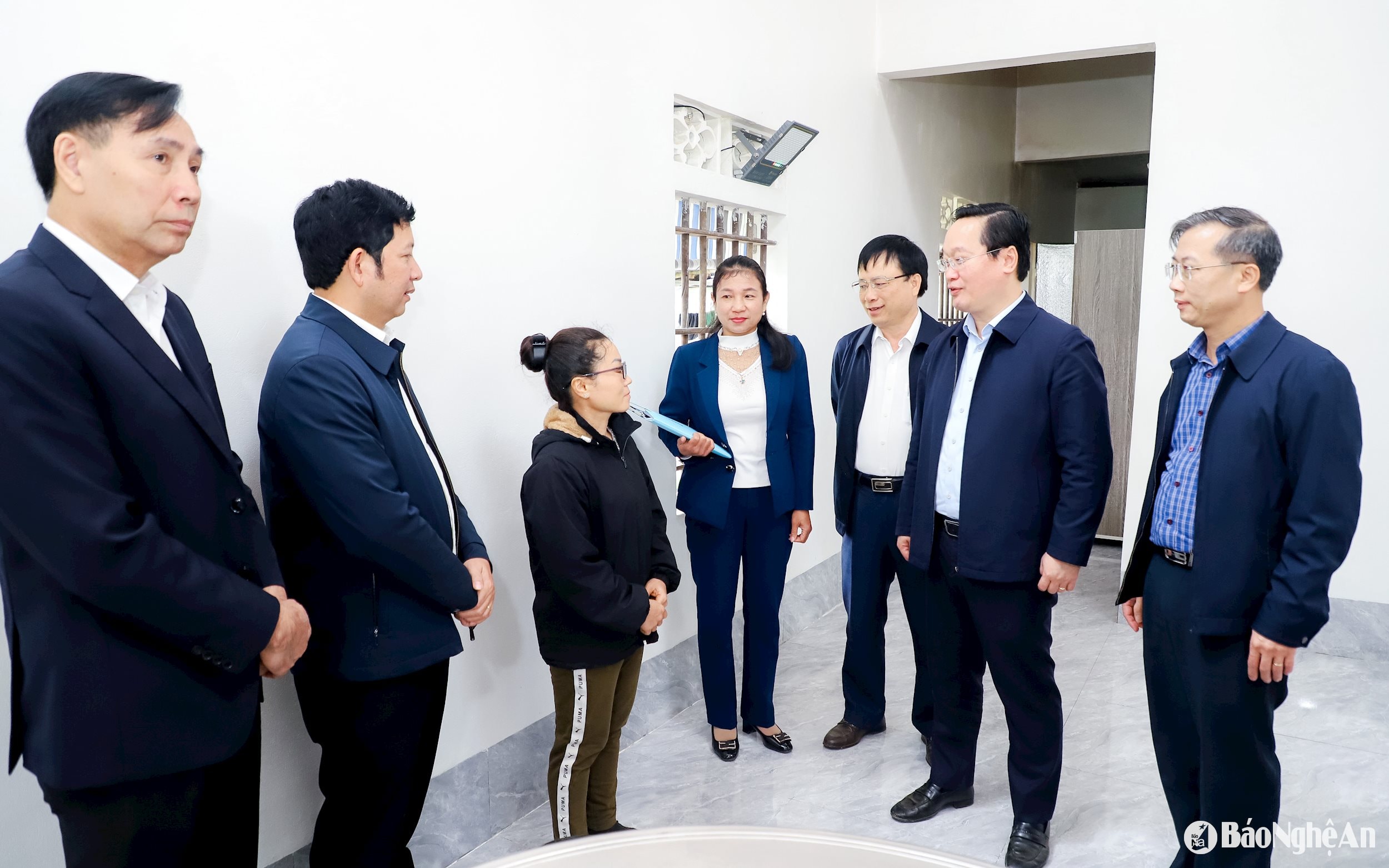
Objectively evaluating the "commanders of sectors" and heads of local Party committees and governments is the basis for creating a pool of cadres for strategic-level positions... Before appointing cadres to important positions in the country, it is necessary to assess the results and effectiveness of their practical work throughout their careers. Only in this way can we minimize the number of cases where individuals lack the necessary virtue and talent to be leaders of the Party and the State.
Fourth, effectively carry out the planning and promotion/appointment of cadres who are truly virtuous and talented.
The current personnel planning, directed by the Politburo and the Secretariat, follows regulations that are both quite strict and proactive in creating a pool of cadres for Party committees before promotion, appointment, and preparation of personnel for Party congresses at all levels for the new term. However, the current planning methods still somewhat overlook a segment of the country's talent, as they have not yet fully utilized the people's role as masters in building the cadre team.
In our opinion, before developing a personnel plan, Party committees should widely disseminate the purpose, requirements, and standards for cadres to the people and establish mechanisms to encourage the people to participate in nominating and recommending truly virtuous and talented individuals to the Party committee. Based on the compiled results of the people's nominations and recommendations, the relevant personnel organization agencies should study, consider, and advise the Party committee on selection and decision-making. To achieve a more effective strategic-level cadre, we propose that personnel planning should create a pool of cadres early and from afar.
For example, when creating a pool of ministers, especially in specialized sectors like education and health, each term the Central Committee should select young individuals with outstanding abilities, good character, and flexible social skills to be assigned to grassroots management positions. Relevant departments should monitor and evaluate these individuals through their practical leadership and management activities at the district and provincial levels to select one or a few of the most promising and qualified individuals to serve as deputy ministers for a period before becoming ministers. With this approach, it is certain that after two terms, we will have strong and capable "sector leaders" at a young age.
Regarding the promotion and appointment of cadres, the Central Committee has established strict regulations, but it is necessary to continue to emphasize the responsibility of the cadre advisory body. The placement of cadres should continue to follow the guidance of our beloved President Ho Chi Minh: "Only by knowing the cadres clearly can we promote them appropriately."(10)"When considering appointing an official, it is necessary to carefully examine whether that person is close to the masses, whether they are trusted and admired by the masses. It is also necessary to consider what kind of work that person is suited to. If a talented person is not used in a way that suits their abilities, the work will not be accomplished."(11).
Practical experience has clearly demonstrated that one of the qualities of a leader or manager is "the ability to utilize talented people." President Ho Chi Minh gave profound guidance to leaders and managers: "If you have the power to employ people, you must employ those who are talented and capable. Do not appoint people to positions simply because they are relatives or friends. Do not suppress those who are more talented than yourself for fear of losing your position."(12).
To continue implementing the planning and promotion of cadres in accordance with Ho Chi Minh's ideology and the Central Committee's regulations, the relevant agencies responsible for personnel organization need to conduct objective and effective surveys and assessments of cadre placement in cases such as appointing heads of departments who have not received specialized training; appointing cadres without practical experience in Party building work but who are elected to Party committees and then designated as Party secretaries; appointing cadres who have never worked in state management but are nominated to be elected as chairmen of people's committees; or appointing some general directors and enterprise directors to Party secretaries in Party committees with a large number of Party members after being elected to Party committees...
If the survey and evaluation are objective and rigorous, the actual results and effectiveness of leadership, guidance, and management by leading and managing officials will certainly yield many valuable lessons for the Party's personnel work. In reality, some officials, thanks to the experience gained from learning from the people, comrades, and colleagues, have still matured quickly and successfully completed their assigned tasks.
Fifth, further strengthen the control of power in personnel management.
To ensure effective control of power in personnel work, Party committees must lead all levels and sectors in thoroughly understanding and strictly implementing the Politburo's regulations during the implementation process.(13)Based on that, Party committees at all levels need to develop annual monitoring programs and plans regarding the recruitment, acceptance, planning, training, rotation, promotion, appointment, commendation, and disciplinary actions of cadres, especially those under the management of the Politburo, the Secretariat, and Party committees.
In the current situation, it is essential to promote the role of the people in supervising organizations within the political system regarding personnel work. Party committees at all levels should designate a specific agency and address where each citizen can promptly report and provide information about violations in personnel work to that agency and address. Based on the information received and compiled, reports should be submitted to the competent authority for resolution and handling (if any).
Thanks to public feedback, some Party committees have accepted and withdrawn decisions to appoint and promote some officials who did not meet the standards or followed the correct procedures, which has been met with public approval and support. To contribute to more effective control of power in personnel work, it is necessary to study regulations on the responsibility of organizations and individuals when directly recommending to Party committees for promotion and appointment those who do not truly possess virtue and talent, violate the law, and must receive disciplinary action from the Party and the State.
The promotion and appointment of officials who are family members, relatives, friends, colleagues, or close associates occurs in some places, but the harm is significant, eroding public trust in the local Party committees and authorities; at the same time, it directly impacts the morale and enthusiasm of officials in agencies and units. Therefore, wherever Party committees, functional agencies, and the people effectively supervise and control power in personnel work, that contributes to political stability, internal unity, and a stronger and more enduring relationship between the Party and the people.
(1) Ho Chi Minh: Complete Works, National Political Publishing House, Hanoi, 2011, vol. 5, p. 309
(2) Ho Chi Minh: Complete Works, op. cit., vol. 5, p. 313
(3) Documents of the 13th National Congress of Delegates, National Political Publishing House, Hanoi, 2021, Vol. II, p. 242
(4) Regarding resolutions: The Politburo issued Resolution No. 42-NQ/TW, dated November 30, 2004, "On the work of planning leadership and management cadres during the period of accelerating industrialization and modernization of the country"; Resolution No. 04-NQ/TW, dated October 30, 2016, Fourth Conference of the Central Committee of the XII Party Congress, "On strengthening Party building and rectification; preventing and repelling the decline in political ideology, morality, lifestyle, and manifestations of 'self-evolution' and 'self-transformation' within the Party"; Resolution No. 26-NQ/TW, dated May 19, 2018, Seventh Conference of the Central Committee of the XII Party Congress, "On focusing on building a team of cadres at all levels, especially at the strategic level, with sufficient qualities, capabilities and prestige, commensurate with the tasks".
Regarding regulations: The Politburo issued Regulation No. 211-QĐ/TW, dated November 8, 2013, "On supervising Party members who are officials under the management of the Politburo and the Secretariat," in which Article 7 includes the supervision of compliance with and implementation of Party and State regulations on organizational and personnel work, and things that Party members, officials, and civil servants are not allowed to do; Regulation No. 262-QĐ/TW, dated October 8, 2014, of the Politburo, "On conducting confidence votes for leading members of Party committees and leading officials in Party and State agencies, the Fatherland Front, and political and social organizations"; Regulation No. 86-QĐ/TW, dated June 1, 2017, of the Politburo, on "Supervision within the Party"; Politburo Regulation No. 98-QD/TW, dated October 7, 2017, "On Cadre Rotation"; Politburo Regulation No. 132-QD/TW, dated March 8, 2018, "On Reviewing and Evaluating the Annual Quality of Collectives and Individuals in the Political System"; Politburo Regulation No. 07-QD/TW, dated August 28, 2018, on "Disciplinary Action Against Violating Party Organizations," in which Article 2 stipulates violations in organizational work, personnel work, and party member work; Secretariat Decision No. 99-QD/TW, dated October 3, 2017, "Issuing a Framework Guideline for Party Committees and Organizations Directed by the Central Committee to Continue to Promote the Role of the People in the Struggle to Prevent and Repel Degeneration, 'Self-Evolution,' and 'Self-Transformation' within the Party"; Regulation No. 08-QĐi/TW, dated October 25, 2018, of the Central Committee, on “The responsibility of setting an example for cadres and Party members, first and foremost the members of the Politburo, members of the Secretariat, and members of the Central Committee”; Regulation No. 179-QĐ/TW, dated February 25, 2019, of the Politburo, “On the system of inspection and supervision of cadre work”; Regulation No. 205-QĐ/TW, dated September 23, 2019, of the Politburo, “On controlling power in cadre work and combating bribery for positions and power”; Regulation No. 214-QĐ/TW, dated January 2, 2020, of the Politburo, on “Framework of standards for positions and criteria for evaluating cadres under the management of the Central Committee, Politburo, and Secretariat”; Politburo Regulation No. 41-QD/TW, dated November 3, 2021, "On the dismissal and resignation of cadres"; Politburo Regulation No. 50-QD/TW, dated December 27, 2021, "On cadre planning"; Central Committee Regulation No. 22-QD/TW, dated July 28, 2021, "On the Party's inspection, supervision, and disciplinary enforcement"; Politburo Regulation No. 80-QD/TW, dated August 18, 2022, "On the decentralization of cadre management and the appointment and nomination of candidates"; Politburo Regulation No. 124-QD/TW, dated October 4, 2023, "On the annual review, evaluation, and ranking of the quality of collectives and individuals in the political system".
(5) Documents of the 13th National Congress of Delegates, op. cit., vol. II, p. 325
(6) Documents of the 13th National Congress of Delegates, op. cit., vol. II, p. 239
(7) Documents of the 13th National Congress of Delegates, op. cit., vol. II, p. 240
(8) Documents of the 13th National Congress of Delegates, op. cit., vol. I, p. 192
(9) Documents of the 13th National Congress of Delegates, op. cit., vol. II, p. 242
(10) Ho Chi Minh: Complete Works, op. cit., vol. 5, p. 321
(11) Ho Chi Minh: Complete Works, op. cit., vol. 5, p. 314
(12) Ho Chi Minh: Complete Works, op. cit., vol. 5, p. 123
(13) Such as: Regulation No. 205-QĐ/TW, dated September 23, 2019, of the Politburo, "On controlling power in personnel work and combating bribery for positions and power"; Regulation No. 86-QĐ/TW, dated June 1, 2017, of the Politburo, on "Supervision within the Party"; Regulation No. 211-QĐ/TW, dated November 8, 2013, of the Politburo, "On supervising Party members who are cadres under the management of the Politburo and the Secretariat".


