(Baonghean.vn) - The mangrove trees sprout in February and March, turning a vibrant green in the summer. In late autumn, the mangrove fruits begin to ripen before the leaves fall, ushering in the harsh winter. During these days, the children of the coastal villages eagerly seek out the mangrove forests to pick the ripe fruits, savoring the refreshing, sweet taste of this mangrove tree at the end of the Lam River.
 |
| The mangrove forest in Hung Hoa commune (Vinh City) is a rich forest with a diverse ecosystem of flora and fauna. The forest covers an area of over 70 hectares, stretching 4km in length, bordered by the Lam River on the outside and dike 42 on the inside, located about 5km northeast of Vinh City center. Currently, the mangrove trees are in their fruiting season. |
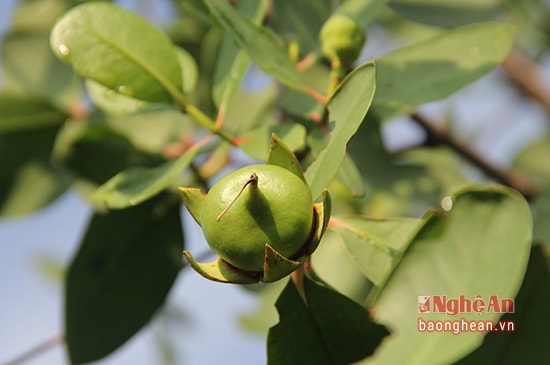 |
| The mangrove tree grows at river mouths, its fruit is small and slightly flattened. Local people still commonly call it "lậu fruit". |
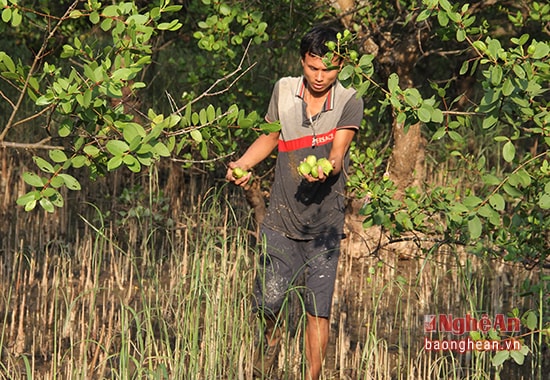 |
| Early October is when the mangrove fruit begins to ripen, and the young people start going out to pick it. |
 |
| The bần fruit has a unique flavor. When unripe, it tastes sour and slightly astringent, but when ripe, it is sweet and refreshing with a mild aroma. |
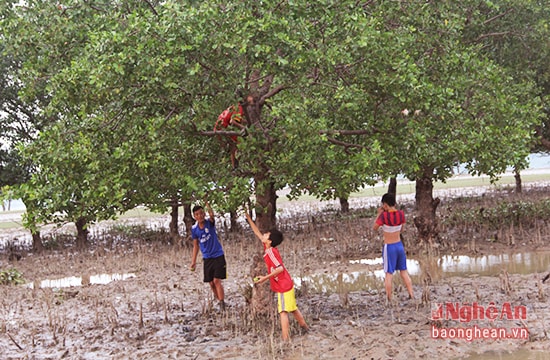 |
| When the tide goes out, it's time to wade through the mud and climb trees to pick mangrove fruit. |
 |
| The children's bellies were bulging with poverty before the tide came in. |
 |
| Childhood joys under the mangrove forest. |
 |
| The 'spoils of war' were placed in special 'baskets'. |
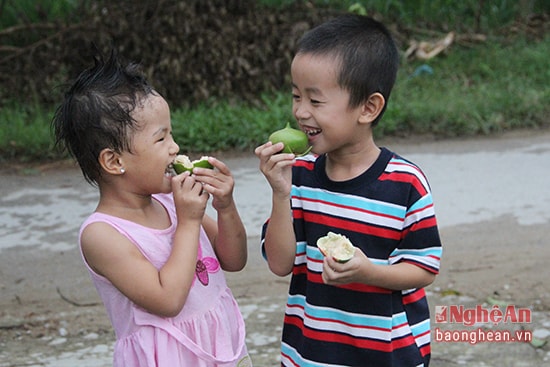 |
| Let's enjoy it! |
 |
| The fruit of the bần tree can be eaten with salt and chili, and is also processed into many traditional dishes such as: sour soup, salad, and served with raw vegetables… |
Wang Yun