
The season of freshwater fish
(Baonghean) - After a summer rain shower, the fields, ponds, and lakes are almost full of water. The water rises to the edge of the grass, trickling and overflowing the rice paddies and even the roads. This is also the time when the shrimp and fish, previously confined in hot, shallow puddles, awaken from their slumber and begin their breeding season. The flooded rice paddies and pond banks are the perfect time for village children and adults alike to go fishing for freshwater fish.
(Baonghean) - After a summer rain shower, the fields, ponds, and lakes are almost full of water. The water rises to the edge of the grass, trickling and overflowing the rice paddies and even the roads. This is also the time when the shrimp and fish, previously confined in hot, shallow puddles, awaken from their slumber and begin their breeding season. The flooded rice paddies and pond banks are the perfect time for village children and adults alike to go fishing for freshwater fish.
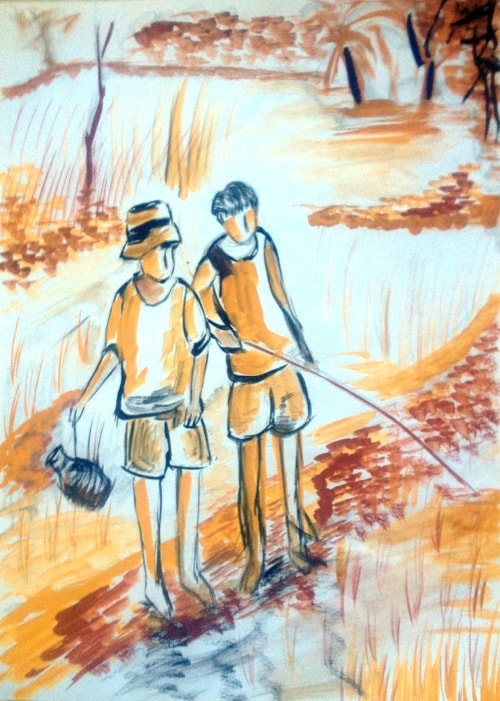 |
| Illustration: Hong Toai. |
It is said that the perch grow along with the rice. When the rice seedlings are first transplanted, there are no perch to be seen. When the rice plants begin to sprout, countless young perch and tiny perch begin to appear, swimming in schools along the clear water of the rice fields. When the rice plants are about to bear ears of grain, the tiny perch have grown into mature perch. When harvest season comes, the old perch, as if still attached to the land where they lived, try to crawl down into the ditches and ponds to find refuge. The scales of these old perch have turned a deep black color of age, and their flesh is then very firm and fatty.
During the freshwater fishing season, the golden-yellow tilapia with their two gill spines crawl back and forth across the bank in a long line like a marching army; the dark-skinned catfish, previously confined, are now free to dart about in search of food in the cool water; and the crucian carp and common carp, their bellies bulging with eggs, swim upstream in pairs, courting each other. Then it's time to cast the nets. Usually, for professional fishermen, just two people are enough to make a mess. But if you're fishing for fun, the more people, the merrier. After securely tying one end of the net to a tree root or blade of grass at the edge of the bank, you carefully navigate along the embankment around the pond, following the tender green blades of grass reaching above the water's surface. The net casters wade in, step by step, gently and softly. As they walked, they steadily cast their nets while simultaneously pushing aside tree roots and debris to prevent the nets from getting snagged. Years of experience had taught them that nets snagged on debris rarely caught fish.
After casting the net all around the lake, the net caster gently steps ashore and securely ties the other end of the net to a blade of grass. After a short rest, it's time to begin the "phăn" (net inspection) process. The technique for "phăn" is simple: just wade gently while holding the net float and lifting it up to check for any fish caught, but it must be done quickly and skillfully to avoid disturbing the water.
Another unmissable pastime is catching carp using yellow ant eggs as bait. Children in the countryside often find it exciting to poke at yellow ant nests to use as bait. They have to venture deep into overgrown bushes and dense foliage to find the nests clinging to the treetops. The tool for poking the nests is a pole with a cloth bag tied to the top to catch the falling ant eggs when the pole pokes into the nest. Sometimes, poking the nest and getting bitten by the ants can cause swelling all over the body. But it doesn't matter, because in the eager eyes of the children, the most enjoyable thing is "harvesting" many white yellow ant eggs, and the most prized are the queen ant eggs, also known as pupae.
After wading through the rice paddies, enduring the scorching sun all day, with baskets heavy with fish slung over your hip or carried in your hand, you can finally think about enjoying the meal. For freshwater perch, we all remember it through simple yet authentic dishes like perch stewed in an earthenware pot with galangal and kept warm in the ash of the kitchen hearth, perch stewed with turmeric leaves, crispy fried perch with ginger fish sauce, perch soup, etc. But there's a rustic dish that perhaps only those who catch the fish get to enjoy: grilled perch right on the edge of the rice field immediately after catching them. Choose a bunch of perch about half the size of your hand, skewer them securely from mouth to tail with a stick. Stick the skewers firmly into the edge of the field. Go down to the rice paddies where the stubble is still, grab an armful of the fish, cover it completely, and light a fire to grill. When the straw has burned out, let it sit for a little longer in the still-burning ash. This is the secret to ensuring the fish cooks evenly and has a fragrant aroma. Once the pile of straw ash has completely burned away, use a stick to lightly scrape away the ash and charred scales from the fish. Cut a banana leaf in half and spread it on the edge of the rice field to make a platter. Using your hands, carefully remove each tender, white piece of fish, fragrant with the scent of freshly harvested rice, and dip it in a little salt and chili. Before even putting it in your mouth, your mouth waters from the irresistible aroma, infused with the rustic scent of straw and rice paddies.
Cong Manh


