
Cold rain causes illness among the elderly and children.
Hanoi and the northern provinces are experiencing cold, rainy days. This also creates favorable conditions for viruses that cause respiratory infections, high blood pressure, strokes, and bone and joint diseases to attack the elderly and young children.
During yesterday's examination session alone, Dr. Nguyen Van Long from the Outpatient Department (Geriatric Hospital, Hanoi) examined 50 elderly people. This number is more than 10 higher than last week, before the weather turned cold.
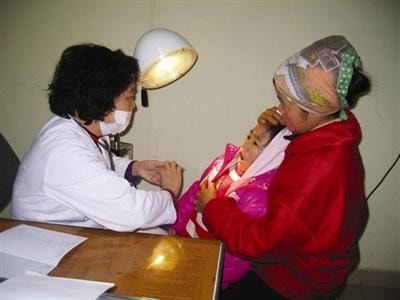
A doctor examines a child with a respiratory infection. (Photo: TH)
According to Doctor Long, the number of hypertensive patients hospitalized due to complications increases during the cold season, especially strokes.
Dr. Trung Anh, Head of the Outpatient Department (Geriatric Hospital), said that weather is not the root cause of complications in hypertensive patients, but it is a factor that causes blood vessels to constrict, blood pressure to rise, and complications to appear. Patients with aortic aneurysms will show signs of a torn aorta; if the tear is large, the patient may die, while milder cases may result in stroke or coma.
Therefore, during cold weather, doctors advise hypertensive patients to keep their bodies warm. In addition to dressing warmly, patients need to supplement their body temperature through methods such as heating and ensuring adequate nutrition. Hypertensive patients need to take their medication regularly and measure their blood pressure frequently.
Doctor Long advises the elderly to avoid sudden changes in indoor temperature, and to be wary of strokes when in a warm room with the door open and a draft coming in, or strokes after suddenly getting out of bed.
At this time of year, the climate is in transition, with high humidity and fluctuating air temperatures, creating favorable conditions for mold growth. This is a major reason for the high number of elderly patients suffering from chronic obstructive pulmonary disease (COPD).
In addition, many elderly people suffer from respiratory infections. The majority of these patients have sore throats, and some cases involve pneumonia.
Cold weather also causes many elderly patients to suffer from bone and joint diseases. In cold weather, blood circulation in the blood vessels becomes poor. Recognizable signs include knee pain, swelling, difficulty moving the knee joint, especially bending and straightening the leg, climbing stairs, etc.
Patients rarely have a fever; in these cases, they should move their legs slowly, and after a few movements, the joint pain will subside. Some medicinal liniments can be used for massage to increase blood circulation in the area. This is an aseptic inflammatory condition, so the use of antibiotics is unnecessary.
Children suffer from respiratory infections.
The cold, rainy weather has resulted in a higher-than-usual number of patients visiting the Outpatient Department (National Children's Hospital). Dr. Cu Thi Minh Hien, Deputy Head of the Outpatient Department, said that most of the children who came for examination had respiratory infections and fever.
Upper respiratory tract infections include pharyngitis, nasopharyngitis, laryngitis, adenoiditis, and sinusitis. Although not immediately life-threatening, these infections can sometimes have serious consequences for patients. Bacteria can enter the bloodstream, causing sepsis and meningitis. The disease is classified into two forms: chronic and acute.
Acute respiratory infections are one of the three leading causes of death in children under 5 years old. Acute respiratory infections in children are common, with high morbidity and mortality rates, and children may contract them multiple times a year (3-5 times), thus affecting their health and lives.
Dr. Hien stated that the majority of acute respiratory infections in children are caused by viruses. In fact, viral illnesses do not require antibiotic treatment. Using antibiotics is harmful to health, especially for children. Prolonged antibiotic treatment (from one week to 10 days) is both expensive and easily leads to antibiotic resistance.
Dr. Hien advises that when children exhibit symptoms such as coughing, fever, rapid breathing, and chest retraction, it indicates severe pneumonia. If a child has any of the dangerous signs such as inability to drink, seizures, lethargy, difficulty waking up, wheezing when lying still, or severe malnutrition, these are signs of very severe pneumonia and the child needs to be taken to the hospital immediately for emergency treatment and special care.
Preventive measures for acute respiratory infections include ensuring proper nutrition: breastfeeding, providing appropriate supplementary foods rich in nutrients suitable for their age, keeping children warm, especially during cold weather and when the weather changes, maintaining personal hygiene and a clean environment, avoiding cigarette smoke and coal dust indoors, and ensuring complete and timely vaccinations. Importantly, early detection and proper care are crucial when children become ill.
According to Tien Phong


