(Baonghean.vn) - Yen Thanh district has one of the largest rice granaries in the province, and the rice fields have become an ideal place to further develop duck farming.
Ducklings, under 25 days old, are raised at home. After 25 days, they can be taken to the fields to forage for food until they are over 60 days old, at which point they can be considered marketable ducks. Therefore, they are called "free-range ducks." The life cycle of a newly hatched duckling to marketable duck is 60-75 days, reaching 1.5 to 2 kg per duck, at which point they can be sold commercially. Currently, the price of 38-42 thousand VND/kg sold in the fields is considered "good." However, during the early part of this year's harvest season, the price sometimes dropped to only 32 thousand VND/kg, meaning farmers essentially "worked for nothing."
Currently, the free-range duck season in Yen Thanh is beginning. Most farmers in Yen Thanh raise ducks on a small scale, with flocks of less than 100 birds, primarily for self-sufficiency in food, selling only a few and keeping a small number for egg production. In addition, about 30 households have developed larger free-range duck flocks of over 1000 birds per household, mainly raising ducks for commercial purposes. These free-range ducks are often bought in bulk by traders who transport them by truck to sell in Vinh, mountainous districts within the province, and Hanoi.
Here are some images of "free-range ducks" captured by a reporter from Nghe An Newspaper in Yen Thanh:
 |
| The duck flock belonging to Mr. Vu Dinh Tuong and Mr. Thai Huu Ngoc in Hamlet 4, Tang Thanh Commune, is a combined total of 2,200 birds this season, divided into three batches: 700 ducks approximately 50 days old; 700 ducks approximately 40 days old; and 800 ducks approximately 30 days old. The photo shows ducks over 40 days old foraging in the canal, next to the enclosure where they are kept in the field. |
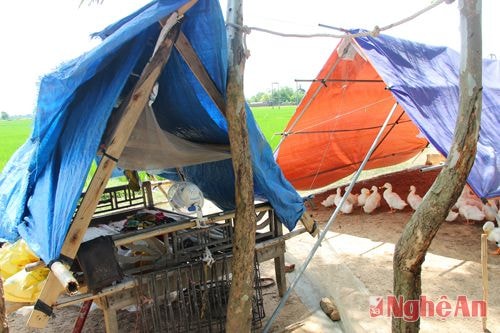 |
| As the ducks approach harvest season, they become a target for thieves. Therefore, duck farmers must live and work alongside their ducks. The photo shows the sleeping tent of Mr. Vu Dinh Tuong's family in the field, next to the duck shed. |
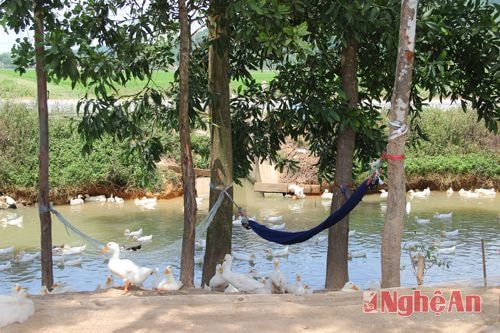 |
| And I had to hang a hammock next to the canal to watch over the ducks. |
![Giống vịt con hiện nay không còn là giống bầu đất mà chủ yếu là giống vịt bầu trắng, do các lò ấp ở các xã Long Thành, Xuân Thành, Hoa Thành, Hợp Thành (Yên Thành) cung cấp. Ngoài ra, anh Vũ Đình Tường cho biết mùa này gia đình anh phải nhập 1000 con từ tỉnh Hà Tây vì nguồn cung cấp tại các lò ấp trong huyện không đủ. Vịt đưa từ Hà Tây về mỗi con 3 ngày tuổi giá 5000 đồng.]() |
| The ducklings currently being raised are no longer the common breed but mainly the white breed, supplied by hatcheries in the communes of Long Thanh, Xuan Thanh, Hoa Thanh, and Hop Thanh (Yen Thanh district). In addition, Mr. Vu Dinh Tuong said that this season his family had to import 1000 ducklings from Ha Tay province because the supply from hatcheries in the district was insufficient. Each duckling brought from Ha Tay, at 3 days old, costs 5000 dong. |
![Ở Tăng Thành mùa này chỉ có 3 hộ nuôi nhiều là hộ anh Vũ Đình Tường, Thái Hữu Ngọc và Phan Văn Hải. Khi lúa chưa trổ bông, đàn vịt được phép chăn thả ở các cánh đồng để vịt ăn các loài côn trùng, cua, ốc... Nhờ đàn vịt mà diệt được nạn ốc vàng hại lúa. Hết đồng này thì chạy sang đồng khác và người chăn vịt cũng chạy theo vịt trên các đồng Gọn, đồng Ga, Nương Dưa, đồng Tro, Rộc Thuyền, Cánh Sơn, Đồng Lý, Rộc Cửa... Trong ảnh là anh Vũ Đình Tường và đàn vịt trên đồng Gọn (Tăng Thành).]() |
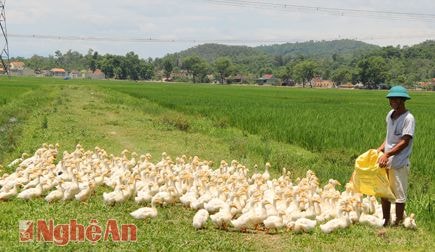
| In Tang Thanh this season, only three households raise ducks in large numbers: those of Mr. Vu Dinh Tuong, Mr. Thai Huu Ngoc, and Mr. Phan Van Hai. Before the rice plants flower, the ducks are allowed to graze in the fields to eat insects, crabs, snails, etc. Thanks to the ducks, the problem of yellow snails damaging the rice crops is eradicated. They move from one field to another, and the duck herders follow the ducks across the fields of Gon, Ga, Nuong Dua, Tro, Roc Thuyen, Canh Son, Dong Ly, Roc Cua... The photo shows Mr. Vu Dinh Tuong and his flock of ducks in Gon field (Tang Thanh). |
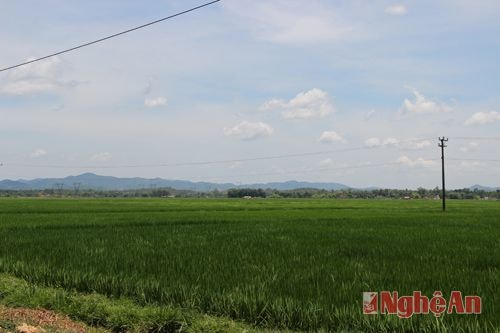 |
| Ducks feed in the fields, making them difficult to see from the bank. However, professional free-range duck farmers can spot the flock by looking in the direction the rice plants are shaking. |
 |
| Just call out "duck, duck, duck!" and the ducks will run up to eat the supplementary feed. The supplementary feed for the ducks is made from bran mixed with spent brewers' grains, ordered from the Vinh brewery. Each hundred kilograms of spent brewers' grains brought to Yen Thanh costs 200,000 dong. |
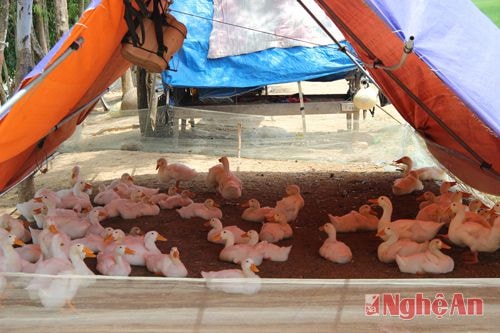 |
| There should always be a tent to shelter the ducks in case it rains. |
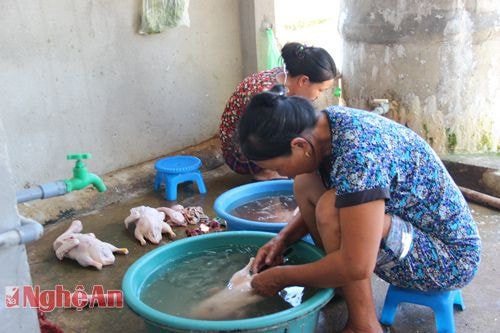 |
| Several restaurants in the area also order commercial ducks from Mr. Tuong's duck farm. |
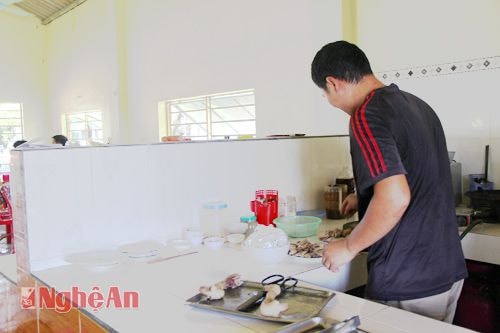 |
| Boiled duck meat, considered sweet and refreshing, is a favorite among diners and is almost a staple dish in summer at eateries in Yen Thanh. The photo shows the butchering and preparation of duck meat at a restaurant in Hoa Thanh commune. |
Performed by: Ngo Kien - Canh Nam



