
The US has imposed its latest retaliatory tariffs on 14 countries, with the most surprising rates coming from these nations.
US President Donald Trump has announced the imposition of new retaliatory tariffs on imported goods from 14 countries, effective August 1st.
According to White House Press Secretary Karoline Leavitt, President Trump sent letters to the leaders of countries including Japan, South Korea, Malaysia, Kazakhstan, South Africa, Laos, Myanmar, Bosnia and Herzegovina, Tunisia, Indonesia, Bangladesh, Serbia, Cambodia, and Thailand to inform them of the new tax policy.
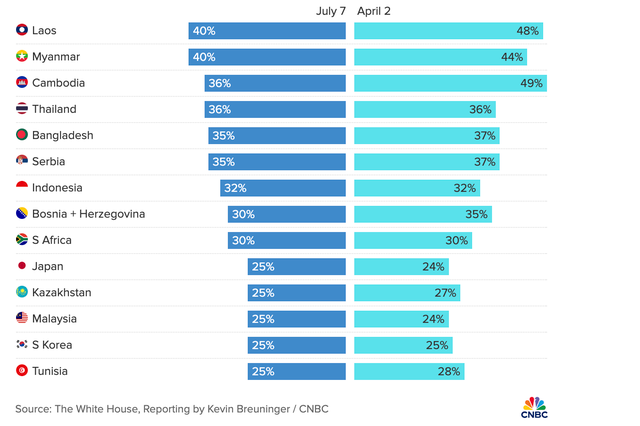
These tariffs are part of a previously announced plan to impose taxes on countries that have not reached a trade agreement with the United States.
Specifically, goods from Japan, South Korea, Malaysia, Kazakhstan, and Tunisia will be subject to a 25% tariff.
South Africa and Bosnia and Herzegovina face a 30% tariff, while Indonesia is subject to 32%. Bangladesh and Serbia are taxed at 35%, and Cambodia and Thailand at 36%.
Laos and Myanmar bear the highest tax rates in this round, reaching up to 40%.
President Trump announced that these tariffs could be adjusted depending on the trade relationship with each country and the tariff responses from those countries to American goods.
According to CNN, these 14 countries exported a total of $465 billion worth of goods to the US in 2024, with Japan and South Korea being the two largest trading partners, accounting for 60% of the value of goods. The new tariffs are unrelated to the existing 25% auto tariff and are applied separately from other industry tariffs.
President Trump also signed an executive order extending the trade negotiation period from July 9 to August 1, giving countries more time to reach an agreement and avoid higher tariffs.
Previously, in April, the US temporarily suspended the tariffs for 90 days, during which time countries were only subject to a minimum tariff rate of 10%.
The White House said President Trump will continue sending letters to other trading partners in the coming days to provide further information on tariff policy. This move marks a new phase in the U.S. trade strategy, aimed at addressing trade deficits with global partners.


