
The US deployed B-1 and B-52 bombers to attack Iran's underwater missile network.
The US military has deployed B-1 Lancer and B-52 Stratofortress strategic bombers to destroy Iran's underground 'missile cities'.
As part of the military operation codenamed "Operation Fury," the US military expanded its attacks targeting Iran's strategic military infrastructure. General Dan Caine, Chairman of the Joint Chiefs of Staff, confirmed that US forces destroyed or sank more than 50 naval vessels and numerous other key targets in the first 10 days. Most notably, strategic bombers were deployed to neutralize Tehran's fortified underground base system.
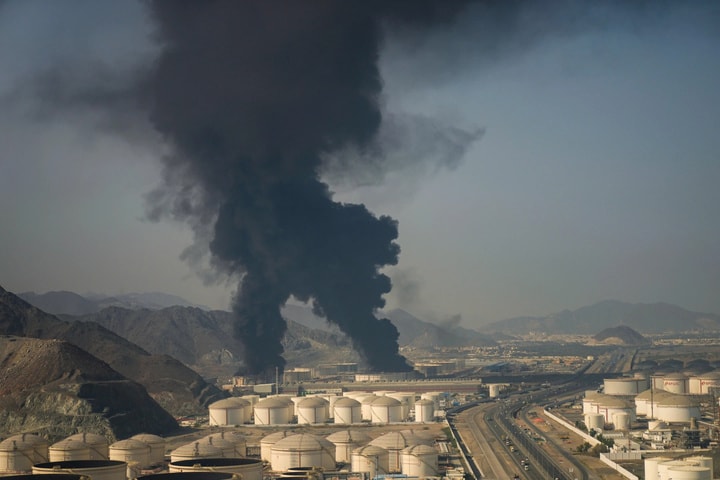
Iran's underground 'missile city' system
"Missile cities" are a vast network of bases operated by the Air Force of the Islamic Revolutionary Guard Corps (IRGC). These complexes are built deep underground, up to 500 meters below the surface, and are equipped with rail transport systems and self-contained control centers. According to military analysts, Iran possesses approximately 2,500 to 3,000 long-range ballistic missiles, including Shahab-3, Sejjil, and Khorramshahr models.
Iran's strategy of building these underground bases was developed based on lessons learned from the Iran-Iraq conflict (1980-1988). Tehran's goal is to create an "asymmetrical" arsenal to put pressure on the enemy's defenses. However, the effectiveness of this network is being challenged as US drones and bombers continuously monitor and attack the launch sites as soon as they are exposed to fire.
The offensive power of the B-1 and B-52.
To penetrate fortified structures, the US reinforced its forces at RAF Fairford base (UK) with a total of 15 bombers, including 12 B-1s and 3 B-52s. In recent airstrikes, the B-52s demonstrated their versatility, being able to fly low at Mach 0.5 to avoid radar or climb to altitudes above 15,000 meters to drop bombs accurately.
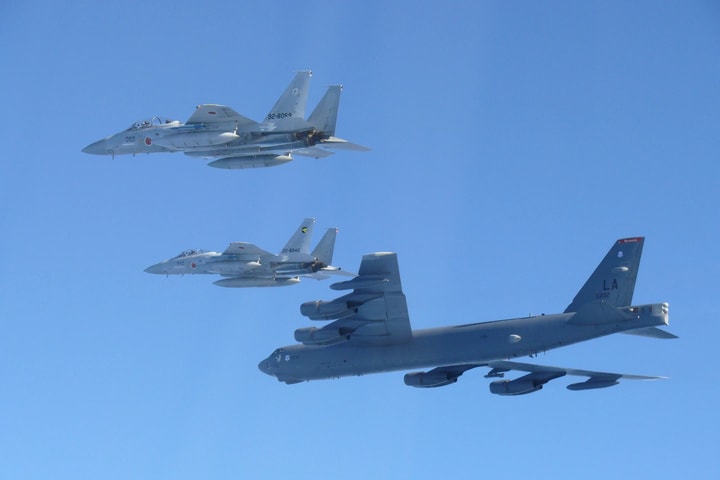
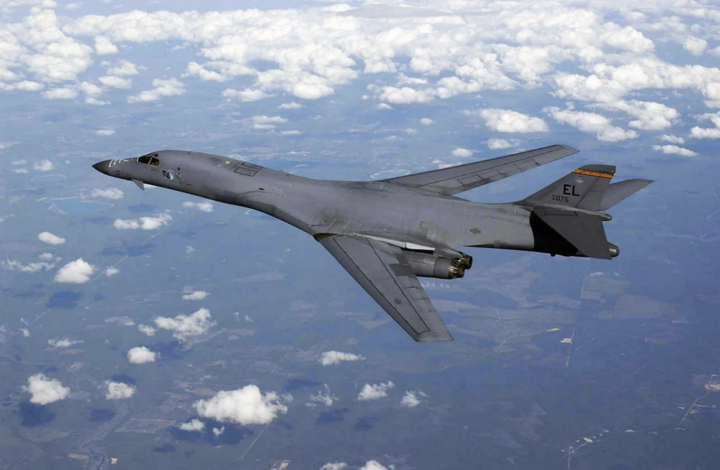
On the other hand, the B-1 Lancer supersonic bomber plays a crucial role thanks to its weapons payload of up to 34,019 kg. This aircraft can carry JDAM GPS-guided bombs, JASSM cruise missiles, and especially the 2,000-pound BLU-109 variant specifically designed to destroy reinforced concrete bunkers.
Prospects for the campaign and weapons capable of penetrating underground tunnels.
White House spokeswoman Caroline Leavitt said B-2 stealth bombers also participated in attacks on buried missile sites using 2,000-pound penetrating bombs. While the B-2 possesses superior stealth capabilities, the B-1 and B-52 are preferred for maintaining high air strike intensity due to their forward deployment capabilities and less complex maintenance procedures.
The latest satellite images show numerous smoldering remnants near the entrances to the "missile cities." The US's public display of loading bunker-busting ammunition at its British base is seen as a strategic message to Tehran. Analysts believe that if Iran's air defenses continue to weaken, US heavy bombers could increase the frequency of attacks, directly threatening the country's nuclear and missile deterrence capabilities.


