
The US used BLU-91/B mines to neutralize Iran's underground missile cities.
Instead of using armor-piercing bombs, the US military deployed the BLU-91/B anti-tank mine system to seal off tunnel entrances, preventing Iran from deploying missiles.
The U.S. military is believed to have found an effective solution to neutralize Iran's underground "missile cities" by using anti-tank mines deployed from aircraft. Instead of attempting to destroy fortified structures with armor-piercing bombs, this method focuses on blocking access points, rendering missile launchers unable to deploy for combat.
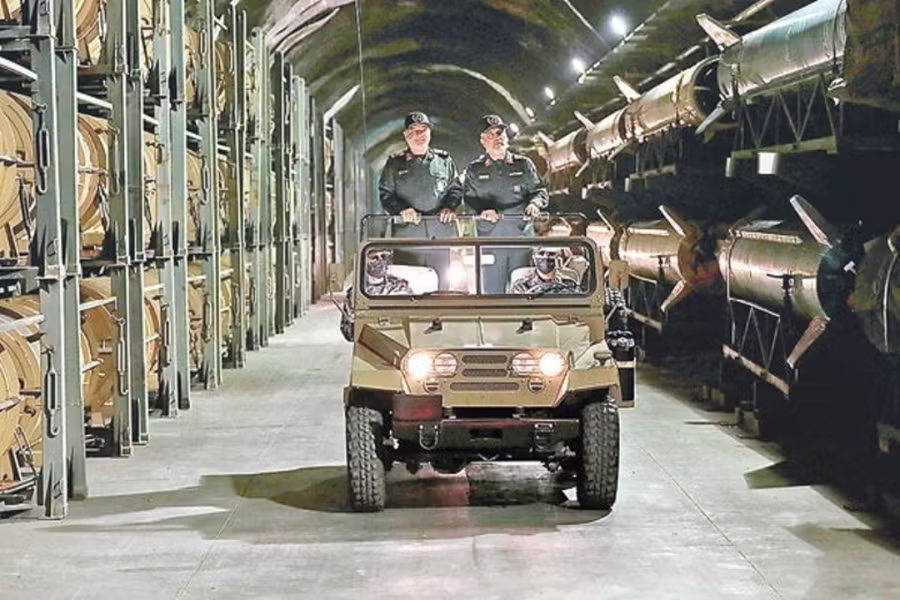
The challenge from Iran's underground network of fortifications.
Iran currently possesses a highly developed underground infrastructure, including complexes known as "missile cities." These are locations where offensive weapons can be manufactured, stored, and loaded under highly secure conditions. Destroying these targets with conventional airstrikes requires a large number of bunker-buster bombs, but the success rate is often not guaranteed.
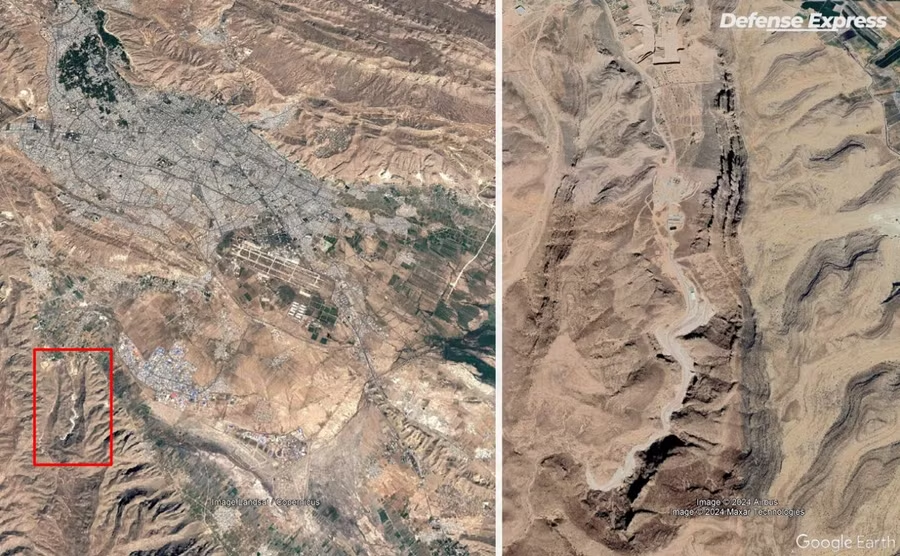
Notably, recent reports from the Shiraz suburbs, specifically the town of Kifri, indicate the appearance of special projectiles being dropped from the air near the entrances to this network of underground tunnels.
BLU-91/B mine technology and tunnel blockade tactics
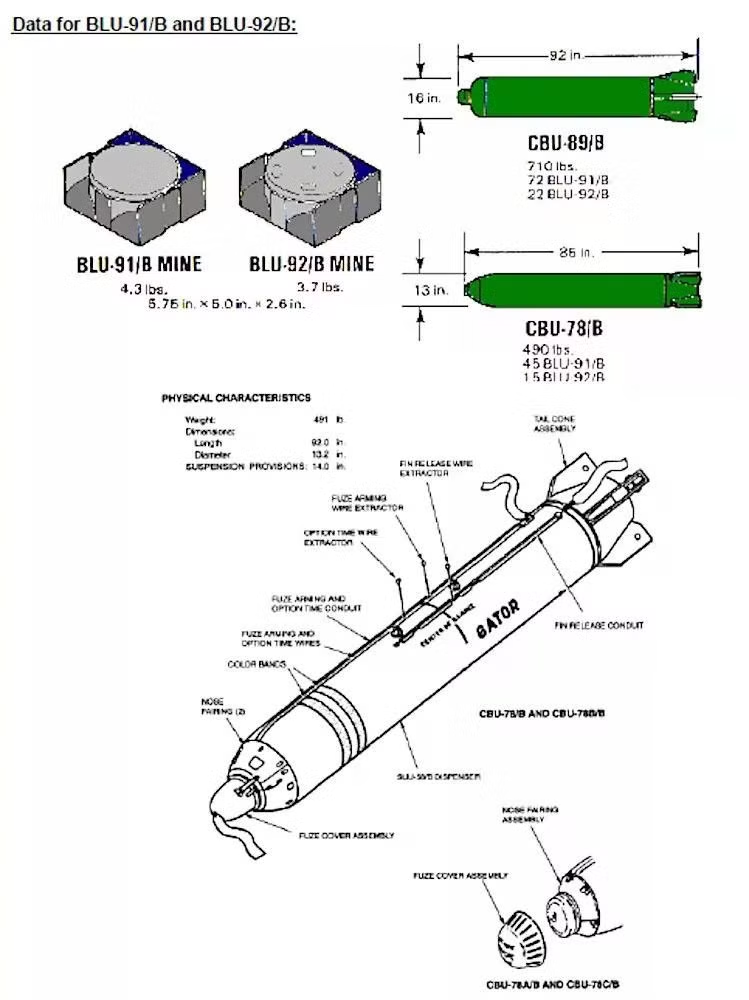
The released images confirm that this type of projectile is the BLU-91/B anti-tank mine, designed to be deployed from the air via cluster bombs such as the CBU-89/B and CBU-78/B. A distinctive feature of this mine is its rectangular stabilizing fins and magnetic field-based detonation mechanism.
The BLU-91/B's operating mechanism allows it to automatically detonate when large metal objects (such as armored vehicles or missile launchers) approach. This turns the areas around the tunnel entrance into a dangerous "quagmire," forcing the enemy to halt all movement until the mine is removed or self-destructs.
Customization and risk control capabilities
In addition to BLU-91/B anti-tank mines, cluster munition systems often carry BLU-92/B anti-personnel mines. However, field reports have not documented the presence of BLU-92/B at locations near Iranian bunkers. This leads to the hypothesis that the US military may have modified the cluster munitions, focusing entirely on anti-tank mines to minimize unnecessary human casualties.
Another key advantage of this system is its flexible self-destruct timer. The mines can be set to self-destruct after 4 hours, 48 hours, or 15 days. This feature allows the military to control the duration of target containment without leaving long-term threats after the operation ends.
| Type of weapon | Main functions | Activation mechanism |
|---|---|---|
| BLU-91/B | Anti-tank mines | Magnetic field sensor |
| BLU-92/B | Anti-personnel mines | Tangled wires / Contact |
| CBU-89/B | Cluster bomb (Gator) | 72 BLU-91 mines and 22 BLU-92 mines were laid. |
Although Iran has reported some civilian casualties, the cause may stem from attempts to manually move the mines. With their sensitive magnetic sensors, any approach carrying metal objects could cause the mines to detonate instantly, completely paralyzing the mobility of ballistic missile units right at the tunnel entrance.


