
The US will send upgraded long-range bombs to Ukraine.
According to a Reuters source, the U.S. has upgraded its small-diameter ground-launched bombs (GLSDBs) to counter Russian jamming systems and is expected to "re-deploy" them on the Ukrainian battlefield in the coming days.
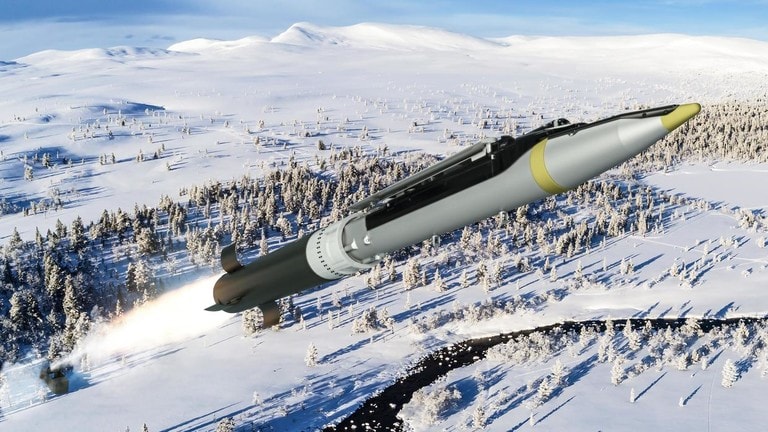
The GLSDB, jointly developed by Boeing and SAAB AB, combines the GBU-39 small-diameter bomb with the M26 rocket engine, creating a weapon with a range of approximately 160 km.
The administration of former US President Joe Biden sent an unspecified number of GLSDB units to Kyiv, but according to Reuters sources, Ukraine has not used these bombs for months after they proved ineffective last year.
The Wall Street Journal reported last July that Russia's electronic warfare capabilities had rendered Western precision-guided weapons – including GLSDB and GPS-guided Excalibur artillery shells – "useless." When the guidance systems were disrupted, some of these weapons were rendered unusable after only weeks of deployment.
Since then, Boeing has made several upgrades, including reinforcing internal connections to increase resistance to interference. According to Reuters sources, at least 19 GLSDB bombs have been tested in “recent weeks” to assess the effectiveness of the improvements. The sources said the U.S. has stockpiled a large number of these relatively inexpensive bombs in Europe and is “preparing” to continue shipping them to Kyiv in the coming days.
This potential replacement comes amid reports that Ukraine has run out of ATACMS stockpiles supplied by the US, a weapon with a longer range of up to 300 km.
Kyiv began using ATACMS missiles to strike Russian territory in the fall of 2024, specifically targeting the border regions of Kursk, Bryansk, Belgorod, and Rostov. However, according to an Associated Press report on March 12, the stockpile had been completely depleted by the end of January.
Moscow has repeatedly warned the U.S. and its allies against allowing Ukraine to conduct long-range attacks, arguing that such attacks would make NATO a direct belligerent due to Kyiv's dependence on Western-supplied weapons.
In response to Ukraine's initial ATACMS attacks last November, Russia launched its new Oreshnik supersonic medium-range ballistic missile targeting the Yuzhmash military-industrial complex in the Dnepr region of Ukraine.


