
2014 - A "disaster" for conflict victims
(Baonghean) - In a report recently released in London (England), Amnesty International stated that 2014 was a "disastrous" year for victims of conflicts around the world.
According to a report by the non-governmental organization Amensty assessing the human rights situation in 160 countries, 35 out of 160 countries experience serious human rights violations. These violations are often perpetrated by armed groups such as the Islamic State (IS), the Sahel group, or the Boko Haram terrorist group.
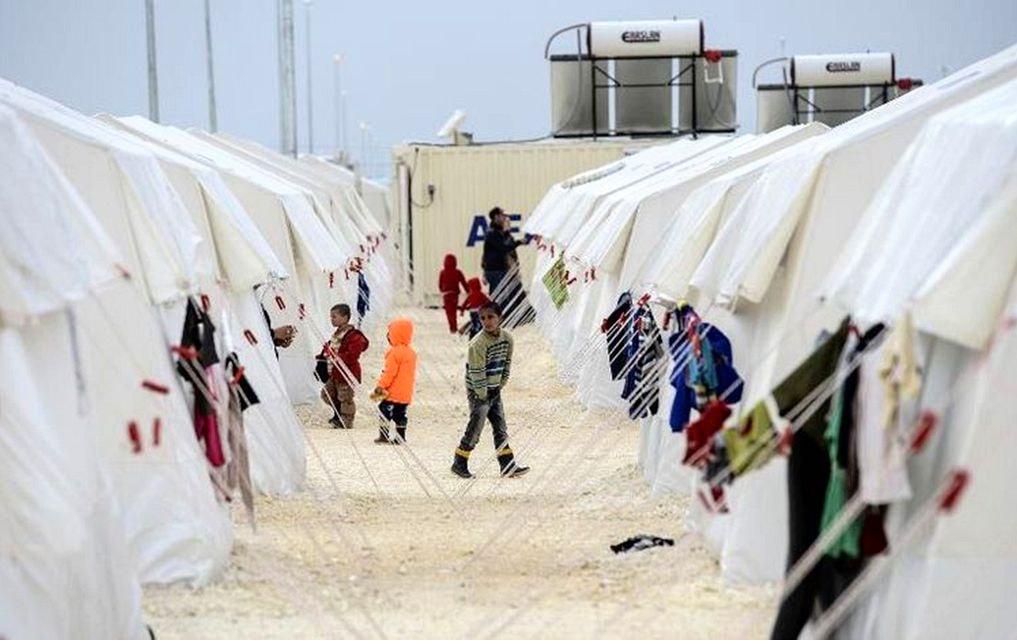 |
| Refugee tents in Türkiye on January 30, 2015. Photo: AFP |
At a press conference in London, Salil Shetty, Secretary-General of Amnesty International, stated that 2014 was a "turbulent" year, marked by a series of conflicts in Syria, Ukraine, Gaza, and Nigeria, resulting in millions of civilian deaths and forcing approximately 15 million people to flee their homes. Salil emphasized that this number of refugees "is likely the highest number since the end of World War II."
Mr. Salil stated, “2014 was a disastrous year for millions of people directly affected by conflicts.” He also accused the international community of responding to human rights violations as “slow and ineffective.” In his opening remarks, the Secretary-General condemned the “world leaders’ disastrous failure to protect their people.”
Mr. Salil also criticized the "United Nations Security Council – an organization established to protect civilians and ensure peace and security – for its disastrous failure and inability to fulfill its assigned tasks." Furthermore, Mr. Salil accused the "five permanent members of the Security Council – the UK, France, the US, Russia, and China – of repeatedly abusing their power, particularly their veto power, in exchange for political or geopolitical advantages for their countries, thereby undermining the protection of their citizens."
For that reason, Amnesty International wants to promote the adoption of a “Code of Conduct in which permanent members of the Security Council voluntarily waive the use of their veto power in cases of genocide, war crimes, or crimes against humanity.” This proposal is not new and it has the support of 70 countries. Therefore, Amnesty is hoping to make this code of conduct a reality, thereby helping to improve the rights of 7 billion people worldwide.
Philip Luther, Director of Amensty in the Middle East and North Africa, also supports this view. He argues that abandoning the veto power would allow the International Criminal Court to prosecute war crimes and crimes against humanity occurring in regions such as Syria and Iraq. In addition to this proposal, Amensty also urges countries to ratify the Arms Trade Treaty signed in 2014.
In response to questions about the state of human rights worldwide in 2015, Amensty was not very optimistic about the protection of human rights, especially as more and more people were forced to live under the control of armed groups while conflicts showed no signs of abating.
Chu Thanh
(According to Liberation, February 26)


