
With the drought looming, well-drilling villages in Nghe An province are operating at full capacity.
As the dry season approaches, the demand for well drilling in many localities increases sharply. In Nhan Tien hamlet, Quan Thanh commune (Nghe An province), dozens of drilling rigs operate continuously to serve the needs of the local people.
The village has a well-drilling industry.
In Binh Minh commune, Nhan Tien hamlet has been known as a village specializing in well drilling for decades.
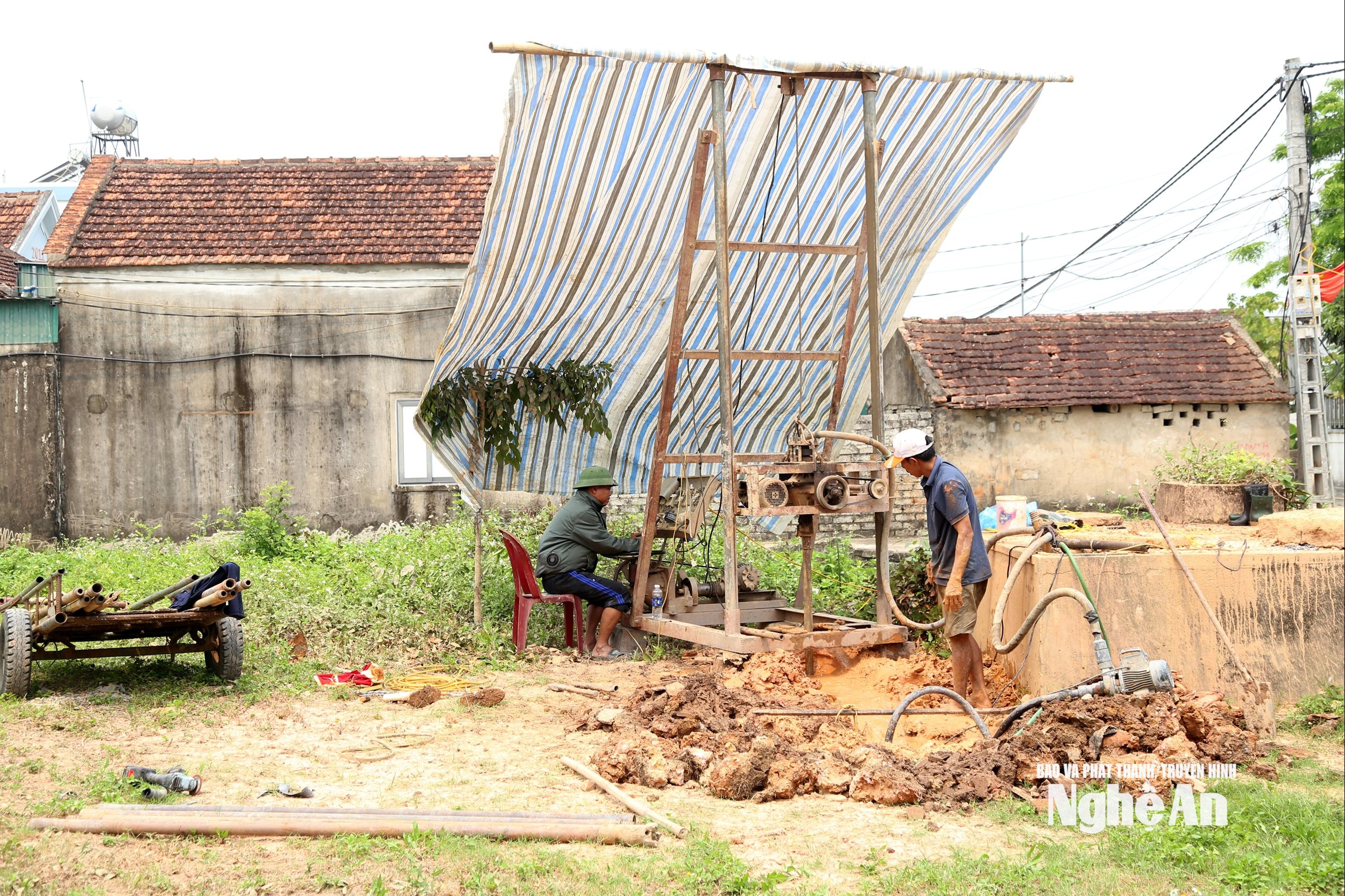
For generations, Nhan Tien hamlet has been closely associated with agricultural production. However, with changing living conditions and the increasing demand for domestic water, in recent decades, this place has also become known as a renowned "well-drilling village" in the region. From a secondary occupation, well drilling has gradually become the main source of income for many households, creating stable jobs for hundreds of healthy, hardworking men who often have to travel far from home.
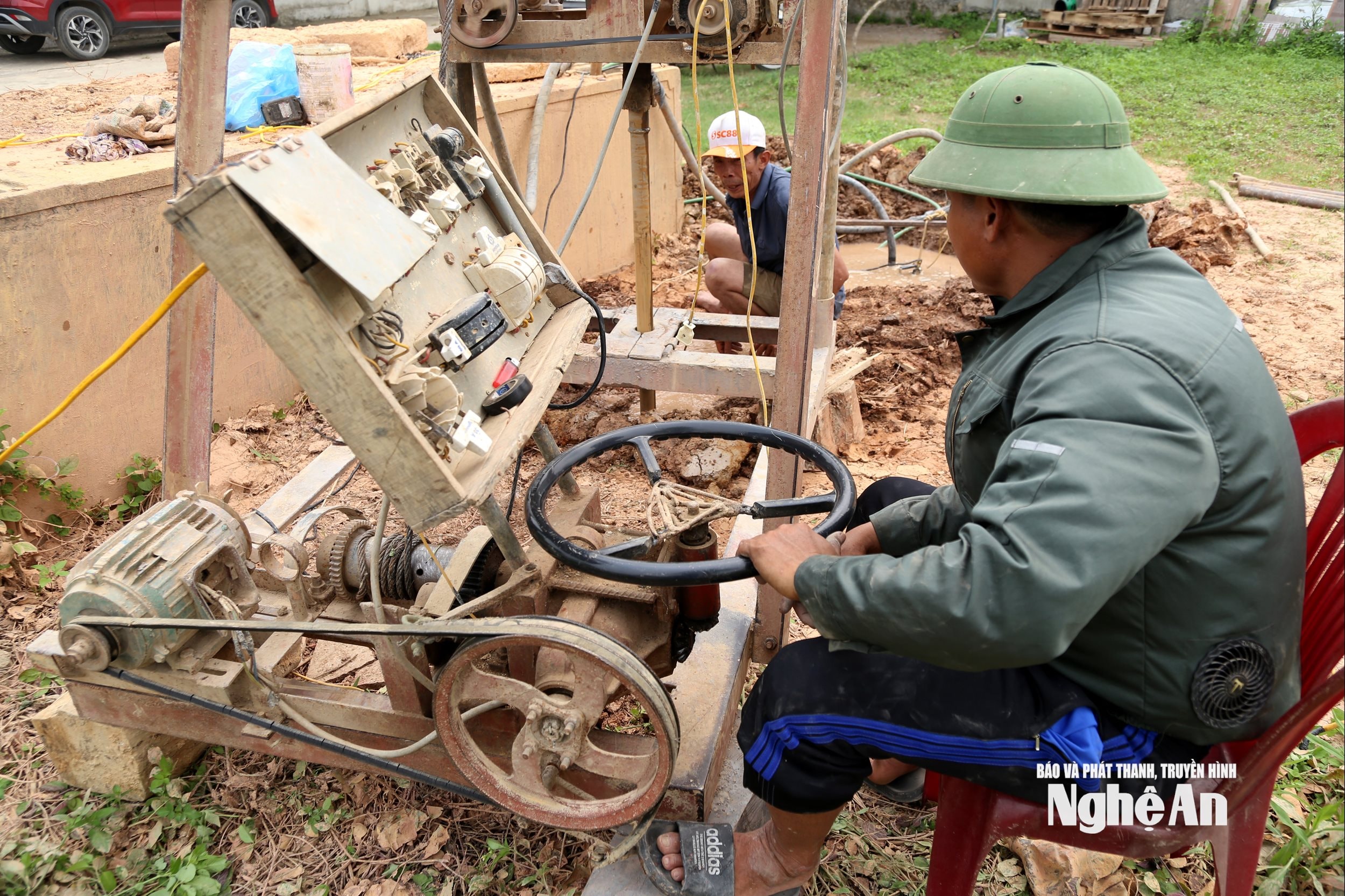
According to local residents, many well-drilling rigs are currently operating in Nhan Tien hamlet. These drilling teams not only serve the domestic and agricultural water needs of people within the province, but also undertake well drilling projects in many other localities, even extending to neighboring Laos. Before the dry season, the demand for well drilling increases significantly, and the rigs work almost non-stop.
Having been involved in well drilling for over 20 years, Mr. Nguyen Van Tuan (born in 1968), residing in Nhan Tien hamlet, said that this profession provides a decent income but also requires significant capital, experience, and enduring physical strength.
"During peak periods, there's work every day. Sometimes, as soon as we finish drilling one well, we have to pack up our equipment and go to another, even if it's tens of kilometers away," Mr. Tuan said.
Currently, the villagers mainly use two types of drilling rigs: air compressors and rotary drilling machines. Of these, air compressors require a very large investment, over 700 million VND per rig, and usually need 3-4 workers to operate. This type of machine is suitable for complex terrain, hard rock layers, and great depths.
Conversely, rotary drilling machines have a lower investment cost, around 70 million VND per unit, require 2 workers, and are suitable for areas with relatively favorable soil conditions. Therefore, the choice of drilling machine depends entirely on the geological characteristics of each drilling location.
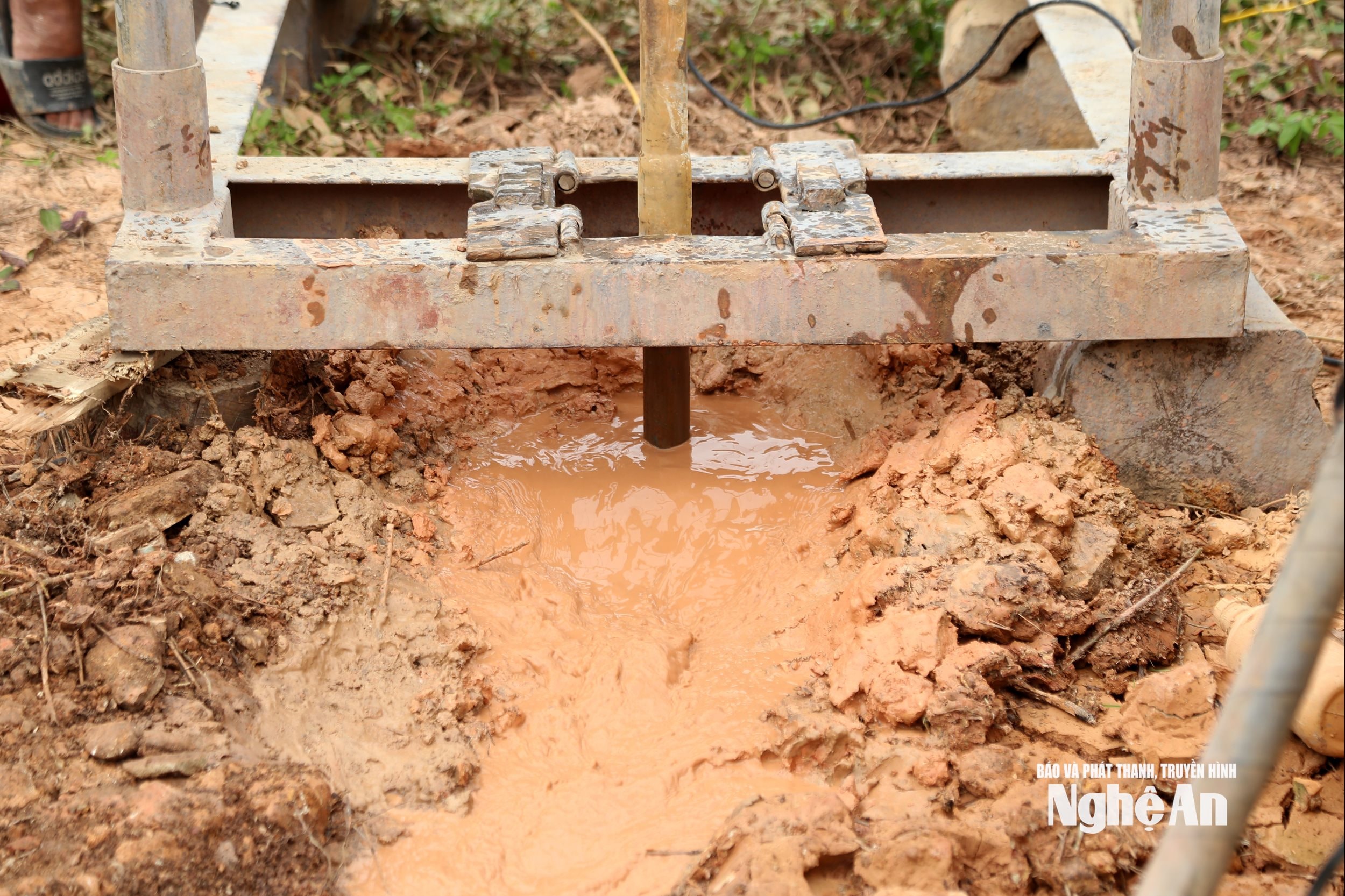
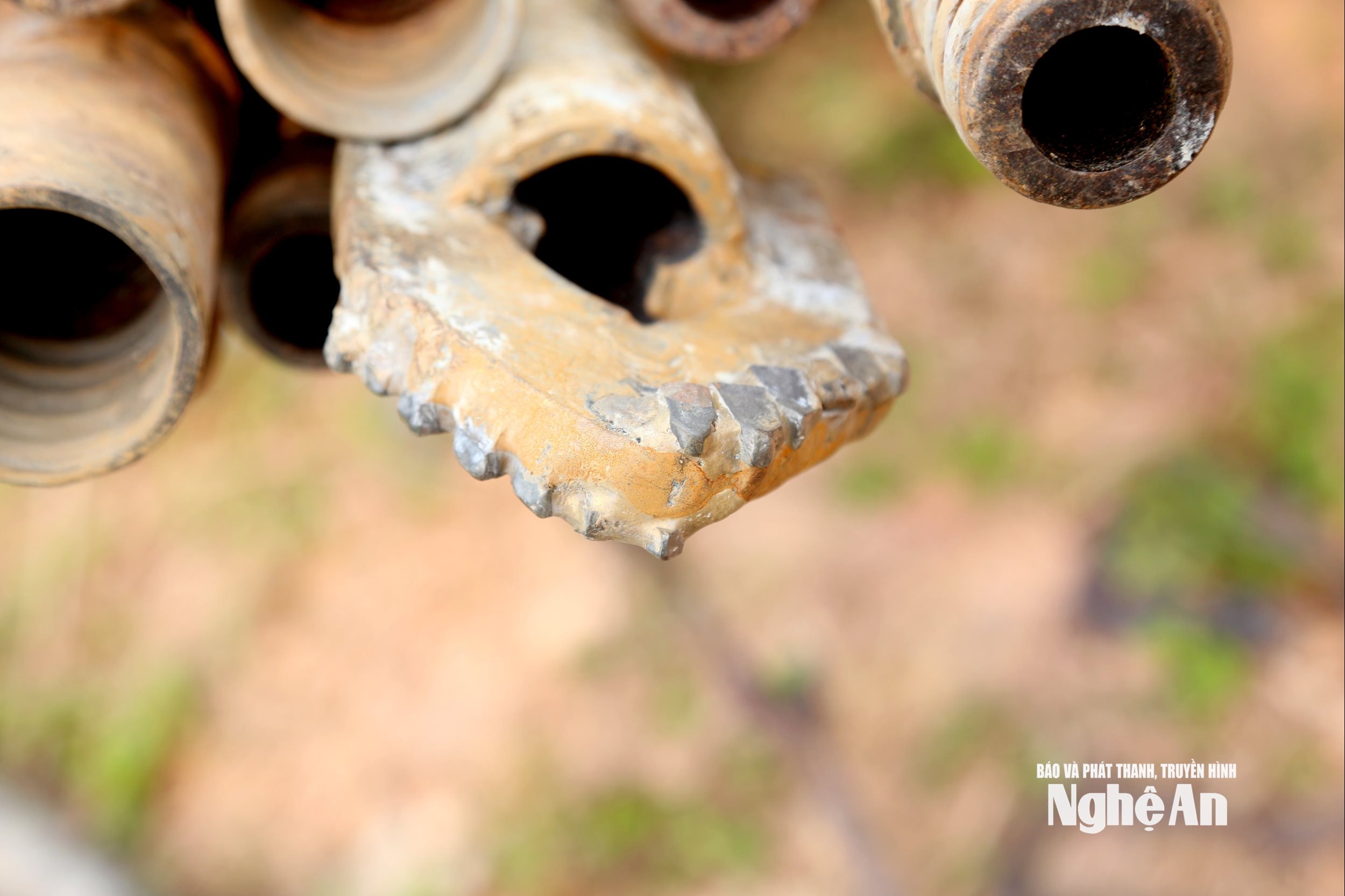
To drill through layers of soil and rock at depths of tens of meters, drillers must use alloy drill bits. However, these drill bits wear out quickly, requiring replacement after an average of every 5,000 meters of drilling, at a cost of approximately 3 million VND per bit.
In addition, 2.2-meter-long steel drill rods are also indispensable supplies. Each drilling rig typically has around 50 drill rods. Due to the high pressure and continuous operation, these drill rods need to be replaced after nearly two years of use, at a cost of approximately 800,000 VND each. Therefore, besides the initial investment, those in the profession also have to regularly spend additional money to maintain and replace the equipment.
Depending on the type of drilling rig and geological conditions, the cost of drilling a well varies. Currently, the labor cost for drilling one water well ranges from 7-8 million VND, not including the cost of materials such as plastic pipes and pumps. After drilling is complete, the workers install two layers of plastic pipes along the depth of the well: the outer layer is a 125mm diameter pipe, and the inner layer is a 90mm pipe.
To ensure strong and stable water suction, the pump is lowered deep to the bottom of the well. Overall, the cost of completing a well currently ranges from 14-16 million VND, depending on the depth and the type of drilling rig used. Each well project is completed within 2-3 days, although in some locations, due to thick, hard rock layers and depths exceeding 80m, it can take 5-7 days.
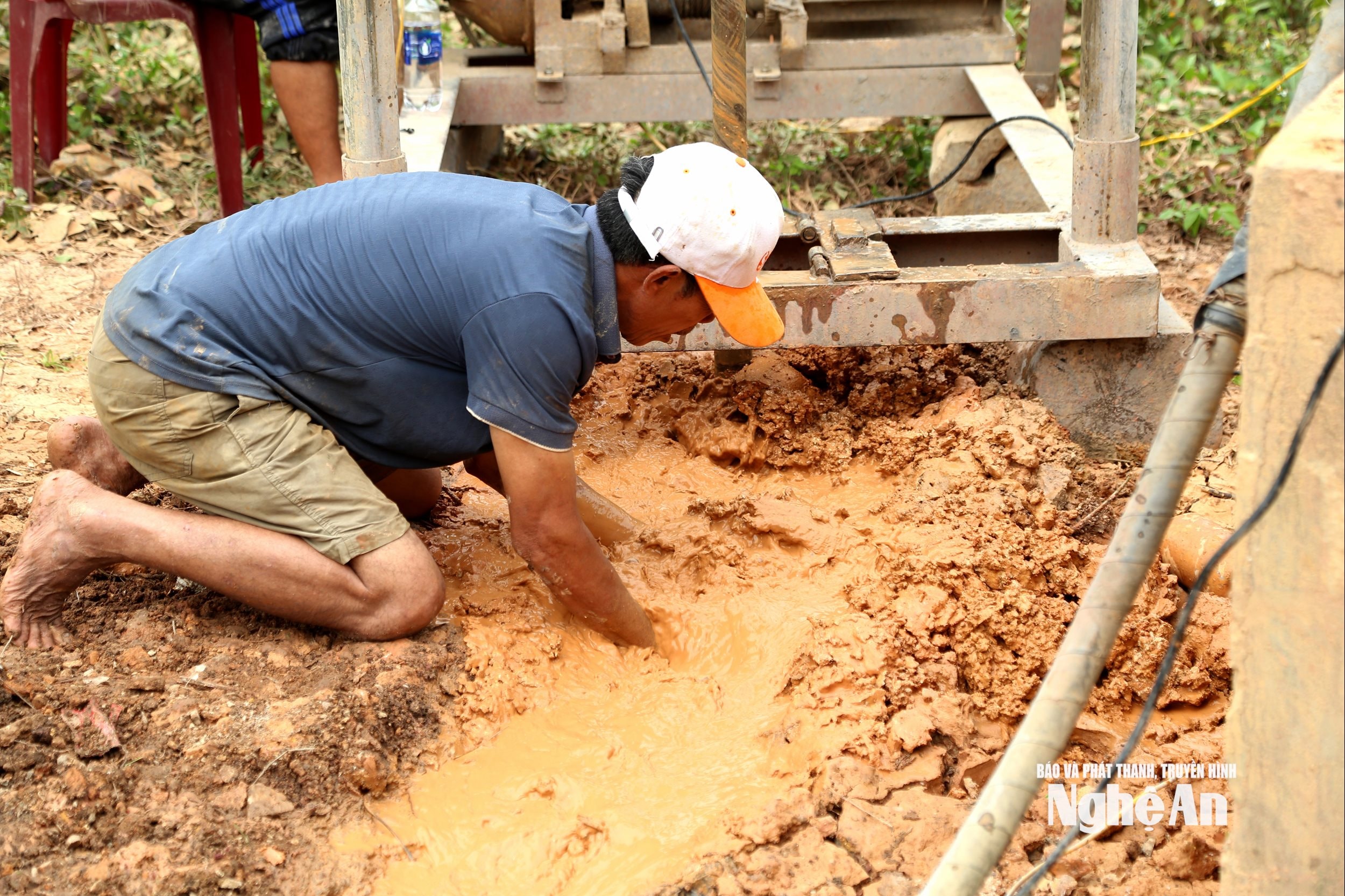
According to Mr. Nguyen Van Tuan, well drilling is a profession where experience is key. "Each region has different soil conditions, so you can't apply one method to all. The worker must monitor the soil, rock layers, and water sources while drilling to adjust the force and speed accordingly. In some places, using an air compressor isn't effective, so they have to switch to a rotary drilling machine to complete the well," Mr. Tuan shared.
According to Mr. Tran Hoang Chu, head of Nhan Tien hamlet, about seven years ago, the locality had dozens of well drilling rigs operating regularly. Currently, the hamlet only has around 10 rigs, including four pneumatic drilling rigs and the rest being rotary drilling rigs. Despite the reduced scale, well drilling still provides stable employment for dozens of local workers.
"Working here today, working tomorrow, especially during the hot months, well drillers are always busy due to the high demand for water for daily use. However, well drilling is hard work and involves many risks," shared Mr. Tran Hoang Chu.
High demand due to shortage of domestic water.
More than just a means of livelihood for well drillers, the well-drilling profession in Nhan Tien hamlet stems from a very real need of the local people. Ms. Nguyen Thi Huong, from Tay Ho hamlet, Quan Thanh commune, who currently hires well drillers, said that for many years her family has mainly relied on rainwater for daily life. Because the area lacks a piped water system, during the dry season, from around November to April, water shortages become severe. By the end of the dry season, stored rainwater is almost completely depleted, making daily life very difficult.
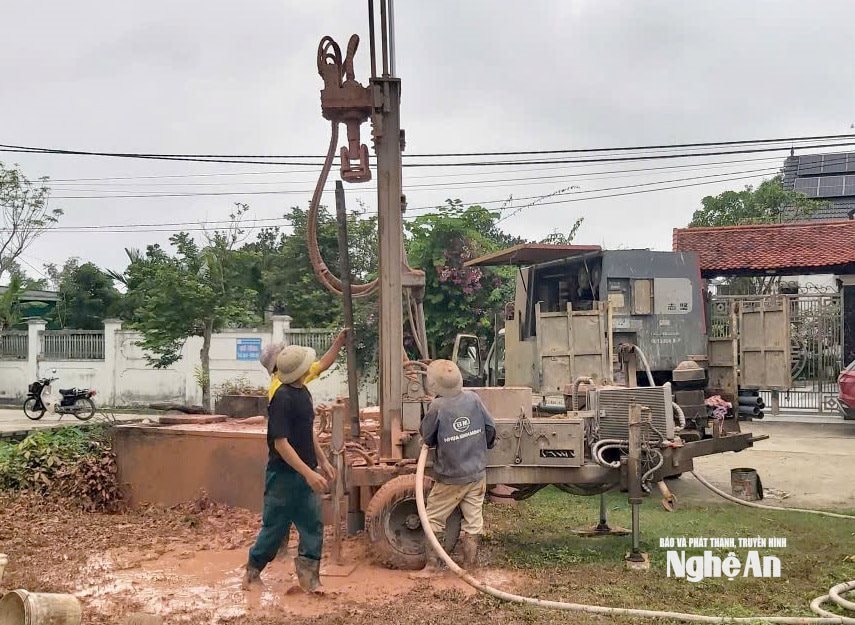
Faced with this situation, this year, her family decided to drill a well to secure their water supply. However, due to the high demand for well drilling, her family had to wait nearly a month for a driller to come to their turn. The well is 26 meters deep, and the total cost was over 14 million VND. "The cost is not small, but having a stable and long-term water source is very reassuring," Ms. Huong shared.
According to our research, many households in Tay Ho hamlet, Quan Thanh commune, are currently seeking to drill wells to secure a reliable water supply for daily use. If Mrs. Huong's well provides a plentiful supply of water with guaranteed quality and no salinity contamination, this will serve as a basis for other households to confidently invest in drilling wells in the future. Mrs. Tran Thi Phuong from Tay Ho hamlet stated that for a long time, their water supply has mainly relied on rainwater and filtered water from ponds and lakes, which is not reliable. Therefore, if the groundwater source is reliable, her family will decide to drill a well.
Despite the hardships, large investments, and frequent absences from home, well-drilling has helped the people of Nhan Tien hamlet stabilize their livelihoods. From a purely agricultural village, it has quietly contributed to alleviating the "thirst" of many rural areas during each drought season.


