
Street scenes in the villages of Nghe An
In recent years, some rural areas in Nghe An have undergone noticeable changes, with multi-story houses built close together and transportation and services developing. Some communes have invested over half a billion VND in installing road signs and traffic signals, while others have assigned house numbers to all households, creating a neat and organized appearance similar to residential neighborhoods.
Houses with numbers
At the beginning of September, we met Nguyen Van Tuan (23 years old) in Quynh Doi commune, Quynh Luu district. Tuan works as a "shipper," transporting goods within Quynh Luu district. This job has become very popular in recent years due to the increased demand for online shopping. However, one of the biggest difficulties in Tuan's job is finding the addresses of the recipients.
"But unlike in other communes, every time we receive an order to be sent to Quynh Doi commune, we're thrilled. Because finding a house here is very easy. We don't have to ask anyone. It's just like being in the city," Tuan said enthusiastically.
Just as Tuan had said, we toured Quynh Doi commune and saw that over 1,500 houses were all assigned specific house numbers. A blue sign was attached to the gate, with the house number at the top and the name of the hamlet, street, and commune at the bottom. At first glance, it looked just like a neighborhood. This is also the first commune in Nghe An to assign house numbers to its residents.
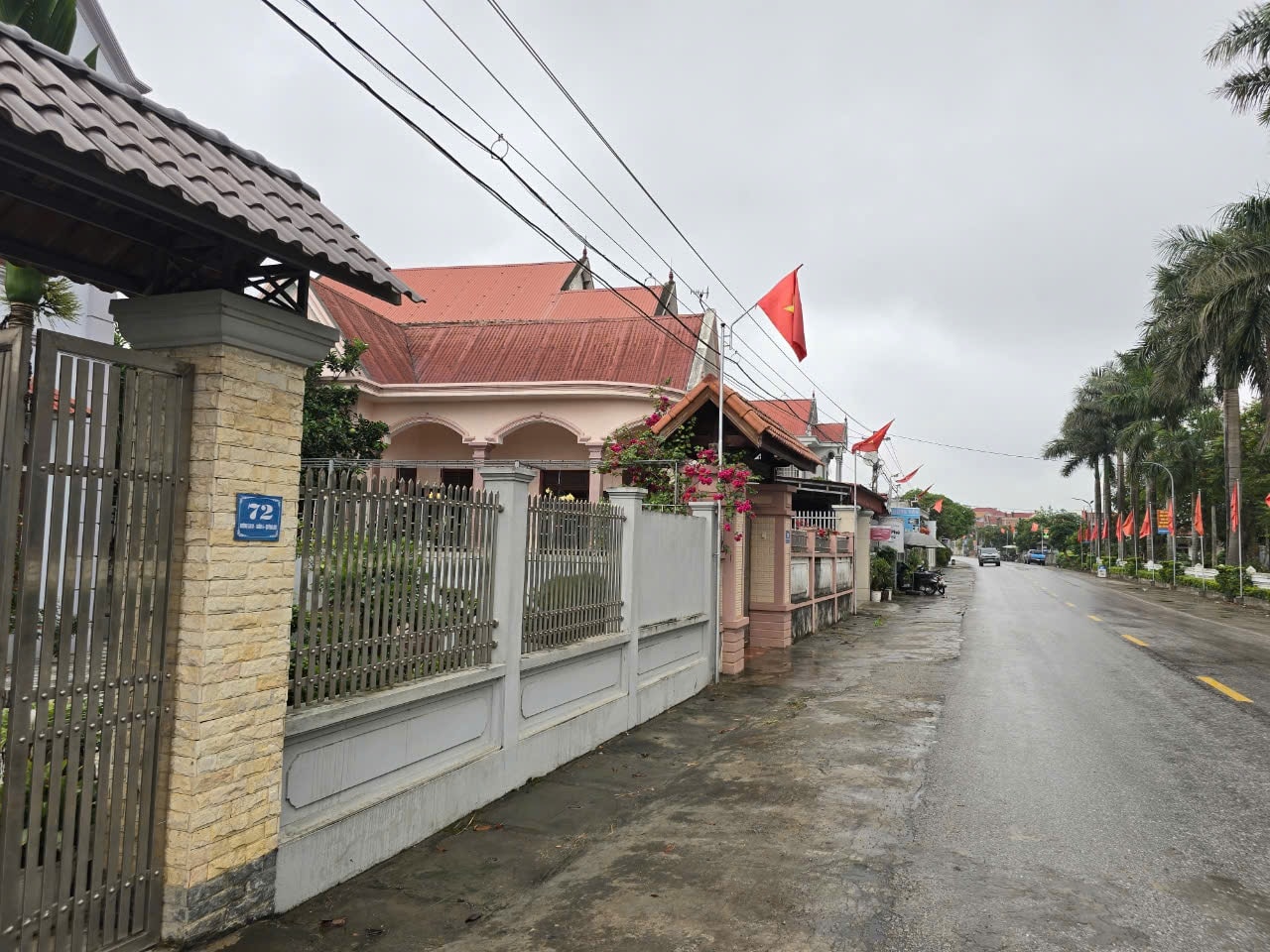
According to Mr. Ho Sy Hung, Vice Chairman of the People's Committee of Quynh Doi commune, the house numbering system was implemented across the commune four years ago. "This stemmed from the suggestions of people who live far from home and tourists. Every time they visited Quynh Doi, they had difficulty finding the houses of acquaintances and had to ask for directions many times. At that time, Quynh Doi commune had just completed the first model rural area project in the province, so we implemented it immediately," Mr. Hung said, adding that during the implementation process, there were no objections from the people; everyone welcomed it. The cost was not high, but it brought many conveniences.
“Our commune is known as a ‘village of scholars,’ with many famous figures. We wanted to name the roads in the commune after these famous people, but that requires permission from the Provincial People’s Committee, so we haven’t implemented it yet. Therefore, currently, only the main road is named after the provincial road that runs through it, while the secondary roads in the commune are numbered using names like Road No. 1, Road No. 2… to number the houses. Since we have specific house numbers, no one has to ask for directions anymore. Especially the delivery drivers, they are very happy,” Mr. Hung recounted.
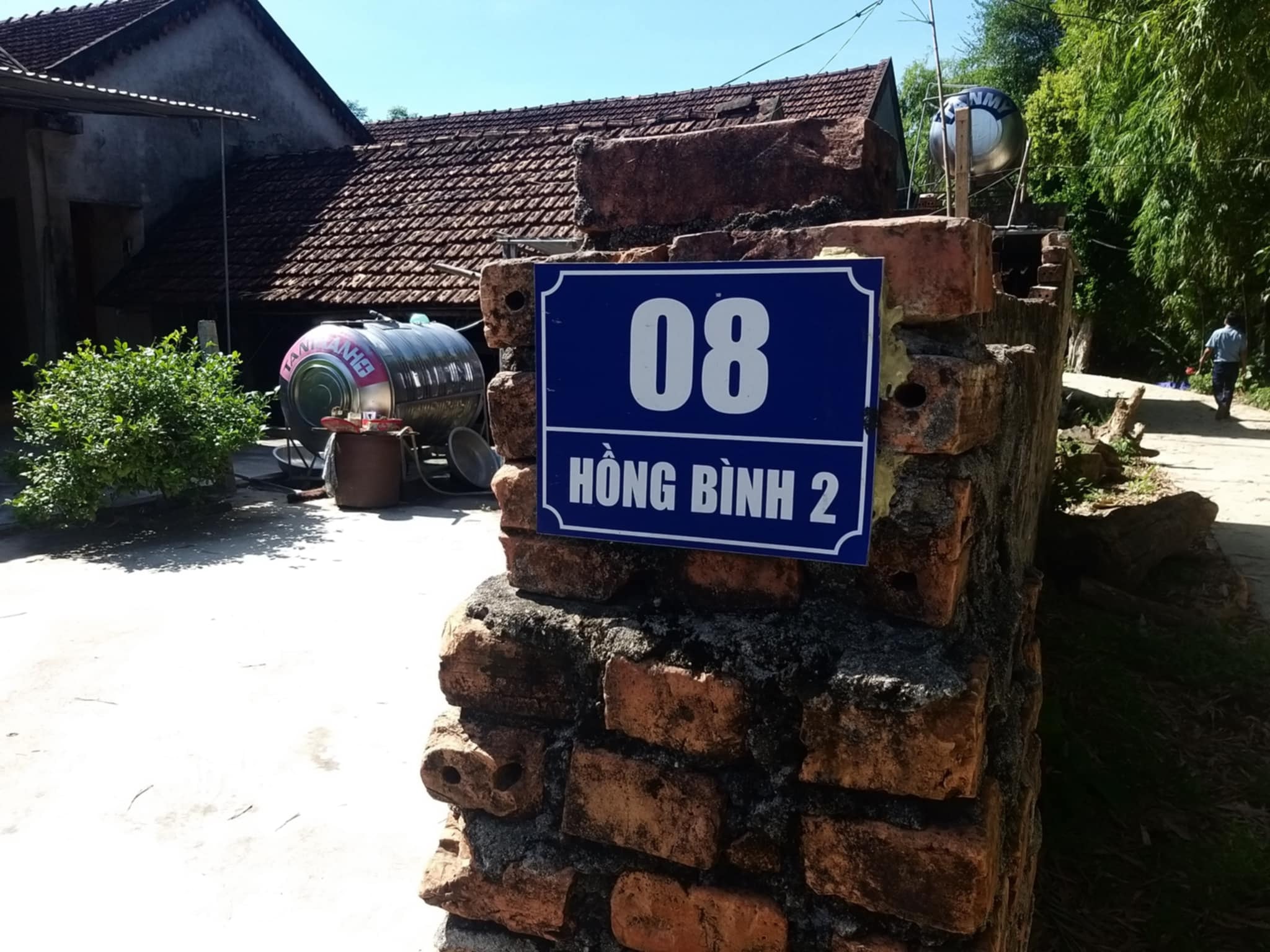
According to our investigation, besides Quynh Doi commune, Thanh Yen commune (Thanh Chuong district) in the province also has house numbers, but it's a spontaneous initiative. According to Mr. Bui Huu Chuong, Chairman of the Thanh Yen Commune People's Committee, house numbering was only implemented in the former Hong Binh hamlet, which has now merged with another hamlet. The signs are placed in front of the houses, displaying only the house number and the hamlet name. "This was initiated and implemented by the residents themselves. However, we've found that having numbered houses is very convenient for many things. It helps the government manage the area better. In the future, as we strive to become a model new rural area, we will consider implementing house numbering for the entire commune," Mr. Chuong said.
The story of a commune spending over half a billion dong to "unravel the maze".
Dien Van commune is nestled in a low-lying area, surrounded by many communes in Dien Chau district. The area is also divided by three rivers: the Bung River, the Vach Bac Canal, and the Nha Le Canal. For a long time, this commune has been known as a "labyrinth," because it is very difficult for strangers to find their way here.
The roads in Dien Van commune are narrow and very winding. Houses are built close together all around. There doesn't seem to be a single main road here, as most are equally narrow and convoluted. "Our commune borders six other communes, so there are six main roads leading into it. But even people from the neighboring communes, who have visited Dien Van many times, easily get lost and can't find the right way out. Sometimes, after a short while, we have to detour to another commune, more than ten kilometers away. Even when senior leaders visit the commune, escorted by traffic police, they still get lost... Dien Van is truly like a labyrinth," Mr. Hai said.
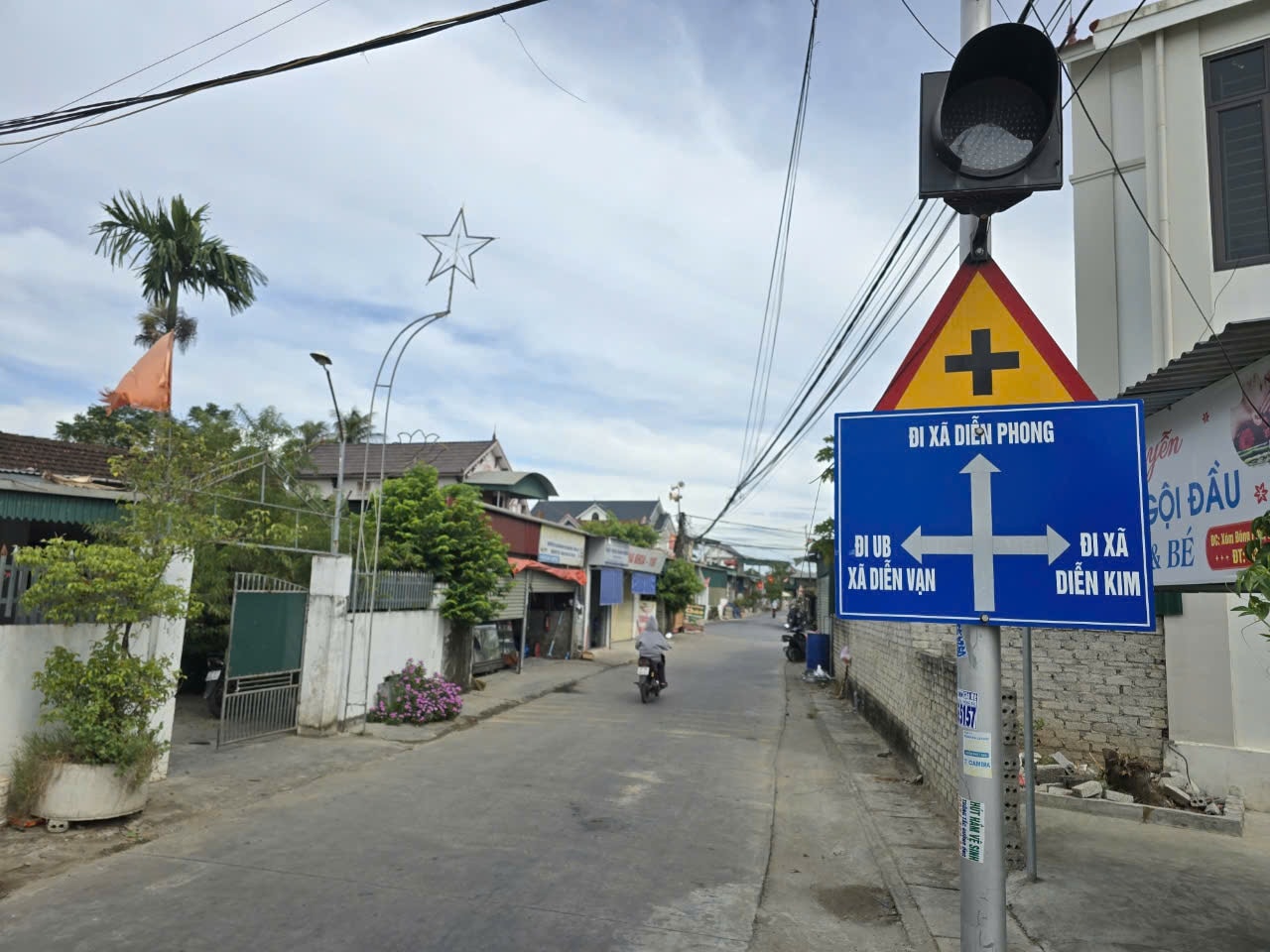
To "untangle the maze," more than two years ago, Dien Van commune invested over half a billion VND to install road signs. Currently, along the roads in Dien Van commune, there is a directional sign every few dozen meters. These signs mostly point the way to neighboring communes or to landmarks within the commune. They are especially important for locations of interest to many people, such as the Dien Van Commune People's Committee headquarters, the commune health station, pharmacies, and various hamlets. Furthermore, Dien Van commune has also invested in speed bumps on busy roads and dozens of traffic lights.
"Before, sometimes a dozen people would stop by every day asking for directions. Some would ask repeatedly but still couldn't find it. But since the clear directional signs were put up, nobody has to ask anymore," said Ms. Hoang Thi Mai (64 years old), who runs a grocery store by the roadside.


