
New York Times: China is increasingly leaning towards "muscle power"
According to Schell, it will be "very difficult for China to survive when its neighborly relations are strained."
Tensions in the South China Sea have suddenly escalated in recent days following China's deliberate ramming of a Vietnamese vessel after unilaterally deploying an oil rig deep within Vietnam's exclusive economic zone in the South China Sea.
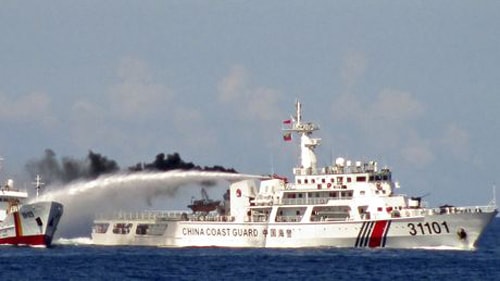 |
| Chinese ships use water cannons to attack Vietnamese ships (Photo: Reuters) |
During a press conference aimed at justifying the operation of the HD981 oil rig in Vietnam's exclusive economic zone, Mr. Di Tien Luong, Director of the Department of Border and Maritime Affairs of the Chinese Ministry of Foreign Affairs, acknowledged the use of water cannons to attack Vietnamese fishing vessels but evaded questions about the number of Chinese ships present in the area where the rig was illegally placed in Vietnamese waters.
According to the New York Times, China's use of water cannons to attack Vietnamese fishing vessels demonstrates Beijing's increasingly reliance on "muscle power" in disputes with its neighbors.
Orville Schell, a China scholar and current director of the Center for U.S.-China Relations at the Asia Society in New York, said: “I find the current situation quite alarming, because the relatively calm relationship between China and its neighbors that existed in previous years may no longer exist.”
Speaking to the New York Times by phone, Schell said: “China is beginning to prepare for a period of regional tension. This is not what China has been touting as a peaceful rise.”
According to Schell, Beijing has "created an atmosphere in which it will be very difficult for China to survive when its relationships with its neighbors are strained."
In a related development, the US State Department on May 8th once again issued strong statements condemning China's unilateral and provocative actions in the South China Sea. Deputy State Department spokesperson Marie Harf called on China to cease its provocative and escalating actions in the South China Sea, including the deployment of a deep-sea drilling rig and numerous escort vessels to the disputed area.
According to VOV


