
The Indonesian central bank raised interest rates to 5.5% in an emergency measure to rescue the rupiah.
The Indonesian central bank (BI) unexpectedly raised its benchmark interest rate by 0.25 percentage points in an emergency meeting on June 9th to prevent a record plunge in the local currency and a wave of foreign capital outflows.
On June 9th, the Indonesian central bank (BI) decided to raise its benchmark interest rate by 0.25 percentage points to 5.5%. This emergency intervention, taken outside of its regular policy meeting, marks the second interest rate hike by the central bank in just three weeks.
Efforts to halt the rupiah's depreciation.
The decision to raise interest rates was made after the rupiah performed worse than expected. Earlier in the day's trading session, the Indonesian currency hit a record low of 18,188 rupiah to 1 USD. Following the announcement from BI, the rupiah recovered 0.9%, trading at 18,030.5 rupiah to 1 USD.
Since the beginning of the year, the currency of Southeast Asia's largest economy has depreciated by approximately 9%, becoming one of the weakest currencies in the region. In addition to raising interest rates, BI has also implemented a comprehensive set of solutions to attract foreign capital:
- Increase the yields on rupiah-denominated assets.
- Increase yields across all maturities for short-term debt instruments.
- A 10 basis point reduction in swap rates was implemented to support exchange rate risk hedging for investors.
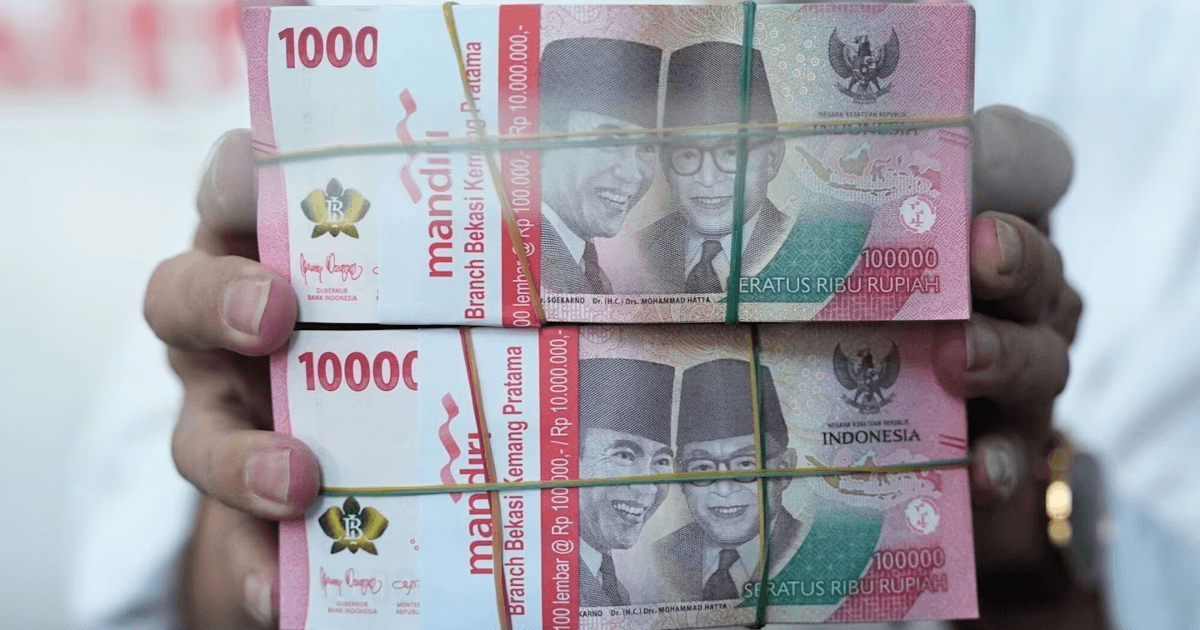
Pressure from fiscal policy and a wave of sell-offs.
The Indonesian financial market is facing significant pressure as its benchmark stock index has fallen nearly 40% since the beginning of the year. This is primarily due to international investors' caution regarding the policy directions of the government under President Prabowo Subianto.
Analysts are concerned about the costly populist programs, most notably the $15 billion free school meal program, which places a heavy burden on the state budget. At the same time, plans to centralize the export of strategic commodities such as coal and palm oil through state agencies are raising concerns about the government's intervention in the private sector.
Statistics on fluctuations in the Indonesian financial market.
| Index | Volatility/Value | Note |
|---|---|---|
| benchmark interest rate | 5.5% | An increase of 0.25 percentage points. |
| Rupiah/USD exchange rate | 18,030.5 | The value has fallen 9% since the beginning of the year. |
| Foreign exchange reserves | $144.9 billion | Lowest in 2 years |
| Stock market index | Nearly 40% off | The group that experienced the sharpest decline in the world. |
The challenge of restoring investor confidence.
The latest data shows that Indonesia's foreign exchange reserves fell to $144.9 billion in May, the lowest level in two years, due to heavy spending by the BI to defend the exchange rate. Global index provider MSCI also issued a warning about the liquidity of the country's stock market due to its highly concentrated ownership structure.
According to Jason Tuvey, Deputy Chief Economist for Emerging Markets at Capital Economics, raising interest rates is only a temporary solution. He told the Financial Times that Indonesia needs more interest rate hikes to stabilize the exchange rate. More importantly, the government needs to adjust its populist policies that are costing the budget to restore lasting investor confidence.
The Indonesian central bank is expected to hold its regular policy meeting next week. Economists do not rule out the possibility that the central bank will take further, more aggressive monetary tightening measures if exchange rate pressures do not ease.


