
Preventing juvenile crime
(Baonghean)Although significant progress has been made in combating crime and preventing legal violations among minors in the province, the situation regarding juvenile delinquency remains complex due to various reasons.
According to statistics, in 2012, the Provincial People's Court handled 109 cases involving 133 juvenile defendants. These included 13 murder cases with 16 defendants; 70 property crimes with 85 defendants; 5 intentional injury cases with 9 defendants; 11 drug-related crimes with 11 defendants; and 1 rape case with 1 defendant… Significantly, these cases revealed that the criminal methods of these individuals were no longer simply impulsive and thoughtless actions, but rather involved careful planning and sophisticated tactics.
Many people surely haven't forgotten the murder that occurred on the evening of August 6, 2012, in Hamlet 1, Quynh Tam Commune (Quynh Luu District). Simply because he couldn't sell his old phone to Nguyen Van Lang at the price he wanted, Phan Van Quang (born in 1996), residing in Hamlet 9, Quynh Chau Commune, Quynh Luu District, harbored a cruel intention of revenge. Quang armed himself with a sickle and went to Lang's house, asking him to drive him in his car. When they reached a deserted area, Quang attacked Lang from behind, slashing his neck with the sickle, causing his death.
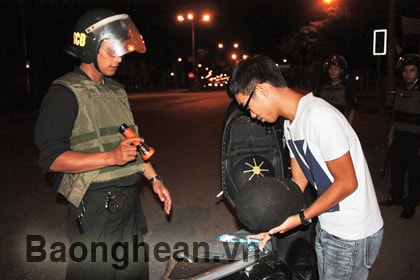
Mobile police units of the Provincial Public Security Department are patrolling and controlling traffic in Vinh City.
On July 3, 2012, the Nam Dan District Police arrested Mai Van Cuong (born in 1997, residing in Hamlet 2, Nam Thanh Commune, Nam Dan District) for the crime of "rape of a child." On the morning of June 28, Mai Van Cuong invited Nguyen Thi T (born in 2003, residing in the same hamlet) to go snail hunting and then took her to the Quy Chinh rice field in Van Dien Commune. At a duck shed next to a pond, Cuong committed the act of sexual intercourse despite T's weak resistance.
According to analyses by relevant authorities, the recent increase in juvenile delinquency is largely due to young people adopting a hedonistic lifestyle too early, prioritizing material values, and lacking responsibility towards the community. In addition, inadequate education from families and schools also contributes. Many children, unable to control themselves, are easily influenced by bad company; others become addicted to games and drugs, and are heavily influenced by the internet, frequently accessing prohibited content such as pornography and violence.
In addition, other contributing factors include difficult family circumstances, forcing children to drop out of school to help their families earn a living through various means, lack of parental supervision, and inequality within the family leading to pessimism and depression. These are important factors affecting children's perceptions and behavior, explaining why many young people commit particularly serious crimes. The formation of organized criminal gangs, with carefully planned methods and tactics, is on the rise.
Lieutenant Colonel Vo Duc Xuan, Deputy Head of the Criminal Investigation Department for Social Order, stated: Preventing juvenile delinquency must begin within each family. Family members who are not exemplary in their conduct, who act contrary to social moral standards, and who condone illegal behavior will be the source of criminal tendencies and behaviors in their children. Therefore, parents need to understand and empathize with their children, always be close to them, share with them, and regularly monitor their changes. Appropriate educational methods should be applied depending on the psychological and physiological development of each age group. Parents need to pay special attention to guiding and adjusting to their children's psychological development, preventing them from developing their personalities freely.
However, it is also necessary to recognize that, in addition to the role of the family, the attention of schools and society is more crucial than ever in educating and guiding children to develop correct awareness and appropriate behavior. Furthermore, social organizations need to actively engage children in beneficial activities, equipping them with life skills and helping them build resilience against social evils. On the other hand, to help juvenile offenders recognize their mistakes and correct them, becoming useful members of society, it is essential that juvenile trials take place in a friendly environment to facilitate rehabilitation. In particular, society needs to create all the necessary conditions and avoid prejudice against juvenile offenders after they have served their sentences. Measures should be taken to support them in learning a trade and finding stable employment to reintegrate into the community and become useful members of society.
Text and photos: Quang An


