
Nghe An: Emergency relocation projects remain in a state of 'slowness'.
(Baonghean.vn) - Nghe An is one of the localities frequently affected by flash floods, landslides, and mudslides during storms, with many areas severely impacted and requiring urgent relocation. This reality highlights the urgent need to develop resettlement projects in high-risk areas to ensure the safety of the people. However, in recent times, many emergency relocation projects have been progressing too slowly, causing frustration among the people.
The relocation project is urgent, but the matching funds are insufficient.
Due to the mountainous terrain of Nghe An province, characterized by steep slopes, and the living habits of its people, many residential areas have formed on mountain slopes and along streams and ravines. This means that the people have to face many challenges.Risk of flash floods and landslidesEspecially during the rainy and stormy season. In fact, the mountainous areas of Nghe An province have experienced many flash floods and landslides, causing heavy losses of life and property.
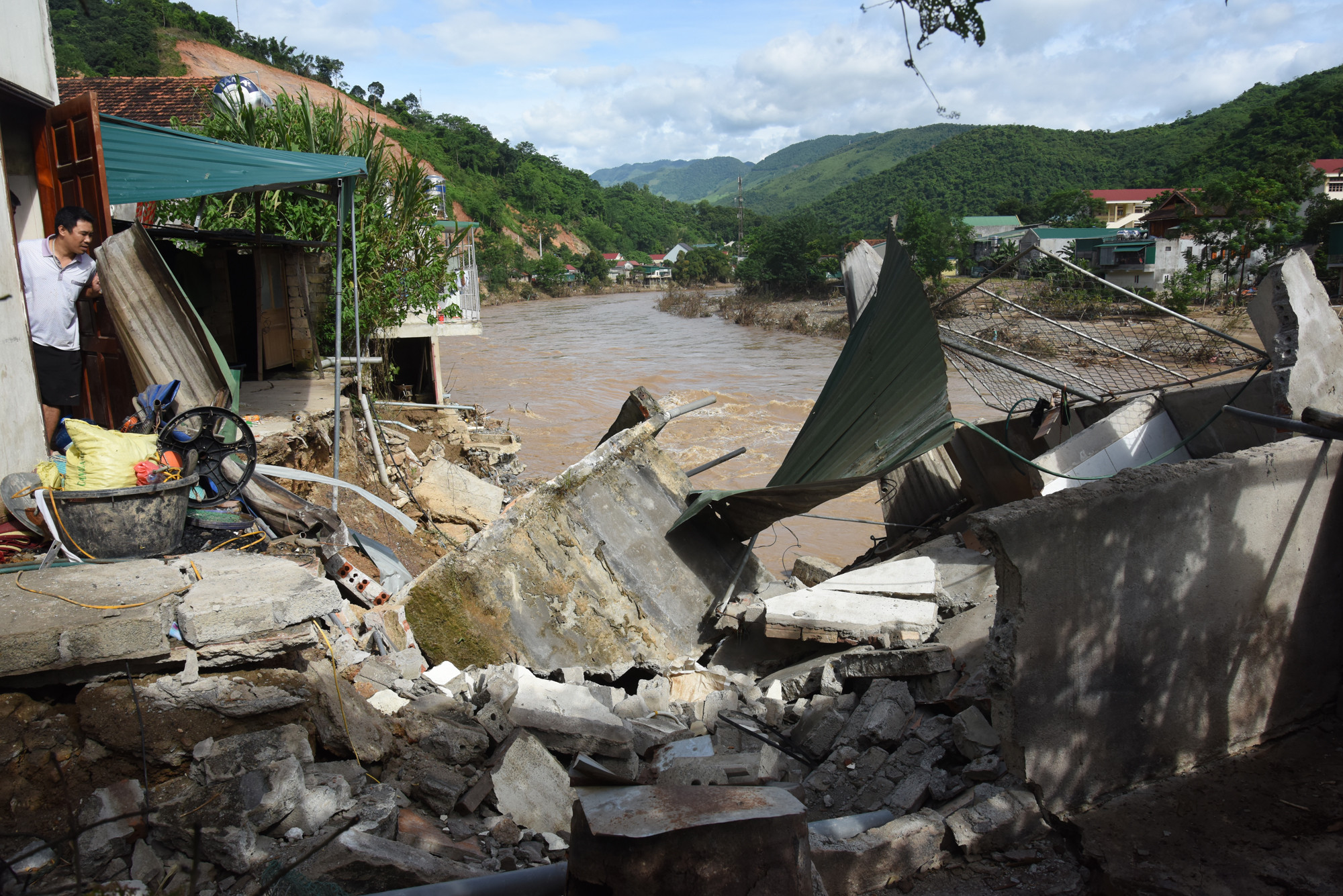 |
| Ky Son district is one of the localities that frequently suffers heavy damage from floods and landslides. (Photo: Thanh Chung) |
To ensure the safety of people in areas at risk of flash floods, landslides, and mudslides, based on Decision No. 1776/QD-TTg dated November 21, 2012, of the Prime Minister approving the program for relocating people in disaster-prone, particularly difficult, border, and island areas, the People's Committee of Nghe An province has directed departments, agencies, and localities to develop and implement investment projects for concentrated and mixed resettlement areas.emergency evacuationMove out of areas at risk of flash floods, landslides, and particularly difficult conditions, border communes in the province.
Specifically, monitoring by the Ethnic Affairs Committee of the Provincial People's Council showed that, as of the end of 2019, the entire province had 21 projects approved for investment and 25 newly planned projects. In particular, the ethnic minority and especially disadvantaged areas had 16 projects in the districts of Ky Son, Tuong Duong, Con Cuong, Que Phong, Quy Chau, Quy Hop, and Quynh Luu.
By the end of 2019, out of 16 projects in ethnic minority and particularly disadvantaged areas, only 4 had been completed; 9 projects were ongoing and incomplete, and 3 projects had not yet been started.
According to Ms. Lo Thi Kim Ngan, Head of the Ethnic Affairs Committee of the Provincial People's Council, the main reasons are the slow, scattered, and piecemeal allocation of funds for projects, primarily from the central government, while the local budget's matching funds are very limited. Furthermore, the integration of funds from various programs and projects in the area to improve investment efficiency and prevent waste and losses has not been specific or effective. For example, the project to resettle residents in disaster-stricken and particularly difficult areas of Chau Thanh commune (Quy Hop district) has a total investment of 18.68 billion VND, of which over 7.5 billion VND comes from the central government and over 11 billion VND from the local budget.
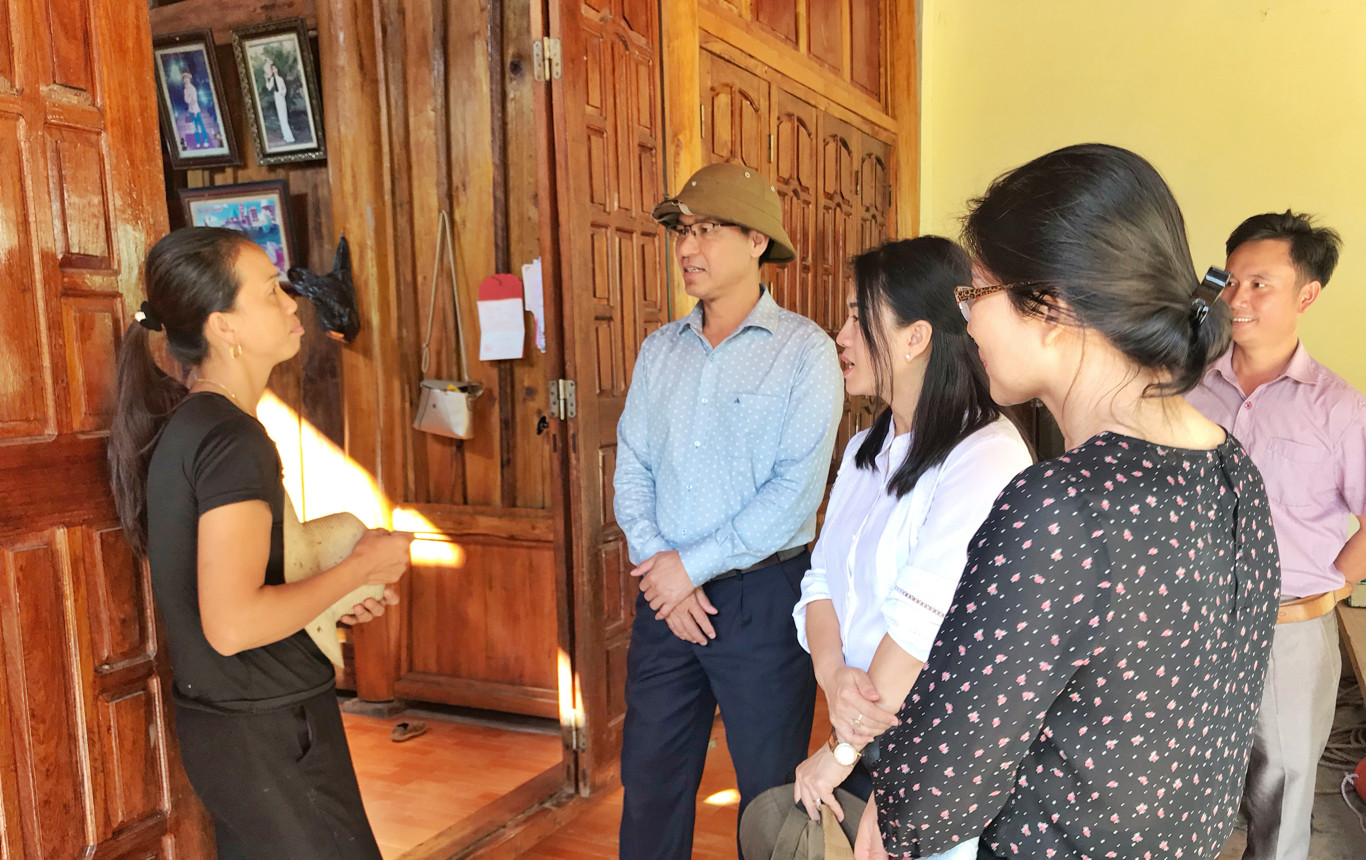 |
| A delegation from the Ethnic Affairs Committee of the Provincial People's Council is investigating the lives of people in a resettlement project for areas affected by natural disasters, floods, and landslides. Photo: Mai Hoa |
Although construction began in 2010, the project has only received nearly 6.8 billion VND out of a total of over 7.5 billion VND from the central government, with no funding allocated from the local budget. Similarly, the emergency resettlement project for disaster-stricken, landslide-prone, and particularly disadvantaged areas in Binh Chuan commune (Con Cuong district) has a total investment of over 26.2 billion VND (over 18.3 billion VND from the central government and over 7.8 billion VND from the local budget), but only 17.8 billion VND has been allocated from the central government, and no further funding has been provided since 2016. Currently, this project lacks access roads to the resettlement area, a water supply system, a kindergarten, and a community cultural center.
Besides the scattered and insufficient allocation of funds, which has led to the prolonged and unfinished implementation of emergency resettlement projects in flood- and landslide-prone areas of the province, at the explanatory session of the Standing Committee of the Provincial People's Council with the leaders of the Provincial People's Committee and a number of provincial and local departments and agencies at the end of September 2020, regarding several emergency resettlement projects from disaster-prone and landslide-prone areas in the province that have been prolonged and caused public dissatisfaction, many opinions also analyzed and clarified many other causes.
Many shortcomings exist in investment and construction management.
The process of organizing, implementing, and managing investment in construction projects has existing problems and shortcomings.
According to Deputy Director of the Department of Planning and Investment Nguyen Huu Mao, for construction projects, once 70-80% of the total capital has been allocated, the project is considered basically complete and ready for use. However, in the model residential area project for fishermen on the Lam River and in the particularly difficult areas of Thanh Chuong district (including the Khe Mu resettlement area in Thanh Thuy commune and the Trieu Duong resettlement area in Thanh Lam commune), despite allocating over 70/86 billion VND, reaching 81.39% of the total investment capital, the project is still not ready for use, and many investment items have deteriorated, causing waste. This demonstrates that there are existing problems and shortcomings in the process of organizing and managing the investment and construction of the project.
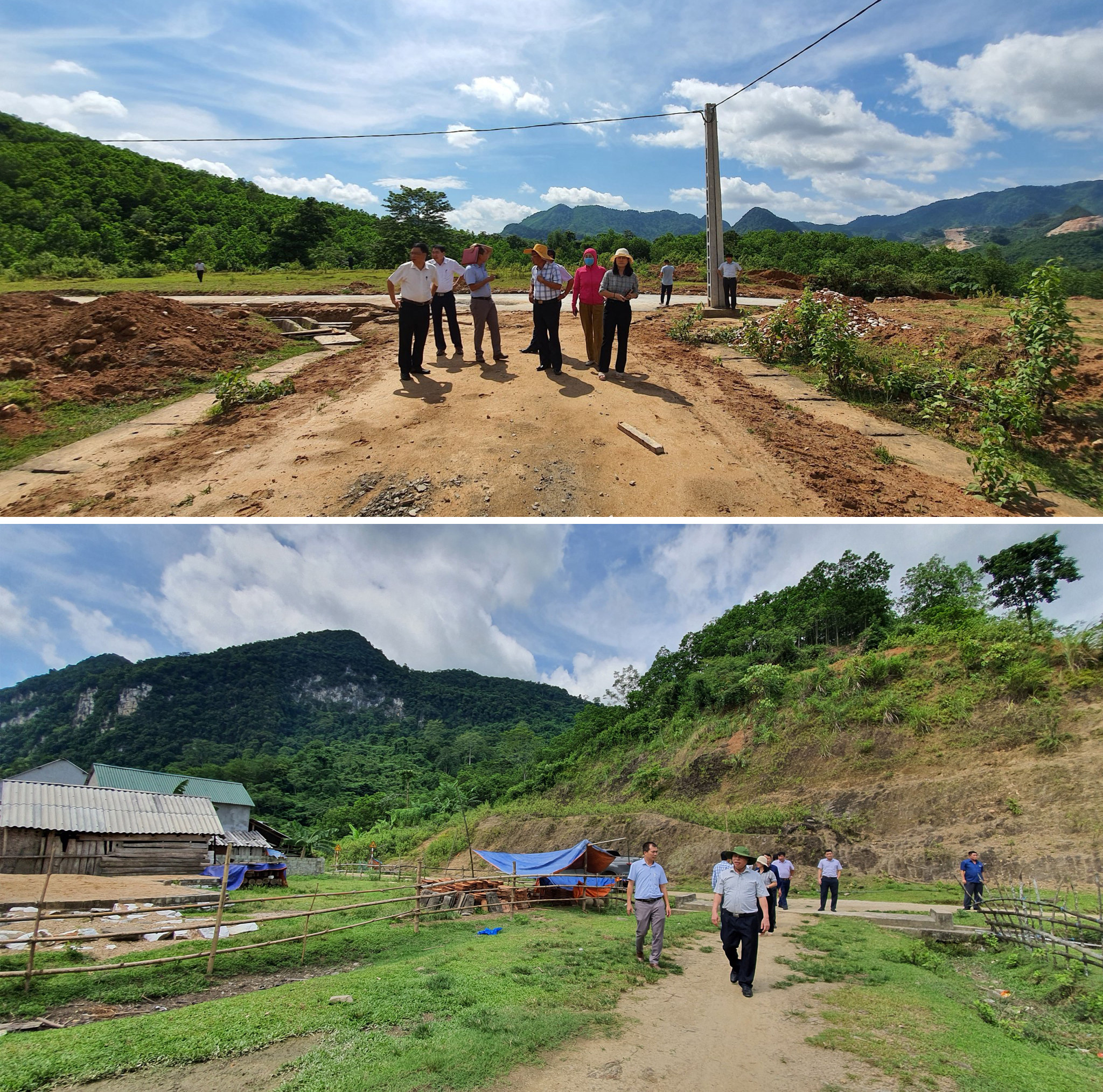 |
| The emergency resettlement project for landslide-affected areas in Chau Tien commune (pictured above) and Lien Hop commune, Quy Hop district, is still under construction. Photo: Mai Hoa |
Another reason, as analyzed by the Standing Vice Chairman of the Provincial People's Committee, Le Hong Vinh, is that the project planning process, the determination of scale and funding sources, is unclear, leading to the project having to be adjusted many times and being prolonged. For example, the Khe Mu fishing village resettlement project (Thanh Chuong) oremergency relocation projectThe project to develop disaster-stricken and landslide-prone areas in Chau Tien and Lien Hop communes (Quy Hop district) has undergone three adjustments. The Standing Vice Chairman of the Provincial People's Committee, Le Hong Vinh, also frankly pointed out that during the implementation process, the responsibilities of the investors and some relevant departments and agencies were not fully met in order to promptly resolve arising difficulties, especially regarding the allocation of capital.
In addition, some opinions suggest that during the implementation process, the investor did not clearly identify the projects and items that needed priority attention. As a result, some projects lacked land for production because there was no money for compensation to acquire land for the people, or there was a lack of bridges for people to use in the emergency resettlement project for areas affected by natural disasters, landslides, and particularly difficult areas in Binh Chuan commune (Con Cuong)...
Reassess urgency to prioritize.
Undeniably, the proactive leadership of the Provincial People's Committee, along with the involvement of several provincial and local departments and agencies, has been instrumental in implementing resettlement projects for flood- and landslide-prone areas within the province. Some of these projects have been completed and put into operation, proving effective, relocating a total of 400 households who are gradually stabilizing their lives.
However, overall, the number of unfinished projects remains high. Besides wasting resources due to the deterioration of many investment items, ensuring the safety of people in areas designated for urgent relocation has not been a priority. As the Chairman of the Provincial People's Council, Nguyen Xuan Son, stated at the explanatory session at the end of September 2020, all resettlement projects, designated as urgent, have remained unfinished for 8-10 years.
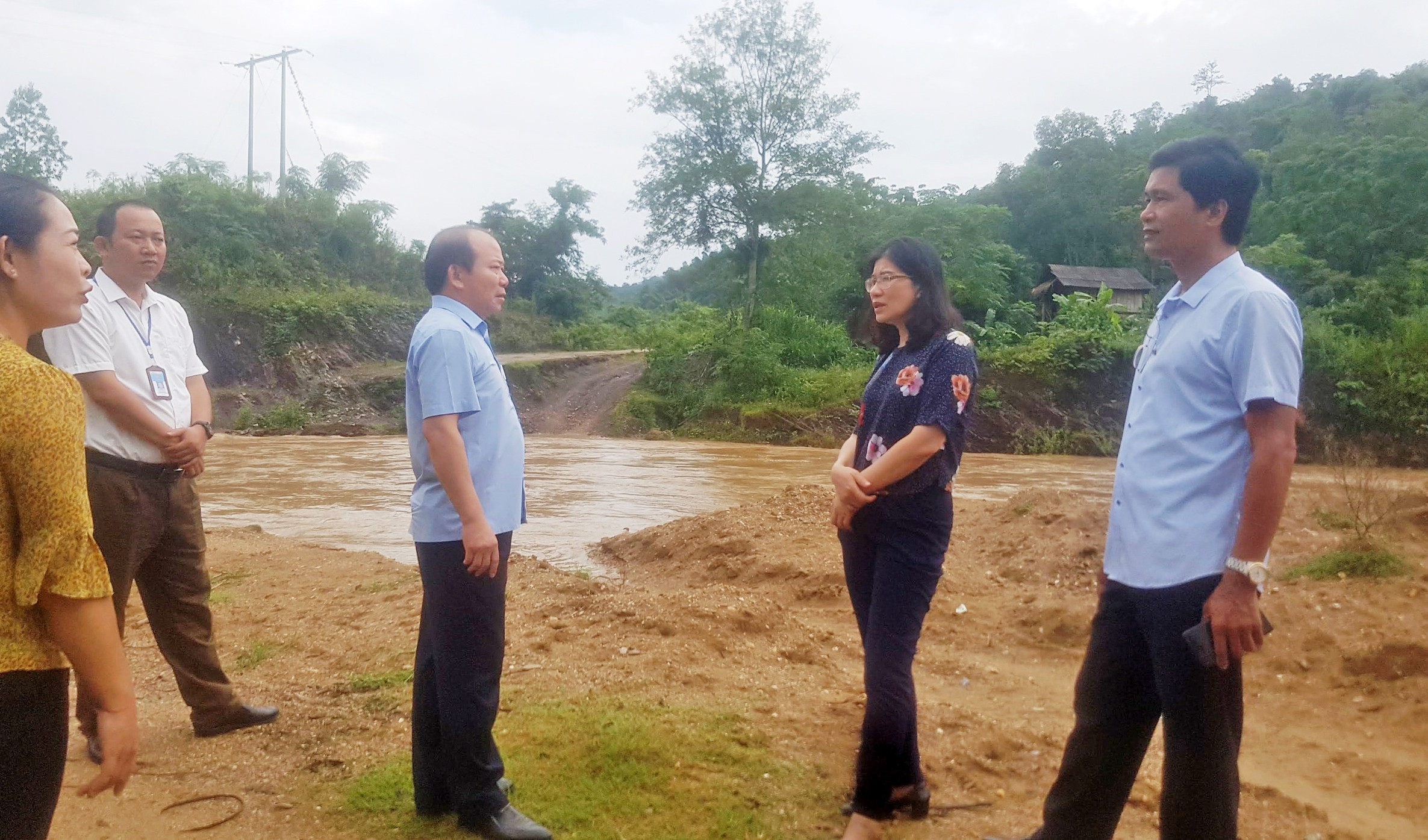 |
| Through monitoring by the Ethnic Affairs Committee of the Provincial People's Council, it was found that the emergency resettlement project for areas affected by natural disasters, landslides, and particularly difficult areas in Binh Chuan commune (Con Cuong district) is underway. Photo: Mai Hoa |
It is necessary to reassess which projects are truly urgent and prioritize construction items in order to develop focused solutions.
Following the explanatory session, the Standing Committee of the Provincial People's Council issued a Notice summarizing the session's conclusions, requesting the Provincial People's Committee to direct a comprehensive review of all resettlement projects throughout the province. Based on this review, they should identify which projects are truly urgent and prioritize specific construction items to develop focused solutions. Simultaneously, they should review completed works and components within each project, conduct quality inspections, and put them into use to avoid waste.
In addition, the Provincial People's Committee needs to direct the inspection and examination of these projects.is in a state of deterioration.Poor construction quality needs to be addressed to clarify responsibility; a comprehensive plan integrating central government funds and balancing the provincial budget is needed to complete urgent resettlement projects early, including the project to build model residential areas for fishermen on the Lam River and in the particularly disadvantaged areas of Thanh Chuong district, which must be completed and put into use in 2022.
In my opinion, since resettlement projects have been classified as urgent, all levels and sectors have a greater responsibility to expedite their implementation to ensure the safety of the people in the short term and, in the long term, to help them stabilize their lives, avoiding the situation where urgent decisions are made but implementation proceeds slowly, as has happened in the past.


