
Nghe An province ensures 100% of ethnic minority students are proficient in Vietnamese.
(Baonghean.vn) - Equipping preschool and primary school students with Vietnamese language skills will help schools organize teaching and learning more effectively, contributing to improving the quality of education.
On the morning of November 24th,Department of Education and TrainingOrganizing the Conference on the Results of Phase 1 Implementation of the Project “Strengthening Vietnamese Language for Preschool Children and Primary School Students in Ethnic Minority Areas, 2017-2020, with a vision to 2025” in Nghe An Province.
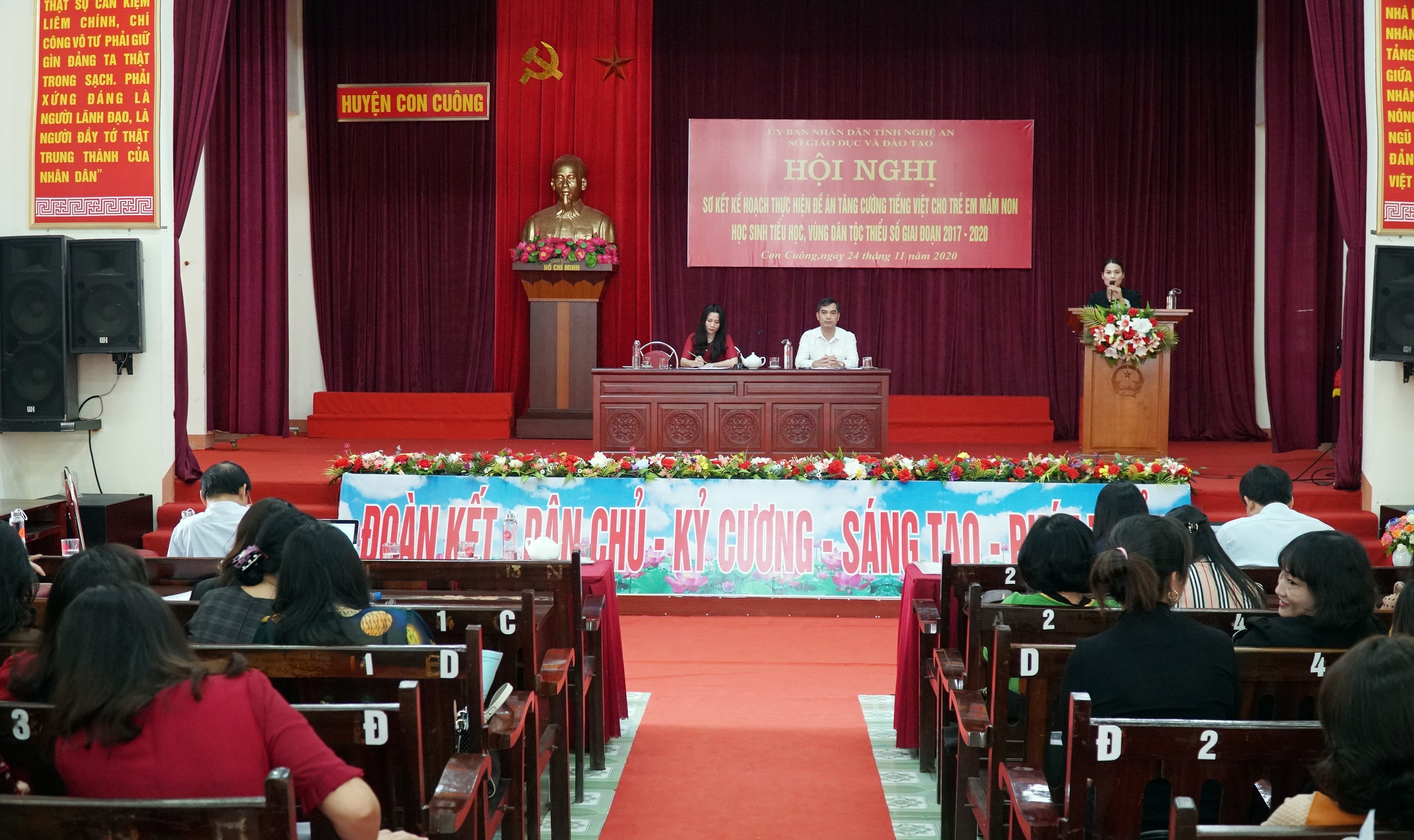 |
| Overview of the conference. Photo: MH |
Strengthening ProjectVietnameseThis program is for preschool and primary school children from ethnic minority groups (2016-2020) to help them acquire basic Vietnamese language skills to complete the preschool and primary education programs; to create a foundation for them to learn and acquire knowledge in subsequent educational levels, contributing to improving the quality of education and contributing to the development of the country.
In Nghe An, at the preschool level, the project is implemented through a series of synchronized solutions such as enhancing learning materials, equipment, toys, and building a Vietnamese-speaking environment to help children become familiar with the Vietnamese language at an early age. In addition, educational institutions have flexibly and creatively integrated Vietnamese language enhancement content into children's daily activities, ensuring that ethnic minority children can achieve age-appropriate educational goals.
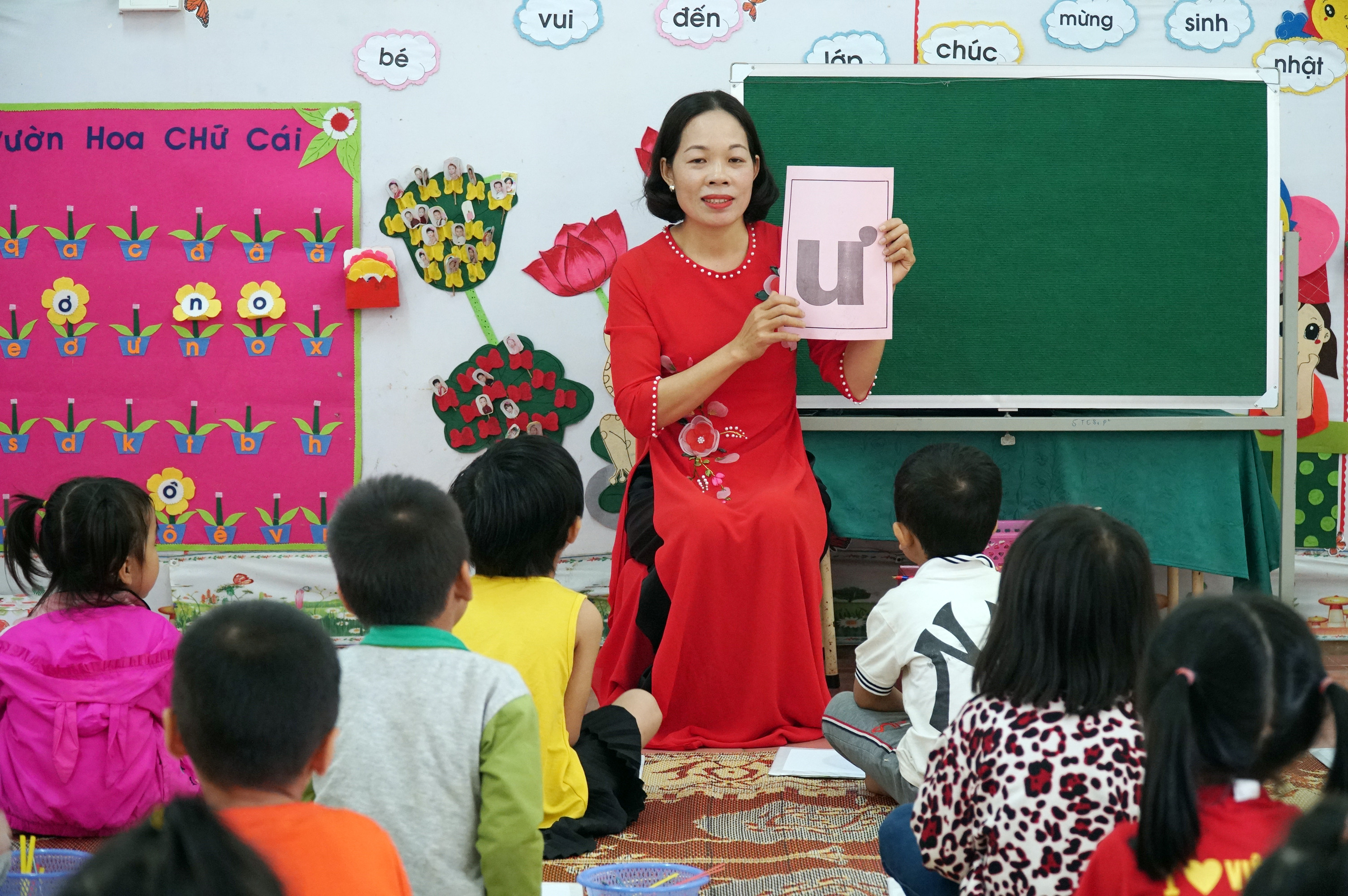 |
| Vietnamese language class for students at Yen Khe Kindergarten, Con Cuong. Photo: MH |
Thanks to the efforts of the entire sector, by 2020, the rate of enrollment of ethnic minority children in schools has achieved many positive results, including 92.6% of preschool children (target 90%) and 100% of ethnic minority children in educational institutions receiving enhanced Vietnamese language skills training, or self-training in their local ethnic minority language to communicate with, care for, and educate children.
Notably, 100% of ethnic minority children attend school for two sessions per day and participate in the half-day program. 100% of 5-year-old ethnic minority children who complete the preschool education program are well-prepared with vocabulary and communication skills (listening, speaking, comprehension) in Vietnamese before entering first grade.
To ensure the effective implementation of phase 2, delegates at the conference frankly pointed out shortcomings and difficulties such as the lack of facilities and equipment in schools in remote areas, and the insufficient availability of reference materials and teaching aids for teaching Vietnamese to ethnic minority children.
Some schools have many teachers from the lowlands who, due to their lack of knowledge of the ethnic minority language, experience language barriers between the teachers and children, limiting the organization of activities to enhance Vietnamese language skills for the children.
Concluding the conference, Deputy Director of the Department of Education and Training Nguyen Van Khoa acknowledged and highly appreciated the efforts of localities in strengthening Vietnamese language skills for ethnic minority students. Many schools have adopted creative approaches and activities, based on practical realities, linguistic characteristics, and the psychology of students, to help them effectively learn, speak, read, and write Vietnamese.
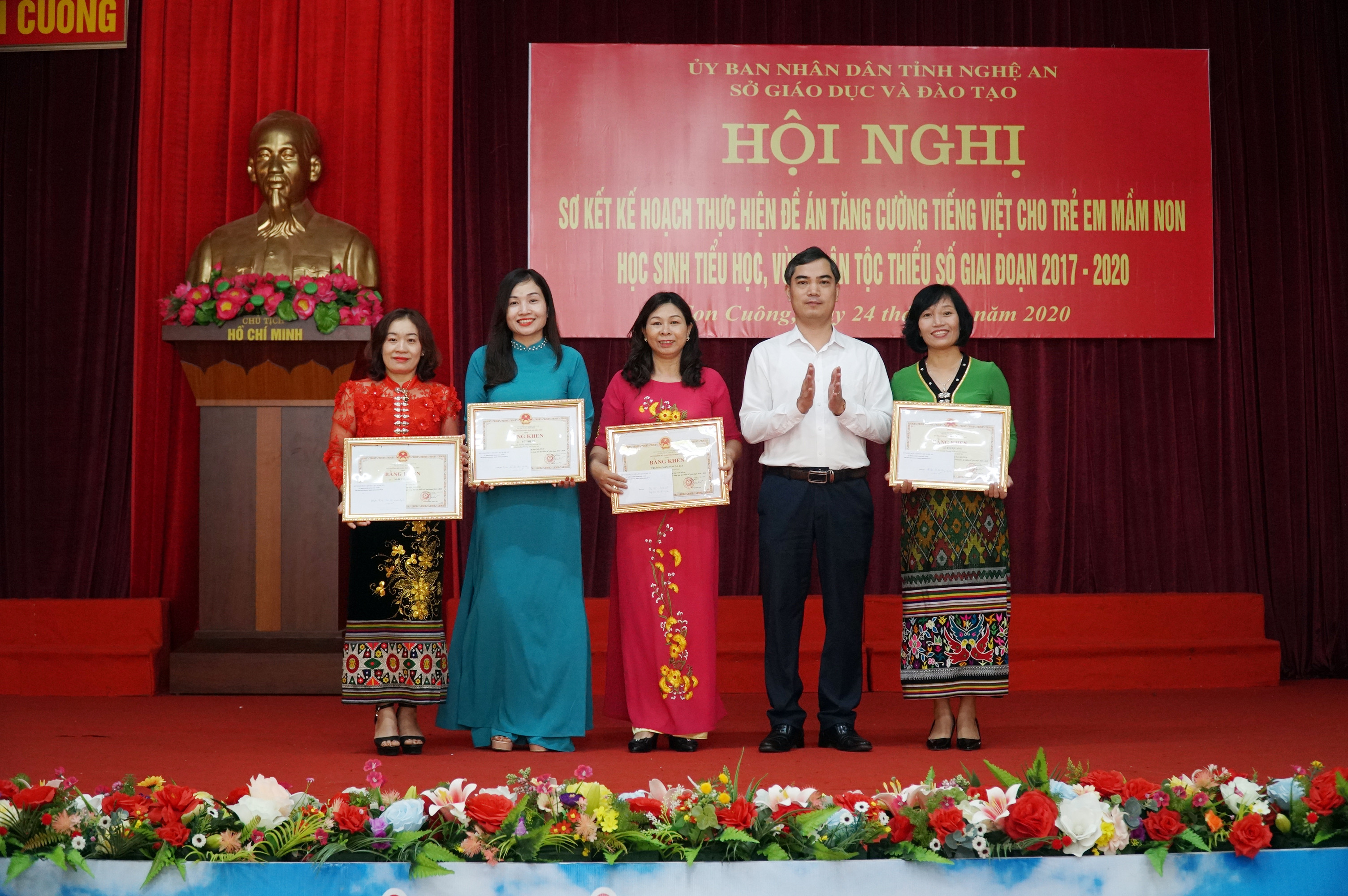 |
| Deputy Director of the Department of Education and Training Nguyen Van Khoa presents certificates of commendation from the Ministry of Education and Training to outstanding collectives and individuals. Photo: MH |
However, in accordance with current requirements, the Department's leadership wishes that units continue to focus on building a Vietnamese language environment both inside and outside the classroom; fostering and improving the capacity of management staff and teachers; and innovating the content and format of professional group activities, school-level professional development activities, and district-level professional development activities.
At the same time, it will create opportunities for officials and teachers to interact, learn, and share good and creative practices in management and professional development related to strengthening Vietnamese language skills for children. In addition, annual funding for strengthening Vietnamese language skills will be allocated to mountainous districts so that units can proactively implement the project.


