
Nghe An: Poultry egg prices drop, consumption slows down.
(Baonghean.vn) - Unlike previous years, when poultry egg prices would typically drop and stabilize after Tet (Lunar New Year), but only for a few weeks, this year the market is booming. However, egg prices are currently low, consumption is slower, and many farms are losing millions of dong every day…
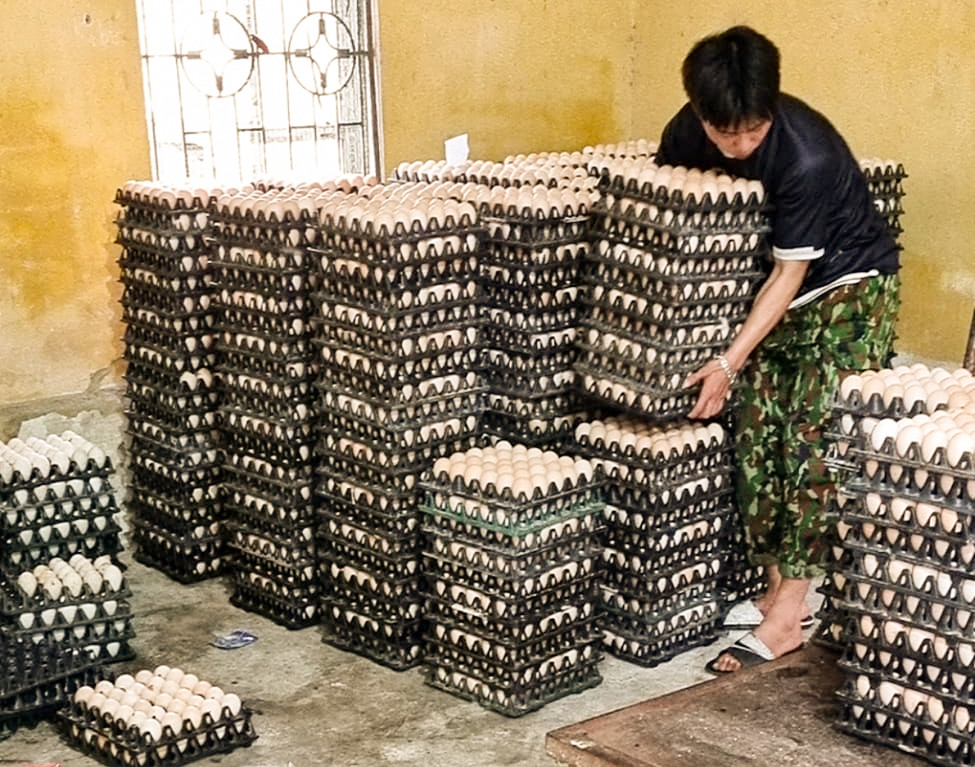 |
| The current price of chicken eggs is 1,800-2,000 VND per egg, 500-700 VND lower than before Tet (Lunar New Year). Photo: Thanh Phuc |
Raising 15,000 laying hens in a closed-loop system, Mr. Tran Xuan Son's farm in Nghia Hung commune (Nghia Dan district) supplies an average of 14,000-15,000 eggs to the market each day. Before Tet (Lunar New Year), egg prices reached 2,500 VND/egg, and the farm's egg supply couldn't meet customer demand. Now, with prices dropping to 2,000 VND/egg, the 15,000 eggs need to be sold within 3-5 days.
Mr. Son said: "According to market cycles, egg prices usually stabilize after Tet (Lunar New Year), but only until the 15th day of the first lunar month. After that, when factories, schools, and collective kitchens resume operations, egg prices rise again. But now, even though it's already February (lunar calendar), the market has not yet improved."
 |
| Besides the 20 million VND spent on feed each day, Mr. Son (Nghia Hung, Nghia Dan) also has to cover labor costs and farm operating expenses. Photo: Thanh Phuc |
Raising 15,000 laying hens daily consumes 20 million VND worth of feed, plus the cost of 800,000 VND for 4 workers and approximately 400,000-500,000 VND for electricity to operate the entire farm. Therefore, with current egg prices, the farm is not only unprofitable but also losing millions of VND every day.
Raising only 2,500 laying hens on a smaller scale, Mr. Nguyen Van Sinh (Yen Hop, Quy Hop) doesn't need to hire laborers; he mainly relies on family members to care for the chickens. Each day, he collects about 2,000 eggs, but with the current selling price of 2,000-2,200 VND per egg (depending on wholesale and retail prices), he doesn't make a profit.
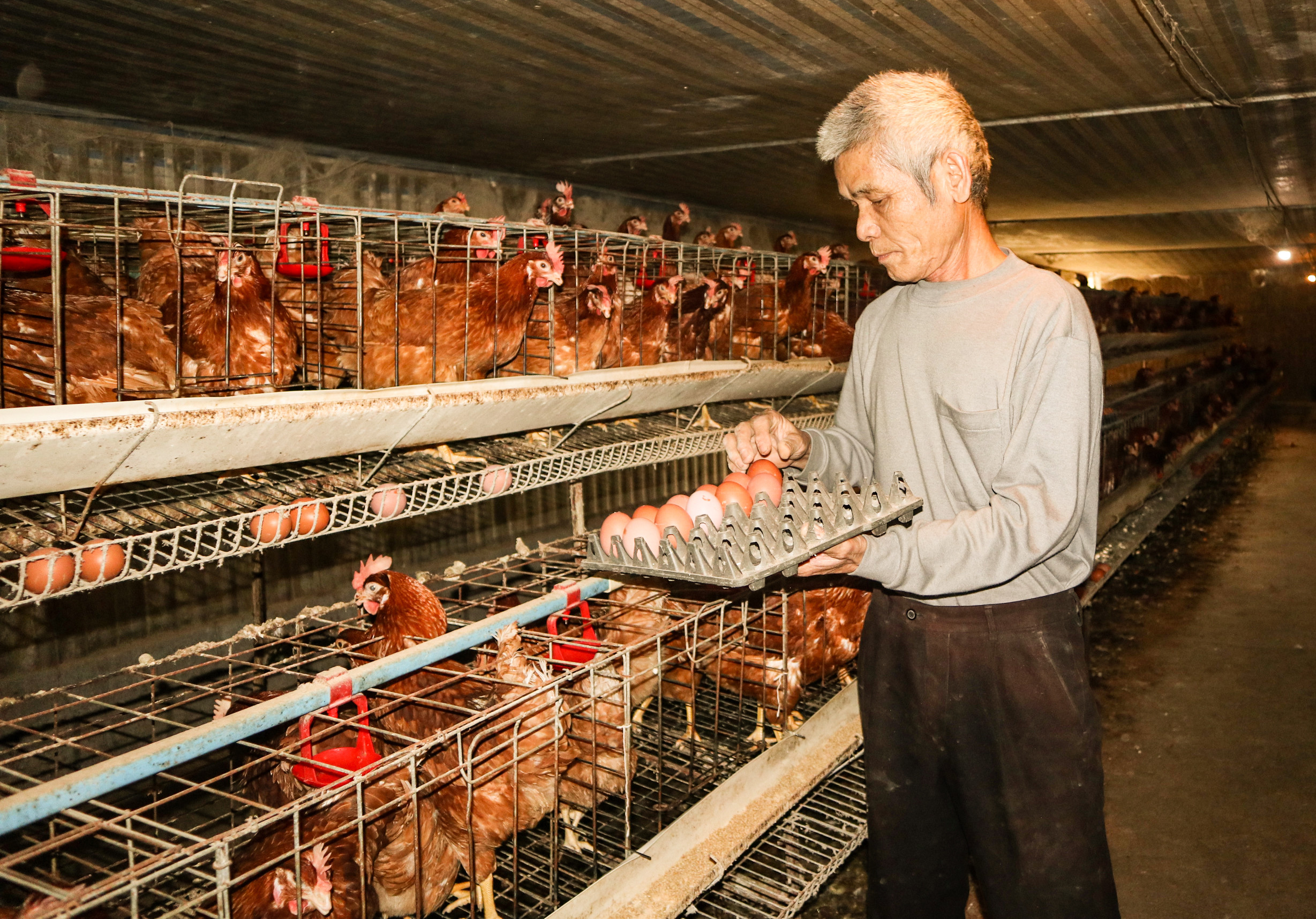 |
| Despite raising eggs on a large farm scale without hiring laborers, Mr. Nguyen Van Sinh (Yen Hop, Quy Hop) did not suffer losses. Photo: Thanh Phuc |
Mr. Sinh said: "That's only if we don't count the labor of the four family members to avoid losses. If we had to hire workers, we'd lose 800,000-1,000,000 VND a day. Egg prices have dropped, but consumption has also decreased, and egg sales are much slower than before."
According to analysis, the reason for the drop in egg prices is that market demand is currently stagnating while the supply of eggs is abundant, as this is the time when farms are raising their flocks at high densities, and the warm weather is resulting in better egg production than at other times of the year.
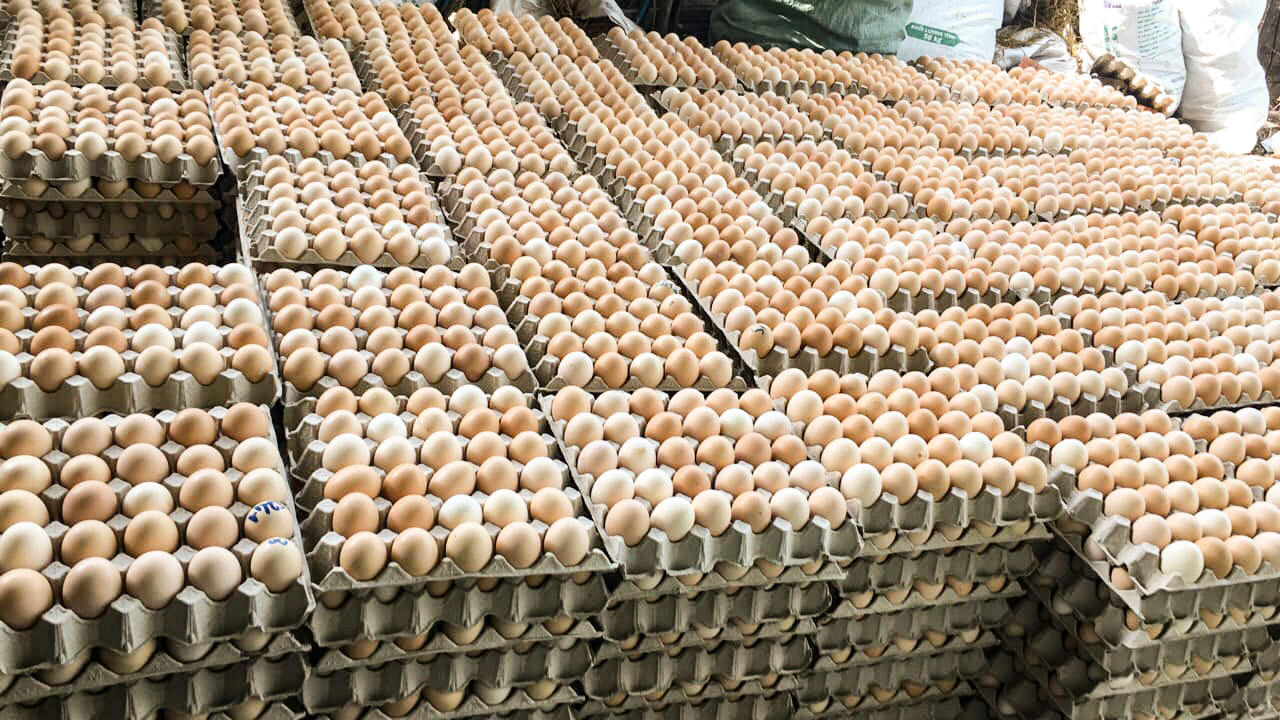 |
| Not only have egg prices dropped, but egg consumption has also slowed down. Photo: Thanh Phuc |
On the other hand, due to the unpredictable hot and cold weather, eggs are difficult to preserve, so distributors are hesitant to import large quantities for stockpiling. Therefore, they only order another batch after selling out the current one.
To avoid losses during the period of low egg prices, most farms are planning to reduce their flocks. For example, Mr. Tran Xuan Son's farm is planning to cull 4,000 chickens; Mr. Sinh's farm is cutting 1,000... "These chickens would have lasted another 1-2 months if egg prices hadn't dropped. But now, with low egg prices and high costs, I've decided to cull them and restock when egg prices rise," Mr. Son said.
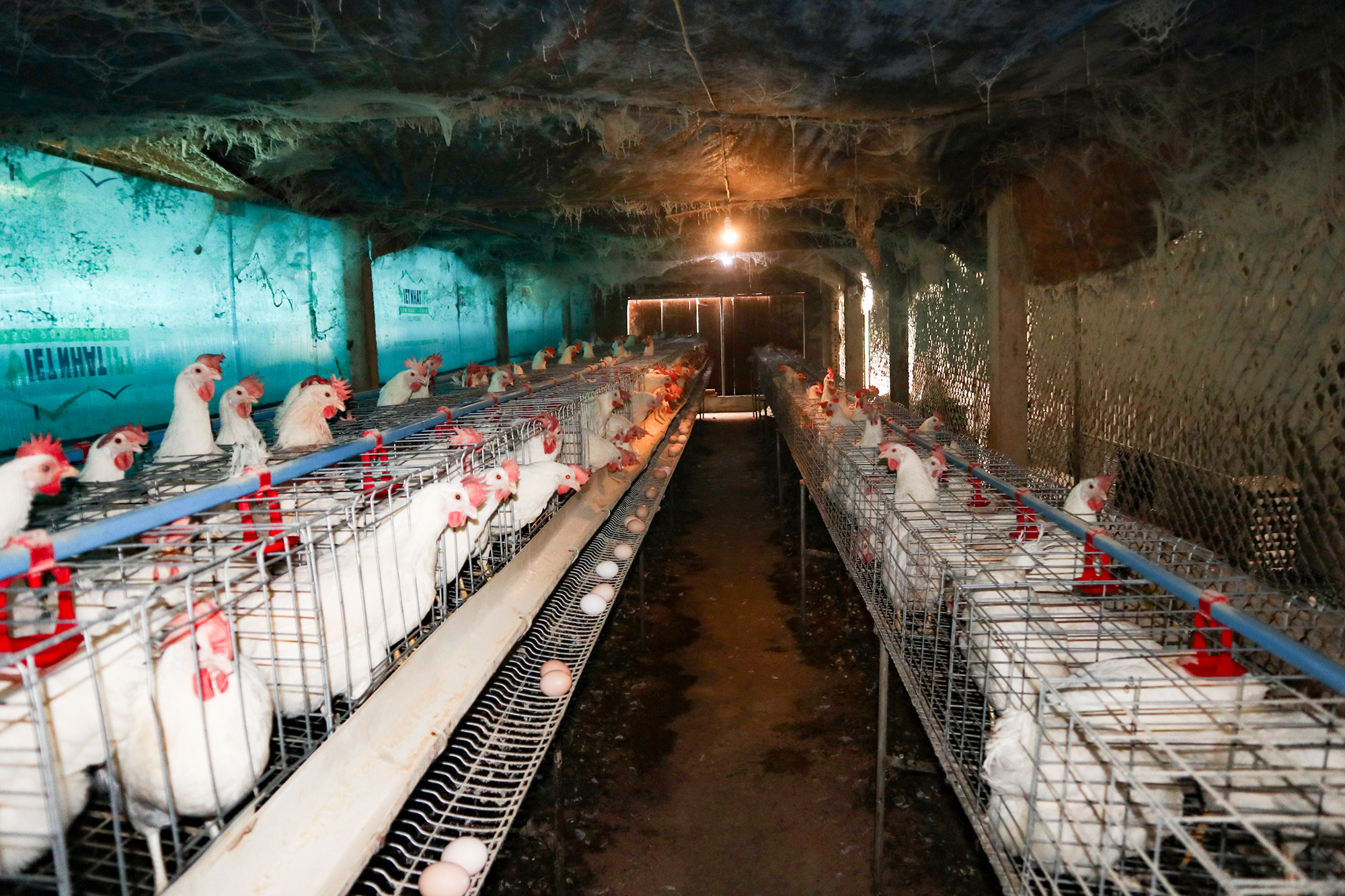 |
| Mr. Nguyen Van Sinh plans to cull 1,000 laying hens to reduce costs during this period. Photo: Thanh Phuc |
Mr. Nguyen Thanh Son, Chairman of the Vietnam Poultry Association, stated: “Since the beginning of 2023, egg prices have decreased due to oversupply after Tet (Lunar New Year). Specifically, the purchase price at farms is around 1,800 - 2,000 VND/egg. At this price, egg farmers in the supply chain do not lose money, but their profit is small. As for small-scale family farms that buy feed from second and third-tier distributors, when the market is unbalanced between supply and demand, they lower prices, sell freely, and experience slow sales. They may incur losses, but it hasn't reached the point of needing a bailout.”


