
Nghe An province is expanding the model of "cleaning up" and "keeping it clean" from drugs.
(Baonghean.vn) - In addition to intensifying the fight against and dismantling drug trafficking and storage networks and hotspots, Party committees, authorities at all levels, and functional forces in the province have also implemented many solutions and replicated models to raise people's awareness of the harmful effects of drugs.
Expanding the model of "drug-free villages"
In March 2023, Minh Tien village, Luong Minh commune (Tuong Duong district) launched the "Drug-Free Village" model. This is the third village in the commune (after Ca Mong and Xop Chao villages) to implement this model. Minh Tien village has 130 households with 619 inhabitants, 100% of whom are Khmu ethnic people.
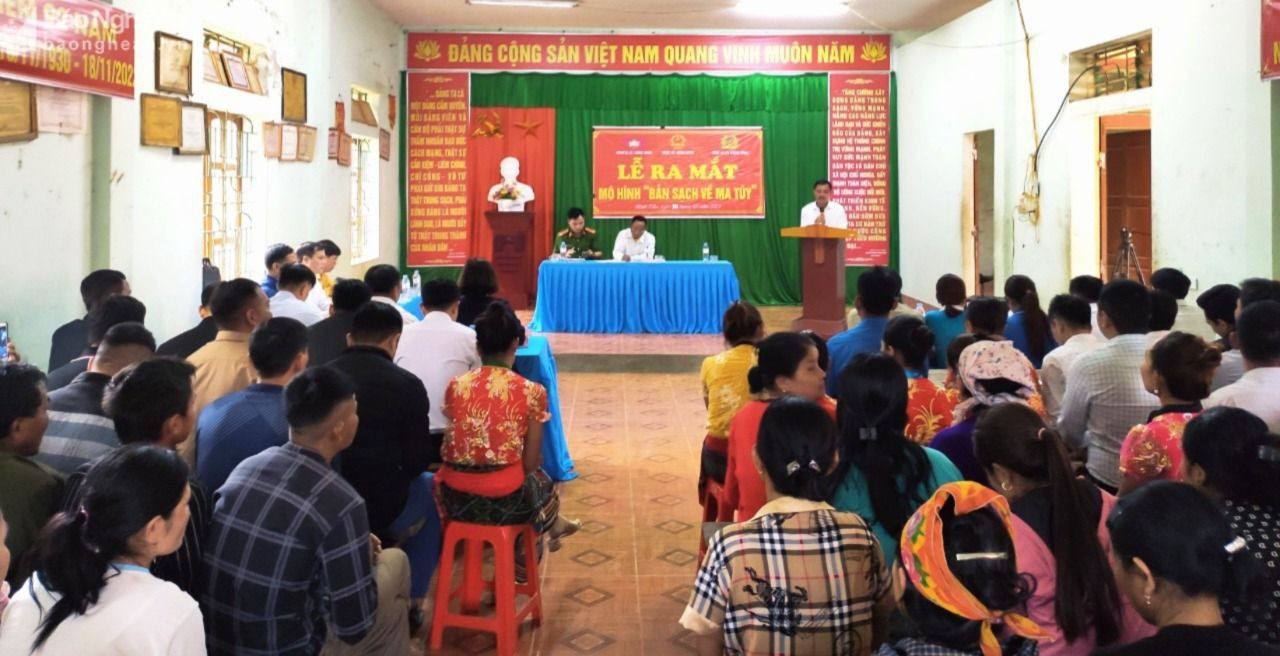
There are currently four drug addicts in the area who have gone away to work. To prevent the emergence of more addicts and to ensure that drugs do not affect the lives of the people, the Party Committee of Luong Minh commune is determined to build Minh Tien village into a "drug-free village".
Therefore, the aim is to harness the strength of the entire population in carrying out the tasks of ensuring security and order, preventing and combating drug-related crimes, as well as managing people after drug rehabilitation in the area.
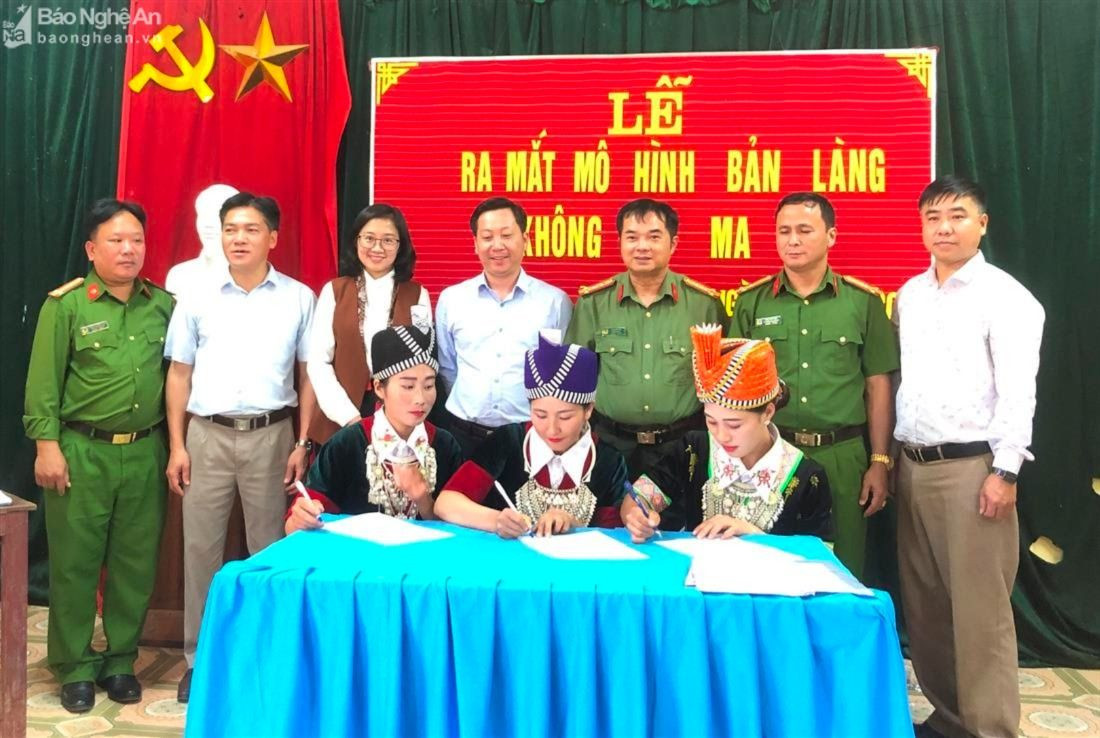
Similarly, Luu Thong village in Luu Kien commune, where 100% of the population are Mong ethnic people, is located about 2.5 km from National Highway 7A, bordering villages in Nam Can and Chieu Luu communes, Ky Son district. Since 2020, the village has implemented a drug-free program, ensuring security and order in the area, with no drug addicts or drug-related crimes. Due to the characteristics of a mountainous, border district with complex and rugged terrain (67.069 km of border with Laos), criminals often choose Tuong Duong district as a base for transporting and trading drugs.
Implementing the Nghe An Provincial Police's plan to build "Drug-Free Border Communes," Tuong Duong district has implemented the plan comprehensively and decisively in four border communes: Tam Quang, Tam Hop, Mai Son, and Nhon Mai, as well as the inland commune of Tam Dinh. On April 25, 2022, the Tuong Duong District Party Committee issued Resolution No. 05 on the implementation of building "Drug-Free Communes and Towns" in the district. Following successful implementation in the border communes, on December 5, 2022, the Tuong Duong District Party Committee issued Directive No. 08 on continuing to promote the implementation of Resolution No. 05, striving to become a drug-free district. In addition, the District Fatherland Front has taken the lead in coordinating with local departments and agencies to implement the "Drug-Free Village" model.
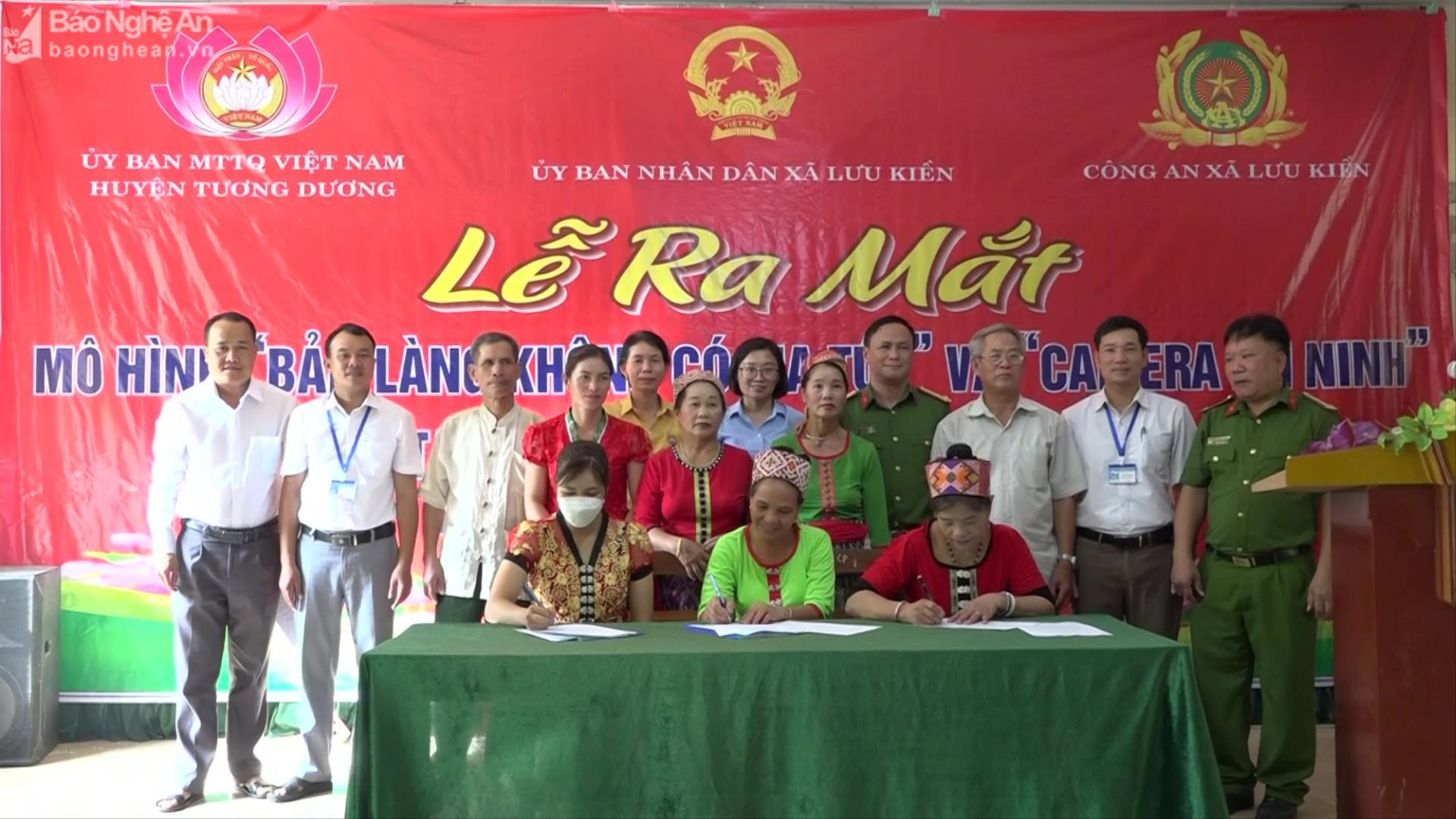
According to Mr. Luong Ba Vin, Head of the Mass Mobilization Department and Chairman of the Fatherland Front of Tuong Duong District: Eliminating drugs in each village will greatly contribute to ensuring peace and security for the people and the locality. Therefore, since the beginning of the term, the Fatherland Front of the district has taken the lead in building a "Drug-Free Village" model in each commune. Based on that, many localities have proactively replicated it in other villages and hamlets in the area, giving them specific names.
For example, "Drug-Free Villages Linked to Community Reintegration" in Co Phao village, Yen Na commune; "Drug-Free Villages with Security Cameras" in Khe Kien village, Luu Kien commune; "Drug-Free Villages Linked to the National Movement for Protecting National Security" in Phay village, Xieng My commune; "Drug-Free Villages Linked to the Development of Rattan and Bamboo Weaving" in Yen Huong village, Yen Hoa commune… Through these initiatives, the complex drug situation in residential areas is being pushed back.
In Ky Son district, a particularly difficult border area bordering four districts in three provinces of neighboring Laos, with 20 communes and one town (including 11 border communes), the work of building drug-free villages is also given importance.
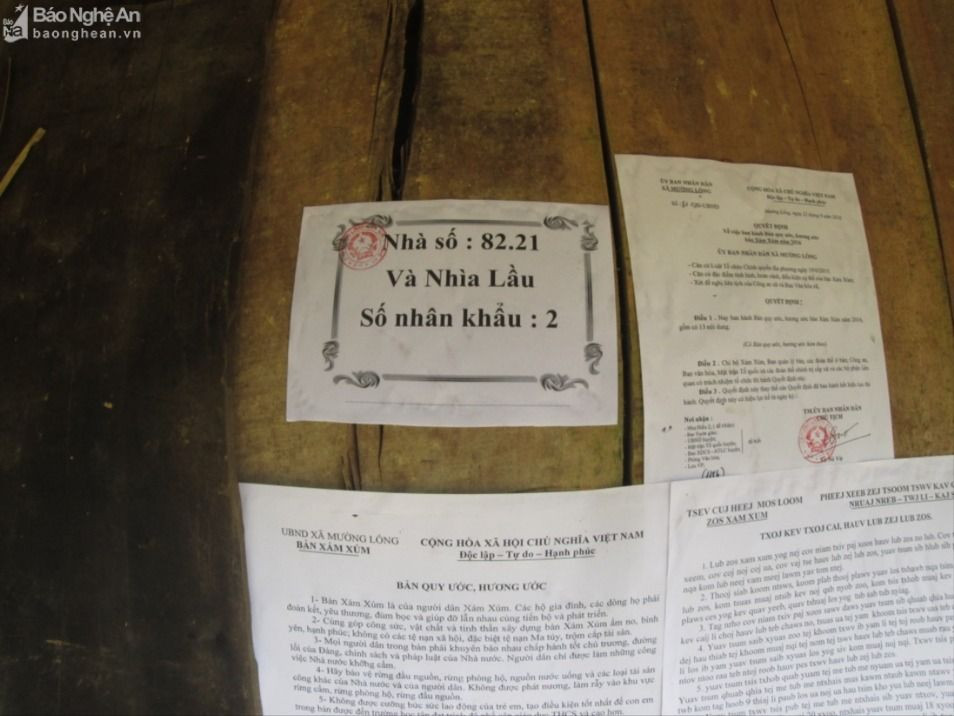
For example, the village of Xám Xúm in Mường Lống commune was previously one of the most problematic hotspots for drug trafficking and use. In response to this, the People's Committee of Mường Lống commune instructed the village management board to issue a set of village regulations and customs comprising 13 points. These included strict regulations such as: immediately reporting any strangers entering the village to the authorities; prohibiting residents from allowing strangers to stay overnight; establishing curfews; and encouraging families with children addicted to drugs to undergo centralized or home-based rehabilitation. Simultaneously, the Party Committee of Mường Lống commune established and assigned a 15-member task force to combat the drug problem in Xám Xúm village. The Kỳ Sơn district police and other district-level departments also provided support to the commune government in eliminating several drug retail points in the village and arresting key drug suppliers.
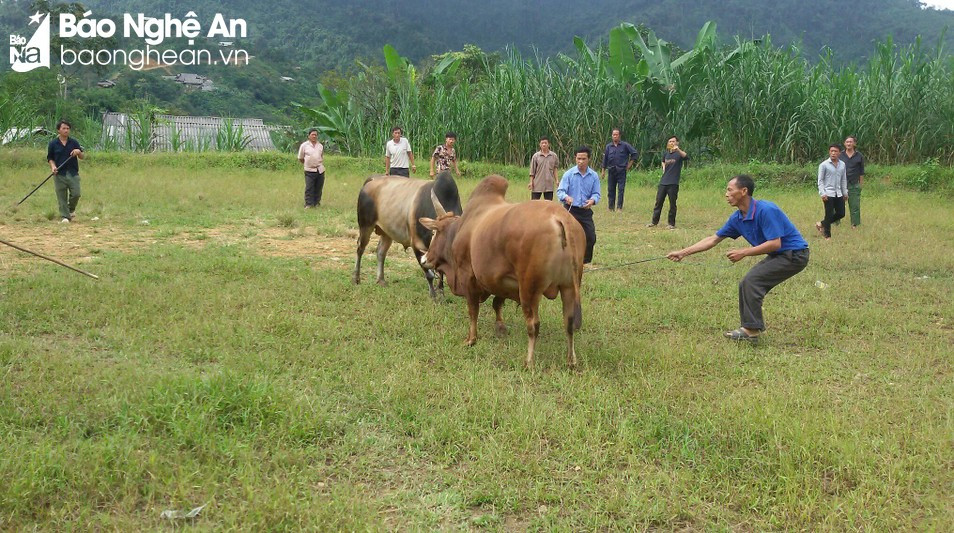
Many village elders and respected community leaders went door-to-door to encourage drug addicts to self-detoxify at home or seek treatment at the district's rehabilitation center, so they could reintegrate into the community. The comprehensive involvement of the entire political system helped change the situation in Xam Xum village. The people of Xam Xum village have become aware of the dangers and heartbreaking consequences of drug abuse and are proactively preventing and combating it. Thanks to the implementation of synchronized solutions, starting from villages like Xam Xum, 19 out of 21 communes and towns in Ky Son district have now been recognized as "drug-free areas".
Many solutions for "cleaning" and "keeping clean".
To enhance the effectiveness of crime and drug-related prevention and control, the Provincial People's Committee proactively issued Plan No. 310 dated May 9, 2023, on strengthening the management of drug addicts in the community and those who have completed rehabilitation, contributing to keeping the area free of drugs in communes, wards, and towns, aiming to build "drug-free districts, cities, and towns" in the province.
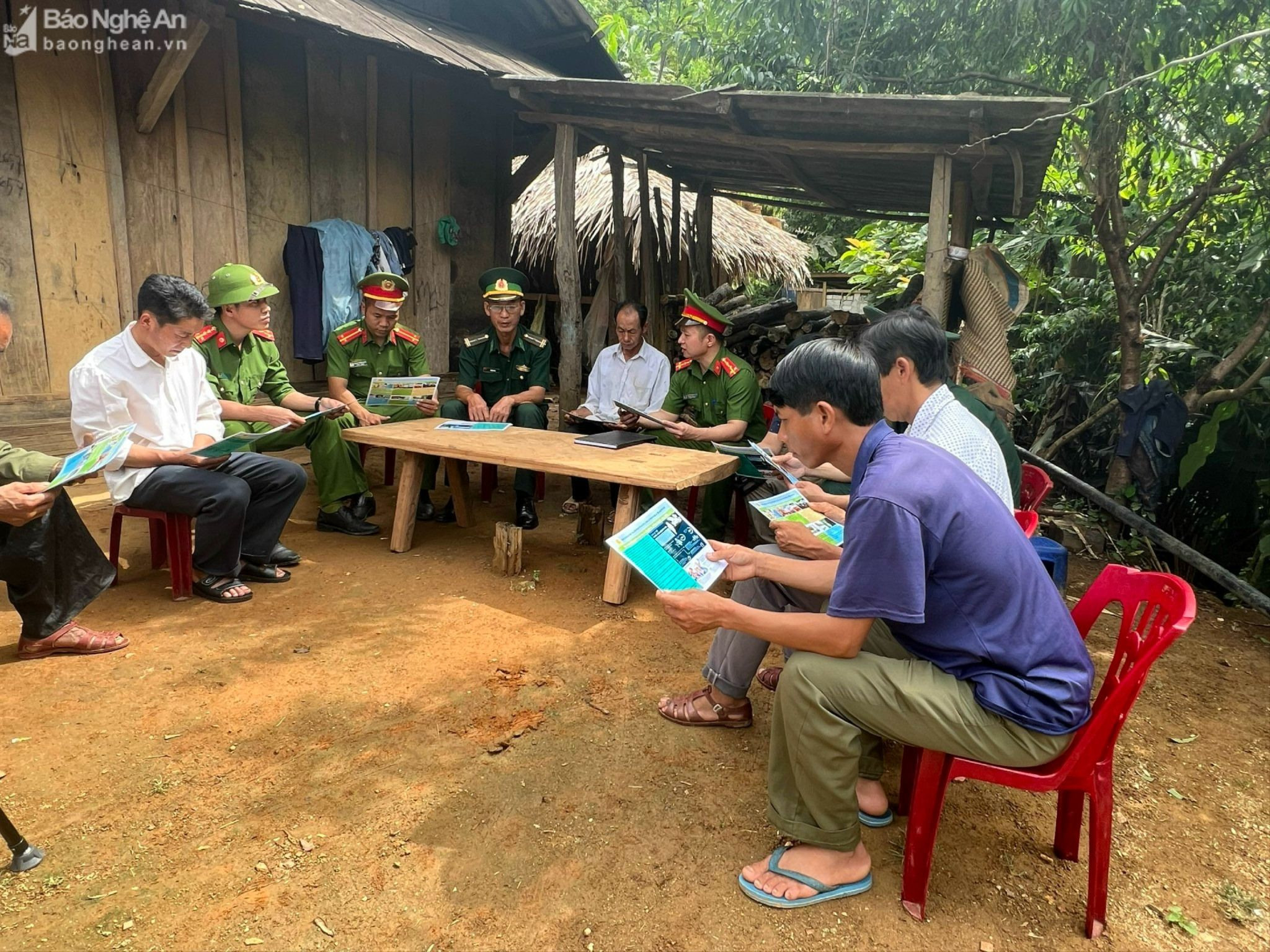
Specifically, the focus is on four target groups: (Drug addicts undergoing voluntary rehabilitation at home and in the community; Drug addicts receiving Methadone treatment; People who have completed rehabilitation; and Drug addicts absent from the area) with the aim of "cleaning up" and "maintaining" drug-free conditions at the commune level. During the implementation process, the Provincial People's Committee directed relevant departments and agencies to develop and finalize a draft Resolution of the Provincial People's Council on regulations regarding certain regimes and policies to support compulsory and voluntary drug rehabilitation, post-rehabilitation management, and the responsibility of contributions from voluntary drug addicts at drug rehabilitation facilities in the province. This draft was submitted to the Provincial People's Council meeting in July 2023 for approval, in order to promptly issue and implement appropriate regimes and policies, contributing to improving the effectiveness of drug rehabilitation and post-rehabilitation management.
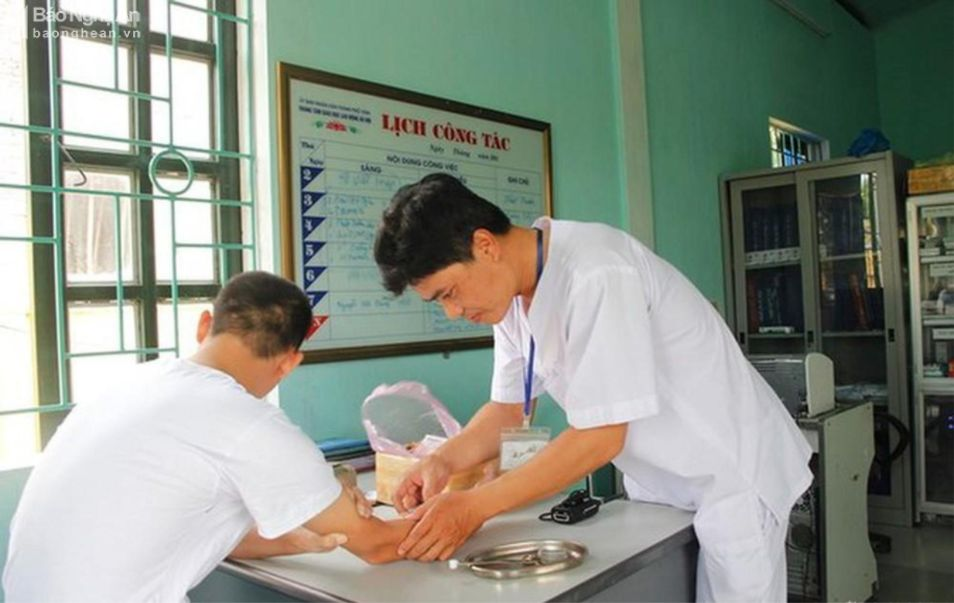
The People's Committees of districts, cities, and towns have also done a good job in community reintegration and post-rehabilitation management of drug addicts. Specifically during the Month of Action against Drug Abuse, districts, cities, and towns established 296 compulsory rehabilitation files and completed 136 community-based drug rehabilitation files for addicts in accordance with the law. Currently, rehabilitation centers in the province are managing 1,799 trainees (including 1,701 compulsory trainees and 98 voluntary trainees). In addition, many criminal networks and complex drug hotspots have been investigated and dismantled.
During the Month of Action for a Drug-Free Community (June 1-30, 2023) alone, law enforcement agencies in the province detected and arrested 245 cases involving 312 individuals for drug-related crimes, seizing 6 blocks of heroin, 685.11 grams of heroin; 446.273 grams of synthetic drugs; 76,340 synthetic drug pills; 5,122.643 grams of methamphetamine; 28.1 grams of cannabis; and 10.44 grams of opium. In addition, police units and localities detected and arrested 58 cases involving 80 individuals for illegal drug use, and dismantled 27 drug retail points.
According to the assessment of the Provincial People's Committee in Official Letter No. 464 dated July 28, 2023, although drug-related crimes in the province have been contained and their nature and severity reduced, the situation remains complex. The number of drug addicts in the province is still high, with a trend towards younger ages and a gradual shift towards using synthetic drugs and methamphetamine (currently, there are 3,935 registered addicts). The number of people undergoing rehabilitation who receive vocational training, job placement, and post-rehabilitation management is generally limited…
Based on this reality, the People's Committee of Nghe An province has determined to continue strengthening the direction of relevant departments and localities to organize effective and substantive drug prevention and control propaganda activities; maintain and expand advanced models and best practices in drug prevention and control in key areas; and do a good job in drug rehabilitation and post-rehabilitation management, especially drug rehabilitation at home and in the community. The People's Committee also requested functional forces (Police, Border Guard, Customs) to continue reviewing and understanding the actual situation of drug hotspots and retail points in the area; promptly implement solutions to combat and eradicate them, "cleaning up" the area, and preventing the formation of complex drug hotspots and retail points that cause public concern.
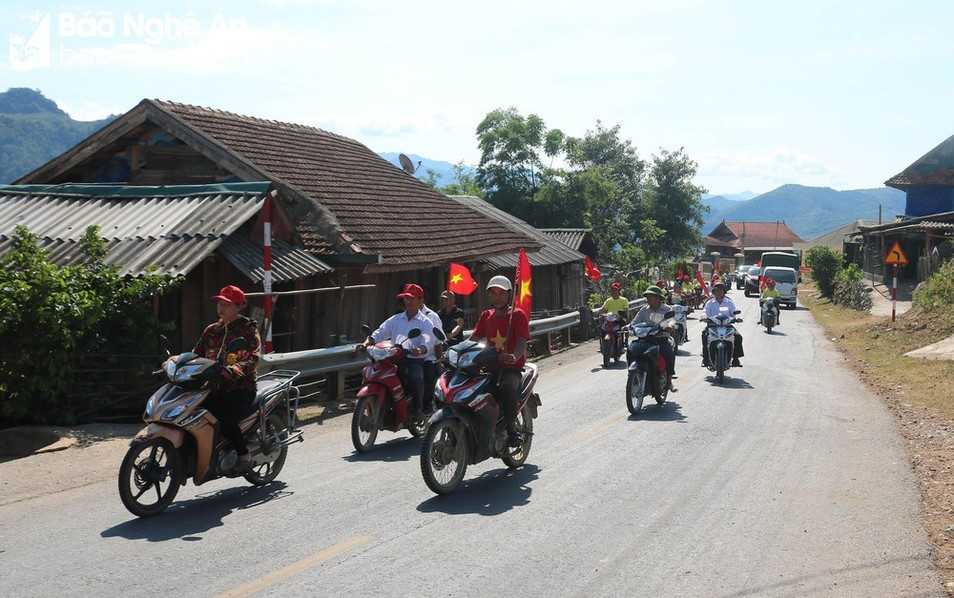
Mobilize forces and implement comprehensive and decisive operational measures to combat and dismantle large-scale, inter-provincial, and transnational drug trafficking rings and criminal groups. Simultaneously, strengthen international cooperation in drug prevention and control with functional forces in Xieng Khouang, Hua Phan, and Bolikhamsai provinces (Laos) to effectively carry out drug prevention and control work in the border area.


