
Nghe An strives to find 'solutions' for population work at the grassroots level.
(Baonghean.vn) - Population work in Nghe An is facing many advantages but also many difficulties and challenges. To effectively carry out population and family planning work, reduce the birth rate, decrease the rate of third births, and improve the quality of the population, many tasks and solutions need to be implemented simultaneously.
Efforts to enhance the team's capabilities.
This December, the meeting point for those working in the field.populationThis training course provides guidance on recording information in the A0 register, preparing specialized statistical reports, and exchanging professional skills related to population. This is one of the important initiatives implemented since the beginning of 2023, because the information in the A0 register is the basic information for the specialized statistical information system on population and family planning, ensuring accuracy and objectivity.
Also at the conference, grassroots population workers exchanged professional skills in population and development, emphasizing the need to change the tasks of population work in accordance with the spirit of Resolution 21-NQ/TW of the Central Committee on "Continuing to shift the focus of population policy from family planning to population and development".
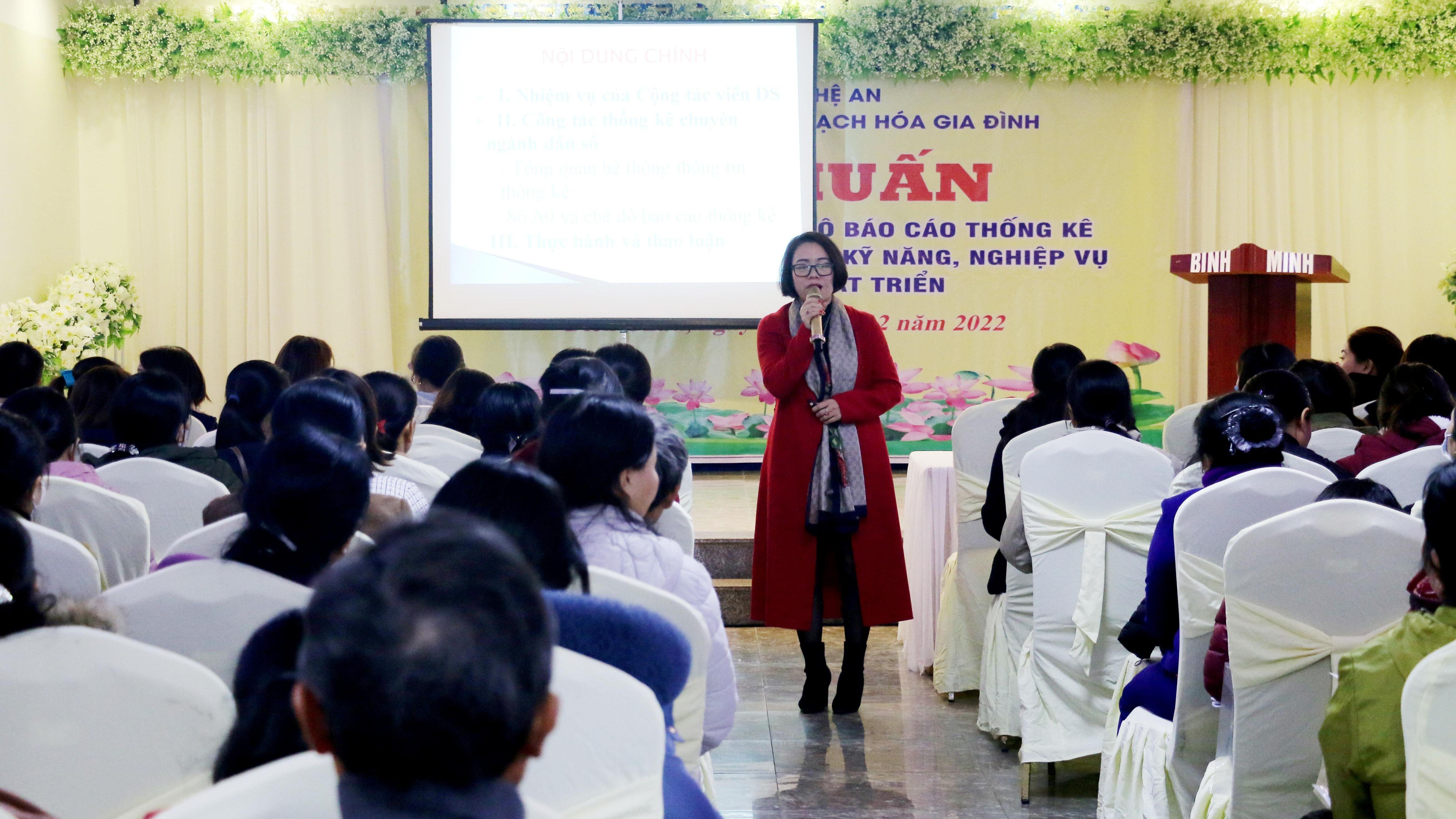 |
Representatives from the Population and Family Planning Department introduce the use of the new A0 form. Photo: My Ha. |
Attending the training course, Mr. Cao Van Hoang, a population collaborator from Hamlet 8, Dien Thai Commune (Dien Chau District), said that this content is very practical. He himself has worked as a village health worker for 20 years but has only been a population collaborator for just over a year. The two jobs have different characteristics, so a relatively older man like him faces many difficulties. Therefore, the knowledge gained from the professional development courses and the shared experiences from colleagues will help those newly assigned to the role gain more experience to perform their duties well.
In 2022, the Nghe An Population Department organized dozens of training courses for over 10,000 collaborators, officials, and members of the Steering Committee for Population and Development at the district and commune levels. In these training courses, specific and detailed information on population issues was conveyed, enabling officials and staff working in population affairs to apply this knowledge flexibly and effectively in implementing population and development work at the local level.
In addition, emphasis is placed on training skills, expertise, and communication methods related to population and development work, so that everyone agrees and effectively implements population-related tasks.
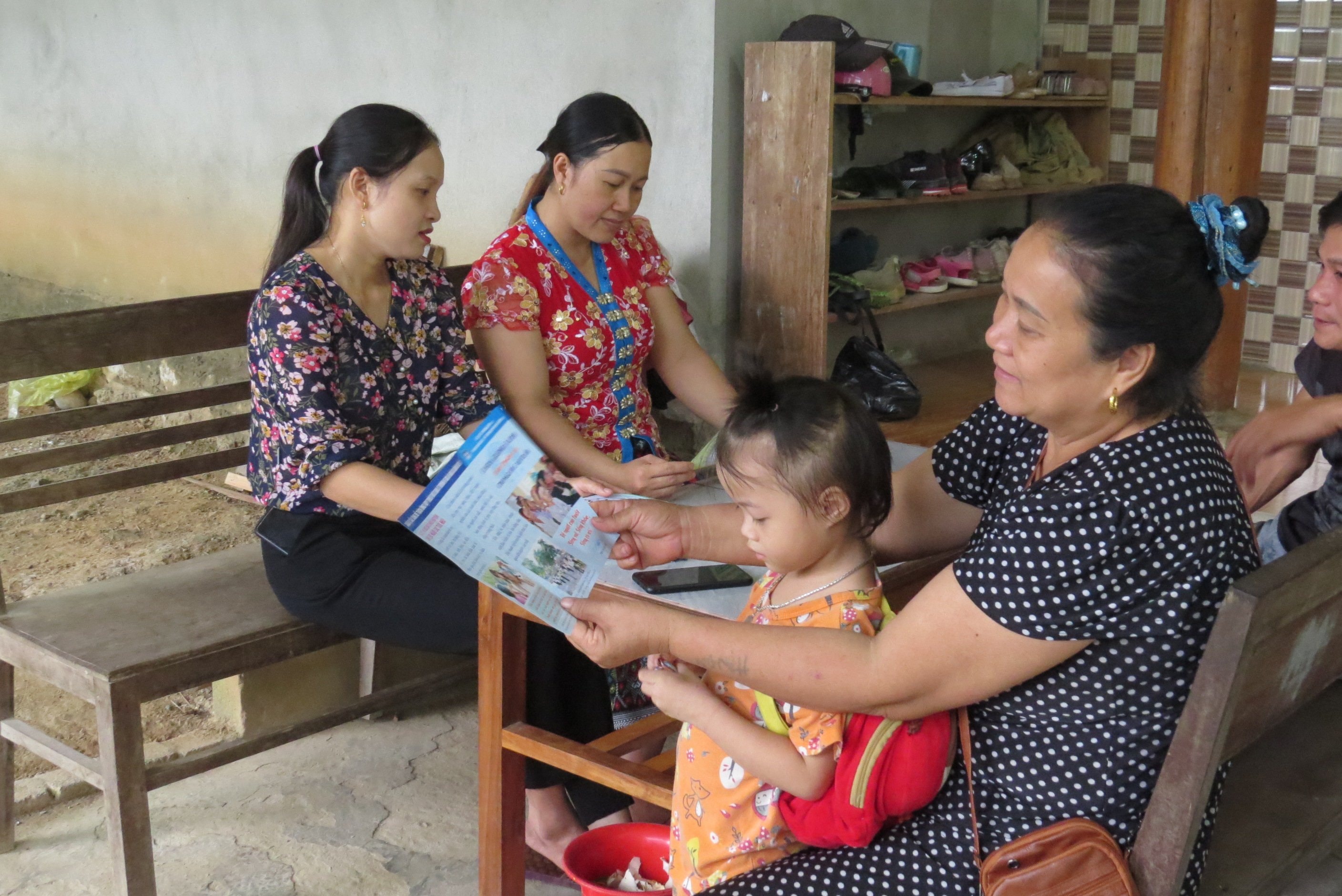 |
Population collaborators are introducing population policies to residents of Tuong Duong district. Photo: My Ha. |
Regarding capacity building for population workers, Mr. Nguyen Ba Tan, Head of the Provincial Population and Family Planning Department, added: Population workers are the bridge to convey the industry's messages and are the "extended arm" of the population sector at the grassroots level. Therefore, promoting training, capacity building, and standardizing the workforce of population officials at all levels and in all sectors is very important and in line with practical requirements.
Previously, in accordance with Resolution No. 15/2020/NQ-HĐND, Nghe An province had basically completed the reorganization of the grassroots population system. The entire province, which previously lacked population collaborators who also served as health workers in over 180 communes, wards, and towns, now has basic coverage. The integration of population collaborators with village health workers will help organize and professionalize grassroots population work more systematically. However, in the initial implementation phase, the replacement of many experienced population collaborators has left certain "gaps."
Therefore, for the past two years, in order to enhance the capacity of population workers at the grassroots level, Nghe An has been a leading locality nationwide in implementing capacity-building training for population officials from the provincial level down to the grassroots, down to each village and hamlet. This is a good foundation to help population work at the grassroots level become increasingly effective.
Synchronizing multiple solutions
Nghe An is a densely populated province, facing more challenges compared to many other localities. While the national average has reached the replacement fertility rate of 2.1 children, Nghe An currently maintains a high fertility rate with a total fertility rate of 2.51 children per woman (ranking second nationwide, after Ha Tinh), and the rate of having a third child or more remains high.
Furthermore, Nghe An is facing the problem of gender imbalance at birth and an alarming rate of population aging. The quality of the population does not match the province's potential. In particular, healthcare for the elderly, reproductive health for adolescents and young adults, and maternal and child health care still face many difficulties; child marriage and consanguineous marriage still persist in remote, disadvantaged, and particularly difficult areas. In reality, Nghe An is a microcosm, encompassing all the difficulties and challenges of population work nationwide in terms of scale, structure, distribution, and quality.
The above situation also compels Nghe An to more clearly recognize the importance of effectively implementing current population work. This includes proactively and effectively implementing Resolution No. 21 on population work in the new context, the spirit of the 13th National Congress of the Communist Party of Vietnam on population work, and the Vietnam Population Strategy to 2030. It is also crucial to correctly implement the policy of continuing to shift the focus from population and family planning to population and development to comprehensively address issues related to: population size, structure, distribution, and improving population quality.
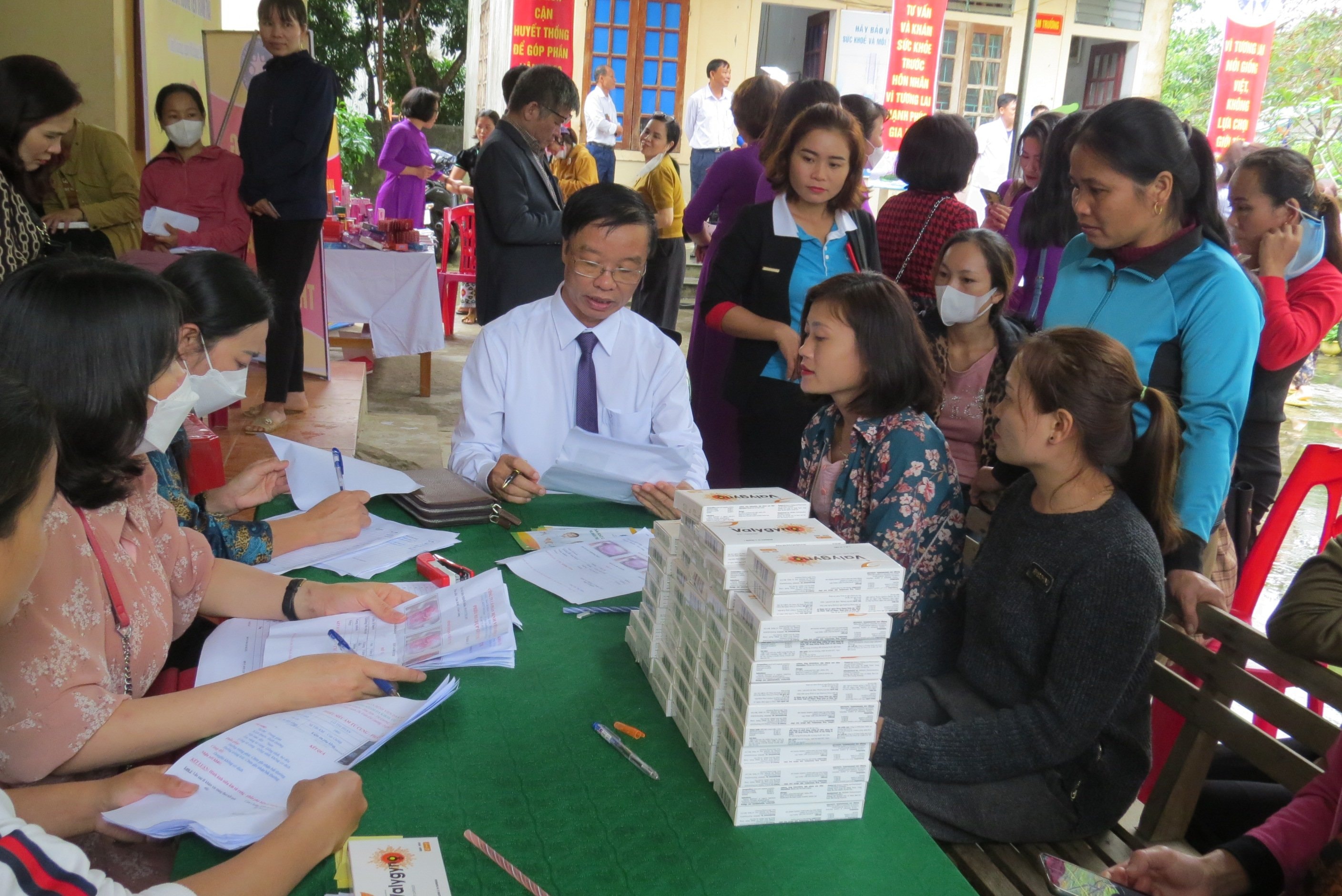 |
Mr. Nguyen Ba Tan, Head of the Provincial Population and Family Planning Department, directly advises people on population issues at the grassroots level. Photo: My Ha. |
To accomplish the set tasks, Nghe An is also implementing many solutions simultaneously, from improving the capacity of the population work team at the grassroots level, creating a foundation to improve the quality and effectiveness of activities in districts, cities, and towns.
Simultaneously, the sector continues to innovate and improve the effectiveness of propaganda and education in implementing the campaign "Each couple should have two children," ensuring the rights and responsibilities in childbirth and raising children well. This aims to promote self-awareness, voluntariness, and mutual supervision within the community; and to highlight the exemplary role of each official and Party member in building culturally advanced families, villages, and units.
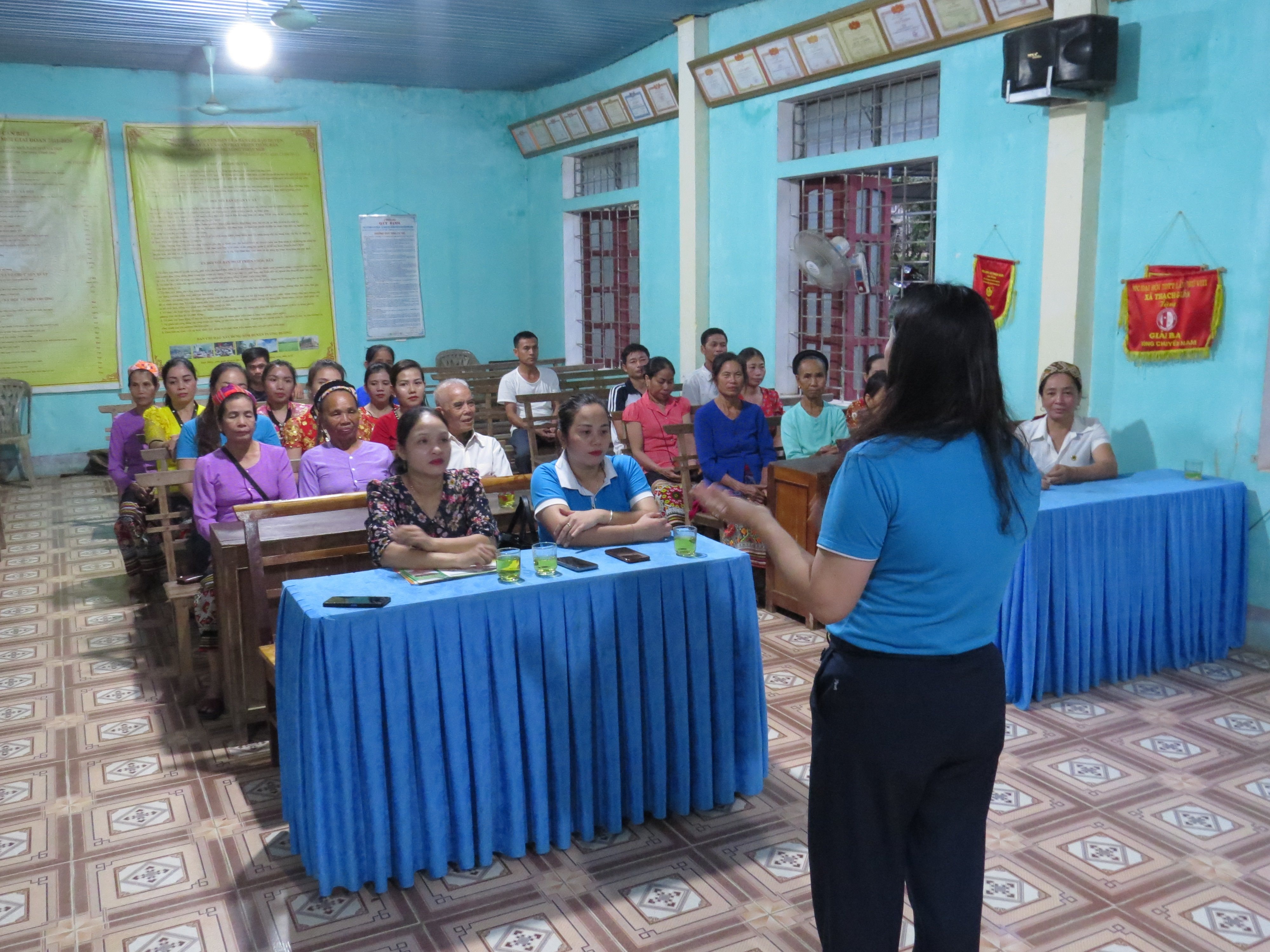 |
A public awareness session on population policy for disadvantaged areas. Photo: My Ha |
To improve the quality of the population, the sector effectively implements intervention solutions to enhance population quality, proactively adjusts the population growth rate, and curbs the increase in the sex ratio at birth; it also proposes solutions to leverage the advantages of the "golden population" structure and respond to "population aging".
In order to effectively implement population work, this December, Nghe An province is also launching the 2022 National Action Month on Population with the theme "Improving the quality of the population for rapid and sustainable national development".
Mr. Nguyen Ba Tan, Head of the Provincial Population and Family Planning Department, said: The National Action Month on Population aims to receive the support and active participation of Party committees, government agencies, departments, mass organizations, social organizations, and all strata of the people in addressing the new issues of current population work.


