
Nghe An: Prenatal and newborn screening to improve population quality.
(Baonghean.vn) - Prenatal and newborn screening is one of the first solutions to limit the severe consequences caused by birth defects and to have healthy children. In Nghe An, screening is also receiving increasing attention from mothers...
Multiple risks
Despite the cold, rainy weather, Mr. and Mrs. Vi Thi Chai and Vi Van Loi from Bang village, Chau Ly commune, Quy Hop district, still traveled nearly 200 km to Nghe An Obstetrics and Pediatrics Hospital for an ultrasound and examination.prenatal screeningAt 37, Chai is no longer young, and this is her fourth child, so both she and her husband are very worried.
Through the ultrasound, her worries intensified when she was diagnosed with fetal hydrops despite being 27 weeks pregnant. This was a condition that had occurred during her first pregnancy, which resulted in an early termination. Feeling distraught, she sought medical help from doctors at the Center for Prenatal and Neonatal Screening and Diagnosis.Nghe An Obstetrics and Pediatrics HospitalThey provide direct consultation, ask specific questions about the pregnancy history, and offer options for handling this special situation.
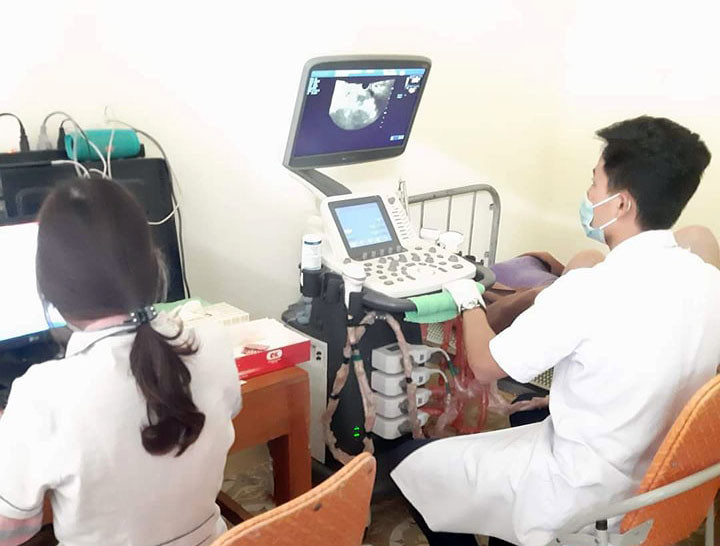 |
| Screening and health check-ups will help eliminate risks. Photo: PV |
According to Dr. Dinh Thi Quynh, who directly advises pregnant women undergoing prenatal screening, the detection rate of genetic disorders is not uncommon, especially in areas with a large ethnic minority population and where child marriage and consanguineous marriage are still prevalent, such as Nghe An. In fact, in some rare cases detected through screening, a significant number of individuals come from mountainous districts.
Nearly six months ago, 16-year-old LIU became pregnant for the first time and had regular prenatal checkups at a private clinic in Binh Duong, but did not undergo prenatal screening. Afterward, she returned to her hometown in Tuong Duong district and had two ultrasounds, but no abnormalities were detected. At 34 weeks of gestation, she visited the Center for Prenatal and Neonatal Screening and Diagnosis, where doctors ordered a fetal morphology ultrasound and basic blood tests. Several abnormalities were discovered, including a lack of forebrain differentiation (Holoprocenphaly), umbilical hernia, unbalanced atrioventricular canal, and polydactyly (sporadic hands and feet).
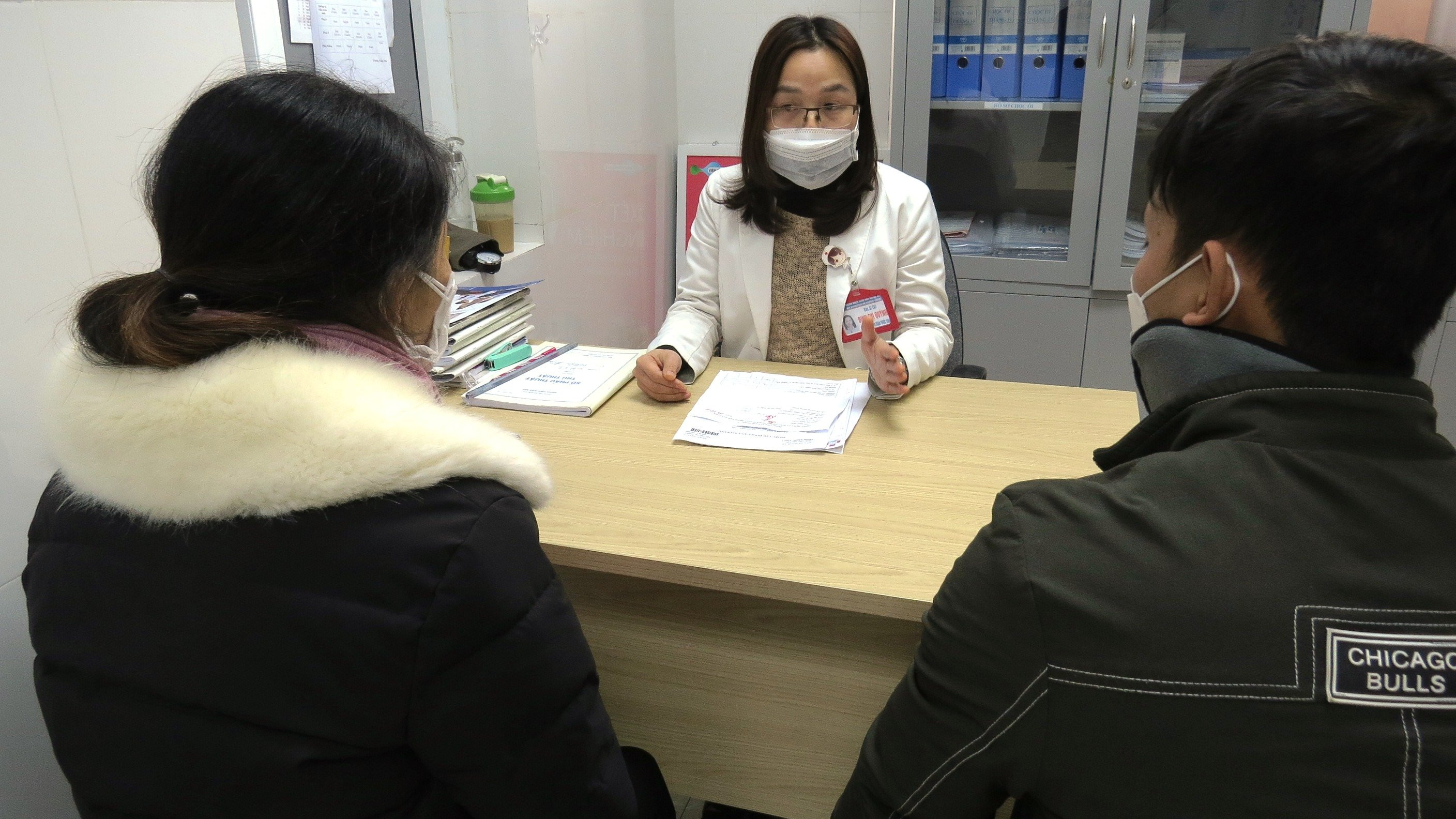 |
| Counseling for couples after screening at the Screening Center. Photo: MH |
To obtain accurate results, the patient was further advised to undergo amniocentesis for G4500 exome sequencing, which revealed a disease-causing variant in the RAF1 gene (heterozygous dominant inheritance). This gene mutation is associated with Noonan syndrome, manifesting as cervical lymphatic cysts. After receiving the results, doctors at the Center consulted, advised, and explained the fetal condition to the patient and her family, and ultimately the patient decided to terminate the pregnancy.
"Having to make the decision to terminate a pregnancy when the fetus is already several weeks old will affect both the mother's mental and physical health. Therefore, we still recommend that pregnant women have early prenatal checkups for ultrasound screening of birth defects and fetal anomaly screening tests in the first trimester, between 11 weeks and 13 weeks and 6 days."
If abnormal lymphatic follicles are detected in the neck area, pregnant women should go to prenatal diagnostic centers for amniocentesis to check for genetic abnormalities.
Solutions for the health and safety of mother and baby.
Prenatal and newborn screening is a widely discussed concept, and it's a measure that helps detect genetic disorders early. This allows for timely intervention and treatment, aiming to mitigate the severe consequences of birth defects, reduce the number of disabled and intellectually impaired individuals in the community, and contribute to improving the quality of the population.
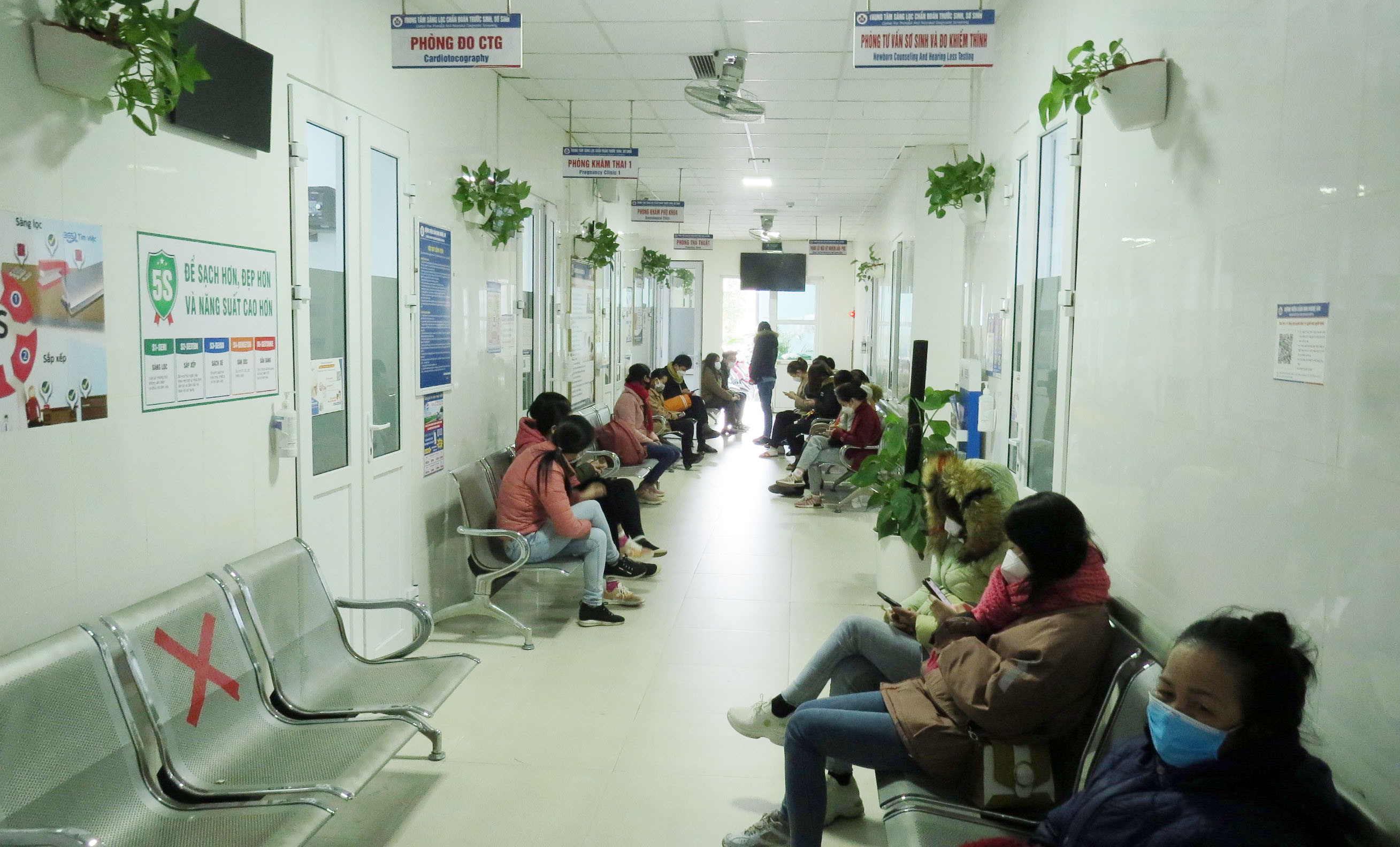 |
| Many pregnant women came for health check-ups at Nghe An Obstetrics and Pediatrics Hospital. Photo: MH |
In Nghe An province, previously, pregnant women mainly underwent ultrasound examinations. For more in-depth screening, expectant mothers typically had to go to hospitals in larger cities. Over the past five years, prenatal and newborn screening has received increasing attention, especially after the establishment of the Center for Prenatal and Newborn Screening and Diagnosis. This is the only center in the North Central region and the seventh in the country to receive investment from the General Department of Population and Family Planning - Ministry of Health, equipped with modern machinery and equipment to upgrade infrastructure for prenatal and newborn screening and diagnosis for pregnant women and newborns.
Over the years, through basic screening tests such as the Double test, Triple test, NiPT, pre-eclampsia screening, and invasive procedures like amniocentesis, blood sampling, and umbilical cord blood sampling, the center has screened high-risk individuals and included them in a rigorous pregnancy management program. Simultaneously, it diagnoses genetic abnormalities to provide timely treatment for pregnant women. Statistics show that in 2021, more than 17,086 pregnant women underwent ultrasound examinations and 2,734 underwent prenatal screening. In addition, 192 pregnant women underwent amniocentesis for in-depth fetal diagnosis. Furthermore, nearly 9,000 newborns were screened.
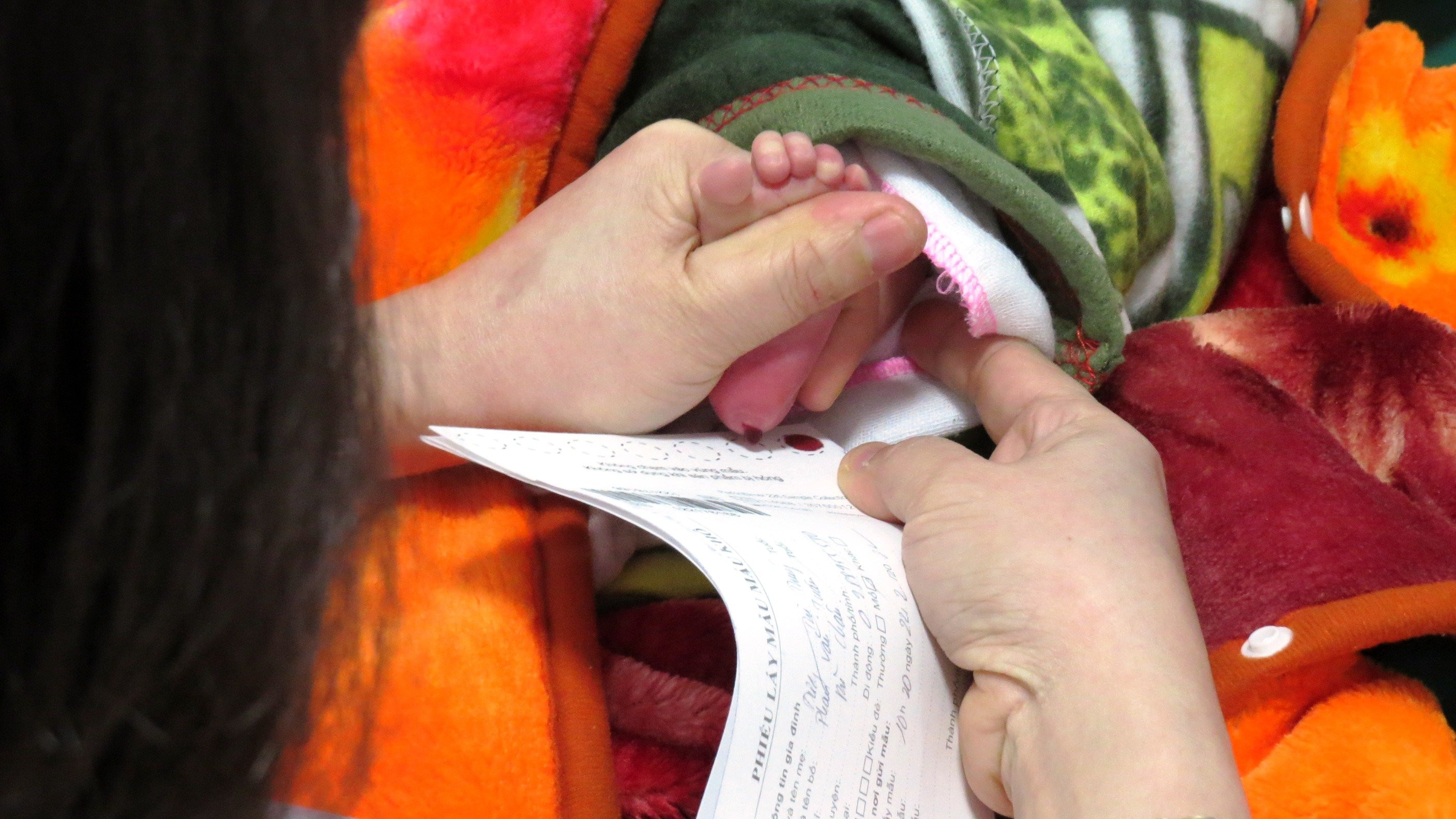 |
| Heel sampling for newborn screening. 1. Photo: MH |
Dr. Nguyen Xuan Chung, Head of the Center, stated: “In major cities, pregnant women are aware of the importance of prenatal screening to ensure a healthy baby. However, in Nghe An, the number of pregnant women screened is still low, and this can lead to many risks if they are not examined early. Children born with birth defects or intellectual disabilities are not only disadvantaged and heartbroken but also a burden on their families and society as a whole.”
Previously, research showed that approximately 1.4 million children are born in Vietnam each year, with about 2% of them suffering from congenital defects. However, only about 30% of newborns undergo prenatal and neonatal screening.
Meanwhile, according to obstetric experts, the causes of birth defects in fetuses and newborns can be due to genetic abnormalities (chromosomal abnormalities, gene disorders, metabolic disorders). Other causes include exposure to toxic environments during pregnancy, taking certain medications during the first three months of pregnancy, or contracting infections during pregnancy such as syphilis or rubella.
Regarding prenatal and newborn screening, since 2012 Nghe An province has also implemented a prenatal and newborn screening project in 21 districts, cities, and towns with various contents such as screening for mothers and babies after birth by taking heel samples.
However, due to financial difficulties, the rate of mothers and children screened only accounts for 10-20%. In 2021, due to the project's expiration and budget cuts, prenatal and newborn screening at the grassroots level was interrupted. Based on this situation, in July 2021, the Provincial People's Committee continued to issue Plan 403/KH-UBND on implementing the program to expand screening, diagnosis, and treatment of certain prenatal and newborn diseases and disabilities in Nghe An province until 2030.
In implementation of Decision No. 1999/QD-TTg dated December 7, 2020, of the Prime Minister approving the Program for Expanding Prenatal and Neonatal Screening, Diagnosis, and Treatment until 2030, on January 10, 2022, the Ministry of Health also issued a document requesting the People's Committees of provinces and cities to coordinate in providing free basic prenatal and neonatal screening services for beneficiaries of social welfare programs, including those in poor and near-poor households, those receiving social assistance; people in particularly disadvantaged villages; communes in ethnic minority and mountainous areas, border regions, and islands; and areas contaminated with dioxin.
Under this program, the Ministry of Health continues to provide free chemicals, sample collection forms, and consumables purchased from the National Target Program on Health and Population for the period 2016-2020 through 5 regional screening centers located at: the National Obstetrics and Gynecology Hospital, Nghe An Obstetrics and Pediatrics Hospital, Hue University of Medicine and Pharmacy, Tu Du Hospital, and Can Tho City Obstetrics and Gynecology Hospital. The technical costs of prenatal and neonatal screening services are covered by the local budget.


