
Nghe An province is intensifying drainage efforts to save the spring rice crop and other sown areas.
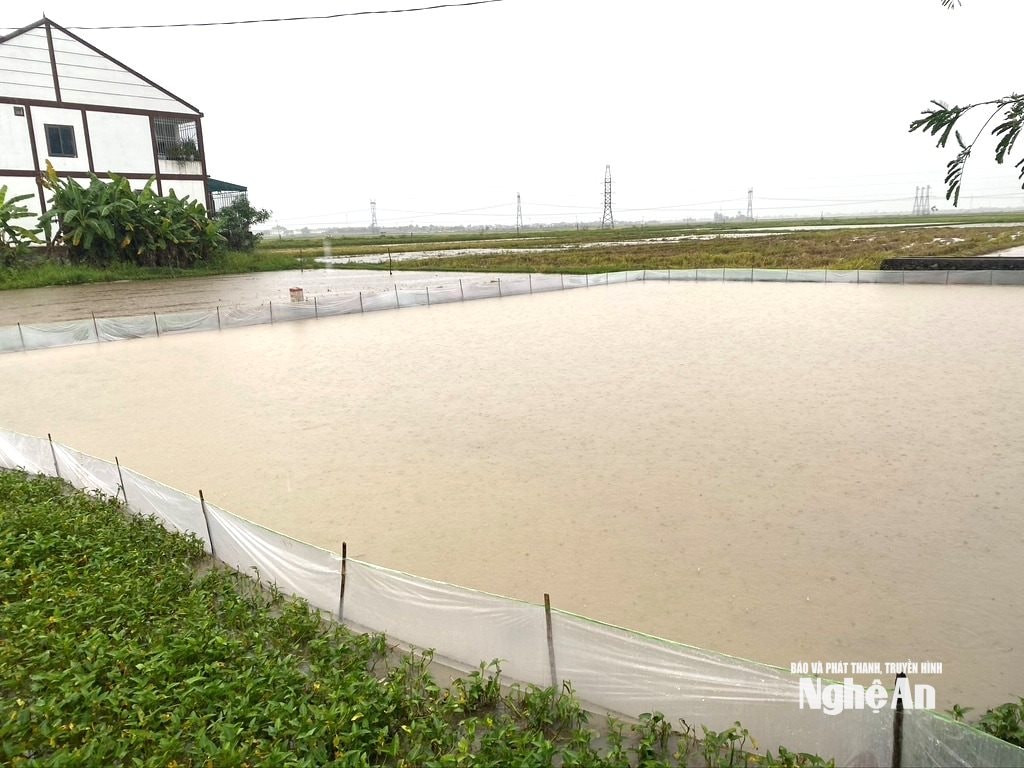
Due to the prolonged heavy rains in recent days causing flooding in many areas of spring rice and summer-autumn planting, irrigation units in Nghe An province are urgently operating drainage gates and pumping stations at maximum capacity to drain water and save the rice crops, minimizing damage to agricultural production.
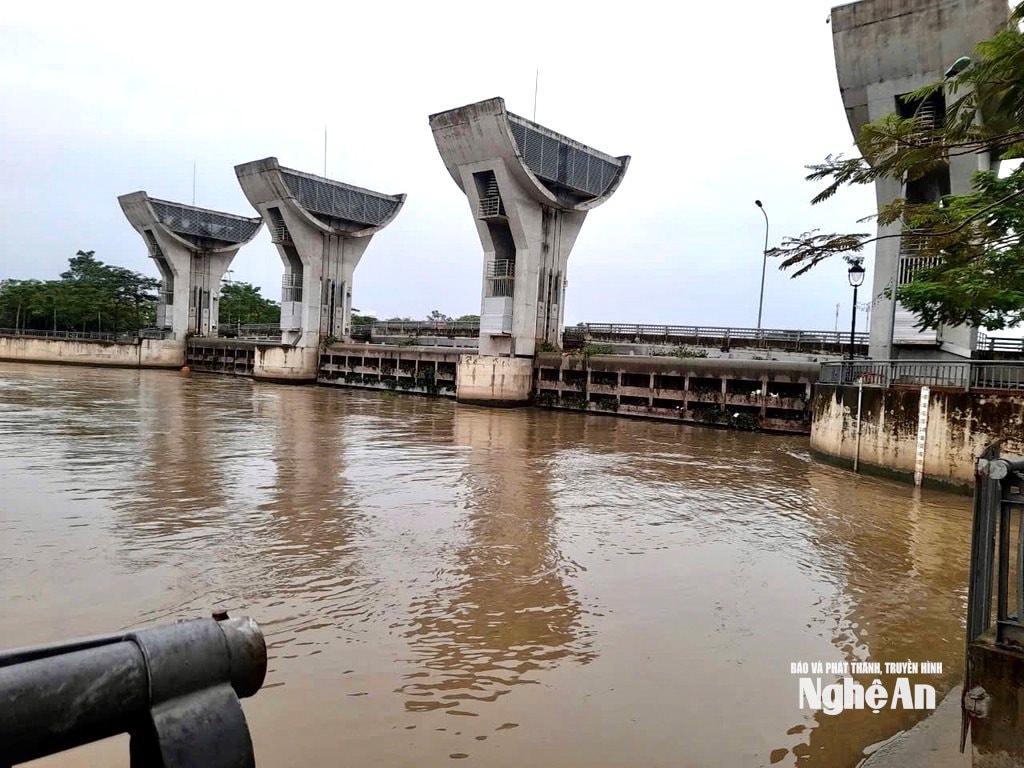
At the Dien Thanh drainage sluice gate in Dien Chau commune, workers are on duty 24/7 to monitor water levels and operate the drainage system continuously. Mr. Nguyen Duc Hanh, Director of the Dien Chau Irrigation Enterprise, said that since the heavy rains began on May 8th, the unit has mobilized all its forces to open the sluice gates to their maximum capacity to accelerate water drainage on the Bung River for the districts of Dien Chau, Yen Thanh (formerly), and surrounding areas.
"Currently, we operate all three sluice gates, each 19 meters wide, with a total discharge capacity of nearly 150 cubic meters."3"Workers must be on constant standby to promptly handle any arising situations and ensure the most effective drainage," Mr. Hanh said.
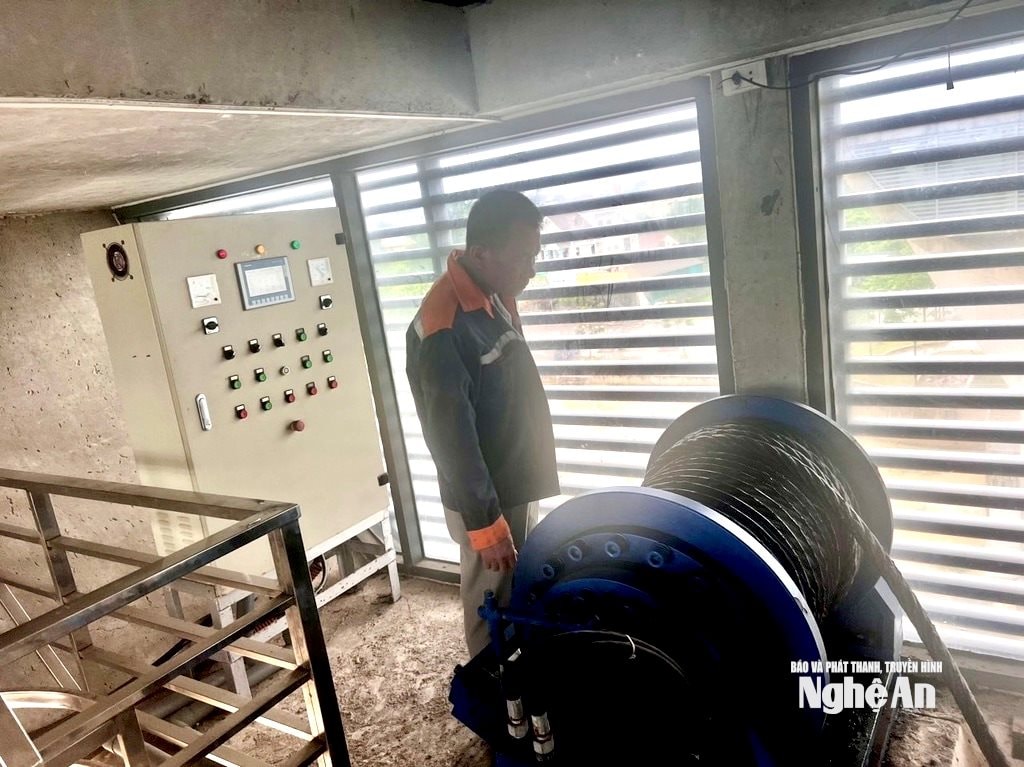
According to Mr. Hanh, the Dien Thanh sluice gate, after being upgraded in 2019, has proven remarkably effective during the rainy season. The system operates more smoothly, reducing the problem of water hyacinth getting stuck at the sluice gate as before, contributing to improved drainage capacity for the entire region.
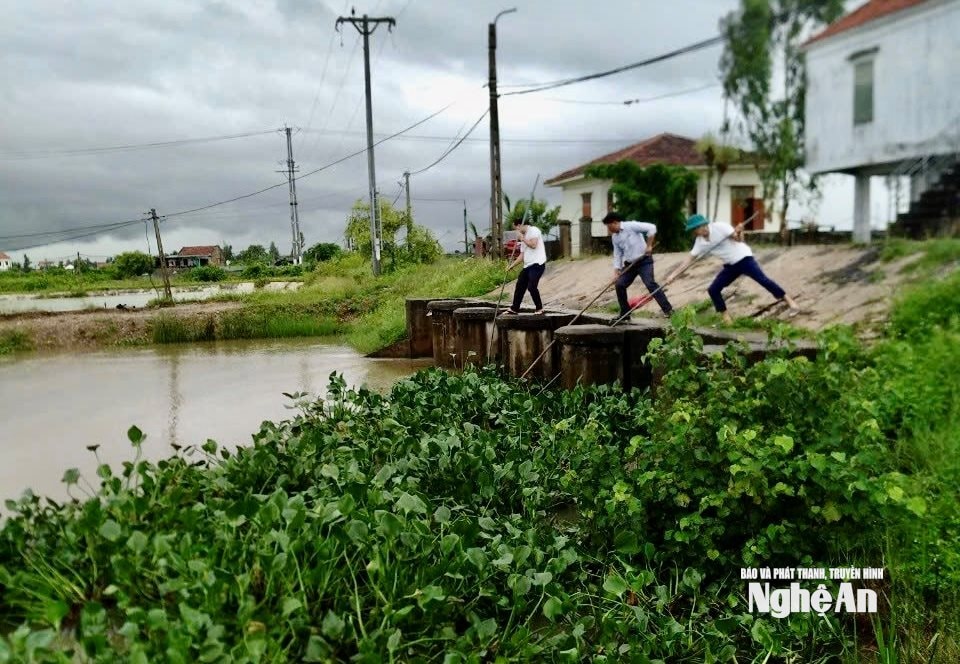
Not only in Dien Thanh, but many other drainage canals in Nghe An province are also operating at full capacity. At the Dien Thuy canal in Dien Chau commune, the current drainage volume is over 50 cubic meters.3/second. However, drainage is facing many difficulties due to water hyacinth covering many sections of the Vach Nam drainage canal, obstructing the flow. Workers have to regularly remove the water hyacinth and closely monitor the tides to open and close the sluice gates appropriately, avoiding the risk of saltwater intrusion.
At the Binh Son drainage culvert in Quynh Luu commune and the 4B drainage culvert in Quynh Anh commune, operations are continuous with a drainage flow rate of 15m³.3/second. Workers have to take turns clearing obstructions at the drain opening to ensure smooth water flow.
Given the unfavorable weather conditions, many farmers in affected areas have expressed their desire for authorities to continue strengthening drainage efforts to protect the remaining rice crops. Mr. Tran Van Ly, a farmer from Hop Minh commune, said that his family has nearly 3 sao (approximately 0.3 hectares) of rice ready for harvest but it was flooded after heavy rain.
"If the water isn't drained in time, the rice will be submerged for a long time, easily germinating and severely reducing yield. Farmers are hoping that irrigation units will continue to open sluice gates and pump out the water quickly to save the remaining rice fields," Mr. Ly shared.
Sharing the same concern, Ms. Nguyen Thi Hoa, a farmer in Quan Thanh commune, said that many areas where summer-autumn crops were recently sown are also deeply flooded. "People just hope the water recedes quickly so they can replant the damaged areas. If the flooding continues, it will greatly affect the planting schedule," Ms. Hoa said.
In the South Nghe An irrigation system, units are focusing on operating the Ben Thuy and Nghi Quang drainage gates to drain floodwaters from over 17,000 hectares of irrigated land. Although over 2,000 hectares of rice were flattened due to heavy rain, thanks to proactive and early drainage efforts, damage to many areas has been significantly reduced.
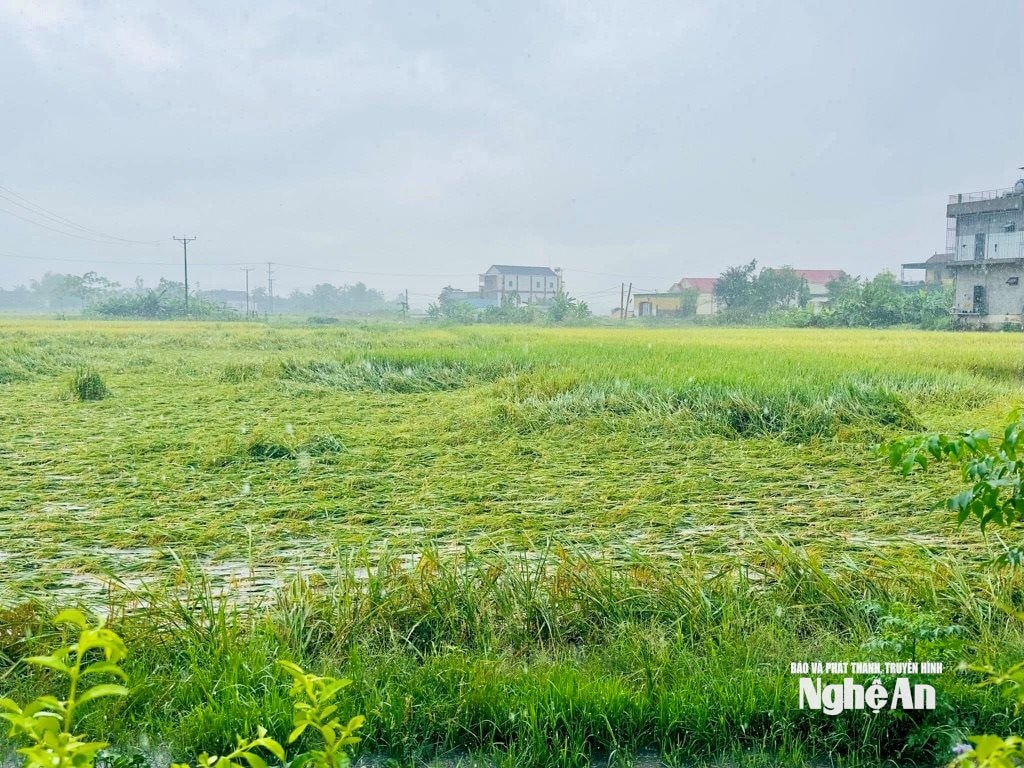
According to statistics from Nghe An province's agricultural sector, the province planted over 90,000 hectares of spring rice, and more than 55% has been harvested so far. However, heavy rains and thunderstorms have affected over 8,000 hectares of rice ready for harvest, with many areas flattened and deeply submerged in water.
Currently, Nghe An province has nearly 20 large and small drainage systems such as Nghi Quang sluice gate, Ben Thuy sluice gate, Thuong Xa sluice gate, Nghi Xa sluice gate, Dien Thanh sluice gate, Dien Thuy sluice gate, etc. However, apart from the Dien Thanh sluice gate which has been upgraded, most of the remaining structures have deteriorated, causing difficulties in operation during the rainy season and floods.
According to a representative from the Nghe An Irrigation Department, the unit is directing irrigation companies to organize 24/7 on-call teams and operate drainage gates and pumping stations at maximum capacity to quickly drain flooded rice and other crops. At the same time, localities are focusing on dredging canals, clearing waterways, and removing obstacles to improve drainage capacity in the fields.
Amidst the still complex weather situation, Nghe An's agricultural sector continues to advise localities to closely monitor the rainfall and flooding situation, proactively implement drainage plans, protect production, and support people in overcoming the consequences of heavy rains.


