
Nghe An is actively building a smart healthcare sector.
In recent times, the health sector in Nghe An province has been promoting the application of digital technology and developing smart healthcare to improve the quality of medical examination and treatment for the people.
Implementing electronic medical records.
Over its 14 years of establishment and development, Nghe An Oncology Hospital has invested in human resources, infrastructure, and equipment. Along with this, the hospital has paid great attention to investing in the development of information technology applications in medical examination and treatment.
In March 2023, Nghe An Oncology Hospital began implementing changes to its HIS-LIS software system (Hospital Information System - Laboratory Information Management System). Following this, the hospital gradually introduced electronic payments, digital signatures, and implemented a PACS (Picture Archiving and Communication System), smart injection vehicles, etc. By April 2024, the hospital had essentially completed the necessary conditions for the application of electronic medical records.
.jpg)
Electronic medical records are digital versions of paper medical records, recorded, displayed, and stored electronically. Electronic medical records have the same legal basis and functionality as traditional medical records. All information regarding professional procedures, medical orders, patient history, and treatment progress is digitized, standardized, and seamless, minimizing the use of paper documents.
Implementing electronic medical records is a major turning point in the digital transformation of healthcare. Electronic medical records make the examination and treatment process faster, more accurate, and more convenient. With electronic medical records, patients can easily track their examination and treatment process, and doctors can easily access and manage information anytime, anywhere.
On May 15, 2024, Nghe An Oncology Hospital officially launched its electronic medical record system. To date, after more than 5 months of implementation, the hospital has reduced over 95% of the paperwork related to medical examination and treatment procedures.
Even with some types of documents that haven't been digitized on the software, medical staff can scan and electronically sign them before transferring them to the hospital management software. This significantly shortens the professional process, and both patients and doctors can access medical records from anywhere with an internet connection.

Ms. Tran Thi Minh, a patient from Vinh City visiting the Nghe An Oncology Hospital, said: "I find the electronic medical record system very useful. Patients don't need to wait for results at the clinical laboratories; the results are delivered on the website. Payment procedures are also very convenient; patients can pay using their bank cards."
Dr. Pham Vinh Hung, Deputy Director of Nghe An Oncology Hospital, shared: Nghe An Oncology Hospital is the first oncology hospital in the country to successfully implement electronic medical records. The application of information technology in management and professional activities not only contributes to improving the quality of medical services, reducing administrative pressure, and meeting patient satisfaction, but also creates a solid foundation towards the goal of building a smart hospital with three pillars: smart disease prevention, smart healthcare, and smart medical management.
From the beginning of 2024 to the present, six more hospitals in the province have implemented electronic medical records: Nghe An Oncology Hospital, Nghe An Endocrinology Hospital, Nghe An Traditional Medicine Hospital, Nghe An Eye Hospital, Cua Dong General Hospital, and Central Ear-Nose-Throat Hospital. Cumulatively, the province now has 11 hospitals implementing electronic medical records (8 public and 3 private). From now until 2028, Nghe An will direct the remaining 38 public and private health insurance medical facilities to complete the implementation of electronic medical records.
Towards the development of smart healthcare.
In implementing Resolution No. 09-NQ/TU on digital transformation of Nghe An province by 2025, with a vision to 2030, and Plan No. 586/KH-UBND of the Provincial People's Committee on digital transformation of Nghe An province by 2025, the Nghe An Health sector has focused on implementing many solutions applying information technology.digital transformationHealthcare, and the development of smart healthcare, aim to improve the efficiency and quality of medical examinations and treatments, and the quality of healthcare for the people.
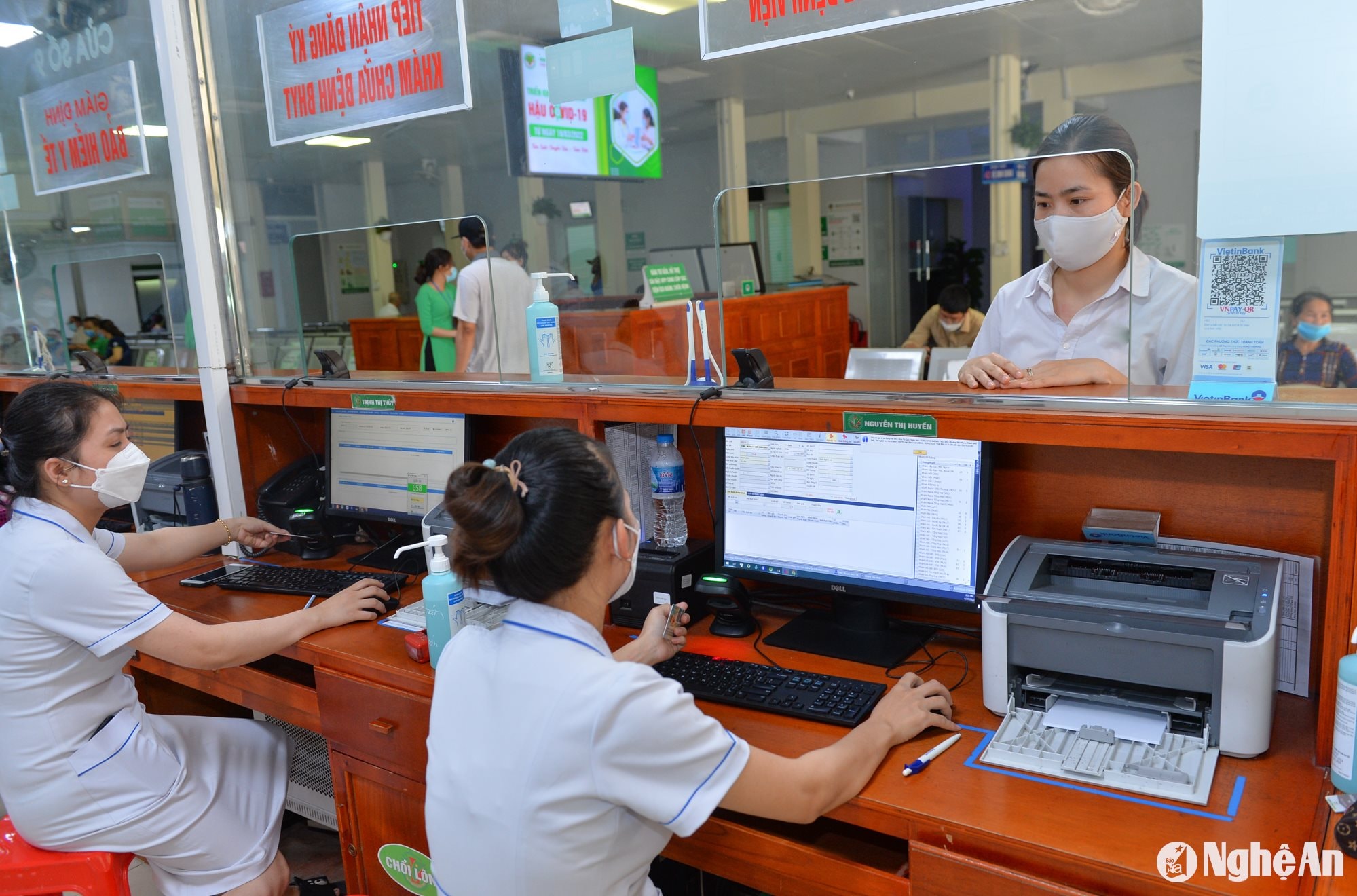
Accordingly, in order to build a smart healthcare system, the industryMedicalNghe An province has directed 100% of medical facilities at the provincial, district, and commune levels to implement software for managing medical examinations, treatments, and health insurance payments; and to connect health insurance medical examination and treatment data with the Health Insurance Claims Information System Data Reception Portal. To date, most medical examination and treatment records have been automatically uploaded to the Ministry of Health's Data Portal and the Health Insurance Claims Information Portal in accordance with regulations. According to reports on online claims processing, the average rate of records submitted on time is over 98%.
In addition, the sector has directed public and private medical facilities to receive patients using citizen identification cards instead of health insurance cards. To date, all 529 public and private medical facilities in the province have implemented this practice.
The healthcare sector is also strongly implementing digital transformation in electronic prescription writing and connecting with the national information system for managing prescriptions and dispensing prescription drugs. Throughout the province, 899 out of 941 (95.53%) medical facilities have been approved by the Department of Health for inter-system access codes; and 119 out of 899 medical facilities have implemented inter-system access, sending prescriptions to the system.

The Nghe An Health Department has directed its units to apply information technology to implement remote medical examination and treatment through technology connecting with leading experts and connecting online training and consultations with major hospitals to improve the quality of medical examination and treatment and reduce travel for patients and medical staff; directed units to apply information technology to online medical examination registration; implemented the issuance and use of smart medical examination cards to help people register for examination numbers remotely, reducing waiting times and congestion for patients; and integrated cashless payment solutions into smart medical examination cards. To date, 76.3% of medical units in the province have implemented hospital fee payment through banks.
In the field of preventive medicine, the Health sector has implemented information technology applications at health centers in all 21 districts, cities, and towns; and deployed common software at all 460 health stations throughout the province. The Basic Health Information Management System has been officially operational since May 2022, with 23 modules helping health facilities manage 18 different record books and reports...
Implementing Plan No. 368/KH-UBND dated July 6, 2020, on the creation, examination, and management of people's health records in the area, the Health sector has so far created 3,474,783 records on the system, reaching over 97%. Of these, 3,124,908 records already have medical examination and treatment data, reaching 89.93%.
According to pharmacist Tran Minh Tue, Deputy Director of the Nghe An Department of Health, despite the achievements, the development of a smart healthcare sector in Nghe An still faces many difficulties and limitations, including: weak infrastructure and equipment for deploying information technology and digital transformation; difficulties in ensuring information security in the healthcare sector; a shortage of human resources for deploying information technology and digital transformation in the healthcare sector; the lack of interconnected software for independent healthcare programs, professional management, and data reporting to the Ministry of Health; and the absence of specialized software in some other important areas of healthcare.
Healthcare facilities are implementing a roadmap for autonomy. However, the pricing of technical services has not been properly and comprehensively calculated, and does not include costs for information technology applications. This has caused many difficulties for healthcare facilities in balancing and investing in information technology applications and digital transformation.
To further promote the application of information technology and digital transformation, the Nghe An Department of Health is coordinating with relevant units to develop a draft plan for the development of smart healthcare in Nghe An province by 2030, to be submitted to the Provincial People's Committee for promulgation. The aim is to improve the capacity and efficiency of management and professional activities; enhance the quality of medical examination and treatment; contribute to administrative reform and reduce hospital overcrowding; and create favorable conditions for people to access timely and effective healthcare services.


