
Nghe An: Over 722 hectares of spring rice affected by rice blast disease.
(Baonghean.vn) - According to the latest information from the Provincial Department of Crop Production and Plant Protection, Nghe An currently has 91,797 hectares of spring rice in the tillering stage - late tillering stage, but rice blast disease has already broken out and damaged more than 722 hectares of rice.
The family of Mr. Nguyen Van Ca in Block 3, Hung Nguyen town, has 3 sao (approximately 0.3 hectares) of rice fields, and all 3 sao are currently affected by rice blast disease.
Mr. Ca said: "Just a few days without checking on the fields, on March 7th, I was shocked to see that the rice plants had lost all their leaves, turning yellow and stunted. I quickly went to the dealer to buy pesticides to spray, and now the rice has basically recovered from the symptoms, but I still have to regularly check on them and take care of them so that the rice plants can recover and grow."
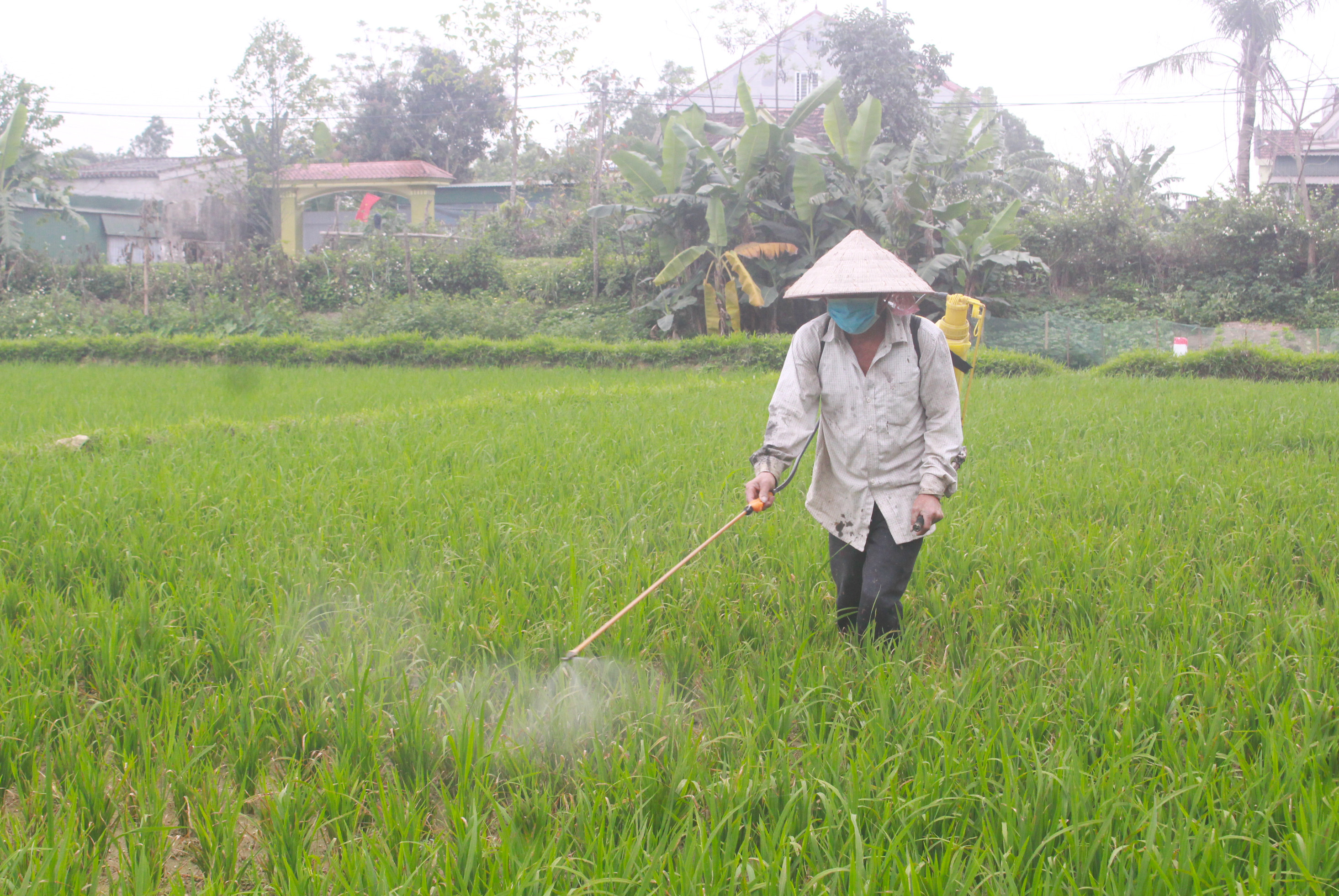 |
| Mr. Nguyen Van Ca sprays pesticide on his rice field, which has been damaged by rice blast disease. Photo: Phu Huong |
Mr. Nguyen Viet Hung, Head of the Crop Production and Plant Protection Station of Hung Nguyen district, said: Rice blast disease has emerged and caused damage since mid-February on early and main crop rice varieties, mainly on varieties such as IR1820, Xi 23, X33, and P6. Locally in some areas of communes such as Hung Loi, Hung Chau, Hung Nhan, Hung Thinh... with some outbreaks affecting 20-25% of the leaves.
“Currently, after the first round of fertilization, the rice plants are growing rapidly, combined with favorable weather conditions for disease spread, causing widespread damage to rice varieties such as IR1820, Xi 23, X33, P6, AC5, NA 6, TBR 225, and various glutinous rice varieties; as of March 14th, the total affected area in the entire district is 478 hectares.”"Of that area, 48 hectares are heavily infested; we have treated over 550 hectares, including 30 hectares that have been sprayed a second time," said Mr. Nguyen Viet Hung.
Currently, tThe early spring rice crop is in the vigorous tillering stage - late tillering, the main crop is in the tillering stage, and the late crop is in the rooting and greening stage - early tillering. In general, all rice crops are growing and developing well..
However, rice blast disease has occurred and caused damage to a total area of 722 hectares, of which 64.8 hectares are severely infected with disease rates reaching 15-20% in some areas, and exceptionally 50-70% in Hung Nguyen and Vinh City.
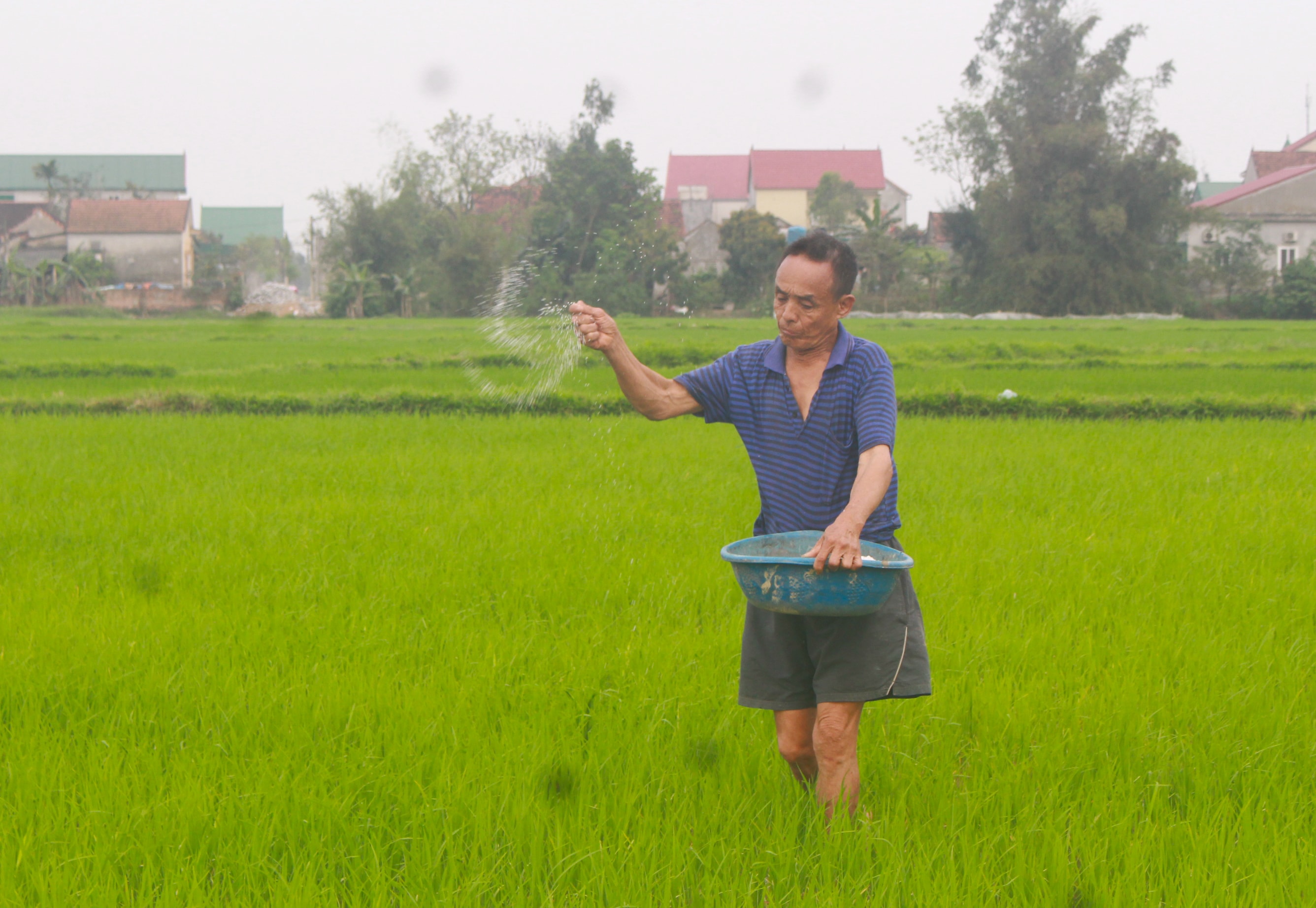 |
| Farmers in Hung Dao commune, Hung Nguyen district, apply nitrogen fertilizer to promote rice growth. Photo: Phu Huong. |
According to Mr. Trinh Thach Lam, Head of the Plant Protection Department, Provincial Department of Crop Production and Plant Protection, tweather conditionswarmgradually, interspersed with cold air masses accompanied by rain.,High humidity is a very favorable condition for rice blast disease.continueto arise, spread, and causesevere on a large scale,Especially on sandy loam soils, light clay soils, and semi-mountainous areas, sowimplantalikeannualoftenhigh infection ratesuch as Xi23, IR1820, Xi30, BC15, AC5, P6, BTE1, Thien Uu 8.
"In rice fields already infected with the disease, where weather conditions are favorable for disease development and damage, it is necessary to immediately stop applying nitrogen fertilizer, maintain sufficient water in the fields, and carry out control measures using one of the pesticides with the active ingredients as instructed by the authorities, according to the recommended dosage."If the disease persists, a second spraying should be done 5-7 days after the first. Only resume cultivation after the disease has stopped spreading."It should be noted that foliar fertilizers should absolutely not be used on fields where diseases are actively spreading and causing damage," advised Mr. Trinh Thach Lam.


