(Baonghean.vn) - In Nghi Duc commune, Nghi An district, Vinh city, the craft of digging up and processing the roots of the chay tree used for betel chewing has existed since ancient times. Currently, many people still cling to the profession even though chay trees are no longer abundant here and the demand for betel chewing is not as great as it used to be.
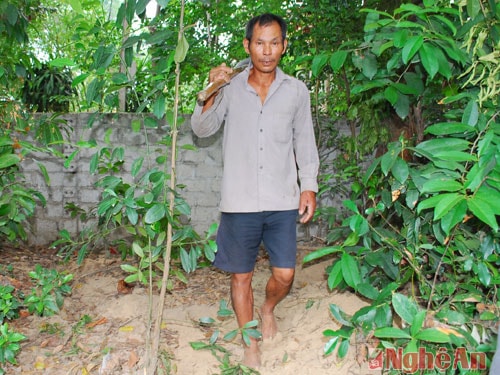 |
| Mr. Nguyen Van Chuong, 56 years old, residing in Hamlet 16, Nghi Duc Commune, is one of the very few people still pursuing the profession of digging up chay roots. |
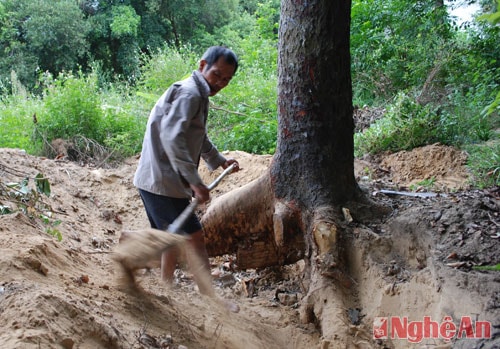 |
| Mr. Chuong went to families who had chay trees to buy the roots. |
 |
| After more than a day of digging and tracing the roots of the decades-old chay tree, Mr. Chuong began the root harvesting phase. |

Use a knife to mark the sections of the chay tree's roots that need to be peeled. |
|
 |
| Then carefully peel off each layer of skin. |
 |
| A moment of rest for the manual laborer. |
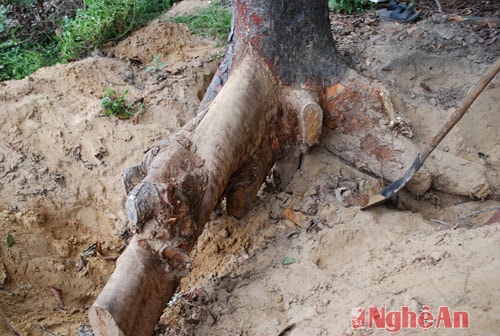 |
| After a period of digging and carefully stripping away the bark, the chay trees are left with only their white roots and are usually cut down. This has led to a decrease in the number of chay trees in people's gardens, and the profession of digging up chay roots is gradually dying out. |
 |
| After the chay tree was cut down, many elderly women who chewed betel came to scrape the bark off the chay tree. |
 |
| The chay roots are thoroughly washed to remove soil, sun-dried, and used for betel chewing by the local people. |
Nguyen Khoa



