
The Grơ New Year ceremony in Keng Du (Ky Son)
(Baonghean.vn) - Before the Lunar New Year, the Khmu people in Keng Du commune (Ky Son district) celebrate their own traditional New Year festival. For them, after this festival, the family has entered a new year. The Khmu people call it "gro," and it usually takes place before the Lunar New Year.
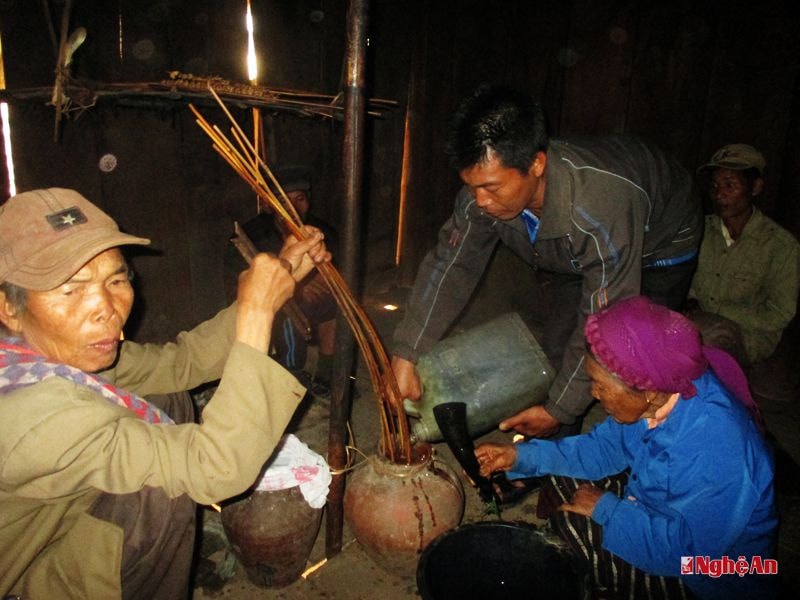 |
| People in Keng Du commune prepare rice wine to celebrate Tet. |
Huoi Phuon 1 in Keng Du commune is a purely Khmu village. Despite being near the center and the furthest place in Ky Son district, the most fundamental cultural aspects of the Khmu people are still evident in the daily lives of the community.
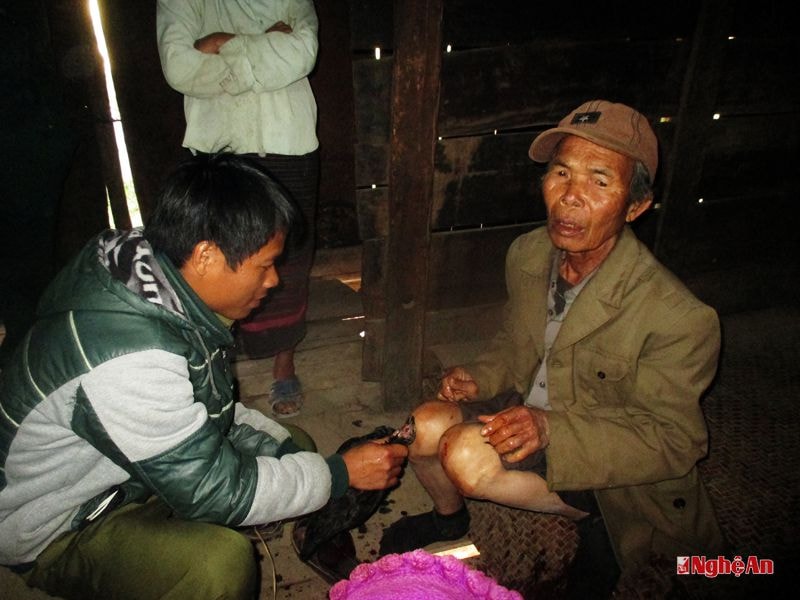 |
| A ritual to pray for good luck by smearing chicken blood on the affected area. |
Besides popular festivals like Lunar New Year and Independence Day, this community also has its own unique holidays, most notably the Grơ festival. This festival is celebrated by each family and clan starting from the last month of the lunar year. By a few days before Lunar New Year, all families have completed the Grơ festival.
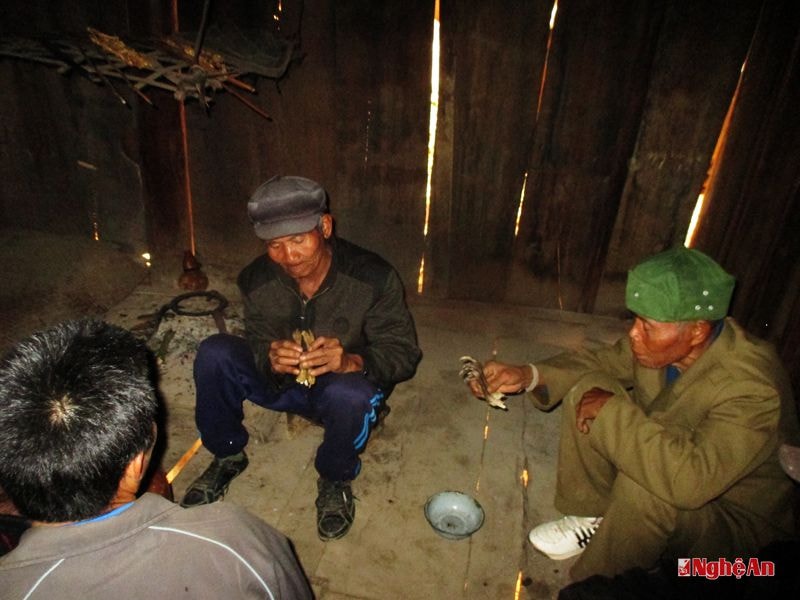 |
| Divination using chicken feet after the ritual offering. |
Explaining this festival, Mr. Luong Pho Bi of Huoi Phuon 1 village calls it a "customary festival." This festival only takes place for one afternoon and one night with many rituals.
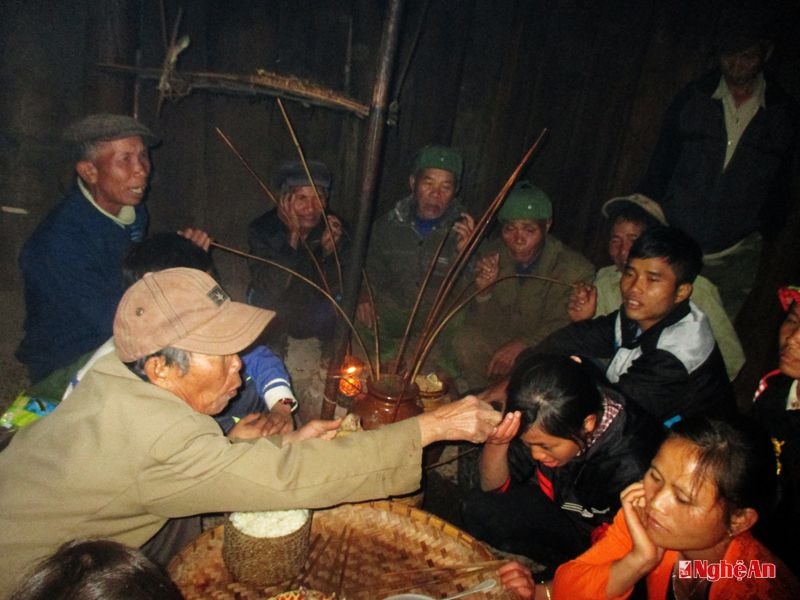 |
| The master of ceremonies distributes sticky rice and meat to the children and grandchildren in the house. |
In the kitchen of the Khmu people, there is a stove used only during religious ceremonies, and a jar of freshly brewed rice wine is displayed. The jar of wine needs to be placed leaning against a post erected next to the stove. The Khmu people believe this post symbolizes the head of the household. Only when the head of the household is absent is this post removed. In the ancestral altar, a tray is always placed to offer the ancestors daily meals; the old tray is always replaced with a new one.
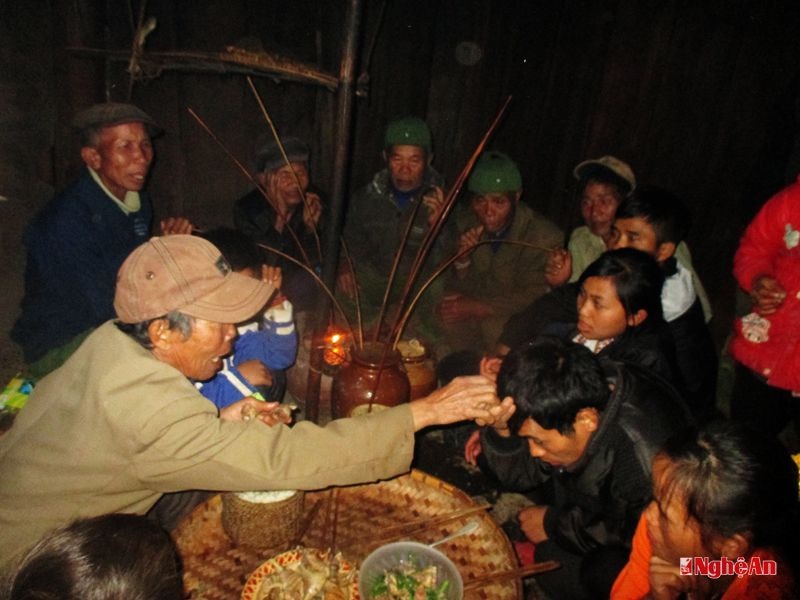 |
| Dot it on your forehead before eating. |
After the first round of drinking rice wine by the family members near the ceremonial hearth, two chickens are brought in for a ritual to pray for good fortune in the new year. After the prayers, the first chicken's beak is cut and its blood is collected. The master of ceremonies takes the entire chicken and smears the blood on the knees of each person. He applies the blood from top to bottom and prays for the misfortunes of the old year to pass away. When everyone in the family has received this ritual, another chicken's beak is cut and its blood is collected. Each person, in turn, has the blood smeared on their knees by the master of ceremonies. This time, the blood is applied from the feet up to the knees, accompanied by a prayer for good fortune in the new year.
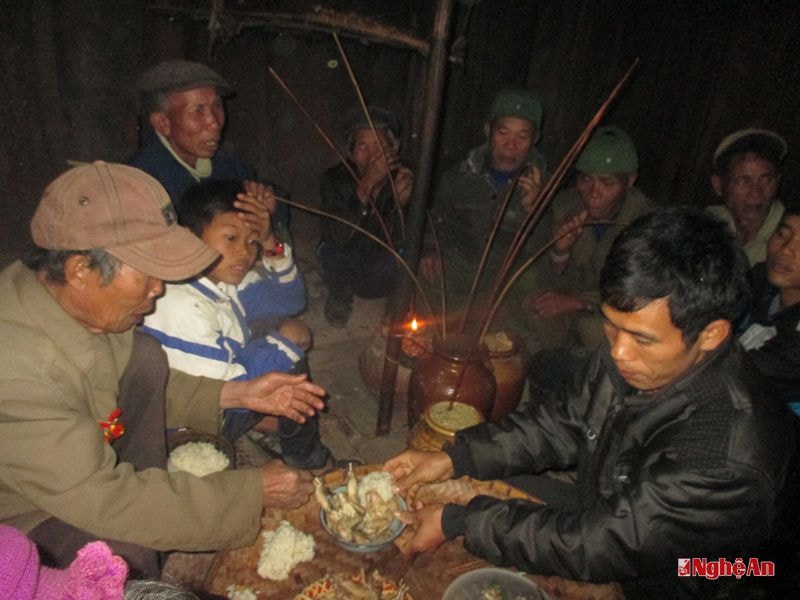 |
| Bring a chicken as a token of gratitude to the homeowner for helping to cure the illness. |
After this ritual, both chickens are slaughtered and offered as a feast to invite ancestors to celebrate Tet. Experienced villagers even look at the chickens' feet to predict good or bad fortune in the new year.
As night fell over the village, another ceremony of drinking rice wine and offering sacrifices took place. Besides boiled chicken, the offering tray included agricultural products of the Khmu people such as pumpkins, squash, and upland beans. After the ceremony concluded, the master of ceremonies distributed a portion of meat and sticky rice to each family member. Those receiving the food would usually bow their heads to receive it, then touch it to their forehead before eating.
On this occasion, those who received traditional medicine treatment from the host during the year also bring a boiled chicken as a token of gratitude.
After this ceremony, it signifies that the family has entered a new year. From early morning the next day until the end of the day, daughters are not allowed to enter the house. A person highly regarded by the family will be invited to be the first visitor of the year early the following morning.
Huu Vi


