
Shuttle diplomacy: Is North Korea in need of new allies?
The unprecedented series of visits by high-ranking North Korean officials to Russia, Cuba, and Equatorial Guinea may not be merely ceremonial.
According to NK News, the fact that the Pyongyang government has been sending high-ranking officials to visit Russia, Cuba, and Equatorial Guinea this week may indicate that North Korea is changing its stance on international diplomacy.
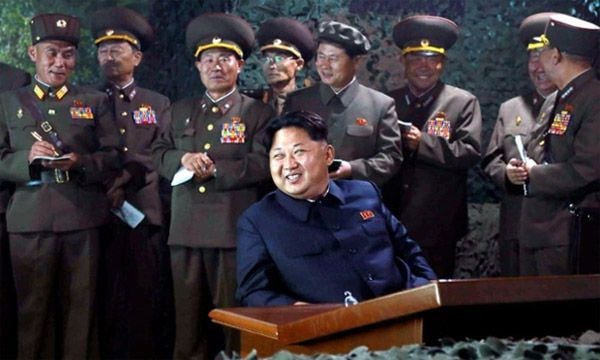 |
| Chairman Kim Jong-un was accompanied by high-ranking military officials at an unnamed location in North Korea. (Photo: EPA). |
All of those separate visits were announced by North Korea's state news agency KCNA. They fueled speculation that Pyongyang might be seeking new allies amid a severe drought and rising tensions with South Korea.
"The reason Russia and North Korea seem to be actively holding talks is because North Korea really has no other allies, as its relations with China, Japan and South Korea have become unstable, to put it mildly," The Guardian quoted Cho Han-bum, a senior researcher at the Korea National Unification Institute, as saying.
KCNA revealed that on June 23, Choe Thae Bok, Chairman of the Supreme People's Assembly (Parliament) of North Korea, departed on a diplomatic mission.
Reports indicate that a spokesperson for the Russian Senate confirmed the meeting, stating that the North Korean envoy would meet with Russian Senate Speaker Valentina Matviyenko – one of the most powerful women in Russian politics and currently on the US sanctions list related to the Ukraine crisis.
John Grisafi, a North Korea analyst at NK News, suggests that by sending senior and experienced party members abroad, North Korea's purpose goes beyond mere meetings and greetings.
Mr. Choe held several high-ranking positions within the party, including the acting head of international affairs.
North Korea also sent Politburo member and Central Committee Secretary Kang Sok Ju to Cuba, believed to be to discuss food aid.
Kang Sok Ju is currently the secretary in charge of international affairs for the Workers' Party of North Korea. "In many cases, party officials responsible for a given issue often have greater influence than their counterparts in government ministries," expert Grisafi said.
Also this week, North Korea sent Foreign Minister Ri Su Yong to Equatorial Guinea, likely the first stop on a tour that KCNA called to "several African countries."
This is the second trip of this kind in the past nine months, following senior official Kim Yong Nam's visit to Uganda, Sudan, and the Republic of Congo in October.
(According to VNN)
| RELATED NEWS |
|---|


