
Ho Chi Minh's older sister
Ms. Nguyen Thi Thanh, President Ho Chi Minh's older sister, nicknamed Bach Lien (White Lotus), was revered by the people as the White Lotus female scholar. She was born in the year of the Monkey (1884) in Hoang Tru village, Lam Thinh commune, Nam Dan district, Nghe An province.
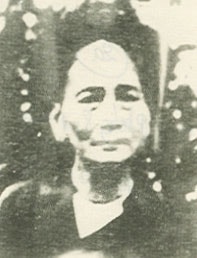 |
Ms. Nguyen Thi Thanh (1884-1954) |
In the year of Tan Suu (1961), Mr. Nguyen Sinh Sac, the father of Nguyen Thi Thanh, passed the imperial examination and was granted the special privilege of "returning home in glory" to live in Lang Sen village. During his time there, Mr. Sac often took his two younger brothers to socialize in many places, while Nguyen Thi Thanh single-handedly managed the household and took care of the garden.
In 1906, Mr. Nguyen Sinh Sac arrived in Hue and took up the position of Assistant Secretary of the Ministry of Rites. He allowed Ms. Thanh to stay and look after his house and fields. From then on, she began participating in patriotic activities with Doi Quyen and Am Vo. In her youth, Nguyen Thi Thanh was an intelligent, beautiful, and virtuous woman, quick-witted in communication. She was the ideal woman for many young men and noblemen who wished to marry her, but she always refused, setting aside personal matters to focus on saving the country. Closely connected with the patriotic scholar Phan Boi Chau, Ms. Thanh worked with Doi Quyen and Doi Phan as a liaison, raising money for the resistance army and the Dong Du movement. At the end of 1910, while on a liaison mission, she was captured by the enemy, but managed to destroy the documents in time. Despite being brutally beaten and subjected to savage torture, she did not betray any information or harm the resistance army. Unable to find concrete evidence, they had to release her. After her release, she continued her activities, opening a simple eatery near Thanh Vinh to get close to the French colonial army's outpost and gather intelligence on the enemy. She and a comrade organized the seizure of enemy weapons to equip the resistance fighters, but unfortunately, the plan was exposed. She was arrested and sentenced to 9 years of hard labor, exiled 3,000 miles from her homeland.
On December 2, 1918, Ms. Thanh was imprisoned in Quang Ngai. There, thanks to her skills in traditional medicine and her knowledge of classical Chinese, she was invited by Judge Pham Ba Pho to his private residence to tutor his son. Through her persuasive abilities and ability to influence others, she enlightened Pham Ba Nguyen (Pham Ba Pho's son), encouraging him to actively participate in patriotic activities and later to be admitted into the Communist Party of Vietnam.
In 1922, she requested permission to visit her hometown, and during this trip, she secretly brought the remains of Mrs. Hoang Thi Loan back to be buried there.
She was a woman of strong character, courageous, and daring, willing to sacrifice herself for the cause of national salvation. In November 1926, she sent a letter to the Governor-General of Indochina and the Resident Commissioner of Central Vietnam, clearly stating her political views and demanding amnesty for King Thành Thái and King Duy Tân.
During her time in Hue, Ms. Thanh often visited, cared for, and conversed with Mr. Phan Boi Chau about the fate of the country and his comrades; she also participated in the group of patriotic intellectuals in Hue.
In September 1930, as the Nghe An - Thinh Hoa Soviet movement reached its peak, the French colonial authorities ordered the dismissal of Nguyen Khoa Ky from his position as Governor of An Thinh Hoa and appointed Pham Ba Pho to replace him in order to suppress the revolutionary movement in Nghe An province. Lang Sen, her hometown, was one of the locations targeted. Pham Ba Pho went to the village to suppress the revolutionaries. With courage and deep love for her homeland, she traveled back to her hometown to persuade and dissuade Pham Ba Pho from carrying out his plan.
On September 18, 1940, she was released and returned to her hometown. Upon learning that President Ho Chi Minh was indeed her younger brother, in 1946, Ms. Thanh traveled to Hanoi to visit him, and then returned to Lang Sen village to live out her life as an exemplary citizen, devoted to her community and relatives.
Due to old age, weakness, and a serious illness, Ms. Nguyen Thi Thanh – the White Lotus Lady, the fragrant white lotus of Lang Sen village – passed away in March 1954. Ms. Thanh's life is a shining example of Vietnamese womanhood, embodying noble character, virtue, and profound patriotism. We have every right to be proud of the White Lotus Lady!
Le Bich Thuy