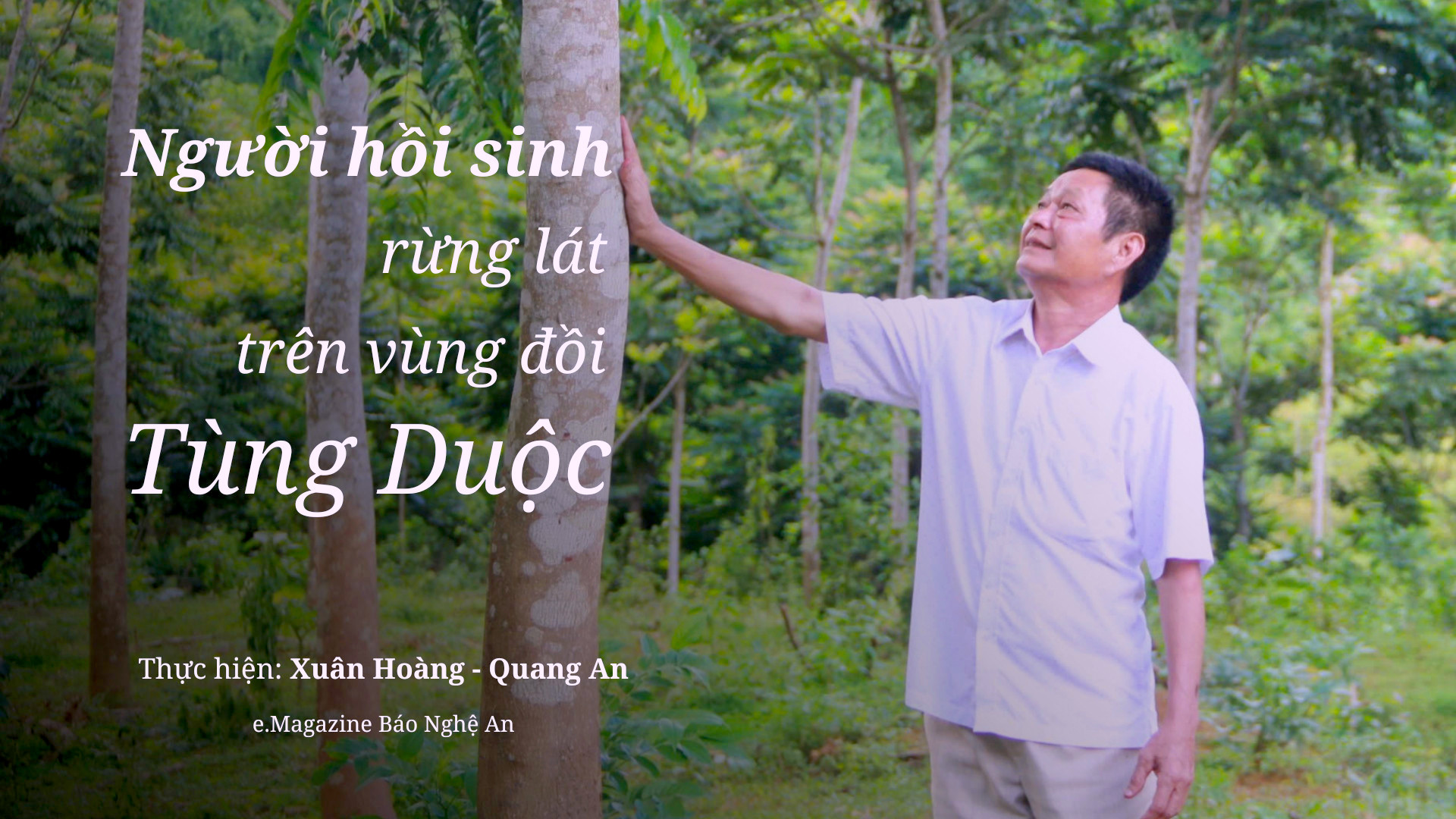
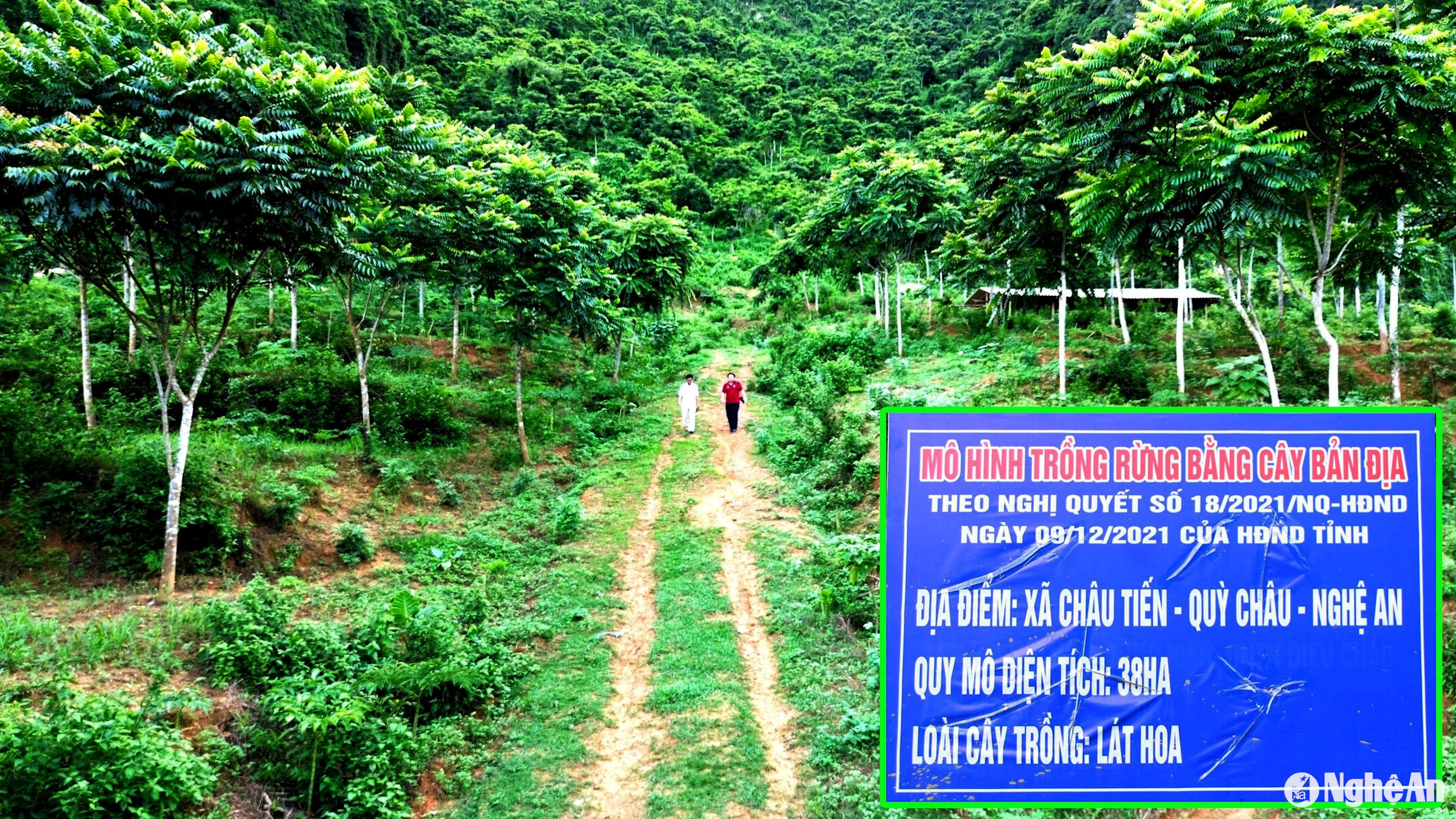
The model of planting large timber forests using native trees, in accordance with Resolution No. 18/2021/NQ-HĐND of the Provincial People's Council, implemented by Mr. Thai Dieu's family in Minh Tien village, Chau Tien commune, is opening up a new direction in Quy Chau district. This forest owner is also the person who restored and developed the Quy duck breed - a specialty of the Phu Quy region.
The Palm Forest Millionaire
After several missed appointments, we finally had the chance to meet Mr. Thai Dieu in Minh Tien village, Chau Tien commune, Quy Chau district. He is the owner of what is arguably a unique forest of flowering lat trees in western Nghe An province. Despite the torrential rain that had just stopped, Mr. Dieu enthusiastically took the wheel of his 4x4 Fortuner, navigating the rough, muddy dirt roads to reach the lat tree forest.
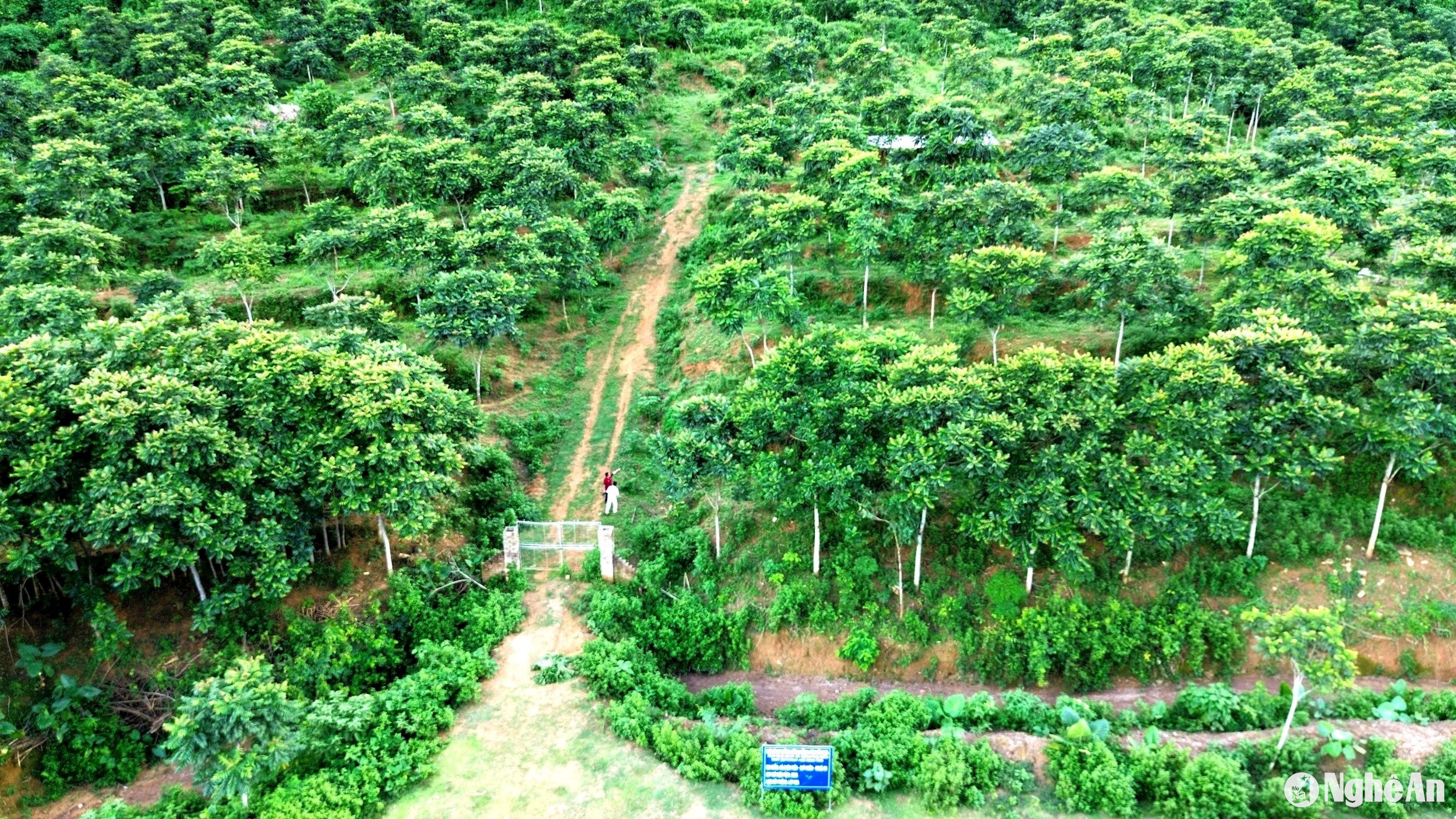
Mr. Thai Dieu's vast forest of flowering trees. Photo: Xuan Hoang
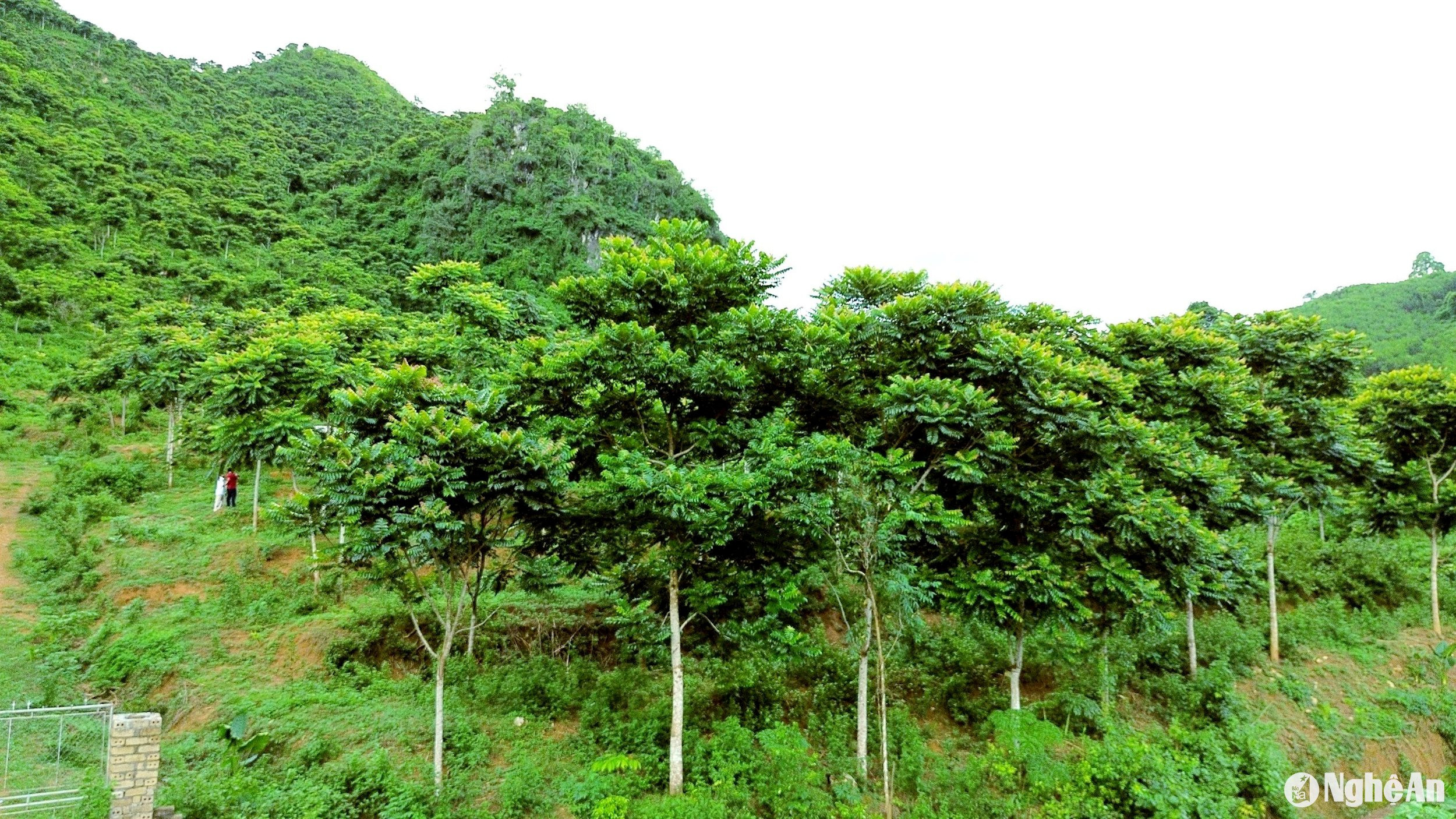
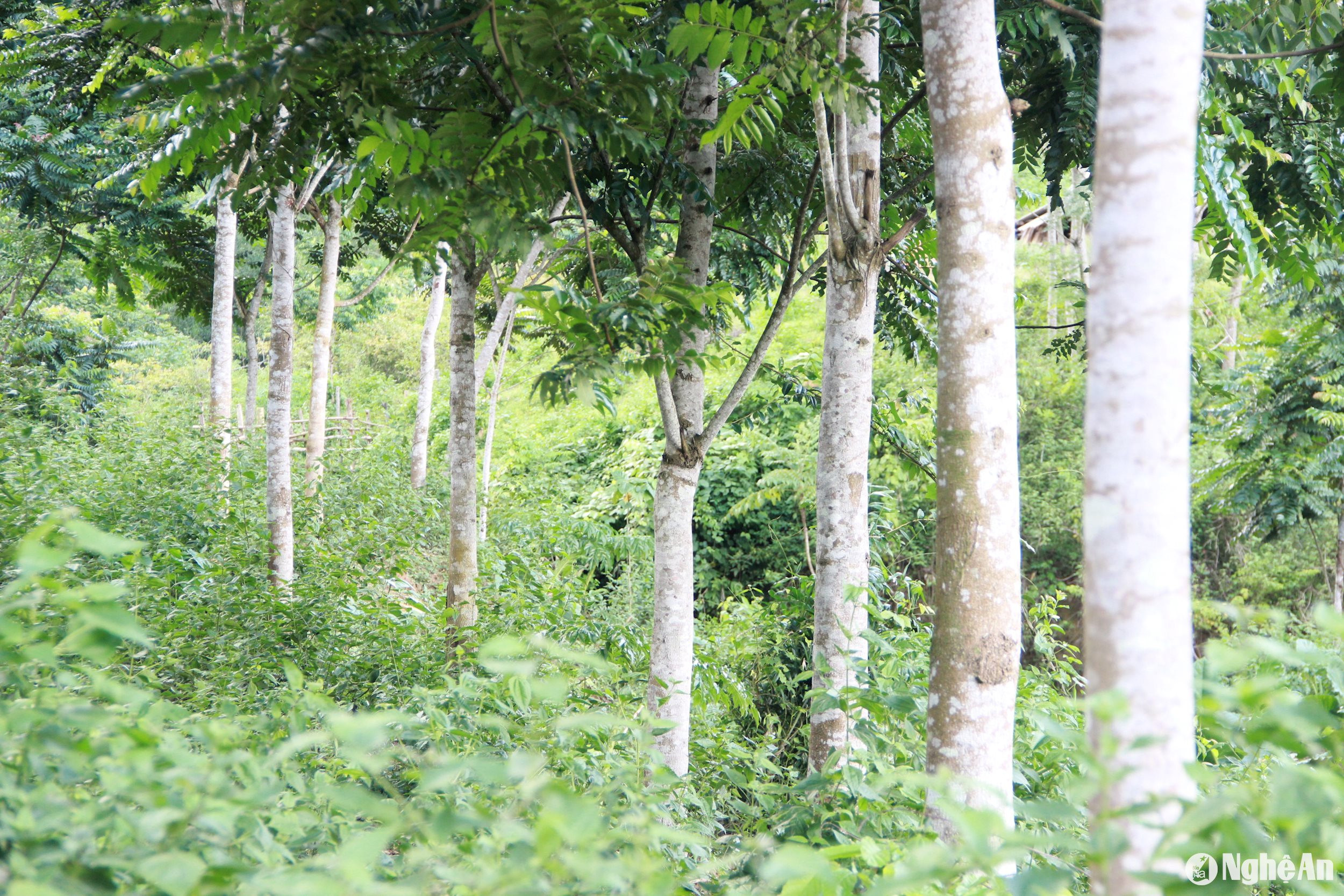
A distant red color appeared on the hills, gradually getting closer. Mr. Thai Dieu explained that the red we were seeing from afar was the color of the young leaves of the Lagerstroemia indica tree. The entire Tung Duoc valley area was previously covered with weeds and bushes. After the land was transferred to him, he decided to completely replace them with Lagerstroemia indica trees, mixed in with a few other species. With an area of 38 hectares, for many months in 2018, dozens of local workers carried each sapling up the mountain to plant them in neat rows. Now, with hundreds of trees, the entire hillside is covered in a green carpet of Lagerstroemia indica.
These flowering teak trees have grown tall after 6 years of planting. Photo: Xuan Hoang
To properly care for the Lagerstroemia forest, Mr. Dieu pays close attention to "community outreach" with the local people every day. In addition, the local people benefit from the nearly 2km long road that Mr. Thai Dieu invested in to transport raw materials. Thanks to this, for more than 6 years, not a single Lagerstroemia tree has been lost, not even a single cut into the trunk.
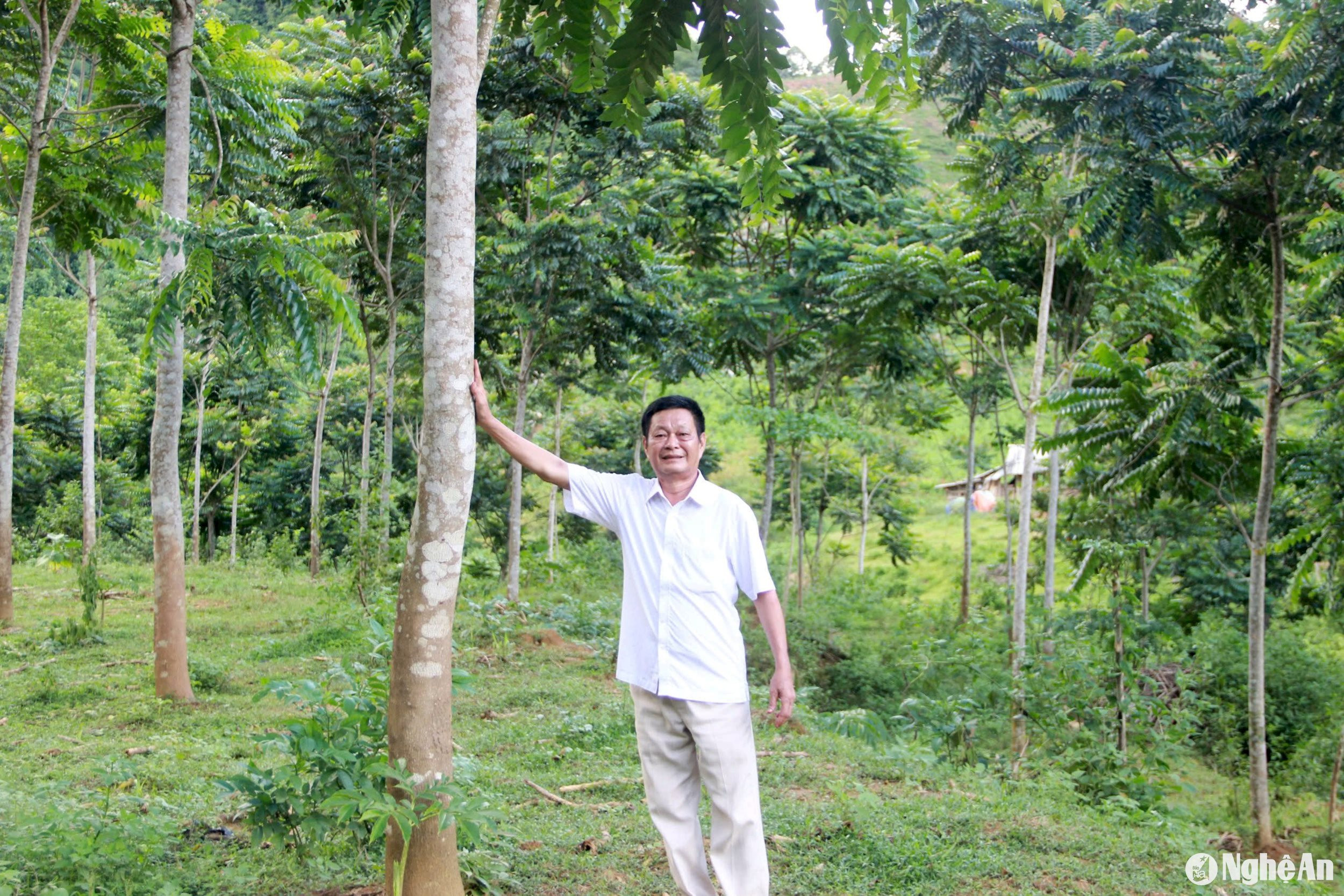
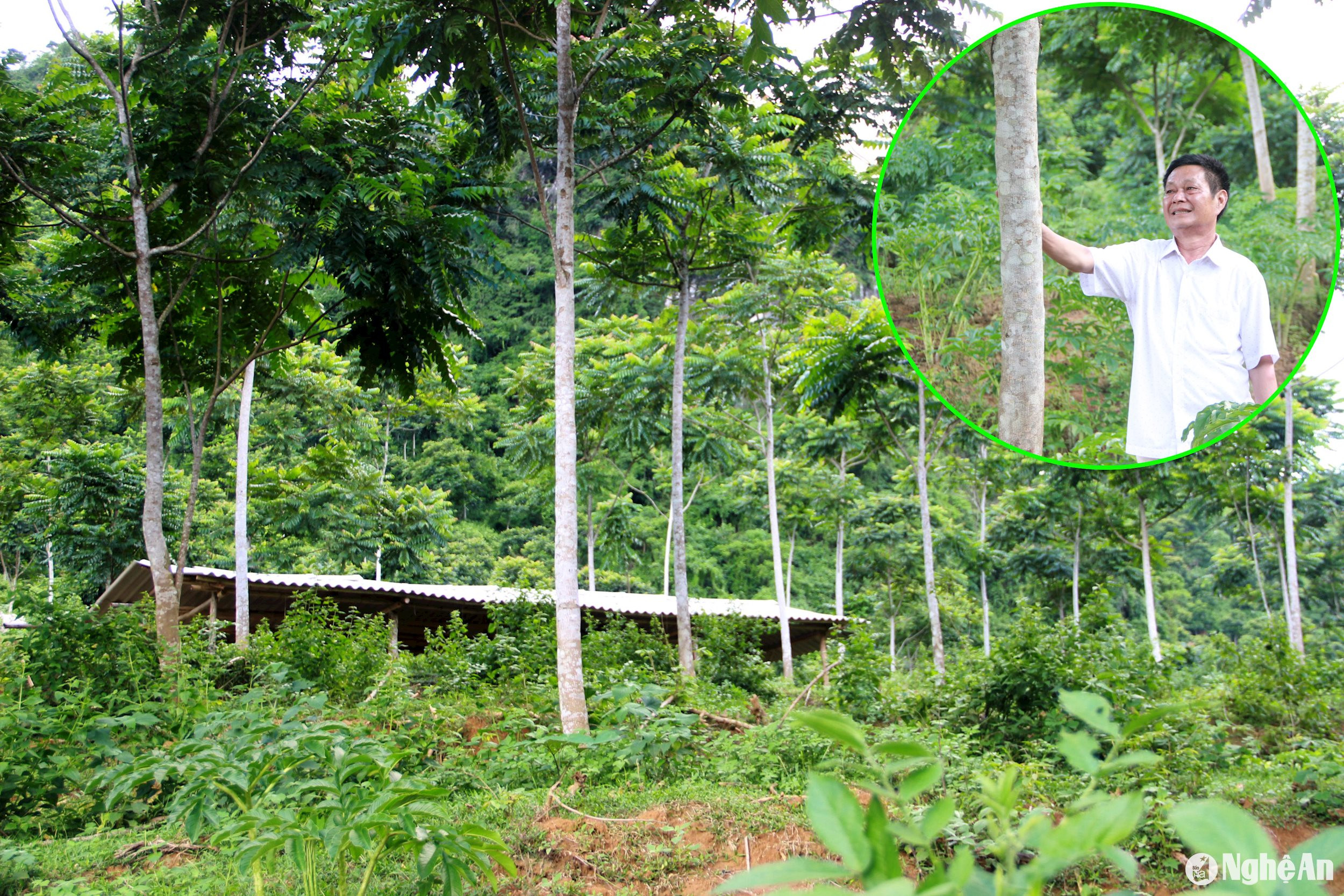
Mr. Thai Dieu next to the cypress forest when he was 6 years old. Photo: Quang An
"
The Dalbergia tonkinensis tree takes 20 years to mature before it can be used for timber. Now that I'm nearly 70 years old, I've decided to consider it a valuable asset for the future. The immediate benefit is having a beautiful forest that provides shade, protects the environment, prevents soil erosion, and maintains groundwater levels in this hilly area. I don't know the professional ranking of Dalbergia tonkinensis timber in forestry, but I know that in my hometown, it has been valued since our ancestors' time. This type of wood is excellent for making beautiful interior decorative furniture...
Mr. Thai Dieu, Chau Tien commune, Quy Chau district
According to elderly locals, the rosewood is durable, resistant to termites, and flexible, making it easy for carpenters to shape. The wood has a bright, fresh color, fine grain, and many beautiful patterns. "The grain of rosewood is as beautiful as clouds and mist, like red flowers, dense in some places and sparse in others; each type of grain has its own unique beauty. That's why it's called rosewood," explained carpenters in Chau Tien commune.
Looking at the six-year-old flowering teak trees, with trunk diameters of about 15cm, Mr. Thai Dieu determined that it would take another 20 to 30 years before this teak forest could be harvested. At that time, the trunk diameters would be around 1 meter, and as precious timber becomes scarcer, the value of this teak forest would increase even further. If exported abroad, its value would be even higher.
Rosewood is in high demand in the market. Photo: Quang An
Mr. Thai Dieu stated that in the past, this forest area had many Dalbergia tonkinensis trees and other valuable natural timber species, but people cut them down and exploited them to the point of depletion for building houses and selling them to timber traders for making interior decorations. Now, many households still plant Dalbergia tonkinensis in their gardens, but only a few trees each. With the introduction of this Dalbergia tonkinensis planting initiative, it is hoped that more households will invest in planting them to create forests, forming a Dalbergia tonkinensis forest for the future. This is also something that the local government and the forestry sector are encouraging.
The path into the forest is paved wide for easy maintenance. Photo: Quang An
Looking at the vast expanse of rosewood trees, many people call him a "forest millionaire." Further investigation reveals that the current market price for rosewood ranges from 11 to 15 million VND per square meter.3Then, in 20-30 years, with over 20,000 of these flowering larch trees, just calculate one tree per square meter.3There are already more than 20,000 cubic meters of wood.3With timber, it's easy to become a "billionaire"! Not only that, but right under the forest canopy are now cattle and pig farms... a "treasure chest" of money.
Preserving the flowering Lagerstroemia tree is the heartfelt wish of Mr. Dieu as well as the people of Quy Chau region. Photo: Quang An
Mr. Thai Dieu proudly shared that, following the principle of "short-term gains to support long-term growth," once the flowering teak forest canopy closed, he invested in raising breeding cows and pigs within the forest. Starting with 50 breeding cows, after three years of care, the herd has multiplied many times over. He sells a certain number of cows each year, and currently maintains 100 breeding cows and hundreds of pigs. These pigs are a hybrid of black and wild boar, slow-growing but with delicious meat, and require minimal care. Thanks to the large number of breeding cows and pigs, Mr. Thai Dieu supplies hundreds of piglets to local people each year, contributing to their economic development.
The person responsible for restoring the Quy duck breed.
During our conversation, I learned that Mr. Thai Dieu is originally from Lien Thanh commune, Yen Thanh district. Speaking slowly about how he came to settle in Phu Quy over 34 years ago, Mr. Thai Dieu recounted that in 1990, while visiting relatives in Que Phong district, he had the opportunity to taste the unique and delicious Phu Quy duck, a local specialty. As a farmer from a rice-growing region with extensive experience in raising ducks in the fields, that experience sparked his idea of settling here and establishing a business raising Phu Quy ducks.
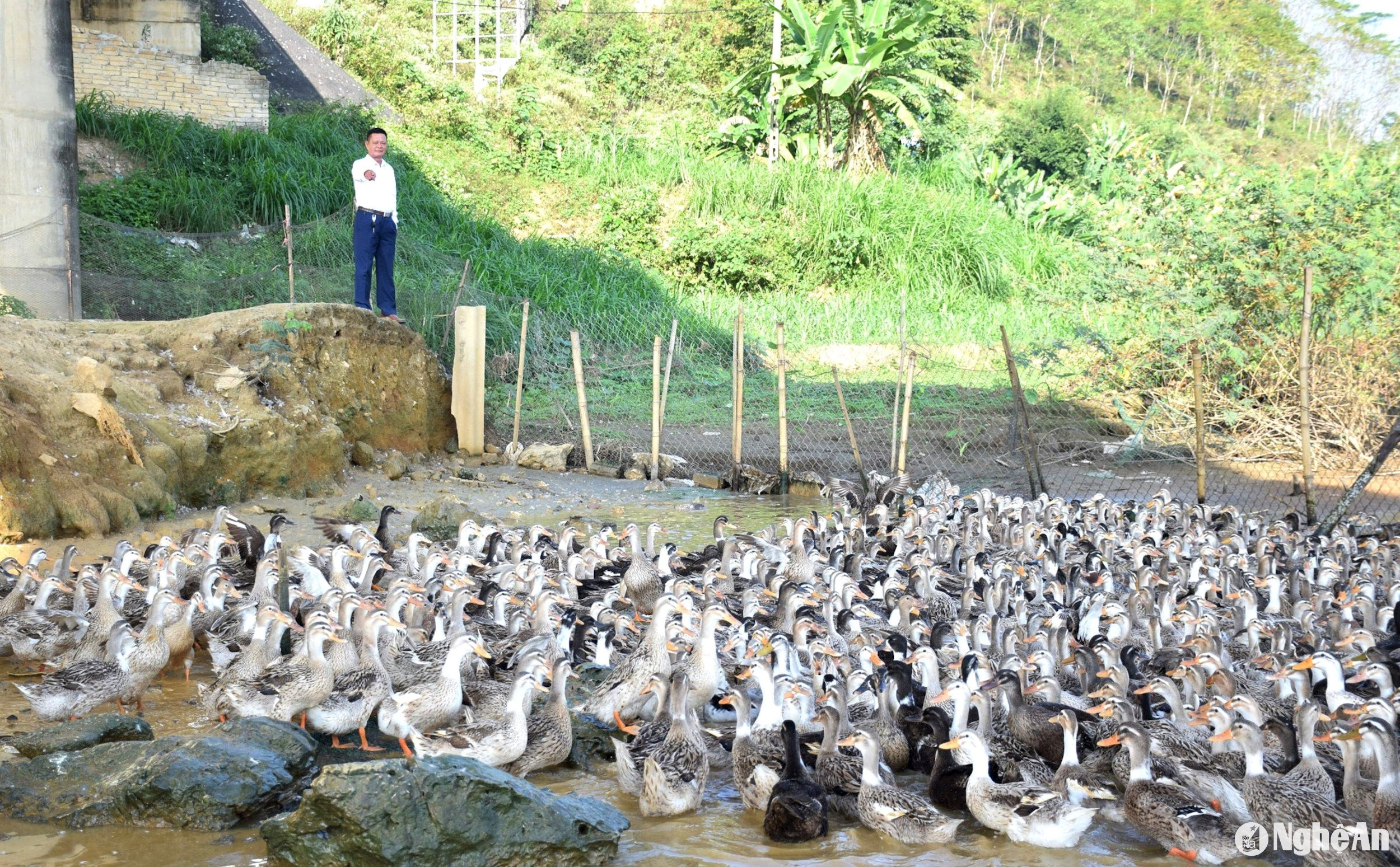
Mr. Thai Dieu is also a pioneer in preserving the Quy duck breed. Photo: Xuan Hoang
When they first set foot in Phu Quy, the couple chose a plot of land at the foot of Chau Tien bridge, next to the Nam Viet river, and settled there until now.
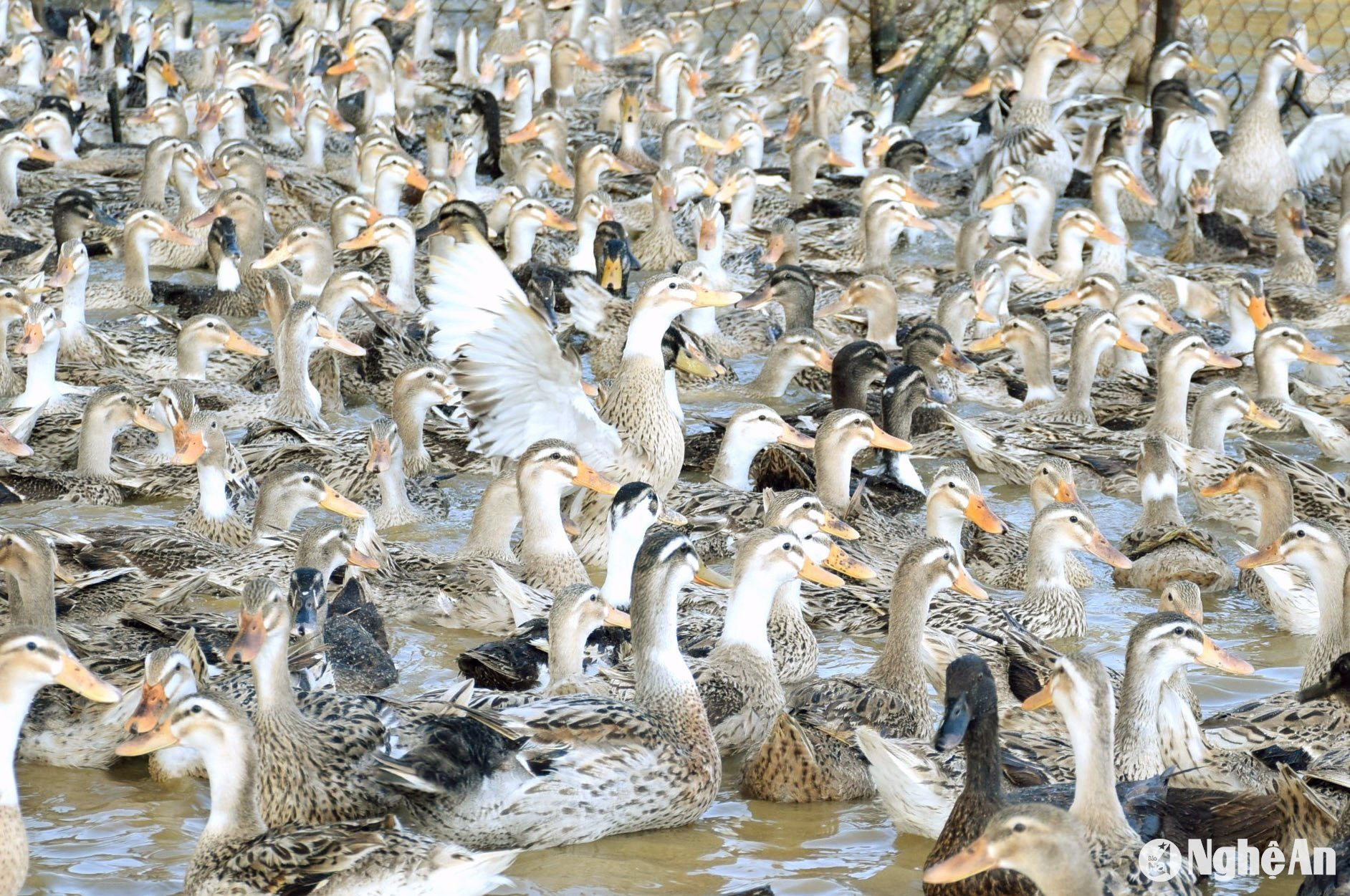
Quy duck is a specialty of Phu Quy region. Photo: Xuan Hoang
"
The Quỳ breed of duck is a specialty of the Phủ Quỳ region, but buying one for meat wasn't easy because the villagers at that time raised them in small numbers, mainly for self-sufficiency. Therefore, establishing a Quỳ breed of duck farm took a long time. Back then, the couple traveled to every village and hamlet, going from house to house, begging people to sell them eggs.
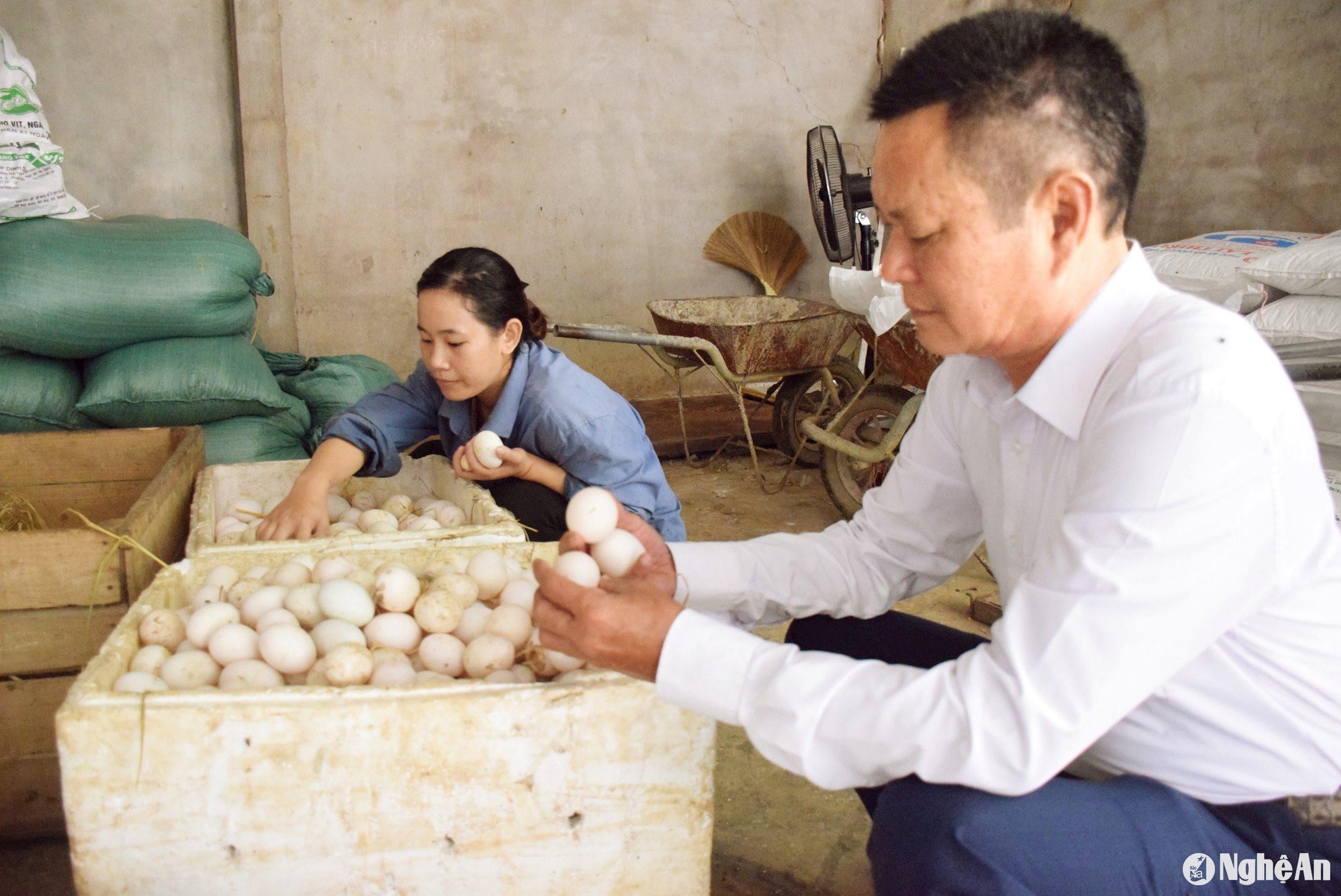
Through persistent effort, he managed to gather a significant number of eggs and proceeded with the incubation process. After many years of perseverance, he had nearly 200 purebred Quỳ ducklings, his first breeding stock. At the same time, the People's Committee of Quế Phong district initiated a plan to restore the Quỳ duck breed, providing him with capital to expand his farm and purchase an incubator. Since 2007, Mr. Thái Diệu has been able to supply tens of thousands of high-quality Quỳ ducklings to local people annually.
Mr. Dieu carefully selects the eggs from Quy breed of duck. Photo: Quang An
Mr. Thai Dieu explained that Quy duck meat is tastier than other duck breeds because it has very little fat, and the meat is thick, chewy, and firm. Scientists have also analyzed that Quy duck meat contains a superior proportion of glutamic acid compared to other duck breeds. However, the local people here explain it in their own way, believing that the food source from algae, crabs, shrimp, and the harsh weather of the far northwestern region of Nghe An are the special "inputs" that create the time-honored delicious taste of this duck breed's meat.
By restoring the Quy duck breed, a local specialty, and establishing a farm, Mr. Thai Dieu's farm is now considered the largest Quy duck farm in Quy Chau and Que Phong districts. Thanks to the savings he has accumulated after many years of raising Quy ducks, Mr. Thai Dieu is now thinking about planting a Lagerstroemia indica forest in Tung Duoc valley as a future asset.
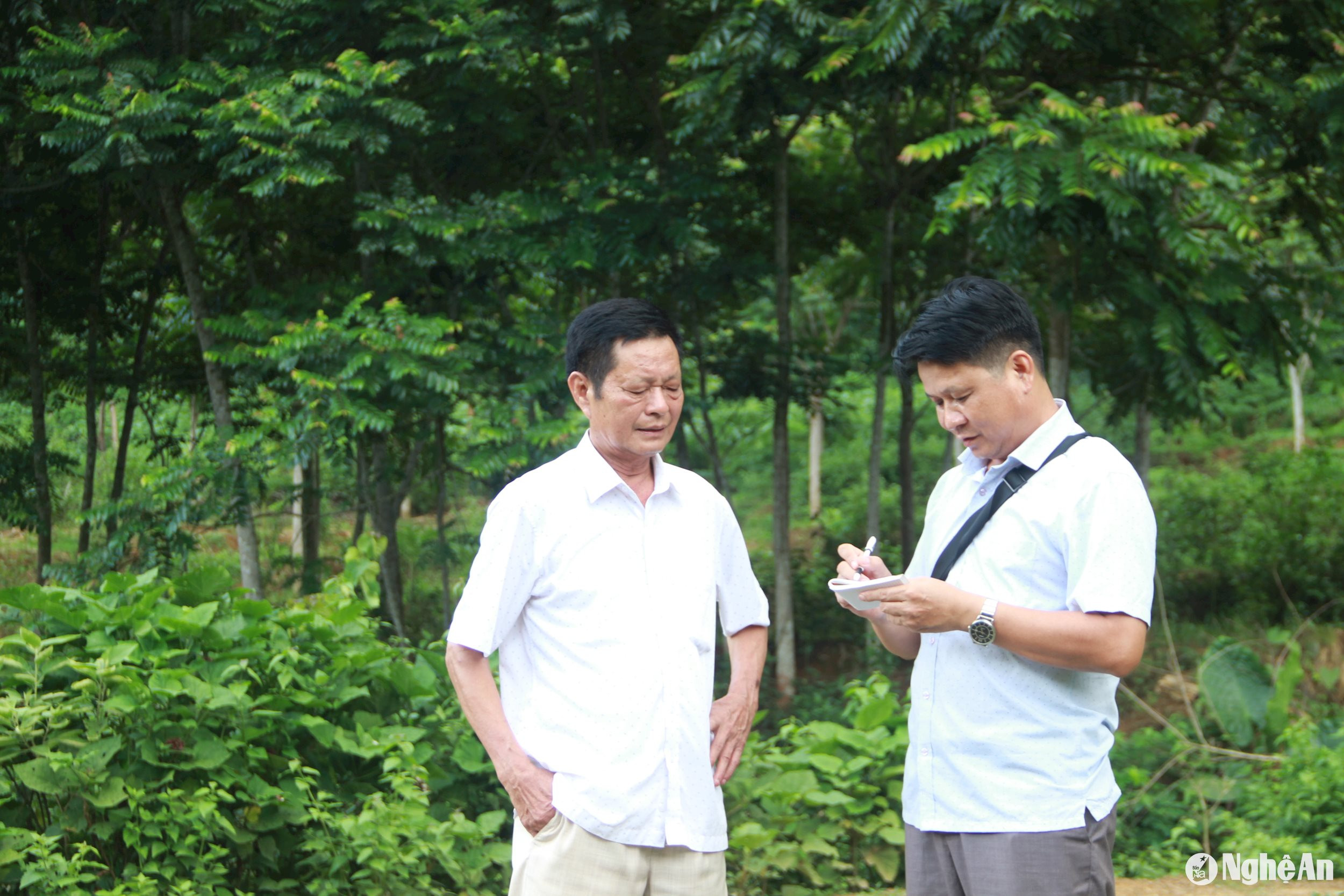
Mr. Thai Dieu shared this with a reporter from Nghe An Newspaper. Photo: Quang An
"
The model of planting large timber forests, mainly consisting of Dalbergia tonkinensis and some other species like Dalbergia cochinchinensis and Lim), implemented by Mr. Thai Dieu in Tung Duoc Valley, Chau Tien Commune, is the largest-scale forest planting model using native trees in accordance with Resolution No. 18/2021/NQ-HĐND of the Provincial People's Council. This approach is consistent with the district's characteristics and policies, and has therefore received attention and support from the local government.
Mr. Sam Trung Kien - Deputy Head of the Mass Mobilization Department of Quy Chau District Party Committee
Your comment has been submitted and will be displayed after being reviewed by the editorial team. The editorial board reserves the right to edit comments to comply with the newspaper's content guidelines.