
A person deeply indebted to the Vietnam-Russia relationship.
(Baonghean.vn) - Having matured during his training in the Soviet Union under the guidance of the Party and State, after many years of studying and researching abroad, Associate Professor Dr. Nguyen Nhu Quy returned and actively contributed to the country's science and technology. Wherever he is and whatever he does, the heart of this scientist always remains with his homeland, Nghe An.
Deeply connected by the bond of friendship between Vietnam and Russia.
Our conversation with Associate Professor Dr. Nguyen Nhu Quy began with his love and pride for his birthplace. He was born in Dai Dinh village, Thanh Van commune, Thanh Chuong district (now Dai Dong commune) – a village rich in a tradition of academic excellence. This area is famous for the Nguyen Nhu family, with dozens of PhDs and hundreds of masters and bachelors who are striving to contribute to building the nation. From his youth, Associate Professor Dr. Nguyen Nhu Quy overcame difficulties, always prioritizing education and conquering the heights of knowledge.
Leaving the bamboo hedges of Dai Dong village, after graduating from Thanh Chuong 1 High School, Associate Professor Dr. Nguyen Nhu Quy passed the university entrance exam and became a member of the intellectual class sent to study in the Soviet Union in the 1970s and 1980s. Back then, being sent to study in the Soviet Union by the State was an immense honor. To be selected, candidates had to go through an extremely rigorous entrance exam, usually only those who excelled in the exams at that time.
You're about to go to study in the Soviet Union, a country with a high level of science and technology. When you go there to study, you should learn something practical that the people need.
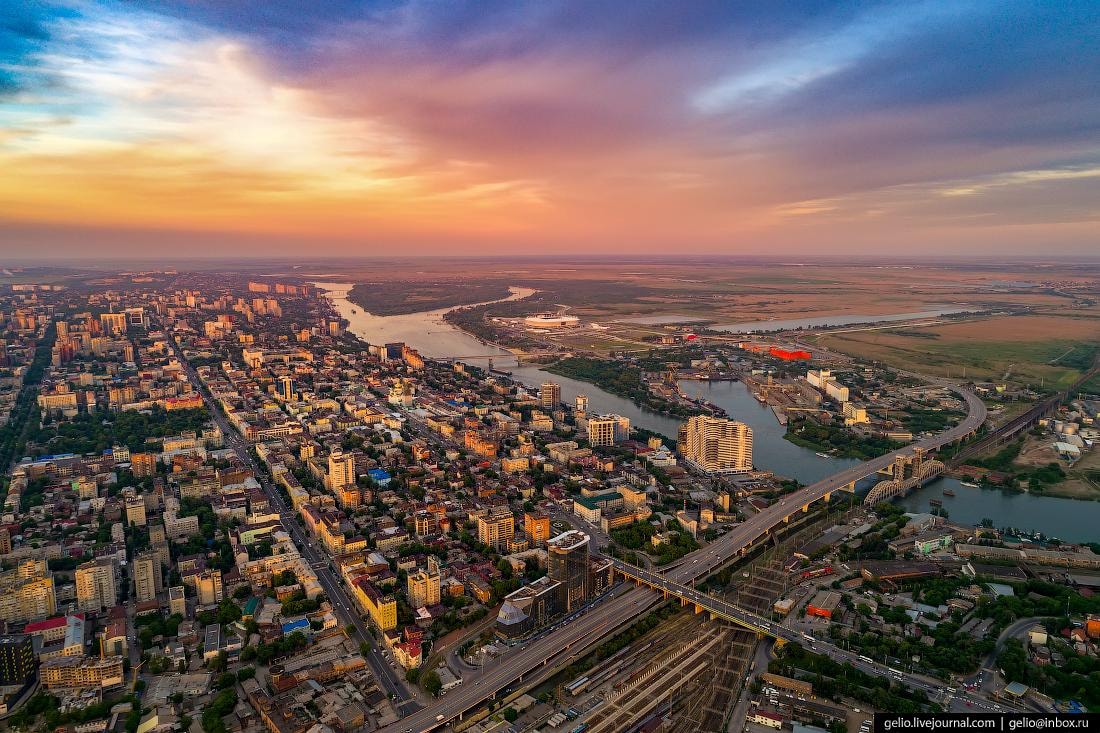 |
| Rostov-on-Don, considered the southern capital of Russia, is located 46 km from the Sea of Azov. It is a major industrial and cultural center, a transportation hub, and is known as the "gateway to the Caucasus". Photo: Livejournal |
Upon arriving in the Soviet Union, freshman Nguyen Nhu Quy was assigned to study construction at the Faculty of Construction Technology, Rostov-on-Don University of Construction – one of the three renowned construction engineering schools in Russia. For the young student at the time, construction was a completely new and daunting concept, as his mind was only focused on "Medicine first, Pharmacy second, and Engineering third." Those anxieties soon disappeared, as Rostov-on-Don University of Construction provided students with a fundamental understanding of both theory and practice. The theoretical systems of Soviet universities in general, and construction universities in particular, were very rich.
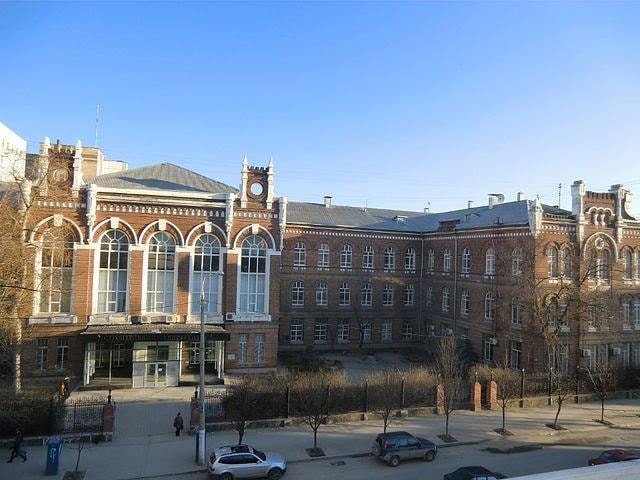 |
Rostov National University of Civil Engineering. Photo: Internet |
Associate Professor Dr. Nguyen Nhu Quy shared: “On the day I packed my bags and left for the Soviet Union, I never imagined it would be the beginning of the journey that followed. I had the opportunity to study and work in large laboratories with leading professors from Russia and around the world in engineering and materials science. That was fortunate, but it was also an immense pressure. Fortunate because I matured thanks to what I learned from my Soviet teachers, from the foundation of knowledge and scientific thinking to their character, behavior, and management skills. The pressure came from the fact that the professors always demanded very high standards and were extremely strict about the quality of work. It was not easy at all.”
Associate Professor Dr. Nguyen Nhu Quy graduated from Rostov-Song Don University of Civil Engineering, Russian Federation in 1977; holds a Master's degree in Materials Science from the Indian Institute of Technology, Bombay; is a visiting lecturer at the Asian Institute of Technology, Kingdom of Thailand; and is a research fellow at the Delft University of Technology, Netherlands. During his teaching and research career, Associate Professor Dr. Nguyen Nhu Quy has sent dozens of PhD and Master's students abroad to train at leading universities in Thailand, Japan, South Korea, and the United States.
Associate Professor Dr. Nguyen Nhu Quy will never forget the deep affection and kindness shown by the Soviet teachers towards Vietnamese students. He recounted: “In 1971-1972, the country was struggling in the resistance war against the US, and economic conditions were extremely difficult. The students who went to the Soviet Union to study were very young. In those circumstances, Vietnamese students received special affection from their Soviet teachers. They not only treated the students as pupils but also as their own children, caring for them both in and out of class, when they were healthy and when they were sick, sharing both joys and sorrows. These warm and affectionate feelings are forever etched in the hearts of generations of Vietnamese who studied in the Soviet Union.”
Thanks to that dedicated care and guidance, the student consistently received a perfect 5/5 grade, and the name Nguyen Nhu Quy, Vietnam, was always on the faculty's honor roll. And then came his degree.“Отлично”(Excellence) is the sweet fruit of years of training, research, and knowledge cultivation. Later, Associate Professor Dr. Nguyen Nhu Quy had the opportunity to research and work in several other countries such as India, Thailand, the Netherlands, and Japan, but for him, being sent by the Party and State to study in the Soviet Union was the greatest stroke of luck – a solid foundation for his later development.
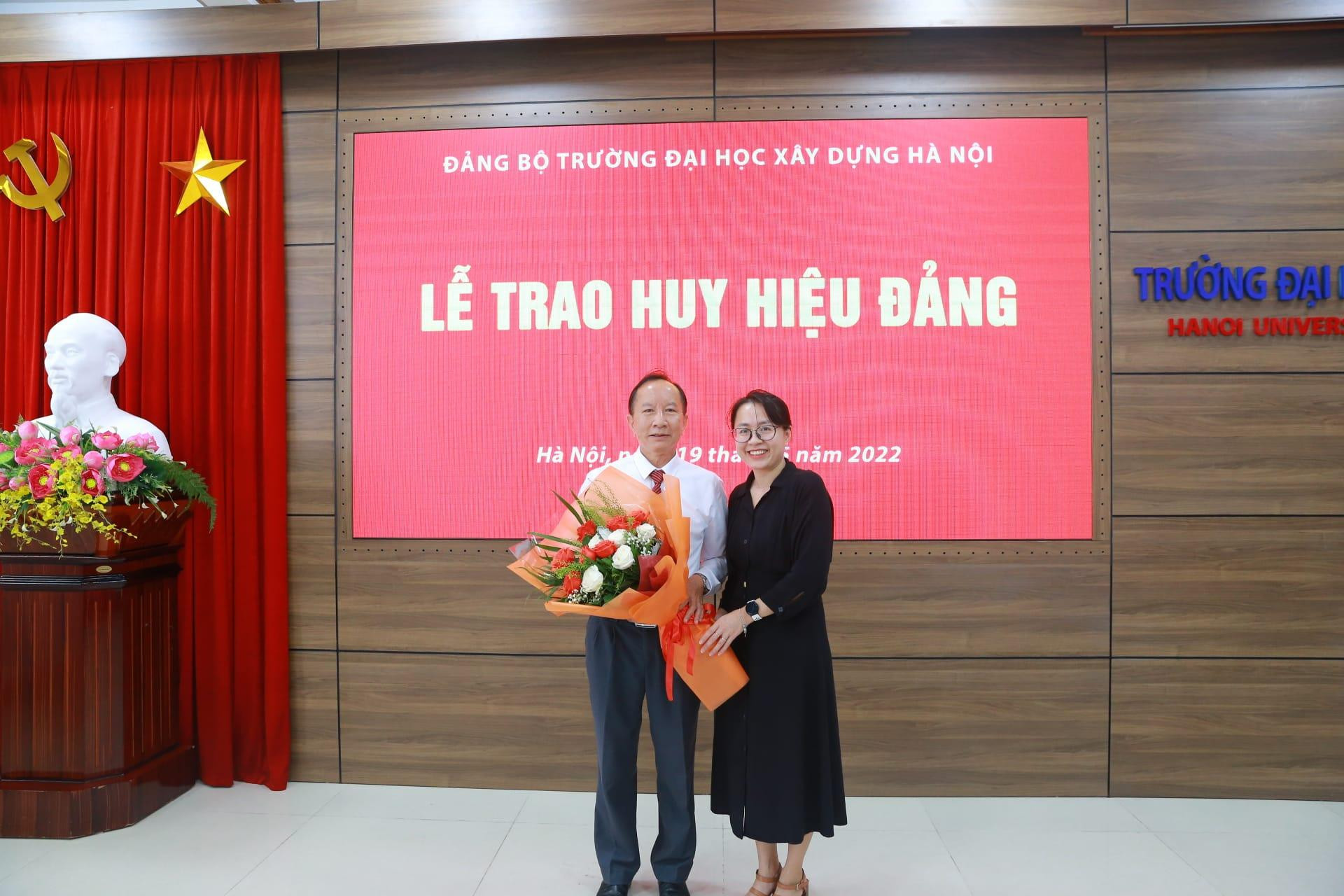 |
| Associate Professor Dr. Nguyen Nhu Quy at the ceremony awarding the 30-year Party membership badge. Photo: Provided by the author. |
Contributing to building the homeland
After graduating and returning to Vietnam following years of study abroad, Associate Professor Dr. Nguyen Nhu Quy was assigned to work at the University of Construction, becoming a senior lecturer and head of the Department of Materials Technology.
Associate Professor Dr. Nguyen Nhu Quy's connection with his homeland of Nghe An began when, in the early stages, he participated in the technical assessment of the Ban Ve Hydropower Plant – the largest hydropower plant in Central Vietnam. The Ban Ve Dam was constructed using roller-compacted concrete technology – the latest advanced gravity dam construction technology applied in Vietnam, and also the field that Associate Professor Dr. Nguyen Nhu Quy has pursued since 1994, leaving his mark on many large projects such as the Son La Hydropower Plant and the Play Krong Hydropower Dam…
Associate Professor Dr. Nguyen Nhu Quy was the first person in Vietnam to research roller-compacted concrete technology and became an expert in this field. His research on roller-compacted concrete technology, a new material later applied in Vietnam's construction of the Play Krong Dam, Son La Dam, and Ban Ve Hydroelectric Dam, is significant. Associate Professor Dr. Nguyen Nhu Quy is the author of valuable specialized books such as: Concrete Theory; Materials for Hydraulic Structures; Thermal Materials, etc.
With his experience in appraisal, in early 2006, Associate Professor Dr. Nguyen Nhu Quy was asked to assist in the design and construction of a trial embankment for the Ban Ve Hydropower Dam Project, in parallel with the design of the contractor PECCI from Elinco Switzerland. Working urgently, the design was completed in a short time. A team of engineers was sent to the Ban Ve Hydropower Plant to directly supervise the construction of roller-compacted concrete according to Associate Professor Dr. Nguyen Nhu Quy's plan. After only a few days of testing, the initial results were promising. The quality of the roller-compacted concrete layer laid by the University of Construction exceeded expectations. Therefore, Associate Professor Dr. Nguyen Nhu Quy's plan was selected for the construction of the dam.
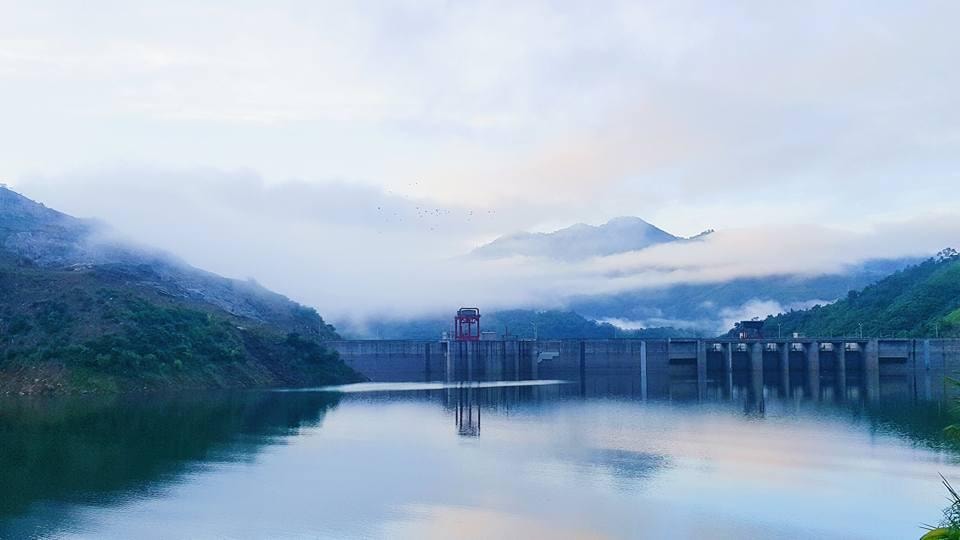 |
Associate Professor Dr. Nguyen Nhu Quy designed and constructed the test embankment for the Ban Ve Hydropower Dam Project in Nghe An province – the largest hydropower project in Central Vietnam – using roller-compacted concrete technology. Photo: My Nga |
After more than three months of construction, at a workshop on roller-compacted concrete construction for the Ban Ve Hydropower Dam at the Vietnam Electricity Corporation, once again before hundreds of domestic and international experts, and before leaders of the Government, ministries, and departments, the roller-compacted concrete method was recognized for its excellent construction quality. “At that moment, I felt incredibly happy. I had done something truly meaningful to show my gratitude to the land where I was born – a poor but dear land – Nghe An province,” shared Associate Professor Dr. Nguyen Nhu Quy.
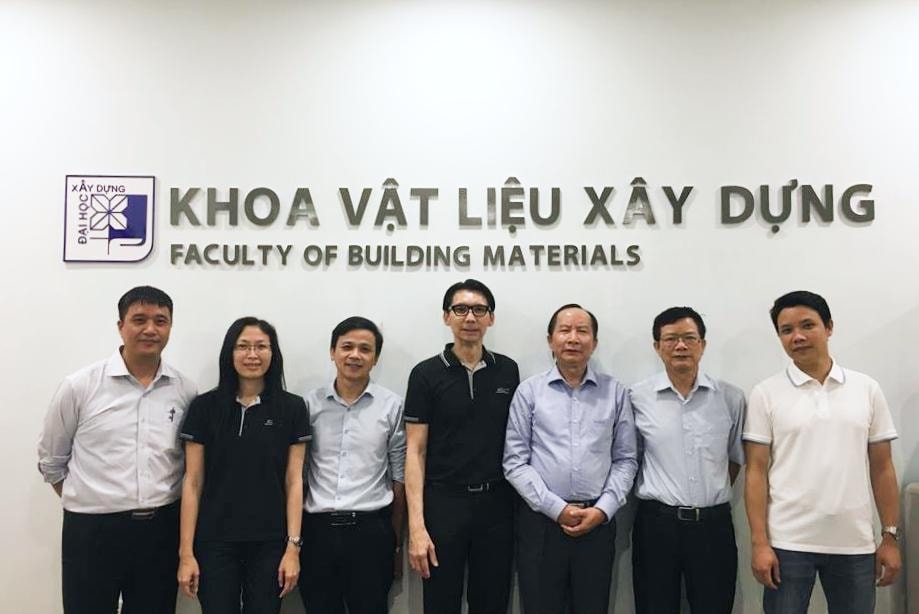 |
| Associate Professor Dr. Nguyen Nhu Quy (third from the right) with colleagues at the Department of Building Materials, Hanoi University of Civil Engineering. Photo: Provided by the interviewee. |
Although living far from his hometown, Associate Professor Dr. Nguyen Nhu Quy always cherishes special feelings for his homeland. He shared: “Nghe An has a ‘gold mine of knowledge.’ The potential for people from Nghe An living far from home to contribute to their homeland is enormous. It doesn’t just stop at volunteering, but also includes contributing ideas to build a more modern and improved homeland, enhancing the quality of life. Everyone wants to contribute, especially the scientific and technological workforce. No matter what they do or where they are, they always turn their hearts towards their homeland. For me, gratitude to my homeland is never enough.”


