
Risk of total crop loss due to rice planthoppers in Ky Son border commune.
(Baonghean.vn) - Currently, the summer-autumn rice crop in Ky Son district is being damaged by many types of pests and diseases at high densities and over a wide area, especially brown planthoppers and white-backed planthoppers.
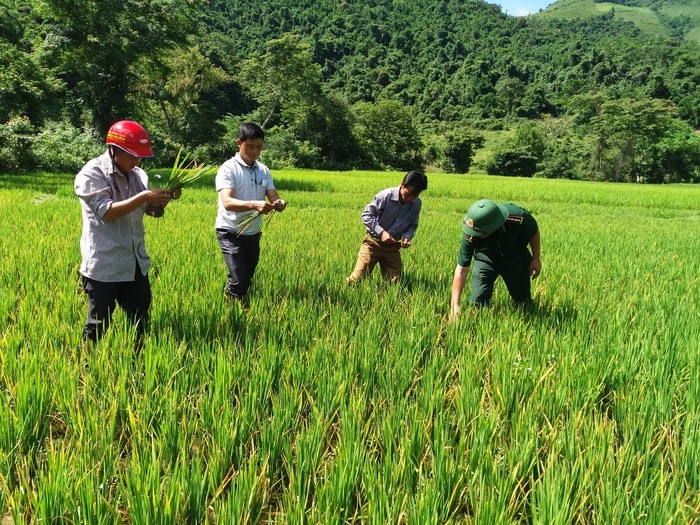 |
| During the 2017 summer-autumn crop season, farmers in Na Loi commune, Ky Son district, planted over 81 hectares of rice. Most of the rice fields in the commune were damaged by brown planthoppers and white-backed planthoppers. (Photo: Lu Phu) |
Because the agricultural planting schedule in Ky Son is usually 10-15 days later than in lowland districts, the rice plants in Ky Son are currently entering the late tillering stage, preparing to develop panicles.
However, according to residents in Na Loi commune, after transplanting, in early August when the rice plants were in their prime, a large number of brown planthoppers appeared, causing damage and affecting the growth and development of the rice plants.
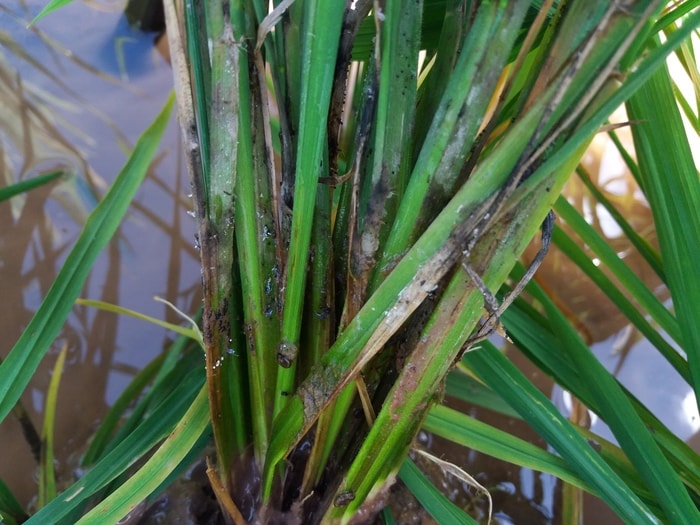 |
| Brown planthopper infestations reach densities of 100-200 individuals/m².2, where the density ranges from 800 to 1,000 fish per square meter.2In some localized areas, the density can even reach 1,500 birds/m².2Photo: Lu Phu |
"This is the first year my family's rice fields have been damaged by rice planthoppers. In previous years, when there were no pests or diseases, the rice grew very well and the yield was quite high. This year, there is a very high risk of crop failure," said Ms. Pit Thi Thanh from Na Loi village, Na Loi commune.
Lay Thi Phuong's family, also from Na Loi village, has over 5 sao (approximately 0.5 hectares) of rice fields at risk of total crop loss due to the white-backed planthopper infestation. Ms. Phuong said she had never seen such a pest cause such severe damage, turning the rice plants yellow and stunting them like this year. "I don't know if we'll even have rice to harvest," Ms. Phuong sighed.
During the 2017 summer-autumn crop season, farmers in Na Loi commune, Ky Son district, planted over 81 hectares of rice using three varieties: Thien Uu 888, Hanoi sticky rice, and a local non-glutinous rice variety. During cultivation, people in the villages of Na Loi, Na Khuong, Pieng Lau, Huoi Ngoi, and Don Bong discovered brown planthoppers and white-backed planthoppers causing damage and killing rice plants in some areas, with a common density of 100-200 insects/m².2, where the density ranges from 800 to 1,000 fish per square meter.2In some localized areas, the density can even reach 1,500 birds/m².2.
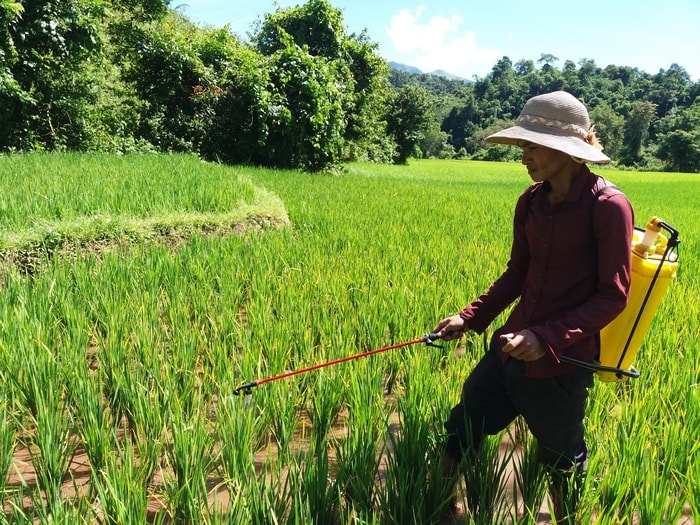 |
| Residents were instructed to actively spray pesticides to control the disease. Photo: Lu Phu |
Mr. Kha Van Then, Secretary of the Party Branch of Na Loi village, Na Loi commune, shared: "The brown planthopper has only appeared this year, and we don't know if it's due to the heavy rains. More than 30 hectares of rice in the village are severely infested. However, because the pesticides are supplied in batches, we can't spray them all at once..."
Currently, due to the transitional weather between seasons, with heavy rains, intense sunshine, and high humidity, conditions are favorable for the spread and outbreak of pests and diseases. If timely and proper spraying is not carried out, the rice planthopper infestation will spread, potentially even causing significant damage to rice crops at this stage. The Na Loi commune authorities have mobilized forces and local people to spray pesticides in the rice fields to control the infestation.
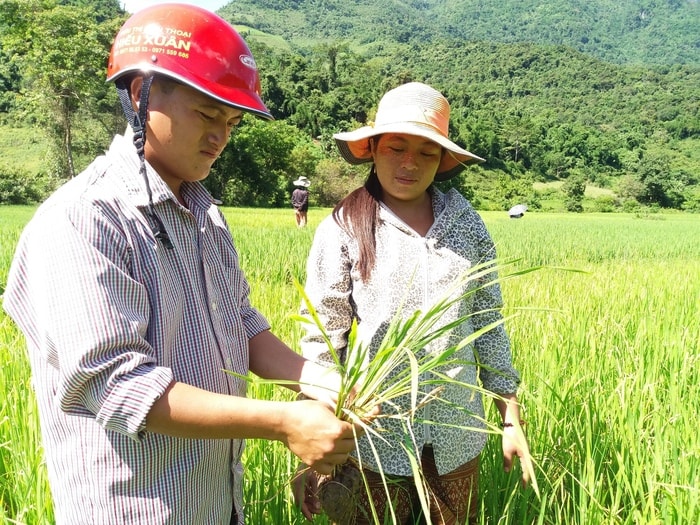 |
| According to forecasts from the Ky Son District Plant Protection Station, brown planthoppers and white-backed planthoppers will continue to increase in both scope and severity in the coming period. If pesticides are not sprayed to eradicate them, the risk of total crop failure is a foreseeable reality. Photo: Lu Phu |
According to a report from the Ky Son District Plant Protection Station, most rice fields in the district are infested with rice planthoppers, concentrated mainly in Na Loi and Nam Can communes. More seriously, brown planthoppers and white-backed planthoppers are expected to continue increasing in both scope and severity in the coming period. Areas with high planthopper densities will experience severe infestations if timely spraying is not organized.
To save the district's summer-autumn rice crop from the risk of total loss, the District Plant Protection Station has issued a document requesting the People's Committees of the communes to direct the commune's agricultural committees and village management boards to closely monitor the fields, delineate zones, and organize guidance for farmers to spray and control pests and diseases promptly to prevent localized spread throughout the district.
Lu Phu
| RELATED NEWS |
|---|


