
Many steel companies face the risk of bankruptcy.
What needs to be done to lift the steel industry out of its slump?
The reasons leading to the risk of bankruptcy for many steel manufacturing and trading businesses are unavoidable, due to the sluggish real estate market, the influx of Chinese steel overwhelming domestic steel, and the numerous challenges posed by anti-dumping duties on exported steel.
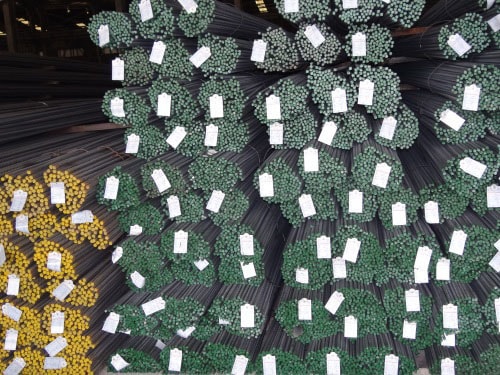
Be a smart consumer when buying products; avoid being tempted by cheap prices and buying low-quality goods that could affect the construction project.
What needs to be done to lift the steel industry out of its slump?
This is a problem for which there is currently no solution, a difficult one to solve, because the steel industry is "starving" for capital due to stalled production and business. In such a dire situation, a series of policies about to be implemented, such as increasing electricity prices specifically for the steel and cement industries, and upgrading to standardized technologies, along with anti-dumping duties being applied to steel exports in America and Europe, are making steel manufacturers even more anxious.
In the midst of crisis, the 30 trillion VND real estate support package offered a glimmer of hope for the steel industry to escape its slump, but since the banks announced it, the market has shown no signs of improvement, and has even declined, with many businesses already on the verge of bankruptcy.
According to the Vietnam Steel Association (VSA), in June alone, production of construction steel reached 376,125 tons, a decrease of 4.72% compared to May; consumption was approximately 350,945 tons, a decrease of 9.2% compared to May. Overall, in the first six months of 2013, VSA member companies produced 2,257,487 tons, a decrease of 2.08% compared to the same period in 2012. However, total steel sales reached 2,272,226 tons, an increase of 1.52% compared to the first six months of 2012. Nevertheless, these figures are not entirely conclusive, as input costs for production have increased along with rising consumer prices in the market.
Due to a lack of demand, steel companies have been operating at a reduced capacity for an extended period. As of June 30, 2013, the inventory of construction steel was approximately 326,947 tons, which in turn led to an inventory of approximately 500,000 tons of steel billets as of May 2013 (including both domestically produced and imported billets).
According to VSA, this inventory is normal and fully sufficient to meet the billet needs of domestic steel mills. However, if the State continues to allow exports when a series of factories such as Thai Nguyen Steel, Viet Trung (Lao Cai), Hoa Phat Group, etc., are preparing to go into operation, the risk of ore and fuel shortages for steel production is unavoidable. Therefore, VSA recommends that the State should strictly prohibit businesses from exporting ore, avoiding the situation where "businesses have bought the pot but have no rice to cook with."
According to VSA, due to the stagnant market, steel companies still have to produce to create jobs for workers, while simultaneously competing on price with imported steel. For this reason, steel manufacturers and traders in the North have continuously reduced their selling prices by 300 to 500 VND/kg, while the selling prices of steel in the South show a significant difference.
Imported steel dominates domestic steel market, resulting in tax revenue losses for the State due to fraud.
According to statistics from the General Department of Vietnam Customs, the total amount of steel imported into Vietnam as of May 31st reached over 5.3 million tons, with an import value of more than 3.5 billion USD: steel billets accounted for 175,408 tons, equivalent to 83% compared to the same period in 2012; black sheet steel was 2,122,703 tons, equivalent to 104% compared to the same period; steel coils were 65,717 tons, equivalent to 72% compared to the same period; and scrap steel was 1,241,920 tons, equivalent to 90% compared to the same period in 2012. Meanwhile, Vietnam's steel exports...
To save themselves, in June 2013, many steel pipe businesses achieved initial success in expanding their export markets, resulting in production and sales increases of 24.44% and 19.52% respectively in the first six months of the year. This success was mainly due to companies like Hoa Sen Group, Nhat Quang, and Sunsteel… However, the path to export remains challenging, as other countries have taken clear actions regarding trade protection to safeguard their domestic production.
According to information from several steel manufacturing and trading companies, a large quantity of Chinese alloy steel imported into Vietnam is being "disguised" as construction steel to benefit from a 0% tax rate, and then sold at a lower price than domestic construction steel, thus putting significant pressure on domestic manufacturers.
Not to mention that Chinese companies always have a huge surplus of steel ready to flood into Vietnam.
Meanwhile, domestic steel companies have yet to access low-interest loans, which has not improved steel consumption and has left them without a way out, especially those factories that have invested heavily in unfinished construction. This has left these companies exhausted and on the verge of bankruptcy.
According to the Vietnam Steel Association, this is a critical situation that requires timely government intervention with more practical policies, creating a level playing field for steel production and business, meeting expectations for investment licensing to create momentum, and helping local workers find jobs and secure their livelihoods.
Theobaocongthuong.PH


