
Nguyen Kiem - An outstanding communist of our homeland.
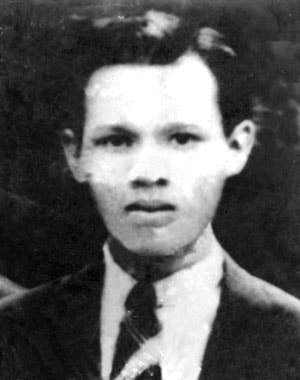
Nguyen Kiem, of the Nguyen Duy family, was born in 1916 in Hop hamlet, Cong Trung village, Quan Hoa commune, Dong Thanh district (now Van Thanh commune, Yen Thanh district). During his clandestine activities in Saigon - Gia Dinh, he used the pseudonym Nguyen Lieu (the name of his son) and registered his birth year as 1912 on his identity card. Later, in martyr records and Ho Chi Minh Medal records, his birth year was also recorded as 1912.
 |
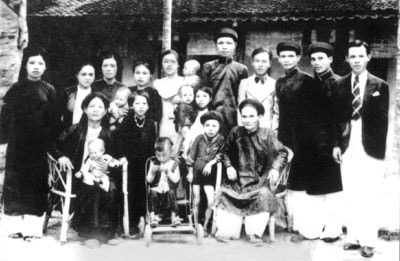
Nguyen Kiem's father was Nguyen Tinh, a scholar who passed the imperial examinations with the second highest score, and later returned home to practice traditional medicine. His mother was Phan Thi Quang, from Bich Tran Village (Dien Thai, Dien Chau).
The Nguyen Kiem family has practiced traditional medicine for three generations, healing the sick and saving lives. Nguyen Kiem's father, Nguyen Tinh, had a family-inherited remedy for asthma. He was not only a skilled physician but also renowned for his compassion towards the poor. One year, during a famine, he donated 800 kilograms of rice to the village to distribute to the needy. A pair of couplets hang in his house:
Regretting one's own life is better than regretting one's possessions; one should avoid being ungrateful.
A brick is worth more than gold; even without money, they'll still cut ties.
Nguyễn Kiệm grew up in a Confucian family. From a young age, his father invited Teacher Hàn Thái (also known as Thái Văn Tố) to teach him at home. Teacher Hàn Thái taught both literacy and character. During his years studying with Teacher Hàn Thái, Nguyễn Kiệm heard stories from his teacher about local scholars who possessed both literary talent and patriotism, and who had led uprisings against the French on several occasions, such as Nghè Cồn Sắt (Doctor Nguyễn Xuân Ôn), Phó bảng Lê Doãn Nhã, and Cử nhân Chu Trạc.
From a young age, Nguyen Kiem was determined to study in order to do things that would benefit the people and the country. After studying Chinese characters for a while, Nguyen Kiem switched to studying the Vietnamese Quốc ngữ script at the Yen Thanh French-Vietnamese Primary School and passed the Prime exam. With high hopes for their intelligent and studious third son, his parents continued to save money to send Kiem to study at Vinh National High School.
During the years 1926-1929, Vinh National School was a hub of activity for the Student Association and the Tan Viet group, led by comrades Nguyen Tiem, Chu Van Bien, and Phan Thuc Tuong. Guided by his brother-in-law, Phan Dang Hoan, a cousin of Phan Dang Luu and a Tan Viet member in the Trang Thanh sub-group, Nguyen Kiem, then only 15 years old, began participating in the struggles demanding amnesty for Phan Boi Chau.
|
In 1930, the Nghe An - Thinh Hoa Soviet movement broke out, Vinh National School closed, and Nguyen Kiem returned to his hometown to help his father and brother open the Nam Dong Ich traditional medicine shop at Dinh Market. At that time, the workers' struggle movement in Vinh - Ben Thuy, and the peasants of Thanh Chuong, Nam Dan, and Nghi Loc spread to the rural areas of Yen Thanh. In November 1930, demonstrations by Yen Thanh peasants marched to the district office demanding a reduction or postponement of taxes, which were brutally suppressed by the French colonialists and the Southern feudal regime. During those difficult and perilous days of the revolution, the Nam Dong Ich shop served as a communication base for some Soviet fighters who came to maintain contact with the revolutionary base. In 1936, the Party base in Yen Thanh was restored, and comrades Ngo Xuan Ham, Phan Duc Vinh, and several other comrades from the Yen Thanh District Party Committee still frequently visited the Nam Dong Ich shop. Also that year, Nguyen Kiem, along with his brother-in-law Phan Dang Hoan and some friends, went to Vinh to open the Hoan Chau private school, which provided both education and opportunities to participate in open struggle activities led by the Democratic Front. Through public books and newspapers, and especially through the accounts of close acquaintances, Nguyen Kiem greatly admired the talent and virtue of Phan Dang Luu. In early 1938, Nguyen Kiem met Phan Dang Luu and clearly expressed his aspirations when Phan Dang Luu returned to Nghe An to campaign for the struggle in the Central Annam People's Representative Assembly. This meeting with Comrade Phan Dang Luu marked a turning point in Nguyen Kiem's revolutionary career.
In late 1939, on a cold, rainy winter night, Nguyen Kiem quietly climbed over the wall and left. At that time, neither his parents nor his wife and children knew where he was going; they only knew that he was following the path he had chosen: to save the country and its people.
Three years later, in 1942, Nguyen Kiem returned to his hometown to ask his parents for permission to bring his wife and children to Saigon to work. His parents, siblings, and relatives advised him to leave his wife and children behind, but Nguyen Kiem insisted on taking them with him. Out of love for his son, Mr. Nguyen Tinh offered to give Nguyen Kiem six acres of rice fields to sell for travel expenses and capital to start a business in a foreign land, but Nguyen Kiem refused, saying, "I'll leave it to my eldest brother and two younger siblings in the countryside." In reality, Kiem brought his wife and children to Saigon to create a legal cover for his activities openly.
During this period, the mass struggle movement in Saigon-Gia Dinh was facing many difficulties. After the Southern Uprising, the highest-ranking leaders of the Central Committee and the Regional Committee were successively arrested, including Phan Dang Luu, Nguyen Kiem's older brother and mentor. Suppressing his grief, Nguyen Kiem plunged into activism. In his early years in Saigon, Nguyen Kiem worked as a journalist. Later, under the organization's direction, he became a prominent contractor in Saigon. With the help of revolutionary bases within the ranks of patriotic bourgeoisie, Nguyen Kiem had sufficient capital and assistants to undertake large and small construction projects, thereby expanding his area of operation and building a base among the working class and urban intellectuals.
When the August Revolution broke out, the entire city of Saigon-Gia Dinh was once again awash in red flags with yellow stars. Nguyen Kiem participated in the uprising to seize power in the city center. However, the fledgling government had only been established for a short time when the French colonialists launched an attack. Saigon-Gia Dinh, along with the people of Southern Vietnam, rose up again to resist the French. Nguyen Kiem maintained his cover as a contractor, but he was entrusted with the responsibility of managing trade unions. On the surface, he was building unions for workers and small traders, but inwardly, he was building revolutionary bases among workers, civil servants, and other groups.
In 1948, Nguyen Kiem joined the Saigon-Gia Dinh Special Zone Committee. In 1949, he was elected to the Standing Committee, directly serving as Deputy Secretary, in charge of the inner-city base. Publicly, he was a member of the Southern Resistance Trade Union Federation. In his new position, he and his comrades in the Saigon-Gia Dinh Special Zone directly led the open and semi-open struggle movements while also focusing on building an internal network of guerrilla fighters in factories, schools, and neighborhoods, under intense scrutiny from the secret police and informants. In the suburban districts, the Special Committee established additional resistance guerrilla bases. These included resistance radio stations, weapons factories, and schools for training resistance cadres.
With his multifaceted talents, Nguyen Kiem, along with his comrades in the Special Zone Committee, built Party and armed bases right in the heart of the city and organized numerous struggles through the press, demonstrations, and strikes that took place continuously – most notably the show of force by tens of thousands of people protesting against the US on March 19, 1950.
At the end of 1950, the Standing Committee of the Saigon-Gia Dinh Special Zone Party Committee met to review the experience of the mass mobilization of demonstrations and strikes against the US and to discuss and decide on a number of important matters, including preparing to send a delegation from the Special Zone Party Committee to participate in the Southern delegation to attend the 2nd National Party Congress in Viet Bac. Nguyen Kiem was nominated as one of the comrades to attend the Congress and was assigned to prepare the Special Zone's report for the Congress.
Following the Special Zone Committee conference, Nguyen Kiem immediately began preparations. After 10 years of activity in Saigon - Gia Dinh, these were the happiest days for him. The city's revolutionary base was growing stronger. The revolutionary spirit of the masses was at its peak. He was also honored to prepare the Special Zone's report for the upcoming National Party Congress... But an unexpected event occurred: one afternoon on the road from the city to the Cu Chi base, he was ambushed and captured by the enemy, thanks to the tip-off of a traitor.
The enemy, overjoyed at capturing Nguyen Kiem, Deputy Secretary of the Saigon-Gia Dinh Special Zone Committee and a key figure, secretly rejoiced. They imprisoned Nguyen Kiem in the Hoang Hung police station and subjected him to all kinds of torture. Sister Hai, a liaison officer of the Special Zone Committee, recounted: "Comrade Nguyen Kiem was captured and subjected to unimaginably cruel torture, with every kind of brutal punishment. The secret police at the Hoang Hung station knew he was an important cadre in the inner-city movement. They had to torture him in a way that would expose the underground network and secret cadres. No matter how much they beat him, they couldn't uncover anything. He cursed them to their faces. He was beaten relentlessly from dusk until dawn and died on the enemy's torture table." (Struggle is the meaning of life - Vu Ngoc Nguyen - Labor Publishing House - Hanoi, 1957).
Comrade Nguyen Kiem sacrificed his life in the early morning of May 30, 1951, at the young age of 36, when his talents were at their peak. Comrades Muoi Cuc (Nguyen Van Linh), Pham Thieu, and others who worked with Nguyen Kiem highly appreciated his role and immense contributions to the revolutionary movement of the city and considered this a great loss.
In 1975, following the historic Ho Chi Minh Campaign, the city of Saigon-Gia Dinh was liberated. The Party Committee and people of Ho Chi Minh City named a major street after Nguyen Kiem to express their gratitude to one of the city's leading cadres who made outstanding contributions to building the infrastructure and developing the movement during a period of intense but also challenging times, and who set an example of unwavering sacrifice in imperialist prisons. The Party and State posthumously awarded Comrade Nguyen Kiem the Ho Chi Minh Order and many other prestigious medals.
Ngo Duc Tien


