
The golden rule for safe food preservation during Tet (Lunar New Year).
Reheating leftover food repeatedly will cause it to lose nutrients, become spoiled, and pose health risks, potentially leading to food poisoning.
During the traditional Lunar New Year, families prepare many dishes, both for ancestral worship and to entertain friends who come to visit, so leftover food is unavoidable.
According to nutritionist Truong Nhat Khue Tuong, reheating leftover food repeatedly can cause it to lose nutrients, spoil, become unsafe for health, and easily lead to food poisoning.
|
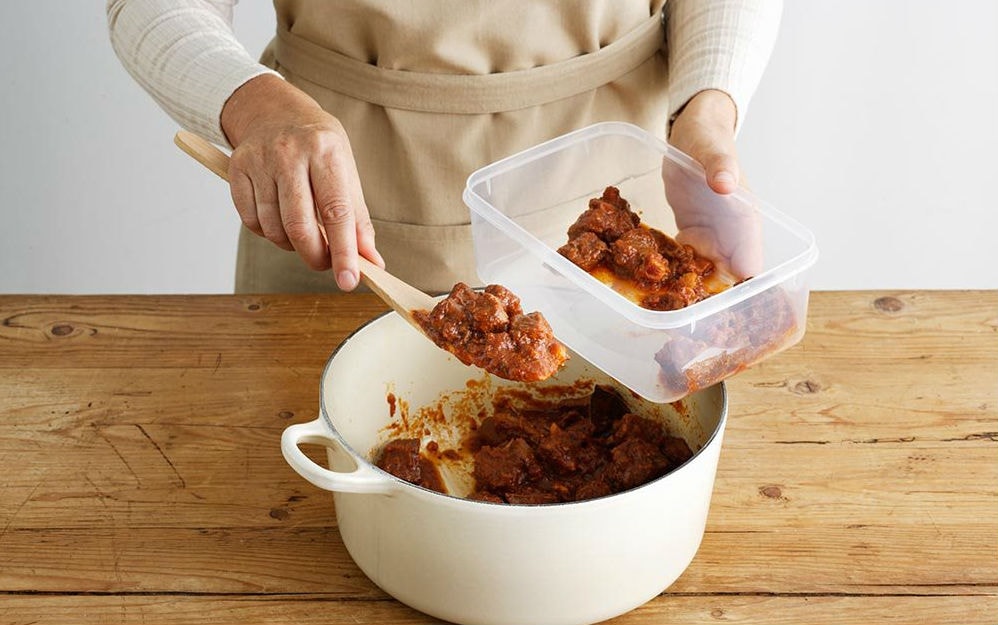
| Cooked food should be divided into small portions and stored in airtight containers before being refrigerated. |
In addition, some types of bacteria can grow at low temperatures, so even if food is stored in the freezer, spoilage can still occur.
People properly preserve cooked food during Tet (Lunar New Year) by keeping the following points in mind:
- Food stored in the refrigerator should be divided into portions sufficient for one meal, stored in lidded containers or wrapped in plastic wrap, and reheated immediately upon removal, then consumed completely.
- Do not put hot food into the refrigerator as this will raise the refrigerator temperature, affecting the surrounding food.
- After cooking, perishable foods such as meat, poultry, fish, eggs, and beans need to be cooled quickly and should not be left at room temperature for more than 2 hours.
- When reheating food, make sure leftovers are brought to a boil. If reheating in a microwave, stir the food while heating to ensure even heat distribution.
After the warming time is over, don't take them out immediately; leave them in the oven for about 3 minutes before removing them.
|
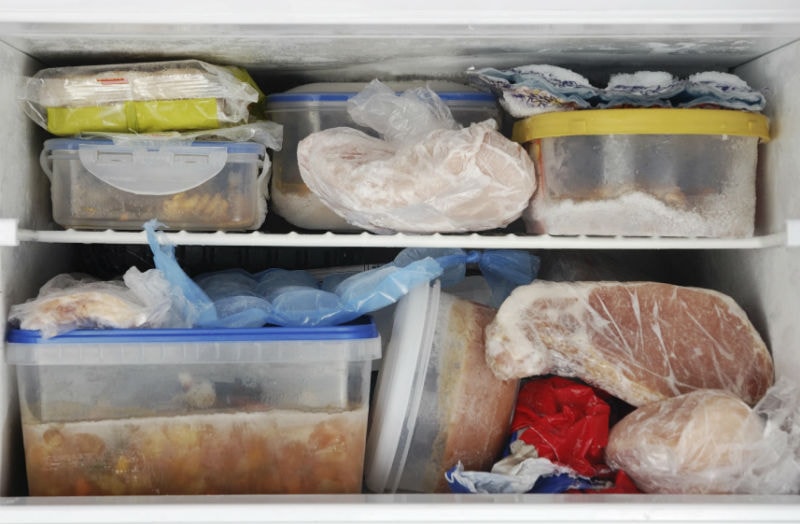
| Properly preserved food prevents food poisoning and harms to health. |
With raw food:
Fresh food needs to be stored carefully and kept separate from other types of food to prevent bacterial contamination.
Before freezing, food should be cleaned, drained, divided into portions suitable for family needs, placed in plastic bags or food containers, and sealed tightly.
Raw meats should be kept frozen in the freezer compartment of the refrigerator for longer preservation and to prevent the potential spread of bacteria to other foods.
When needed, simply thaw the food; it will still be fresh, delicious, and hygienic.
There are two ways to thaw food: using the refrigerator's cooling compartment and using cold water. If you choose to thaw using the cooling compartment, you need to prepare in advance, as it will take quite a long time.
When thawing food using cold water, you should keep it in a plastic bag to prevent nutrient loss. For meat and fish, you can add crushed fresh ginger or salt to the water surrounding the food.


