
Japan surpasses China to become the largest creditor of the United States.
(Baonghean) - Japan surpassed China to become the largest holder of US Treasury bonds in June, amid escalating US-China trade tensions.
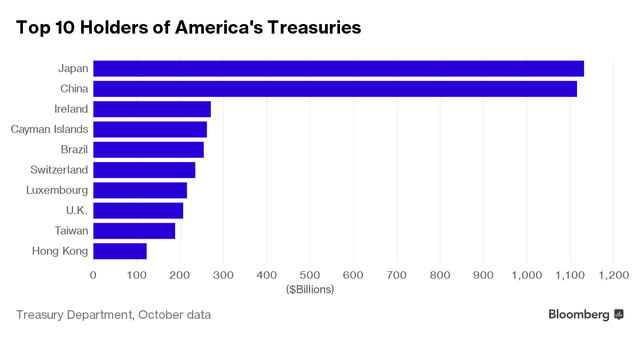 |
| List of the 10 largest creditors of the United States, according to data from the US Treasury Department. Photo: Bloomberg |
International media outlets have reported that Japan surpassed China to become the largest creditor of the United States in June, holding the highest percentage in nearly three years, the US Treasury Department announced on August 15.
Specifically, the amount of U.S. public debt held by Japan increased by $21.9 billion in June, reaching $1.1229 trillion, according to data from the ministry. Japan has surpassed China to become the largest holder of U.S. public debt for the past two years.
Meanwhile, China held $1.1125 trillion in U.S. government debt in June, a slight increase of $2.3 billion from the previous month after three consecutive months of decline. To date, China appears to have been less active in purchasing U.S. government debt.
Amidst the trade war between the two countries, analysts have speculated about the possibility of Beijing selling off US debt to retaliate against Washington. However, there is currently no indication that China will resort to this "weapon."
It is known that the last time Japan held the position of the largest creditor of the US was in May 2017. From October 2018 to the present, Japan has continuously purchased US Treasury bonds, with total net purchases exceeding $100 billion.
US Treasury yields have been steadily declining recently, but remain in positive territory. Meanwhile, the amount of government bonds with negative yields globally is increasing sharply. For example, the yield on Japanese government bonds is currently at -0.23%.
Therefore, the appeal of US Treasury bonds is very high, especially as investors worry about volatility in financial markets, trade wars, and the risk of a global economic recession. Alongside gold, US Treasury bonds have always been considered a safe, traditional investment method.
"The strong buying of U.S. Treasury bonds by Japanese investors is a clear reflection of the current global environment of low and negative bond yields," commented Ben Jeffery, strategist at BMO Capital Markets.
During Thursday's trading session, the yield on 30-year US Treasury bonds fell below 2%, an all-time low. Similarly, the yield on 10-year US Treasury bonds dropped below 1.5%, its lowest level in three years.


