(Baonghean.vn) - As a National-level historical and cultural relic, and with assigned guardians, the Ma Nhai Stele (Con Cuong, Nghe An) seems to be neglected, with graffiti covering the base of the stele.
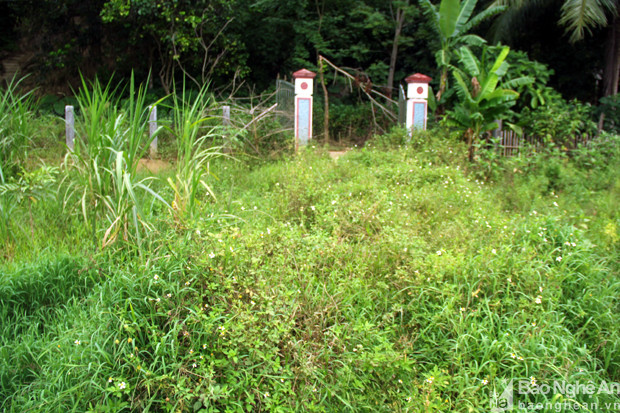 |
| The Ma Nhai commemorative stele is a stone inscription carved directly into the rock face of Thanh Nam Mountain in Chi Khe commune (Con Cuong district, Nghe An province). In 2011, the Ma Nhai stele was recognized as a national historical and cultural relic. However, for many years, this relic has seemingly been forgotten. The photo shows the entrance to the relic, with grass growing nearly half a meter high, completely blocking the path. Photo: Tien Hung. |
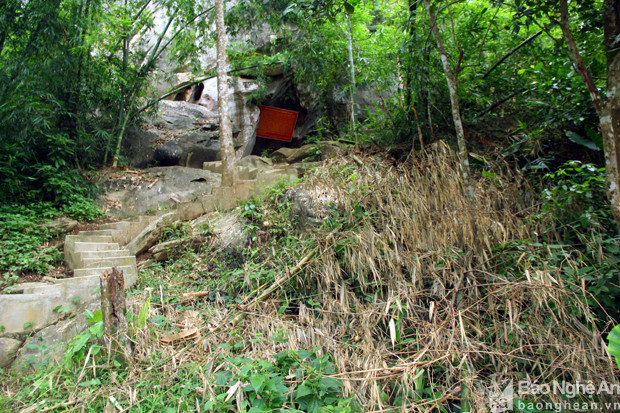 |
| At the foot of the mountain, felled bamboo stalks lie scattered everywhere. Photo: Tien Hung. |
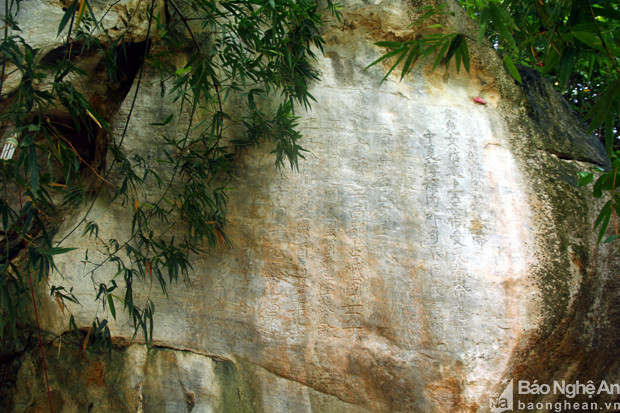 |
| According to historical documents, after three great victories against the Mongol army, the Tran dynasty had to contend with many other forces. At this time, local chieftains as well as neighboring countries often sent troops to harass the border regions, especially the western part of Nghe An province. In the year of At Hoi (1335), Emperor Emeritus Tran Minh Tong decided to personally lead the army, "acting as a general and personally commanding the troops, with strict orders and resounding authority," so that "Laos, upon hearing the news, fled in terror." The Emperor Emeritus then ordered the Transport Commissioner Nguyen Trung Ngan to compose an inscription to be carved into the side of a mountain to commemorate the victory. The stele has no author and contains 14 lines with 155 characters. Photo: Tien Hung. |
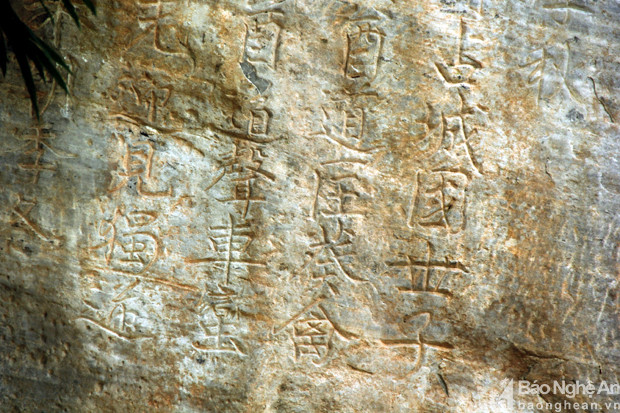 |
| Over nearly 700 years, the stele has deteriorated. Some parts have peeled off, and the rock face is stained. Photo: Tien Hung. |
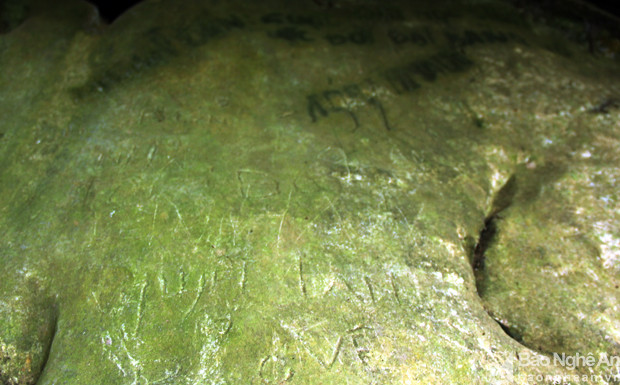 |
| In particular, upon entering the historical site, visitors are immediately confronted by a multitude of graffiti and vandalism that is very offensive. Photo: Tien Hung. |
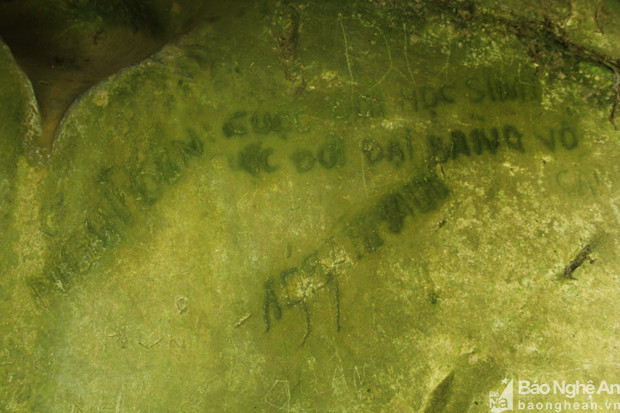 |
| The vandalized area is located on the same cliff as the ancient stele, just over a meter away. Some of the graffiti was written in paint. Photo: Tien Hung. |
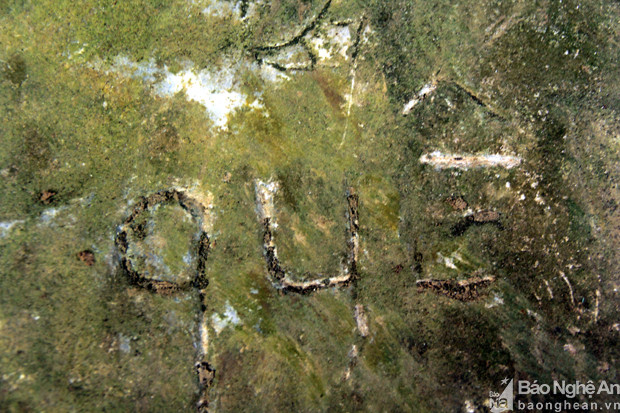 |
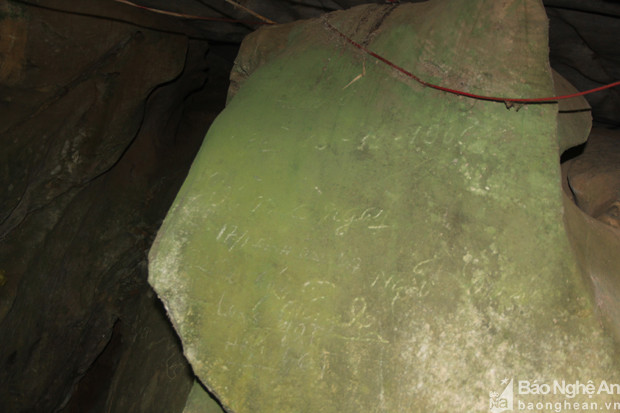
| Some are even carved deep into the rock, making them very difficult to erase. Photo: Tien Hung. |
 |
| The head of the Culture Department of Con Cuong said that currently, the historical site is being protected by a local resident who receives a monthly allowance of 200,000 VND from the Provincial People's Committee. "We are proposing to the district to provide this person with an additional 1 million VND per month to help them protect it better," Mr. Nam said. |
Tien Hung



