
Many new points in the Party's inspection and supervision work.
Deputy Chairman of the Central Inspection Commission Tran Tien Hung presented 13 new contents and groups of contents in the Party's inspection and supervision work, as well as the functions, tasks, and organizational structure of the (new) commune-level inspection committees.
On the morning of June 14th, the Ho Chi Minh National Political Academy, in coordination with the Party Committee of the Government, the Party Committee of the Vietnam Fatherland Front, central mass organizations, and central ministries, departments, and mass organizations, organized a national training conference on the organization and operation of Party organizations, government, Fatherland Front, and political mass organizations at the (new) commune level.
Attending the conference at the central headquarters were the following members of the Politburo: Pham Minh Chinh - Prime Minister; Tran Cam Tu - Standing Member of the Central Party Secretariat; Nguyen Xuan Thang - Director of the Ho Chi Minh National Political Academy, Chairman of the Central Theoretical Council; Nguyen Trong Nghia - Secretary of the Central Party Committee, Head of the Central Propaganda and Mass Mobilization Department; Nguyen Duy Ngoc - Secretary of the Central Party Committee, Chairman of the Central Inspection Committee; Nguyen Hoa Binh - Standing Deputy Prime Minister; and General Luong Tam Quang - Secretary of the Central Public Security Party Committee, Minister of Public Security.
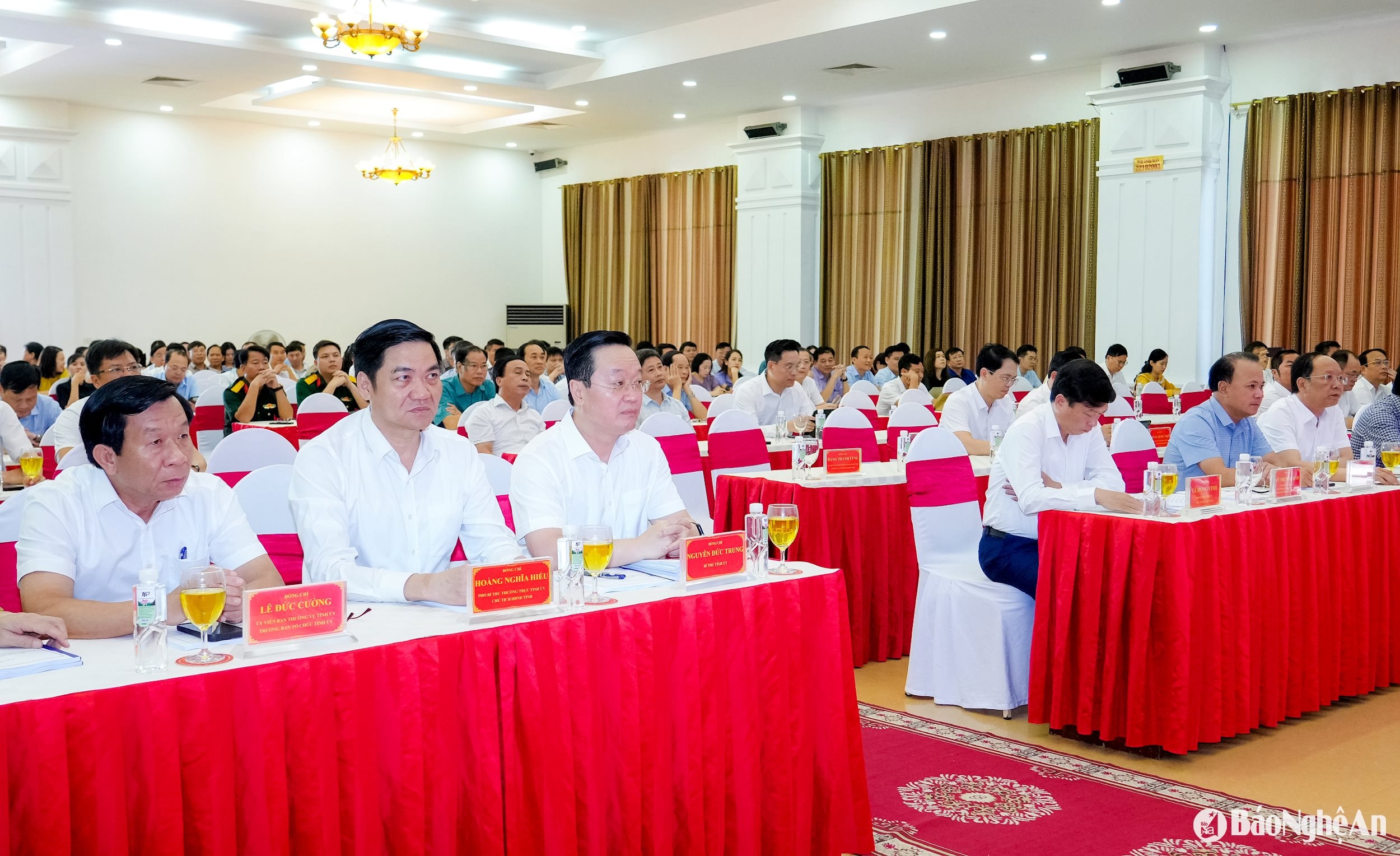
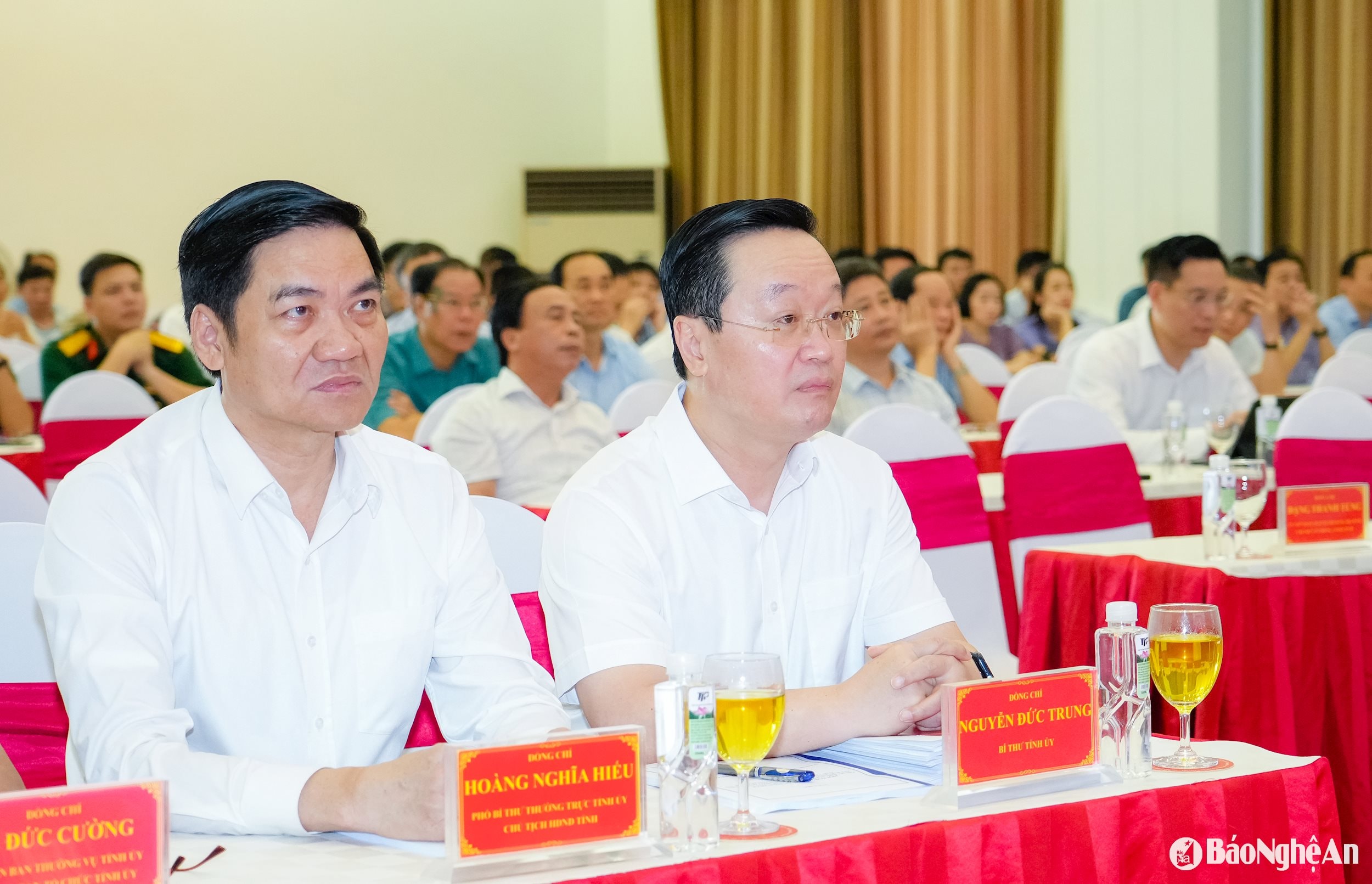
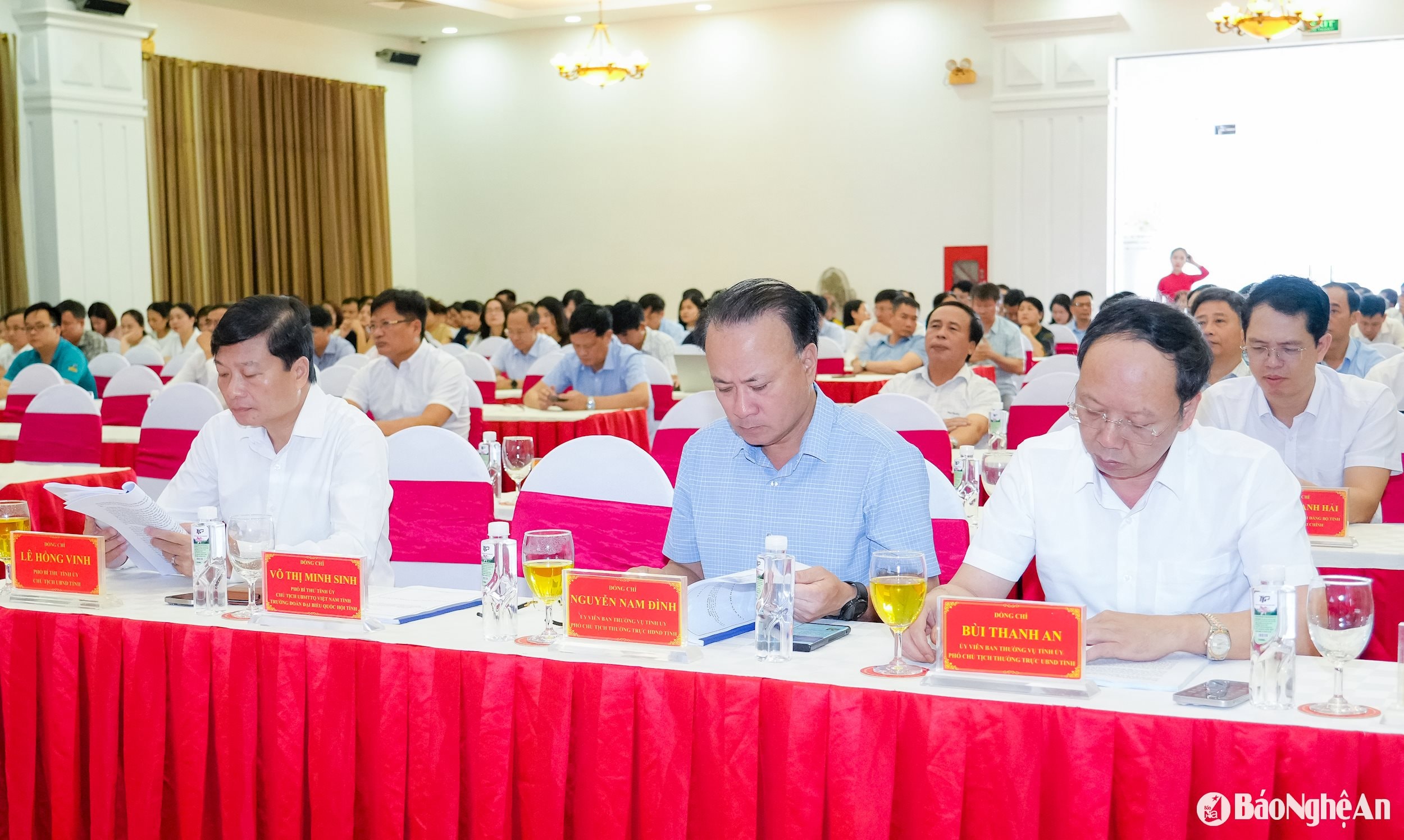
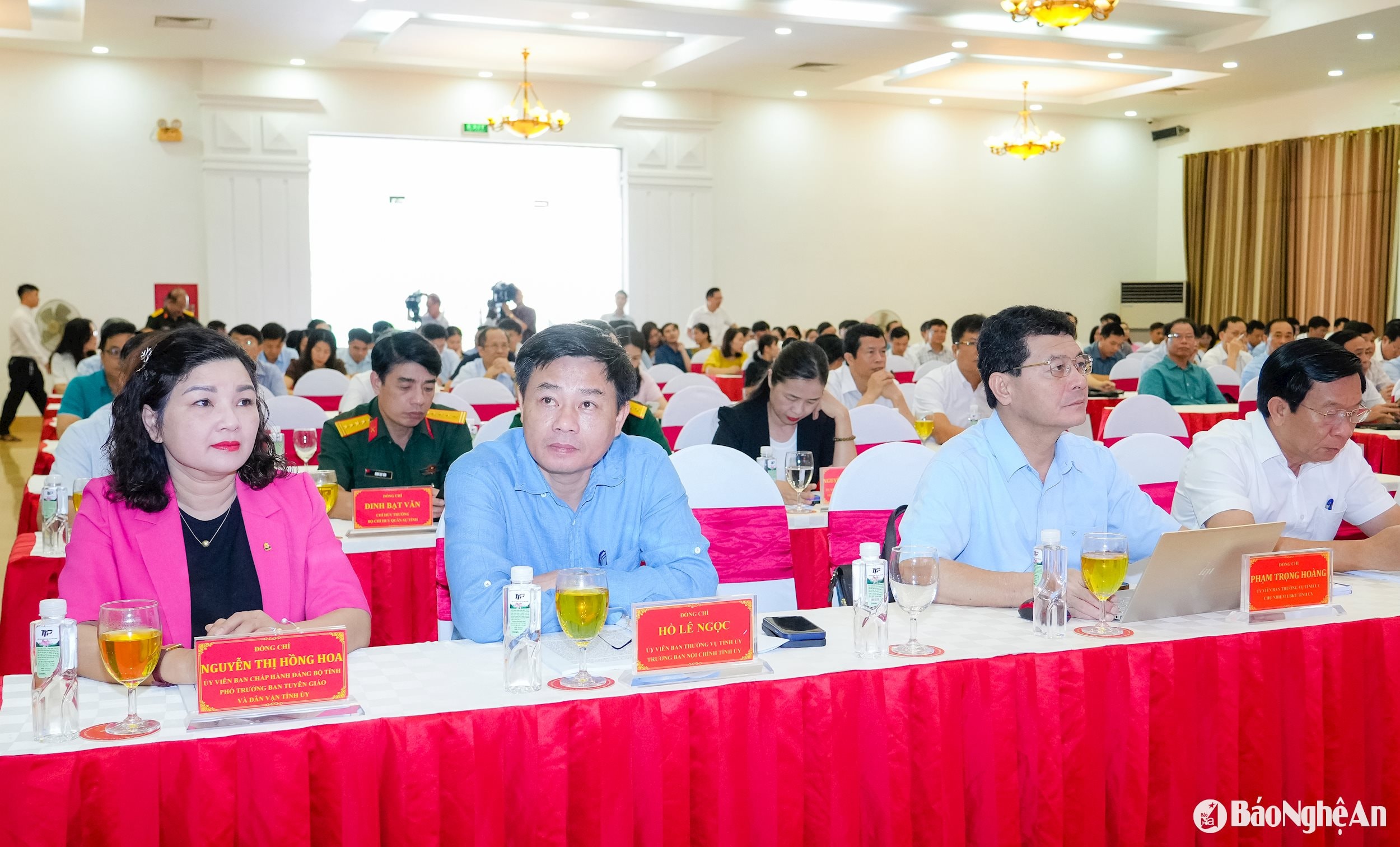
The conference was broadcast live to 10,035 locations nationwide with over 1.5 million delegates in attendance. At the main venue in Nghe An province were: Nguyen Duc Trung - Secretary of the Provincial Party Committee; Hoang Nghia Hieu - Standing Deputy Secretary of the Provincial Party Committee, Chairman of the Provincial People's Council; Le Hong Vinh - Deputy Secretary of the Provincial Party Committee, Chairman of the Provincial People's Committee; and other members of the Provincial Party Standing Committee…
At the conference, Comrade Tran Tien Hung - Member of the Central Committee of the Party, Deputy Chairman of the Central Inspection Committee - presented a专题 (special topic) on new points in the Party's inspection and supervision work and the functions, tasks, and organizational structure of the (new) commune-level inspection committee.
Supervision is a key task.
Deputy Chairman of the Central Inspection Commission Tran Tien Hung emphasized that Regulation 296-QĐ/TW of the Central Committee of the Party on inspection, supervision and discipline work of the Party has inherited and integrated the Party's regulations and decisions on inspection, supervision, discipline, and control of assets and income, ensuring uniformity in implementation.
Regulation 296-QĐ/TW has omitted articles and content related to Party committees, Party groups, Party committees, and inspection committees at the district and county levels, as well as the two Party committees at the central and provincial levels. At the same time, it adds content related to Party committees and inspection committees at all levels of the four new Party committees of the Central Committee and the two new Party committees directly under the provincial level.
New regulations for Party committees and Inspection Committees at the immediate higher level than the grassroots (Party committees and Inspection Committees at the commune, ward, and special zone levels) are intended to align with the practical restructuring of the political system's organizational apparatus and the two-tiered local government model.
Regarding the scope of application and subjects covered, the regulation adds the following content: "For Party organizations and Party members abroad, the inspection, supervision, and disciplinary enforcement work of the Party shall be carried out in accordance with this Regulation and the regulations of the Politburo and the Secretariat" to ensure practicality for Party organizations and Party members abroad and to conform with Regulation No. 141 of the Secretariat.
The Central Committee has determined that supervision, including regular supervision, is highly valued and considered a priority for Party committees and inspection committees at all levels during this period. Regulations have been added to clarify the forms and methods of regular supervision, the responsibilities of those being supervised, and the authority of the inspection committees in regular supervision, in accordance with the recent reorganization of the organizational structure.
To further clarify the forms and methods of regular supervision, the Secretariat of the Central Committee has stipulated that direct supervision is carried out through attending meetings of Party committees and standing committees; through self-criticism and criticism sessions of Party organizations and members; and through direct work, attending other meetings and conferences of the supervised entities.
Indirect supervision is carried out through monitoring software, digital database systems; reviewing reports on the organization and activities of lower-level Party organizations; studying documents, reports, and notices of conclusions from inspections, supervisions, audits; results of self-criticism and criticism; opinions, feedback, and recommendations from political and social organizations and other organizations and individuals; reports from the mass media; reviewing complaints and feedback from Party members and the general public...
Regulation 296-QD/TW also adds content on controlling assets and income to align with current Party and State regulations on this matter. Specifically, it includes provisions on leadership, guidance, and organization of the declaration and public disclosure of assets and income of officials and Party members, in accordance with relevant regulations; and clearly defines the subjects and content of asset and income control.
In addition, the Party Central Committee Secretariat specifically stipulates the subjects of asset and income control for the inspection committees at the same level, ensuring the objectives of preventing and combating corruption, waste, and negative practices, while ensuring consistency and avoiding overlapping authority and subjects with inspection agencies at all levels regarding asset and income control.
The regulations add the entity responsible for controlling assets and income, namely the "inspection committee of the Party committee at the level directly above the grassroots"; clearly define the cases in which asset and income verification is required; and stipulate the procedures for verifying assets and income when performing tasks as prescribed in the Party Charter.
Party branches must regularly monitor themselves.
Regarding the inspection and supervision work of the advisory and support agencies of the Party committees, the regulations have added three more provisions concerning authority and responsibility. These include: adding the responsibility to handle complaints against Party organizations; adding the responsibility to advise on resolving disciplinary appeals within the Party; and adding the responsibility to submit a report on the results and conclusions of the inspection and supervision to the Party committee and its standing committee upon completion.
In the Party branch's inspection and supervision work, there are two new contents: the content that "Party branches must regularly self-monitor" and the content of resolving complaints and conducting inspections when there are signs of violations by Party members regarding "political and ideological qualities," "self-evolution," "self-transformation," and "Party activities" to make it more comprehensive and to prevent degeneration.
Regarding the organizational principles of the Inspection Committees at all levels, there are three new points: The principle of "appointing the Inspection Committee, its chairman, and vice-chairmen" has been added to the organizational principles of the inspection committees in certain cases, in accordance with the Party's new regulations on the consolidation and merger of organizations at the provincial and commune levels, and the termination of operations at the district level.
At the same time, the responsibilities of the Party Inspection Committee should be supplemented to include coordinating with the Party Organization Committee at the same level to prepare personnel for their respective levels, and regarding the content of rotation, to ensure it is consistent with practical realities and aligns with the Regulations on Cadre Rotation in the Party Inspection Sector issued by the Party Secretariat.
Regarding the organizational structure and number of members of the Party's Inspection Committees at all levels, there are many new points to align with Directive No. 45-CT/TW and the Party's organizational structure from the central to the grassroots level.
In particular, the Central Committee emphasized and stipulated an increase in the number of members of the inspection committees, deputy chairmen, and the full-time operation of the inspection committees of provincial and city Party committees, and inspection committees at the commune, ward, and special zone levels; it also stipulated the number and structure of inspection committees under newly established, merged, and consolidated Party committees; and it stipulated the procedures for implementation in cases subject to merger and consolidation.
Regarding disciplinary enforcement within the Party, the regulations have added several provisions to the principles of disciplinary enforcement; the authority to discipline Party members who violate regulations rests with the grassroots Party committee, the standing committee of the Party committee, and the Party committee at the level immediately above the grassroots; and responsibility for Party members who violate the law has been added.
The regulations also supplement the authority to handle complaints, reduce the time limit for handling complaints, and specify the content of complaints; they also add regulations on the final level for resolving complaints against Party organizations to better reflect reality. Specifically, the Secretariat of the Central Committee is the final level for resolving complaints regarding disciplinary measures such as expulsion from the Party; reprimands and warnings against Party organizations decided by Party committees and organizations directly under the Central Committee and below; and the time limit for resolving complaints is reduced to align with current legal regulations on handling complaints and denunciations.
The regulations also add cases requiring suspension of Party membership and the address for announcing the decision to suspend Party membership to better reflect practical realities; add cases for suspending Party positions and work to align with Regulation No. 148-QĐ/TW; and change the authority to suspend Party membership.
The Party Committee's Inspection Committee at the commune level has 3 to 7 full-time members.
Deputy Chairman of the Central Inspection Commission Tran Tien Hung also presented the functions, tasks, and organizational structure of the (new) commune-level Inspection Commission. The (new) commune-level Inspection Commission is a specialized inspection and supervision agency of the (new) commune-level Party Committee, performing tasks and powers as stipulated in the Party Charter; advising and assisting the commune-level Party Committee and its Standing Committee in directing, guiding, and organizing the implementation of the Party's inspection, supervision, and disciplinary tasks.
The duties and powers of the commune-level Inspection Committee are to perform tasks as prescribed by the Party Charter; to advise and assist the Party Committee and carry out tasks assigned by the Party Committee; to perform tasks related to controlling assets and income; and to suspend Party membership.
Regarding the organizational structure of the Party Committee's Inspection Committee at the commune level, it consists of 3 to 7 full-time members, with the deputy secretary or a member of the Party Committee's Standing Committee serving as the chairman; and 1 to 2 vice-chairmen (one of whom is a Party Committee member).
Specifically, Party committees of communes not subject to merger, consolidation, or special zone status (of equivalent size) shall have 3 to 5 members. Party committees of merged, consolidated, or special zone communes and wards (of equivalent size) shall have 5 to 7 members.
The Party Disciplinary Committee of the Special Administrative Region is subordinate to the provincial or city level. In cases where conditions are met, a higher-level Party Committee directly above the grassroots level can be established with 3 to 7 full-time members, corresponding to the two cases mentioned above.
In other cases, depending on the scale and practical conditions, the Standing Committee of the Provincial or City Party Committee decides on the number of members, ranging from 3 to 5, including full-time and part-time members, or may not establish an inspection committee, with inspection work assigned to one Party committee member, similar to a departmental or branch Party committee.


