
Large areas of rice fields in Nghe An province suffered crop failure due to rice seeds germinating in the fields.
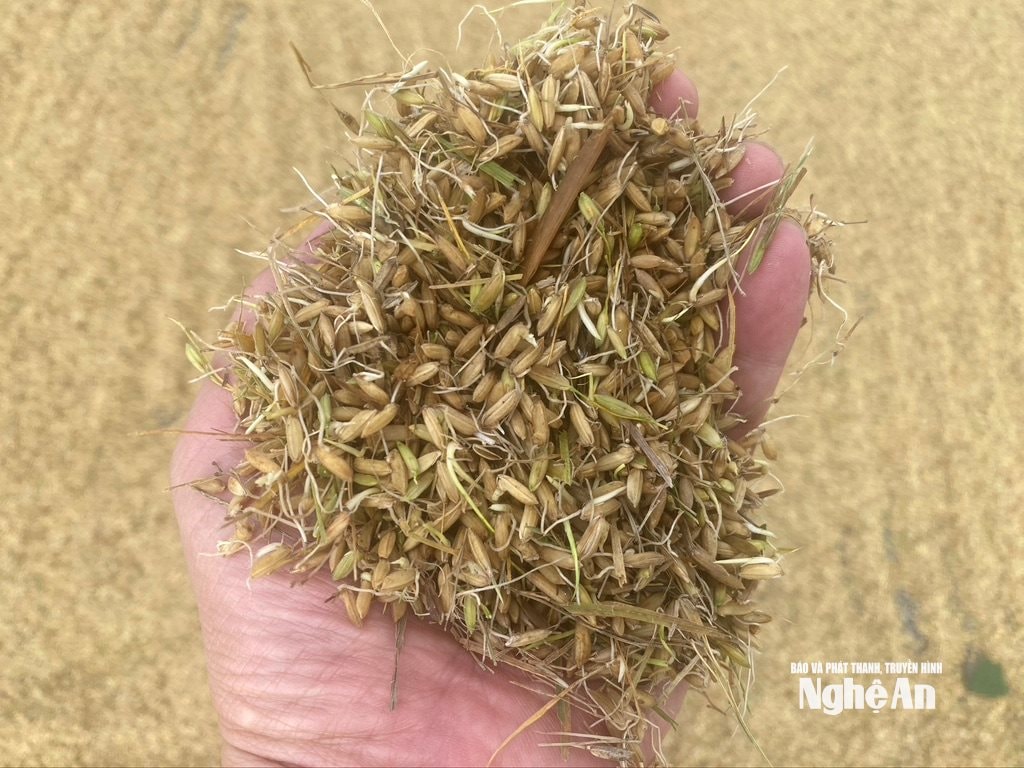
In recent days, many rice fields in Nghe An province have ripened to a golden yellow but have been damaged by storms and heavy rain. The rice grains, after absorbing water, have germinated right on the ears, putting farmers at risk of significant crop losses.
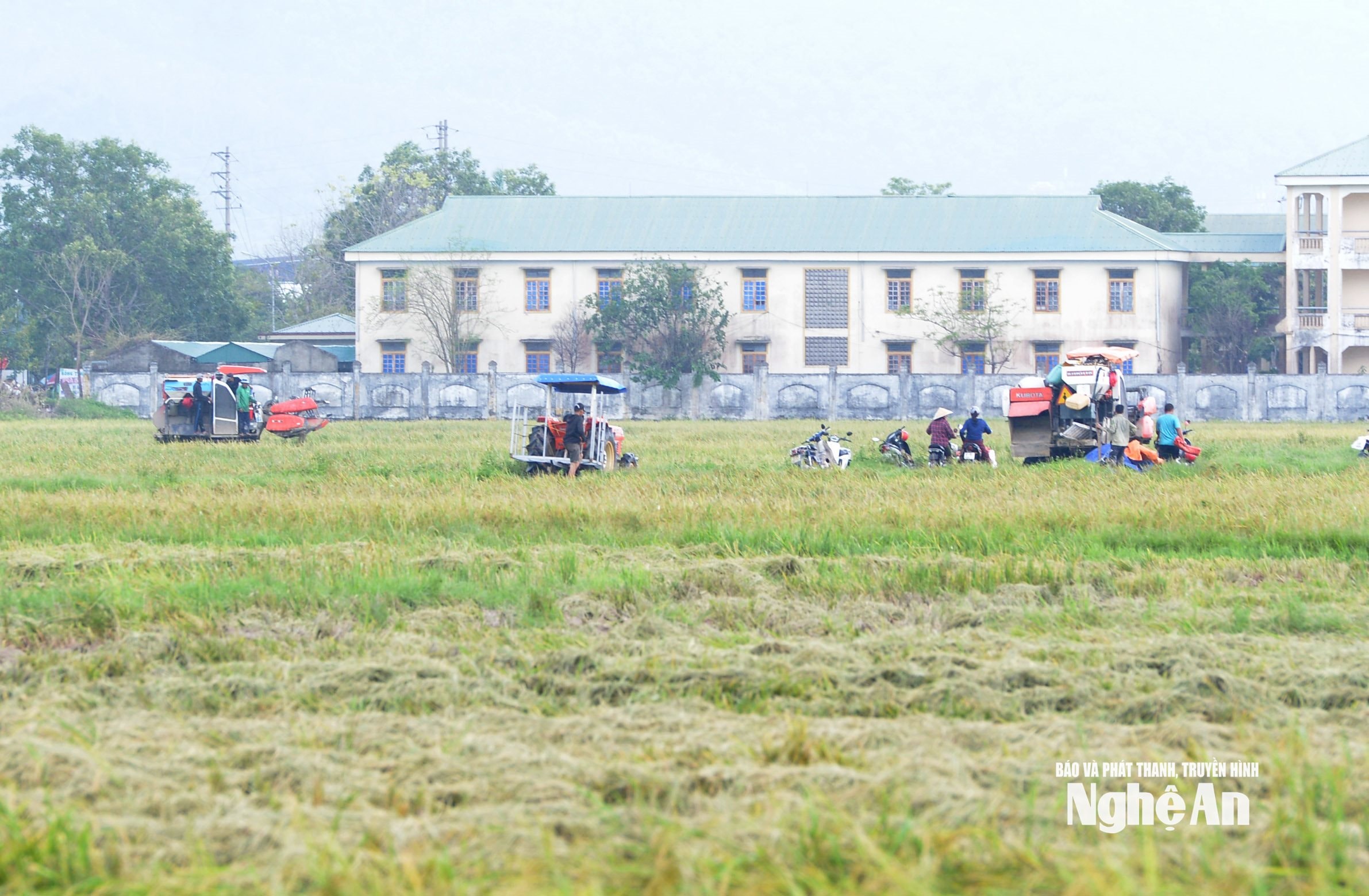
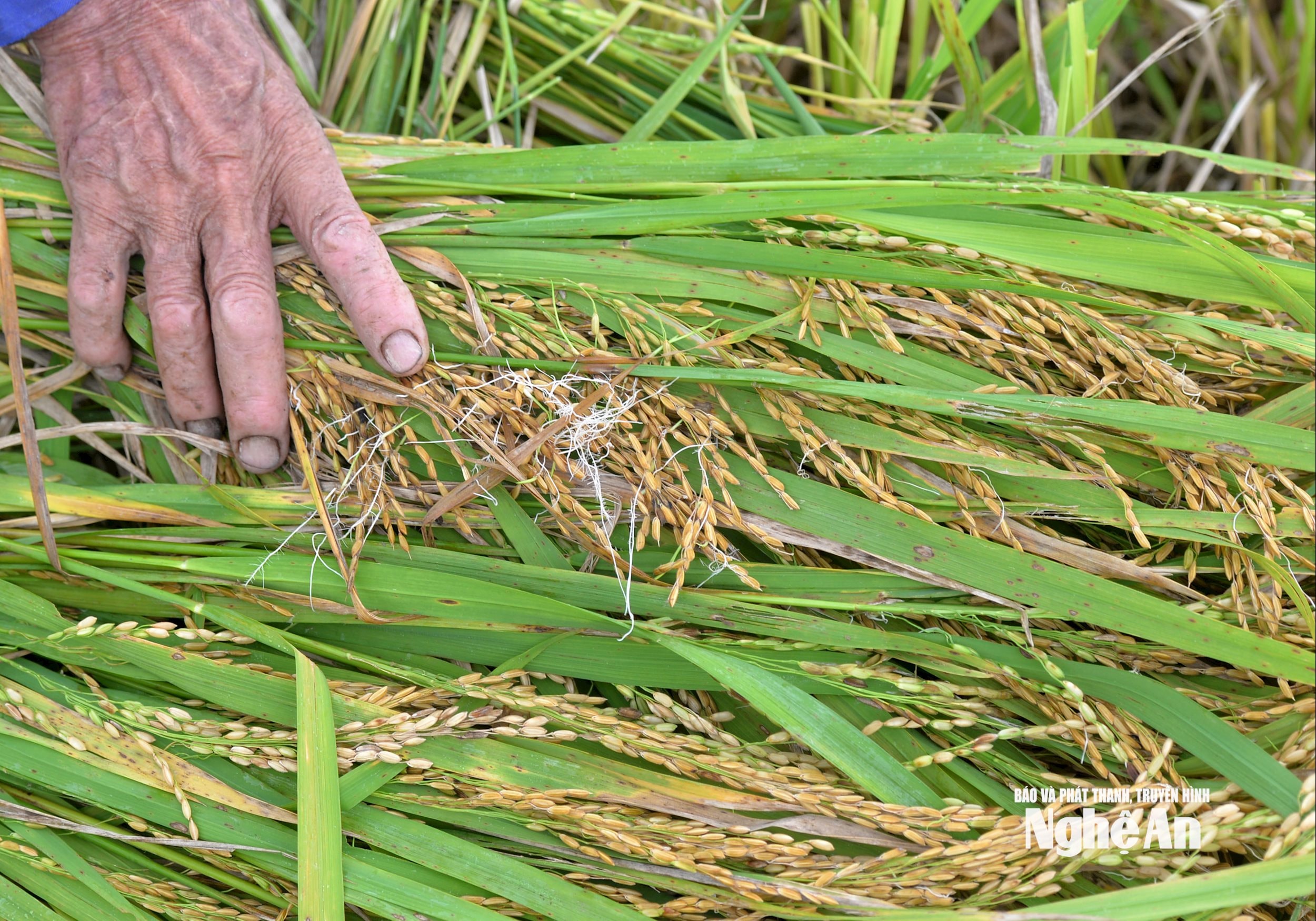
On September 1st, despite it being National Day, in many rice fields in Yen Thanh, Van Tu, and Quan Thanh communes (Nghe An province), alongside the fields that were not flattened, machinery was still urgently harvesting under rainy conditions. In the flattened fields, farmers were diligently picking up each sprouted rice stalk. On the stalks, green sprouts had emerged from the husks, causing the once plump rice grains to be almost completely ruined.
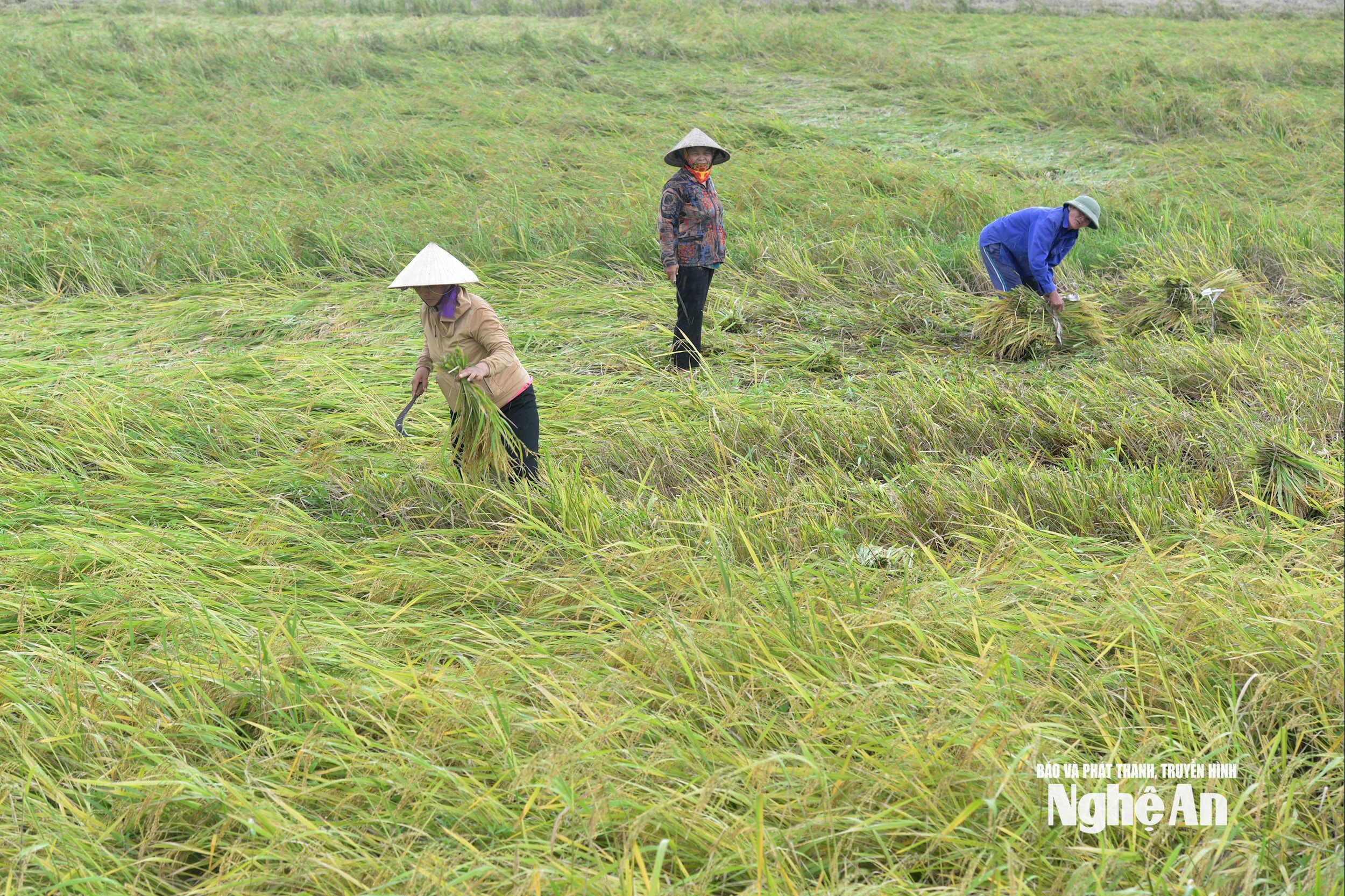
Ms. Phan Thi Hoa, a farmer in Tran Phu hamlet, Yen Thanh commune, sadly shared: “My family cultivated 4 sao (approximately 0.4 hectares) of summer-autumn rice. We thought this year would be a bumper crop, but when the rice was ripening, we were hit by continuous storms, and all the rice plants were flattened in the mud. The fields are muddy, and the harvesting machines can't get in. Now, over 40% of the rice has sprouted, and months of hard work have gone down the drain. This rice is unsaleable even if we dry it; we can only use it as animal feed.”
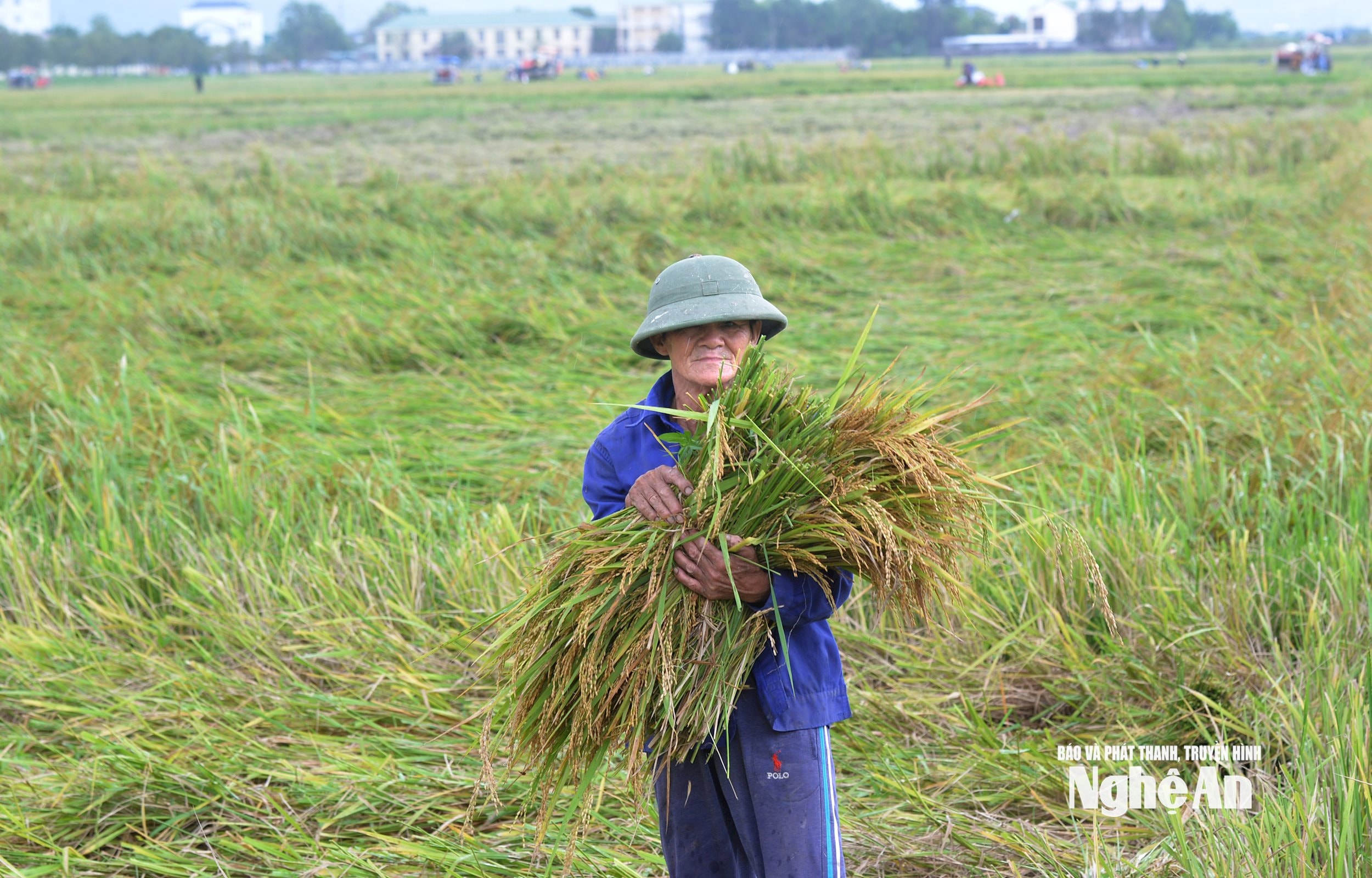
Next to it are three rice fields belonging to Mrs. Nguyen Thi Sam's family, totaling 7 sao (approximately 0.7 hectares), also in a similar state of flattened rice paddies, with water submerging the rice stalks. Despite the alternating rainy and sunny weather, the family still has to mobilize manpower to harvest manually in the wet conditions, working with frustration, knowing that if they don't harvest, the germination rate will be higher.
Roughly speaking, farmers invest over 1.2 million VND to cultivate one sao (approximately 1000 square meters) of rice field. During the harvest season,Farmers only need two days of sunshine to be able to mobilize combine harvesters to harvest the entire area. However, due to the heavy rain, the fields became muddy, preventing the machinery from entering, forcing the rice to remain waterlogged, leading to germination and a high risk of total crop loss.
.jpg)
According to experts, rice that germinates in the field almost completely loses its commercial value. If the grains have germinated, the rice will break apart and deteriorate after milling, making it unsuitable for market consumption.
Mr. Nguyen Van Duong, Chairman of the People's Committee of Yen Thanh commune, said: "This summer-autumn crop season, the entire commune planted over 1,400 hectares of rice. The heavy rains that lasted for the past few days caused 900 hectares of rice in the area, which were in the ripening stage and not yet ready for harvest, to be flattened by the rain. Even though farmers rushed to the fields, they couldn't salvage what they could. The rice plants were flattened, and water seeped deep into the fields, causing the rice to sprout right on the ears."
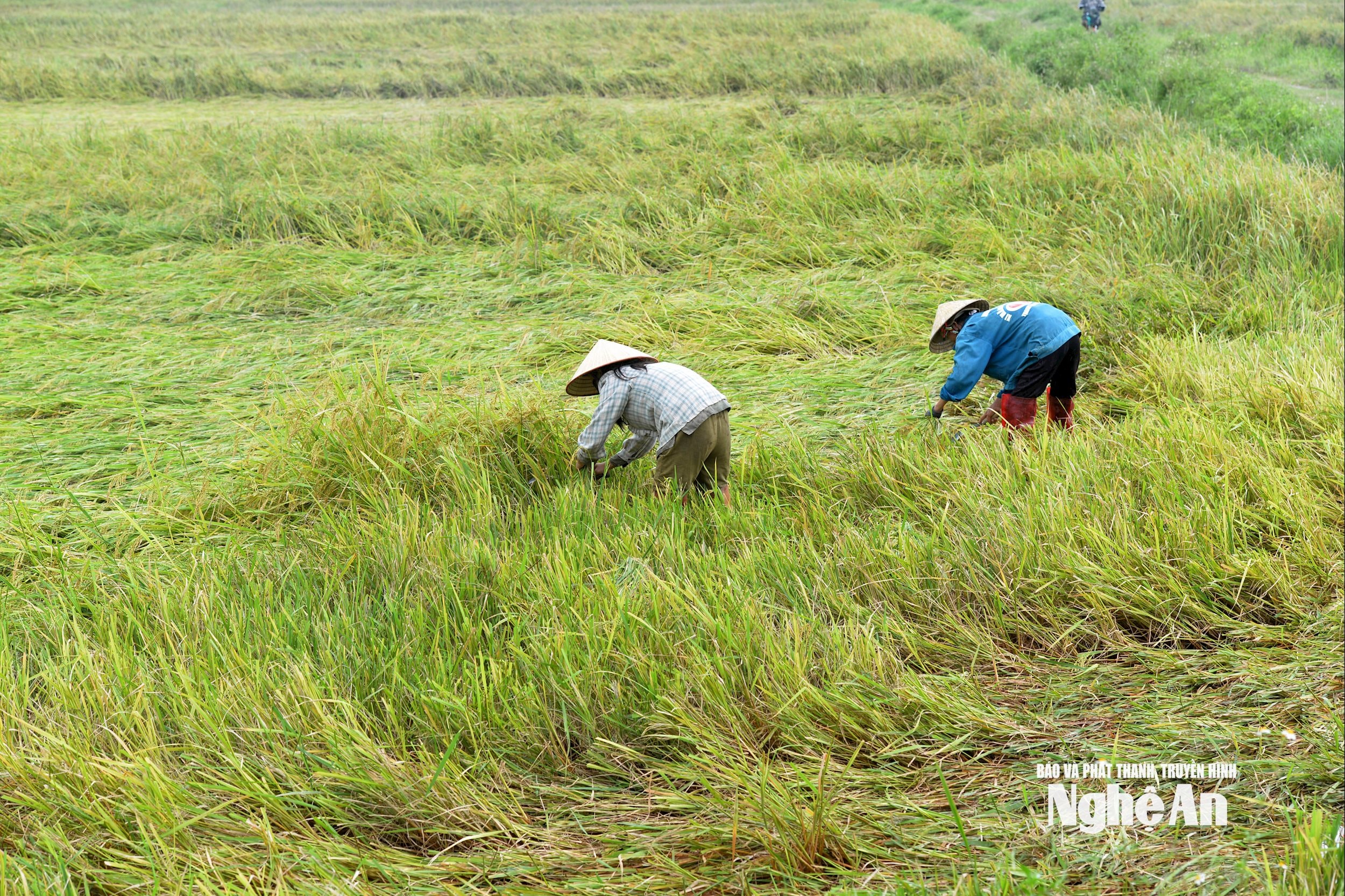
From yesterday morning until now, the sun has been shining, and the commune has directed villages to mobilize harvesting machines and quickly harvest areas that can still be salvaged. However, in the afternoon, heavy rain fell again, preventing farmers from harvesting any further. Currently, the commune is directing departments to continue compiling damage statistics and proposing measures to higher authorities for timely support so that farmers can quickly stabilize production.
“This summer-autumn crop was considered bountiful. Before typhoon No. 5 hit, the locality had estimated a yield of over 6 tons/ha. But now, many rice fields have been flattened, the germination rate is high, and the yield will decrease by 40-60%. What is worrying is that if the weather continues to be unfavorable, the germination rate will be even higher, and many areas risk total crop failure,” Mr. Duong expressed his concern.
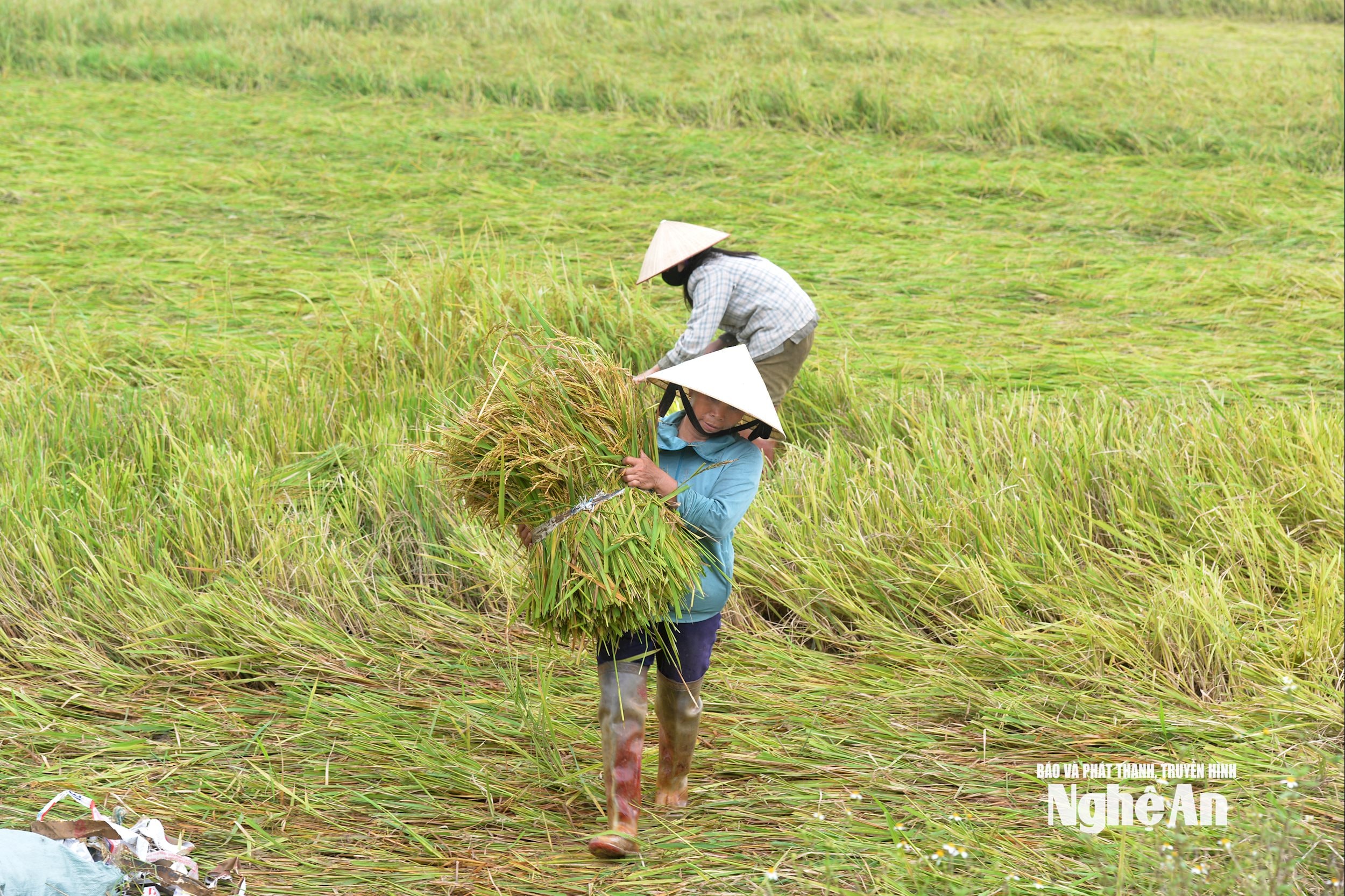
In the flooded fields, looking at the rice sprouts turning white, the villagers could only sigh in despair. For farmers, a completely lost harvest means a heavy burden placed upon their shoulders.
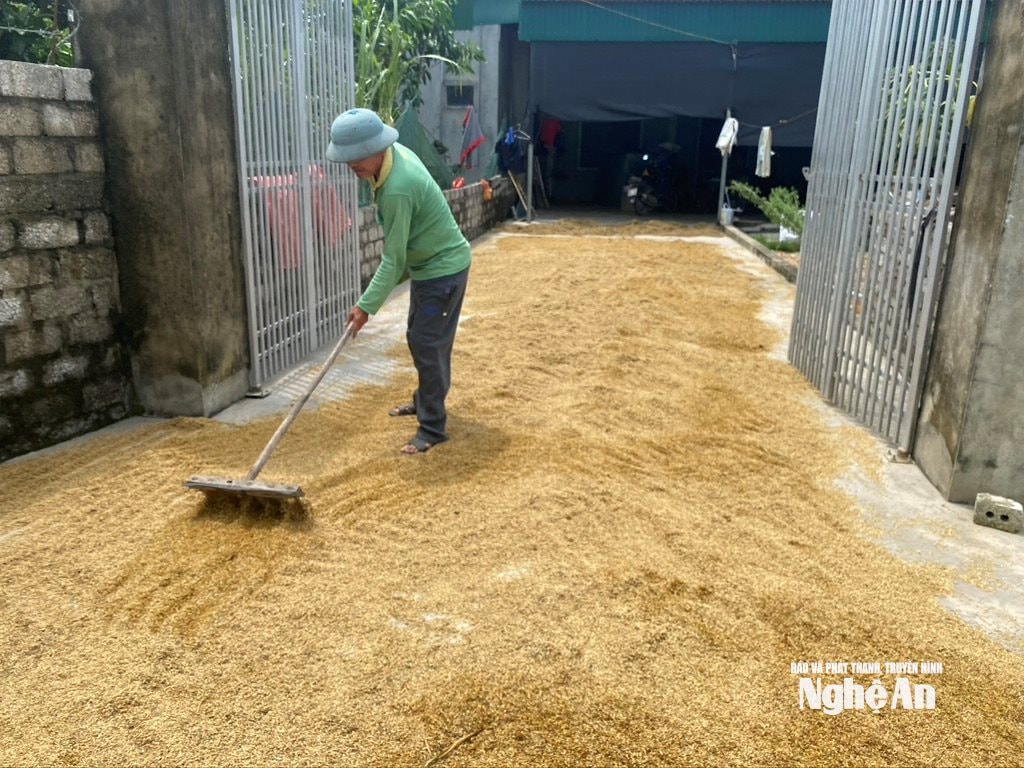
In another development, in many areas of Nghe An province, large areas of summer-autumn rice crops, harvested but not yet dried, have sprouted and spoiled. Taking advantage of the dry, sunny weather on September 2nd, farmers in many localities across the province were still busy "grabbing" the sun, urgently drying the rice to salvage the damaged grains.
.jpeg)
.jpeg)
According to data from the Department of Crop Production and Plant Protection, in 2025, the total area of summer-autumn rice in the province was over 56,000 hectares. Due to the impact of Typhoon No. 5, more than 33,438 hectares of rice were damaged, mainly by flooding and lodging. As of August 31st, the estimated harvested rice area was approximately 3,500 hectares, concentrated in the communes of Hop Minh, Van Tu, Yen Thanh, Tan Chau, Minh Chau, and Quang Chau, which were planted early to avoid flooding.


