
Many streams and ravines are drying up, so officials and locals are going up the mountains to find water sources to combat the drought.
(Baonghean.vn) - After several prolonged periods of drought, streams and springs in many mountainous districts of Nghe An province are gradually drying up, significantly affecting daily life and agricultural production. Many localities have had to mobilize forces to go to the mountains to clear waterways and find water sources to combat the drought.
In Bao Nam commune, Ky Son border district, according to the commune's People's Committee leaders, in addition to the current heatwave exceeding 40 degrees Celsius, the prolonged drought nearly a month ago has caused the water sources in streams and springs in the commune to gradually dry up. The people of Bao Nam commune rely entirely on water from these streams and springs for their livelihoods and production; therefore, the water shortage not only leads to crop failures but also affects the health of the residents.
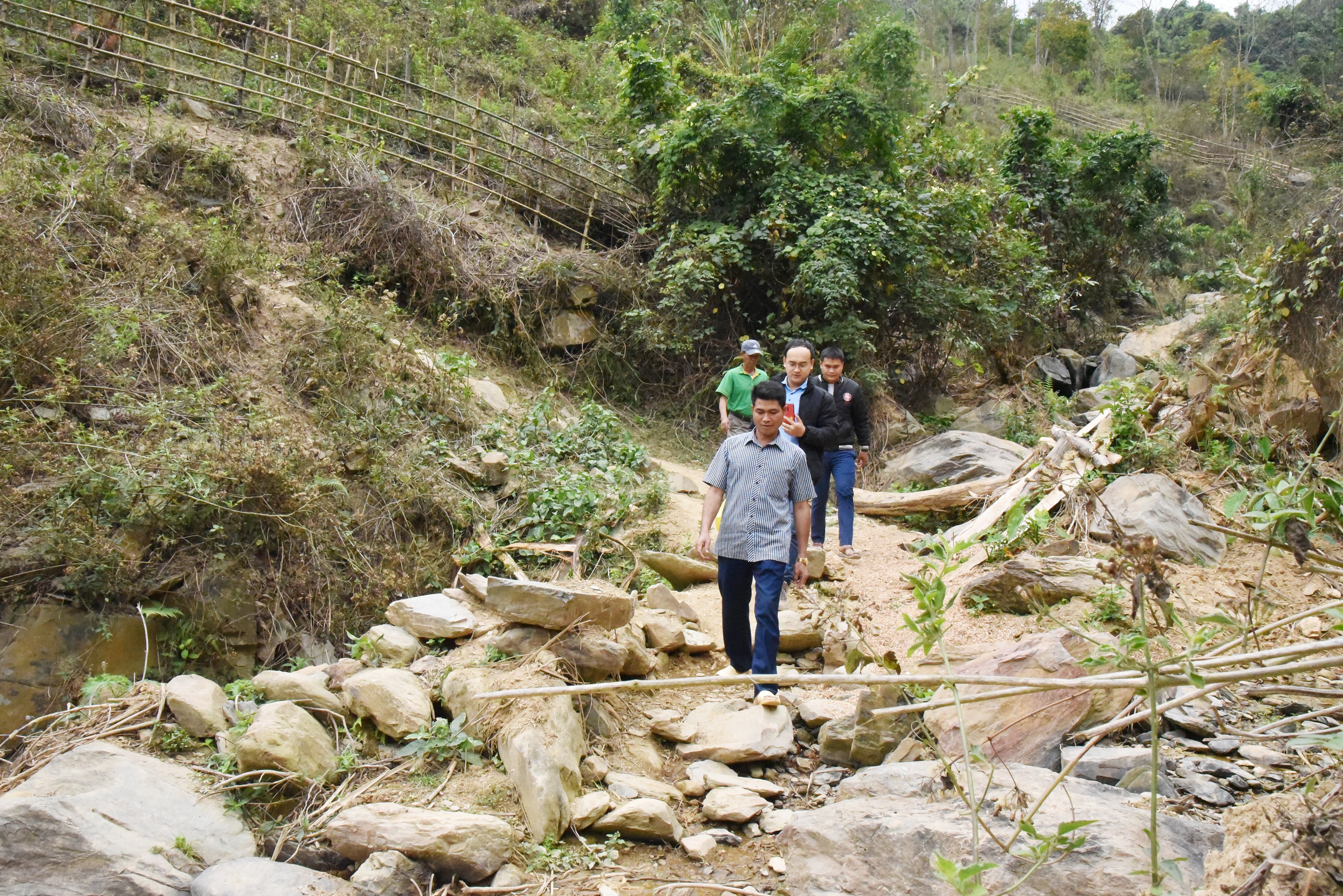 |
Officials from Bao Nam commune People's Committee inspect the water sources of streams and springs in Hin Pen village. Photo: HT |
In Hin Pen village, one of the remote villages in Bao Nam commune, village head Cut Pho Anh said that the continuous dry and sunny days have caused the water source from the stream to dry up, forcing villagers to visit their fields and farms daily to assess the drought situation. "The roads leading to the production areas of Hin Pen village and neighboring villages are currently non-existent or damaged by landslides. People have to travel along steep mountain slopes. Currently, Hin Pen village is mobilizing people to open a 700-meter road to the production area and clear the water flow to combat the drought for crops," said Cut Pho Anh.
Cụt Phò Anh's farm is located in a low-lying area, about a 30-minute walk from his house through the mountain slopes. To ensure enough water for his livestock and irrigation for his 0.5-hectare rice paddies, he had to invest nearly 20 million VND to buy additional water pipes from a stream about 1 km away from his farm.
"I had to sell my cows to buy water pipes. It hasn't rained for a whole month, and without water, the buffaloes, cows, rice, and corn will die," said Mr. Cut Pho Anh.
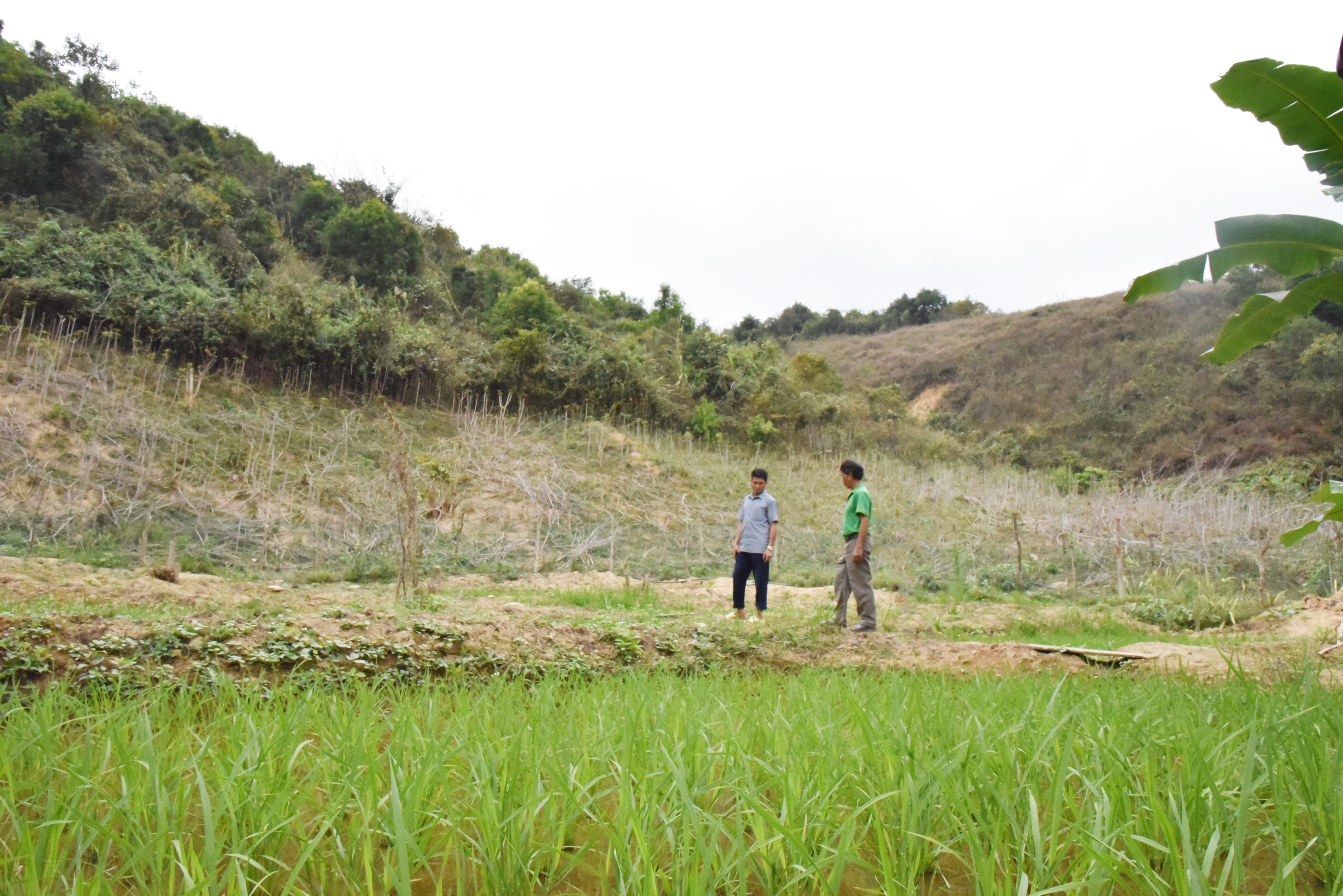 |
Village head Hín Pèn, Bảo Nam Cụt commune, Phò Anh (on the left) buys water pipes to bring water from streams and springs to combat drought in his family's production area. Photo: HT |
According to the leaders of Bao Nam commune People's Committee, not only did the hot weather in the first months of 2023 negatively affect the lives and production of the people here, but in 2022, erratic weather patterns such as severe cold spells and heatwaves caused a decrease in the productivity and quality of crops and livestock. Specifically, the area planted with upland rice only reached 89% of the plan (302 ha/340 ha). As for the area planted with paddy rice, due to drought and cold rain, it only reached 42.85% of the assigned plan (3 ha/7 ha). In 2023, if timely drought control measures are not implemented, the planted area of Bao Nam commune will not meet the plan.
Similarly, as streams and springs show signs of drying up, in Tam Quang commune (Tuong Duong district), during the hot days of early May, commune officials, village officials, and local people are carrying out dredging and clearing of streams and springs to maintain water sources and ensure drought prevention for over 200 hectares of rice paddies, 250 hectares of corn, nearly 150 hectares of various vegetables and beans, and a livestock herd of over 5,000 animals.
 |
Officials and residents of Tam Quang commune are searching for water sources and clearing streams and creeks to combat drought and protect crops. Photo: CSCC |
In Que Phong district, the heatwave at the end of April 2023 most affected the communes of Tri Le, Tien Phong, and Cam Muon. During the peak of the hot weather in early May 2023, based on daily weather forecasts, these areas continued to be affected. Officials from the People's Committees of the communes and villages proactively disseminated information and reminded people to take measures to prevent and combat the heat and drought for their crops.
According to Mr. Vi Van Cuong, Chairman of the Tri Le Commune People's Committee, Cam village in Tri Le commune was the most affected, with approximately 16 hectares of rice fields damaged by drought. To combat the drought, commune and village officials, along with local people, not only cleared waterways in streams and creeks but also had to rent additional pumps and pool money to buy fuel to run the pumps and save the rice crops.
 |
Many rice fields in Cam village, Tri Le commune, are severely affected by drought. Photo: CSCC |
According to statistics from the Provincial Irrigation Department, Nghe An province aims to achieve 424,410 tons of grain in this year's summer-autumn crop, with 81,000 hectares of rice planted. This crop season faces numerous difficulties and challenges. Temperatures are generally higher, while total rainfall is lower than the multi-year average; in particular, water regulation has been necessary since the spring planting season to support production and combat drought in Thanh Chuong and Do Luong districts. Meanwhile, water levels in reservoirs, dams, rivers, streams, and key waterworks are low. It is estimated that over 6,500 hectares across the province are at risk of drought and water shortage.
According to information from the North Central Region Hydrometeorological Station, from January to the first half of April 2023, water levels on rivers in the North Central region changed slowly, trending downwards. Upstream areas were affected by hydropower regulation, while downstream areas were influenced by tides. Therefore, in Nghe An province, water flow in rivers, reservoirs, streams, and springs tended to decrease.
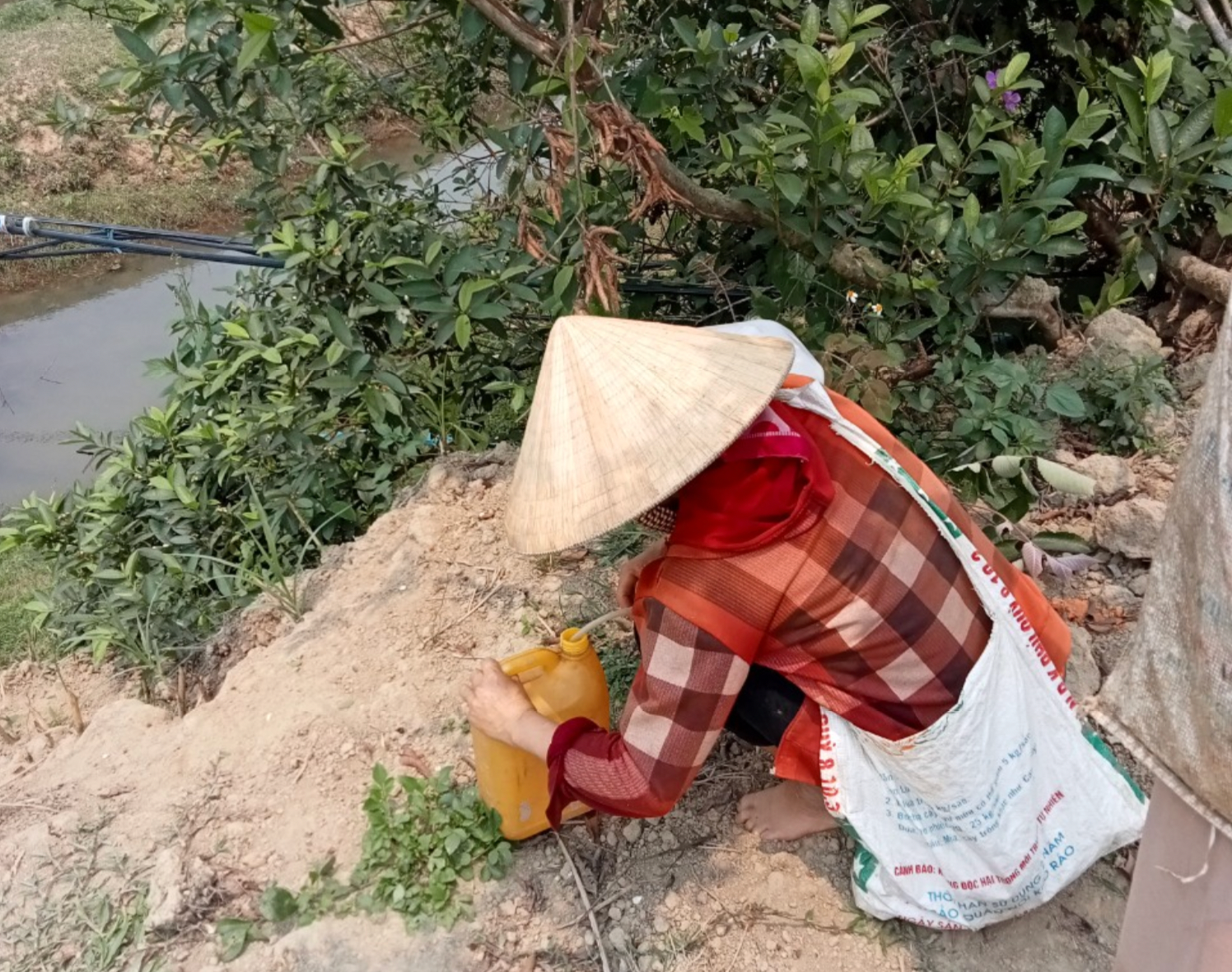 |
The people of Cam village obtain water for daily use from streams and reservoirs. Photo: CSCC |
The North Central Region Hydrometeorological Station also forecasts that from the second half of April to May 2023, water levels on rivers in the North Central region will continue to change slowly and gradually decrease. From April to June 2023, the average flow volume on rivers in the Thanh Hoa and Nghe An river basins will continue to be 10-35% lower than the multi-year average.
Forecasts for August 2023 indicate continued hot weather in the North Central region, with the intensity potentially exceeding that of the same period in 2022. Therefore, there is a high risk of impacting the environment, living conditions, infrastructure, and socio-economic activities. Extreme weather events such as heavy rain, heatwaves, thunderstorms, tornadoes, and hailstorms can negatively affect production activities and health. People need to be informed and take proactive and effective preventive measures.


